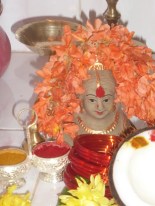
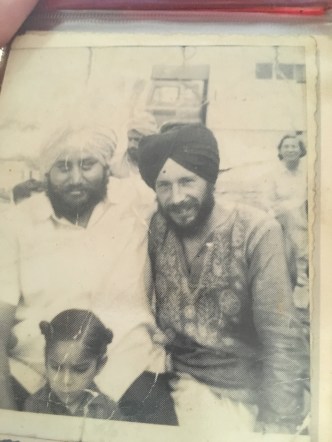
older


img_1142

Signs of Ageing:

forgetfulness

greying hair

dribbling

poor concentration

impatience

wrinkles

irascibility

squashed mosquitoes in peripheral vision

amongst the challenges now is to work which did one’s did actually arrive with age and which one’s can be reversed

Wow

what a day!

Biscuit (aka Brexit) pales into insignificance. UKAOs just seems so small and so less relevant.

img_1137

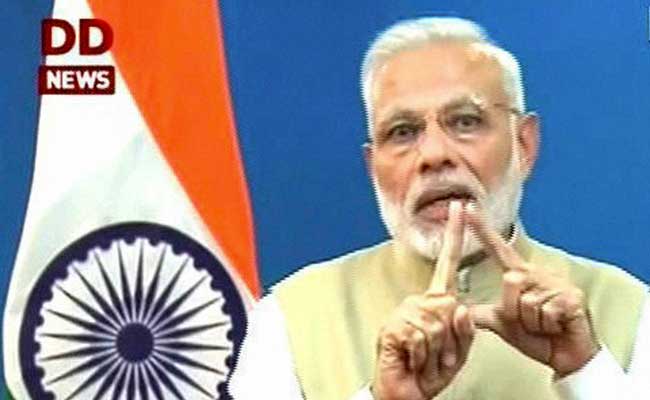
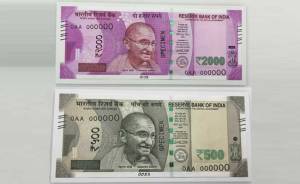
India was MODI-fied, over two years ago, with the election of the BJP party to govern India. Today in a country of one billion people Modi announced that OVERNIGHT all large denomination notes (500 and 1000 Rupees) would be abolished, imagine that? In a country with so many people, where the majority have a stash of notes at home and a significantly large minority aren’t known by the tax authorities, operate in an under-the-table-informal economy will now have to take their cash to the bank to get it exchanged. It is intended to tackle counterfeit notes, bribery, corruption, ‘black’ money and add to other polices such as IDs, bank accounts for poor people etc. that together help contribute to formalise society fully onto the ‘radar screen’.

Astonishing! img_1138

There will be much more to come. Banks are closed, ATMs not working. Once they reopen cash can be exchanged up to a maximum of  4000 Rs per day or put into a bank account within the next fifty days! These new notes will be issued in limited quantities from Thursday.

Cash chaos.

But it’s India so somehow it will all work out.

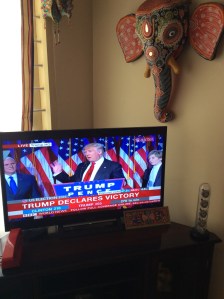
Next, we can now look forward to a President Trump!

img_1134

There’s an Elephant in the room.

Is this another example of how people in UK and now the US have become so disconnected with the political classes, the establishment power and the orthodoxy they represent? People are angry and are providing a strong message, wanting a different future.

Meanwhile, ‘laid-back’ Manjula relaxes, munching on the Roses Chocs I smuggled in (equivalent of five tubs) from the UK. She gives them out to friends, neighbours and relatives…..

img_1136

the not so local (part 2) the Englishman moves back home

Indian ex-employee rescues British boss from destitution.

Len’s story continues and here’s a statement he’s issued…..

An Englishman, who’s been living and working in India for over 20 years has been wholly dependent on his income from London, UK, which unexpectedly stopped. Len Bailey, who is 75 years old and with mobility difficulties, would have been homeless and destitute if his previous employee hadn’t found him accommodation, food and enough money to see him through.

Len says: “ I was completely stuck. No money coming from the UK which I needed to go to London and sort out and the Police refused to provide a ‘letter of release’, to enable me to leave the country.”

Len first visited India over 45 years ago and subsequently set-up businesses providing employment and expertise in the construction industry. More recently having designed and developed chipper technology to sustainably use palm fronds as part of agro waste recycling.

Len adds: “ I had applied for visa and extensions as required via the local police and to Delhi but there had been no refusal, or rejection, just nothing, no response. Now, I need to get back to London to be able to sort out my affairs”

The Police had refused to provide an exit visa or ‘letter of release’ and are now demanding a penalty payment. The UK High Commission were unable to help.

img_0669His ex-employee realising that Len might be destitute and with real concern for his general health and welfare has now made arrangements to pay the penalty set by the Police. This penalty was for Len having continued to live here with an expired visa and with Delhi not issuing an extension.

Once the Police have done the needful and sorted out the paperwork Len will be able make haste back to London to re-establish his income.

img_0667Len, here saying farewell to his Doctor, is now back in the U.K. Having been picked up by a relative at the airport.

Who knows what the future holds…

Len leaves behind a close knit group of friends and numerous families he has helped practically and emotionally over the years.

Firangi’s Fortunes

He was breathless, panting, with bulging eyes. What was amiss? Was he having a heart attack? would I have to scramble around in my messy brain for the First Aid Training from over 40 years ago?

He was completely speechless,  flummoxed and didn’t know what to do.

But relax dear reader it wasn’t a life or death situation.

He’d unexpectedly met a foreigner.

Foreigners

We’re often asked by guests at Mysore BnB why, as foreigners travelling in India, do we get so much attention? Whether it’s wonderful hellos, gorgeous smiles, penetrating questions, endless photos, now the ubiquitous ‘selfie’ and almost constant stares.


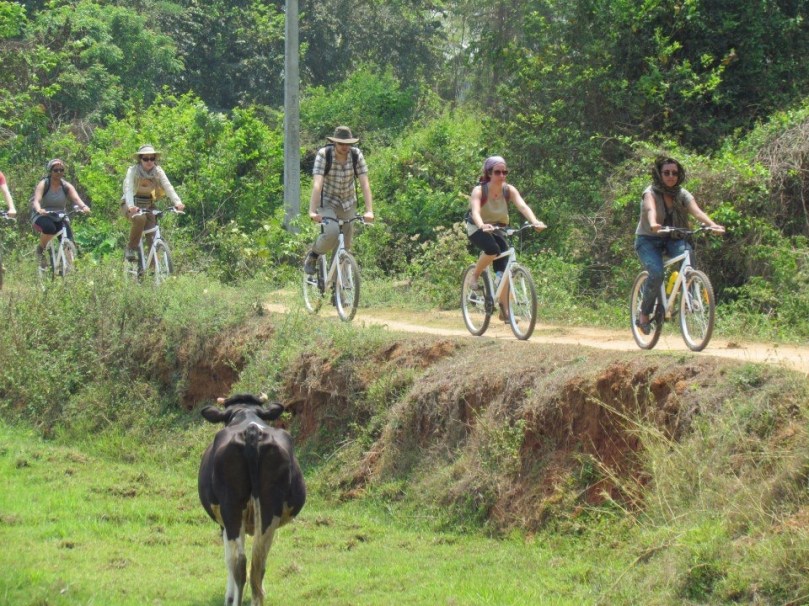
When I first travelled in Kerala,  I found myself with a Frenchwoman in a small Elephant procession but it was us, the foreigners and not the Elephant that seemed to be the main attraction. It felt as if we were the first foreigners these guys had ever seen but that was patently not true.  We are so often the centre of attention.

How could  that be with such lovely specimens…..?

It hasn’t changed that much after living here seven years.
img_1118

I often wonder who’s watching who? It’s sometimes unwanted and annoys some people  but its pretty harmless. But why? As always and especially in India there is not one, nor easy or consistent answer.

A blessing

On one of my first visits to Mysore. Early one morning, I’m sitting at a corner watching the city come to life.  An elderly Indian lady walks up touches a cow (which of course is a god!) and then touches herself as if to take a blessing. She then does exactly the same to me! How come?

Some may see us as special even exotic and there seems to be at least, a certain reciprocity there.

One of the downsides of all this, is of course, that it relates to seeing someone with lighter skin as better and in that case it should be relegated to the dustbin along with the ‘fair and lovely’ creams. But it’s not quite as simple as that.

Guest is God!, but not always…

Nowadays

Just last week we went to see another (first floor) house to rent.

Manjula had called the owner to get details and the price. It sounded ok. So we arranged to see it. It didn’t quite go to plan.  We hadn’t revealed that I, a foreigner, was involved. This was to help ensure we’d get a fairer Indian price. The owner pulled up outside the house of his two-wheeler. Manj and I were waiting and the ladies from the downstairs house were hanging around and chatting.

He’s the guy I began to describe at the beginning of this piece.

Let’s say he was speechless but it might best describe his initial response to say he was shocked and stunned. When he slowly began to gather his senses (OK don’t expect too much here) he said it was “only available for vegetarians”. The shocking foreigner before him obviously was a rabid Christian carnivore. Well, I’d got him there, I’ve been a veggie for 40 years.

sorry ….. the cogs whirred a bit more

“It’s for family and not bachelors.”  Well as I’m nearly 60 with grown up kids I’m not exactly family but neither am I bachelor and I’m not planning to have all night parties. So I sort of hit him with that in my inestimable western logical sort of way. I must admit though I wasn’t winning him over.

Finally we got it. It wasn’t available to a foreigner. It’s the Firangi Flop. End of story so we’re not just special!!  I gave him a bit about being a guest in his country (Famous saying Atithi Devo Bhava: ‘Guest is God’  clearly didn’t apply here), that I’d been renting from a member of his ‘community’ (this guy is a vegetarian Lingayat as are my current house owners) for seven years, kept a clean house, paid rent on time, blah blah blah. To no avail. So that house is off the list and he’s not getting a Christmas Card! 😉

We tried it again with a lovely small house just down the road, same problem.

img_0405

It does however reflect a common fact here, not unlike elsewhere. Traditionally, local people’s friends are quite rigidly defined, social networks and milieu are of their community, a term which locally means: where they are from, who they worship and their caste. No difference from the rest of the world eh? but prejudice here is incredibly transparent. They haven’t learned to hide it behind ‘politically correct’ camouflage. Appealling to ‘vegetarians only’ is code. Outsiders need not apply. It specifically means:  it’s only for higher caste (Brahmin), Jain or Lingayat. In this case, it’s based on even more prejudice and only available to people from Rajasthan , who are themselves, of course, in-comers or oft-comers as we’d say in Yorkshire.

So we’re special but we’re also outsiders.

In my view its part of the iceberg which  also relates to extreme politics, we’re seeing  around the world and that touches on people being disconnected from each other, xenophobia, anti-immigration and intolerance,  but that story is for another time.

Maybe, as always, I leave the last word to Manj.

Here’s Manjula ‘s view from a couple of years before working for me.

p1120303

over nine years ago, the time when I lived at my brother’s place. Once my brother’s wife and I were out to purchase something from a shop, it’s a small village, it comes after Hassan, it’s called Salgami. On our way back home we saw 2 foreigners, a couple, they were cycling. My brother’s wife said in astonishment, “Look how these English people are cycling in our village. I think they like to see villages.” She continued, “If you work at an English person’s house you will earn well enough, they’ll offer you good food, nice and rich food. Imagine, if I was not married, I would have worked at an English person’s house. I would have eaten the same food as they did, I would be happy and jolly. “
I said, “Ayyayappa! English person’s house? A big NO to their house. They eat insects, they eat all kinds of meat, they eat cow’s meat, pig’s meat and what not! And a few also eat insects.” I said this as I had watched in television; in a few shows which showed them eating many creatures “
She said, “It’s not necessary that everyone eats. The ones who eat will eat and there are the ones who don’t eat at all. “
Later we reached home.

After 6 months, I came to Mysore. Look what happened with me? The same thing what my brother’s wife had said, I got a job at an Englishman’s house! I remember Stephen had asked for a maid for this house, a girl or an old lady. I was lucky to find his house and he was lucky to find me.
I was wondered thinking about all kinds of meat I might have to cook. Later I heard it from Vasanth that Stephen was looking for only vegetarian food to be cooked. “Thank God!” I was relieved.
I eat chicken, mutton and fish. I can cook them all but if it was any other meat I wouldn’t have touched it. I would have reluctantly said “NO” to cook any other meat.

so we’re special, crazy, outsiders, or maybe…

We’re just weird…

Farrell Factoid

img_0646

The final section above is taken from the digital recordings that Manjula has made in Kannada and have been transcribed by our good friend Vidya, for me to share via the blog. This is the first quote from this treasure trove.


Firangi is an old term for Foreigner, usually white, westerner and possibly British now we’re referred to, rather boringly, as plain old ‘foreigner’ or even “American’, I think it was originally Persian and Jonathan Gil Harris describes some in the ….

The First Firangis

village life, visiting family

Extraordinary ordinary

Manjula’s brother Raju, and his wife Deepu, daughters, Amrutha and Hamsa live in a small village of 290 people with around a 100 houses. Its 3 hours away from Mysore. It isn’t a quaint picture book village, even by Indian standards. It’s people are very poor. They do however have great character.

God only knows what they think of us arriving in a car, having driven here just for the day. At one point Manjula points out that the other villagers (not her family) will be shocked as she sits in my presence, they think I’m her boss ;-). Imagine how her life has changed.

The family always look forward to Manjula’s visits and this time, especially so, as it’s the first since the BIG trip to the UK.

At their house, the only door leads into the ‘hall’ which is maybe 9 metres square, in which there’s a couple of plastic chairs (probably borrowed for the guests to sit on) TV (gift from us) cabinet holding absolutely all their worldly goods, it’s where all the family sleep, eat and the copper/fireplace for heating the water is in the corner where there’s also space for bathing.   The only other room at the back, is where Deepu cooks on a stove.

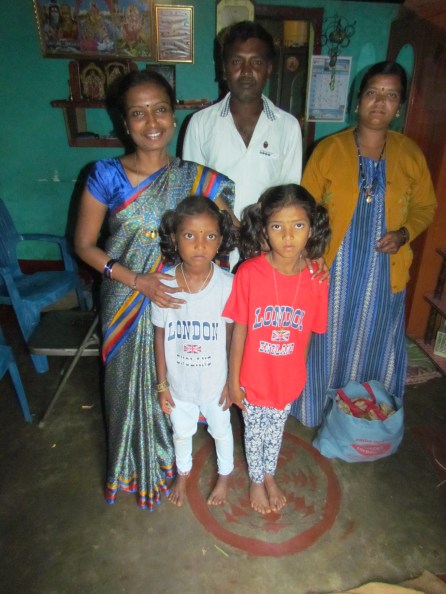
Well, of course they had to look at the holiday snapshots!… whatever the culture, its a friend/family obligation 😉 to have to sit through the photos. With pain there is gain!!! …. The rewards from the DIG trip are presents of clothing (suitably labelled ENGLAND and LONDON), perfume, soap and  English sweets: chocolates, sherbert liquorice, the ones that go pop in the mouth, were clearly a big favourite. Discreetly Manjula placed some money next to the Goddess Lakshmi.

It’s a poor village and most people are related in one way or another, they are all from the same caste. They are mainly farmers. The odd person, such as Raju, works in construction. They do however have two small schools and children once they reach age 11 will go to school, at the next village.

So what’s this?

img_6080

Growing ginger…I’ve never seen it growing before and together with sweet corn, potatoes, Ragi, and the ubiquitous coconut, in the dark rich looking soil, it seems to show that this is a very fertile area.

We take a walk around the village. Most houses are similar, just one or two small rooms. We nip through the fields to visit Deepu’s uncles. They have a larger house but it has had two families living there.

They seem to be completely off the network of canals so, they irrigate from rainwater and borewell. I have seen one toilet (the very basic toilet that’s supported by govt funds) while walking around, so I assume that everyone otherwise uses the fields.

img_6131

Here’s Manjula using one of our established signals. She had just been for a no1. I know, I know, too much detail, so here’s a bit more. I’m now sitting here back at the family house. I’m stuffed. We’ve had rice (two types) a selection of fried bhaji, (carnivores had some chicken) all followed by Keer, and helped down with generous glasses of Lilt (lemonade). I’m wondering if I’ll manage the journey back before I need the loo. I’ve already used the bushes!

Electricity is maybe three hours max during the day and most of the evening, sometimes. It really brings it home to me, how materially rich we are and what a different life we lead! Its been a great trip and so nice to see the family happy to be together.

img_6205

I’m now very aware that we should be sharing more and wonder what it is they really need.

Farrell Factoid

There is a massive shift of the population from rural to urban areas. Raju’s wives uncles had three children and two have moved to the cities. It’s not surprising when people are so poor and they can earn maybe three or four times the usual rate, in work that’s more regular,  if they shift to the city. If they are lucky to get a thorough education they’ll definitely move.

We have a variety of signals. (see no 1 above) Another, is used (in other contexts) to signify glass half-full or empty, is used when we meet someone who’s a bit negative, a Marvin the Robot or Eeyore type or alternatively a very positive and optimistic person.

Postscript

As I’ve said, it is a very poor village but it’s still important to respect one’s Gods and build Temples. The last picture is a relief copied from the Temple they are replacing! Manjula says it’s not to go on facebook so it’s hidden at the back here. This can’t be such a surprise, after all its in the country that gave us the Kama Sutra.


Manjula’s Background

379003_10150528283149937_1371457865_nManjula is from a poor background. Her poverty, family instability and her experience as a woman in a patriarchal society is not atypical. She  has shown great determination, fortitude, even stoicism. It’s a common story in India. Women (and men) managing to survive through very challenging backgrounds and life circumstances.

Manjula’s story helps illuminate what life is like for so many people living in contemporary India. There may be explosive growth of the economy and the middle classes – we can see the evidence in many ways – higher disposable income, rising prices, spare money sloshing around, building-building-building, the glorification of ‘development’, leisure holidays, flash cars, waste everywhere, traffic jams, disposable nappies (diapers), house dogs… you name it, we’ve got it!

But as with everywhere else and even more so in India, the rich and poor whilst living cheek by jowl are far far away from each other. People are left out and behind, there is the risk their story is not told or realised, their needs forgotten, a myopia of the modern age.


Khushwant Singh is King

Well he isn’t really, fact is he died a couple of years ago just before he reached a 100 years old.

He was a writer covering novels, polemics, facts, opinion pieces in an incredibly direct and challenging way! His style is refreshing.

I’ve read many of his books and would recommend them all. I think ‘Train to Pakistan’ is powerful and ‘India an Introduction’ is a really easy accessible way to begin to get your head around some of the complexities of India. But do check them all!

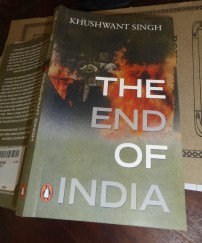
P1150262I’ve just finished reading ‘The End of India’. It’s a mix of different papers so doesn’t necessarily all fit together as a coherent whole. His analysis of the communal violence, the role of the politicians and what it means for India of the future is useful and insightful. He highlights some of the real risks of India’s shift (in some senses) from a secular to a Hindu dominated society.

The reaction from India’s is in itself illuminating. Check the broad range of opinions in the reviews at goodreads or if you can wait long enough for the ridiculous number of ads to load, check India Today

I really like the way he finishes the book. I can go with that!

“I will sum up my faith in time-worn cliches: good life is the only religion.

Ingersoll put it in more felicitous language: ‘Happiness is the only good; the place to be happy is here; the time to be happy is now; the way to be happy is to help others,’

Ella Wilcox put the same thought in plainer words:

‘So many gods, so many creeds,

so many paths that wind and wind.

When just the art of being kind is all that the sad world needs’

Happy Ganesha Chaturthi

Happy Ganesha Chaturthi

Vakra-Tunndda Maha-Kaaya SuuryaKotti Samaprabha

Nirvighnam Kuru Me Deva Sarva-Kaaryessu Sarvadaa

O Lord Ganesha, of the curved trunk, large body and with the brilliance of a million suns please make all my works free of obstacles, always.

So the big event has arrived. Today is the day. Boys in groups of ever increasing size have been touring the area, for what seems to be weeks, knocking on doors asking for donations to build their shrines.

The traditional potters street in Mysore (see below) sell the many varieties of the terracotta Ganesha. Others sell them on street corners throughout the city.

Our good friend Rob Thomas has taken some great photos of them for sale in Mumbai. I must say that the one’s in Mumbai look great, (maybe its Rob’s photography) they are beautifully painted.

The older boys and men build temporary shelters, with completely over the top decorations, lights leading up the road, colourful Ganeshas and music blasting out of speakers. Its great fun.

It’s not a particularly ancient festival in its current form as it was popularised by a chap called Lokamanya Tilak (there’s a back story there about fighting the British colonials and the development of Hinduvstan) in Mumbai in the late 19th Century.

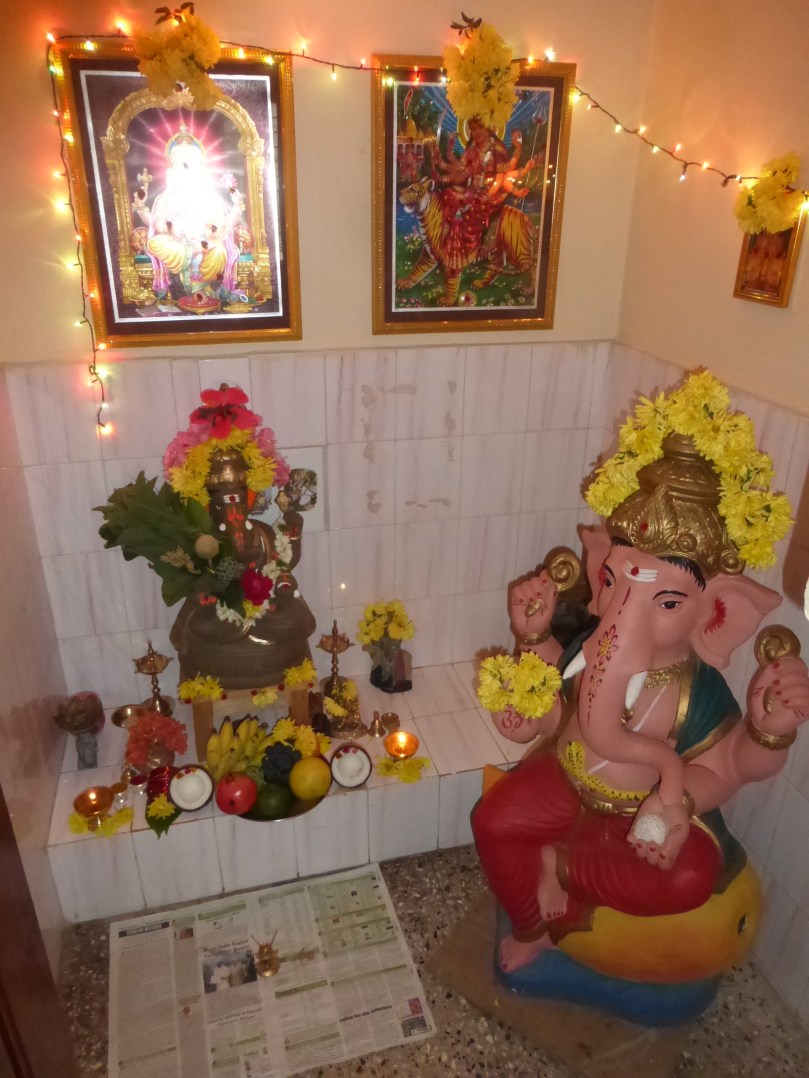
P1150273So here at home Ganesh is installed in our Pooja Room. We choose to have the simple version with no or natural paints NOT the Plaster of Paris version with paints that damages the environment.

There are a set series of days, with a few different options (this is India) we’re supposed to keep him at home and then immerse him in water. We usually go the ‘whole hog’ and immerse him in the river Kaveri on Srirangaptnam at Paschimavahini (featured on our world famous cycle tours) in five days. This year we’ll delay the immersion to coincide with the arrival of Alex , my niece from the UK and on her second day we’ll give her a ‘right-old’ introduction to India 😉
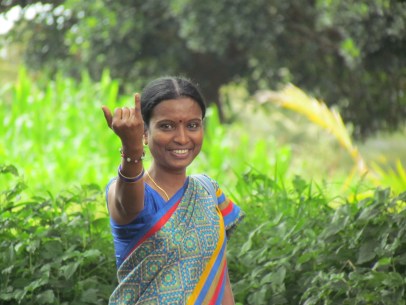
Our Pooja Room also has a much larger Ganesh, bought cheaply after the festival had ended a few years ago. He was bought to go in the roof garden but he just hangs out here! that’s cool!

P1150272


It’s all action

It’s happening at Moksha (meaning salvation) Manor.

They have a saying here in India that there are seven days in a week but eight religious days. Well, I reckon it might be true.


P1150269

Today is Gowri Habba or Gowri Ganesh or Swarna Gowri Vratam! (Remember in India there is NEVER just one way of doing or saying or understanding things.) It’s the festival day dedicated to Goddess Gowri a form of Goddess Parvati (aka Ganesh’s mother) who on this day visits her devotees. It’s especially important for the ladies. Married women will wish for a happy and peaceful married life, the unmarried will look to get a good husband.

Manjula and I wish you all a Happy Gowri Ganesha

Lucy is objecting to being on the chain, the girls are really active, Manjula is doing Pooja with Ganesh but really Gowri and if you look closely you can just see her in the bottom left. I’ve enlarged it above. The silver containers are posh and new and hold the Sindoor (red vermillion) and Haldi (Tumeric yellow)

It’s the day before one of our most important festivals in Mysore (it’s REALLY REALLY big in Mumbai and pretty big here) Ganesh Chaturthi. Ganesh arrives tomorrow. He’s actually already here  but maybe that’s just the English way.

More later…..

the not so local locals

Foreigners who’ve made Mysore their home

In Mysore there’s quite a few foreigners living here. They seem less like the type you’ll find in Bangalore, who knows!

Here in Mysore, some of us have homestays, manage subsidiaries and have set up our own businesses, one even exports Henna/Indigo to south Korea!

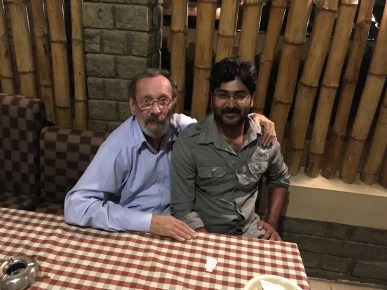
One of these oddballs is Victor Len Bailey, he’s 75 nearly 76.

IMG_0305

We’re just back from a trip to visit him way over the other side of Mysore. He’s a bit of a mix!

This visit to Len is poignant as he’s likely to be back in the UK in the next few weeks to finally leave India after being here for the past fourteen years, most of them in Mysore.

On this occasion, he was remembering his first trip to India.

In a former dry cleaners Bedford truck, he’d converted into a mobile home, him, his Anglo-Indian wife and their two kids travelled overland to India, in 1970. He’d been working as a mobile crane driver, his wife in an Indian restaurant (he lived above when they first met) and there were a few others travelling with them who had paid for their passage. That helped pay for their trip.

Christmas 1970, he was aged 30, a bit old for a hippy, as he declares! Here he is, that January, ‘turning native’

IMG_0307

You can just see the truck in the background. They travelled along the great trunk road, the last stage being from Lahore to Nagpur to a stone that marked the very centre of the Indian subcontinent. Then they hit the road again to take in the south visiting Mysore for the first time and including: Ooty, Coimbatore and Chennai. A total trip of six months.

The return journey, normally reckoned to be 22 days was more like 40 days. Being stuck in the mountains, with snow storms, broken roads, picking up distressed back packers, breaking down, running out of money and a coming to the aid of a local newly wed bride. The mobile home continually being  a magnet and attracting locals, especially children fascinated by the fluorescent lights, generator, toilet and shower, and probably, the odd people 😉

He remembers Afghanistan and that Kabul was the nicest city, laid back, friendly people with some sadness because of how it’s been damaged by the interference of foreign powers. He recalls stopping for coffee and snacks and making Instant Whip for the Children from the Kuchi Tribe that had gathered around.  I ask you …. of all the things to give 😉 well anyway. They’re eating it in the plastic containers he’s provided with teaspoons and slowly stepping backwards until they could just slip back and run away with their well-found souvenirs.

Road conditions were so poor in places, they would be lucky to make a 100 miles in a day.

He remembers another vehicle, a bus from the UK with plenty of paying customers, a version of ‘Magic Bus’ just 21 days to Delhi “roll-up roll-up”, which had all its windows fall out through the incessant shaking.

There was no guarantee you’d arrive!

I could have been one of those innocent travellers. A few years later, still in the 1970’s in my gap years before and during university, I’d hoped to follow in the footstep of the hippies. I’d managed to get just over the European border onto the Asian side of Turkey (what a wimp) but I never succeeded in fulfilling that burning ambition in getting to India until just ten years ago.

Len has so much depth, a self-made man who can hold forth on an unlikely range of subjects in phenomenal detail (so not like me at all), a genuine guy with guts, determination and a heart of gold. He also has links back to the early days of the Labour Party so he’s also 100 years plus old 😉

During their stay in Teheran it was obvious that society would not last. The rich would spend the equivalent of someone’s annual income on a night out and it was fashionable to buy obscenely expensive things such as learning to fly helicopters. Big gaps between the rich and the poor, ostentatious demonstrations of wealth. Ring any bells?

I wonder how he will find going back to the UK and its current austerity with slashed public services and near bankrupt local authorities. He really has little choice financially. But how will he manage? The different culture, the weather, the cold? He is a bit frail and has no accommodation to go to or places to crash. Maybe he’ll just dump himself on the doorstep of the first London Borough he arrives at…  Southall which also happens to be the place where the majority of the residents come from the Indian Subcontinent!

IMG_0306

We’ll miss you Len, you’ll leave a gap and we hope your re-entry to the land of your birth will go well.

Len at 17.

Yes he got his snaps out!

It strikes me after listening to some of Len’s stories about how many  memories we have of experiences that help create who we are and how that will in time disappear as if it’s just a puff of smoke

…. or will it?