Maid in India 6

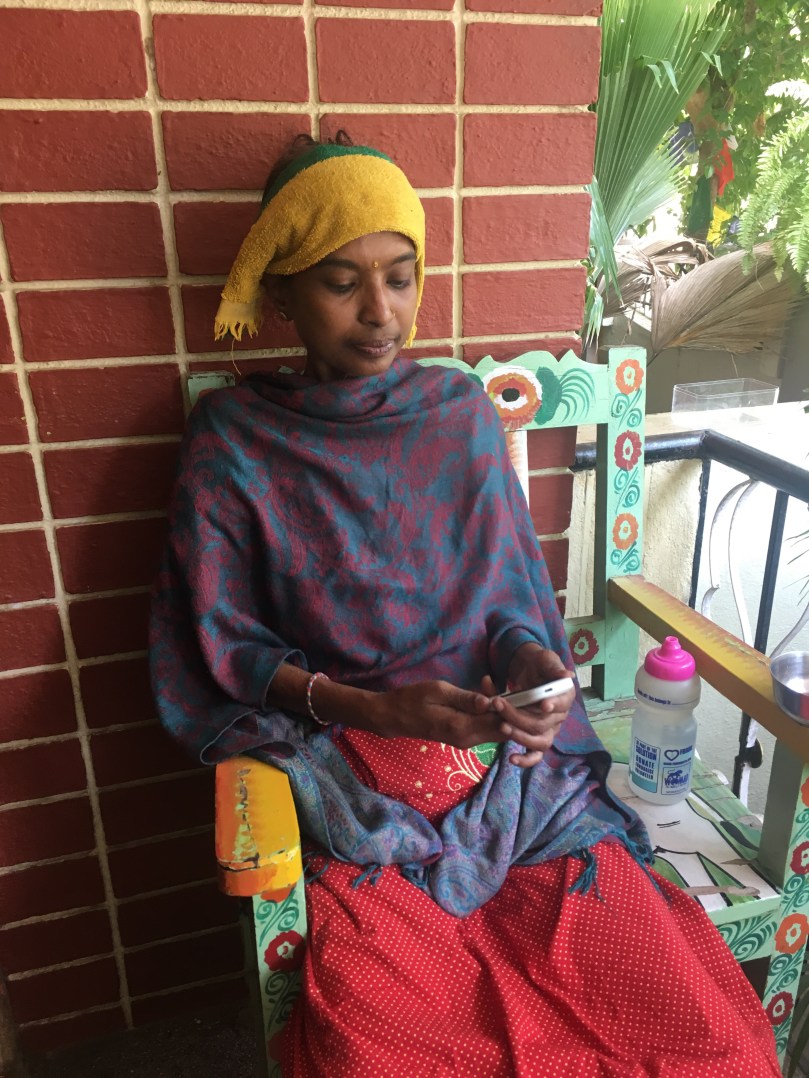
IMG_2671

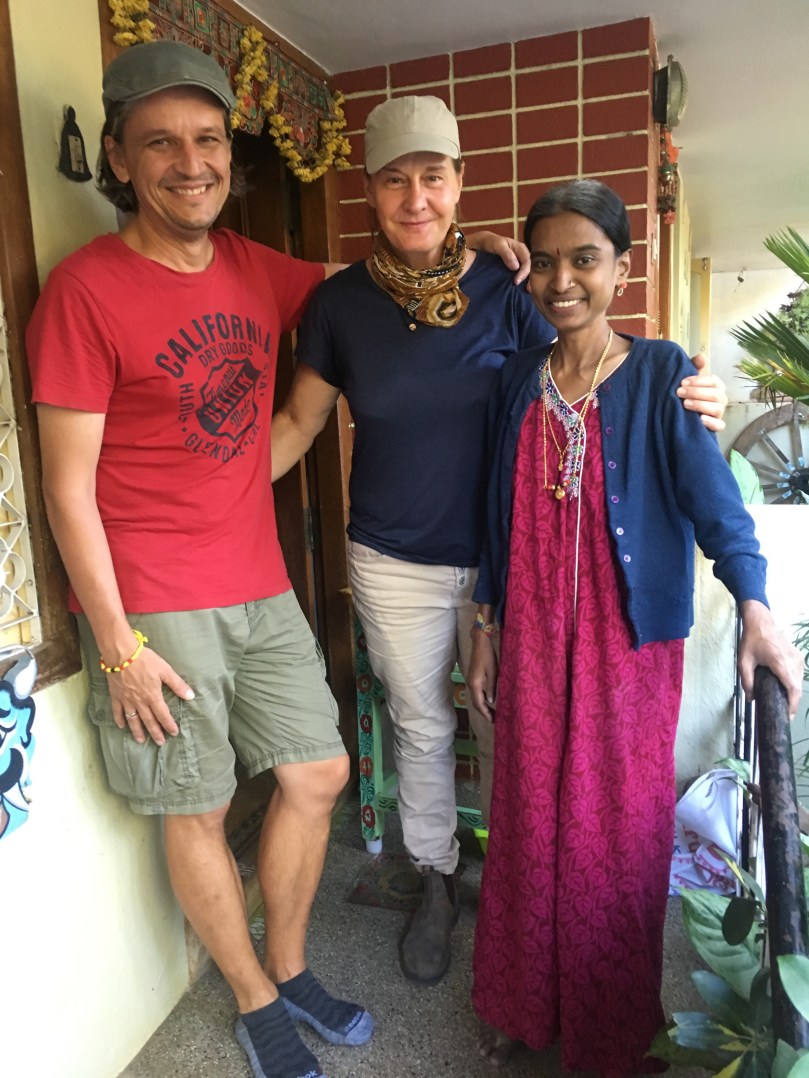
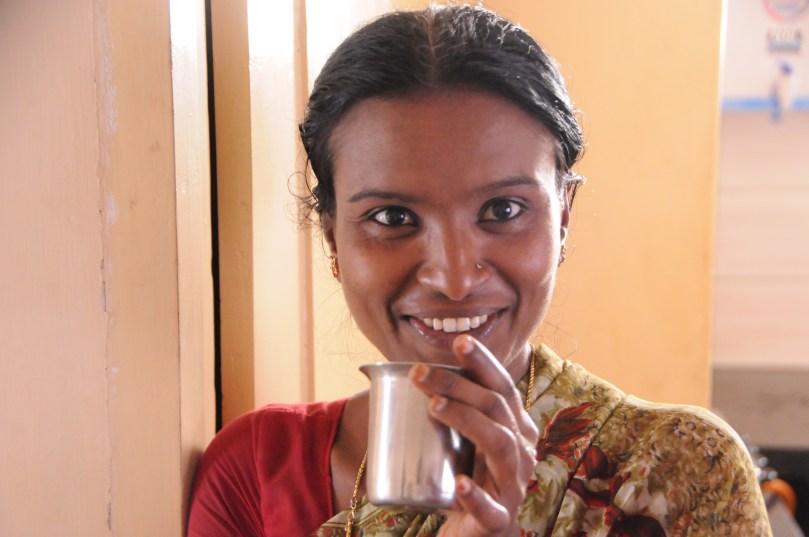
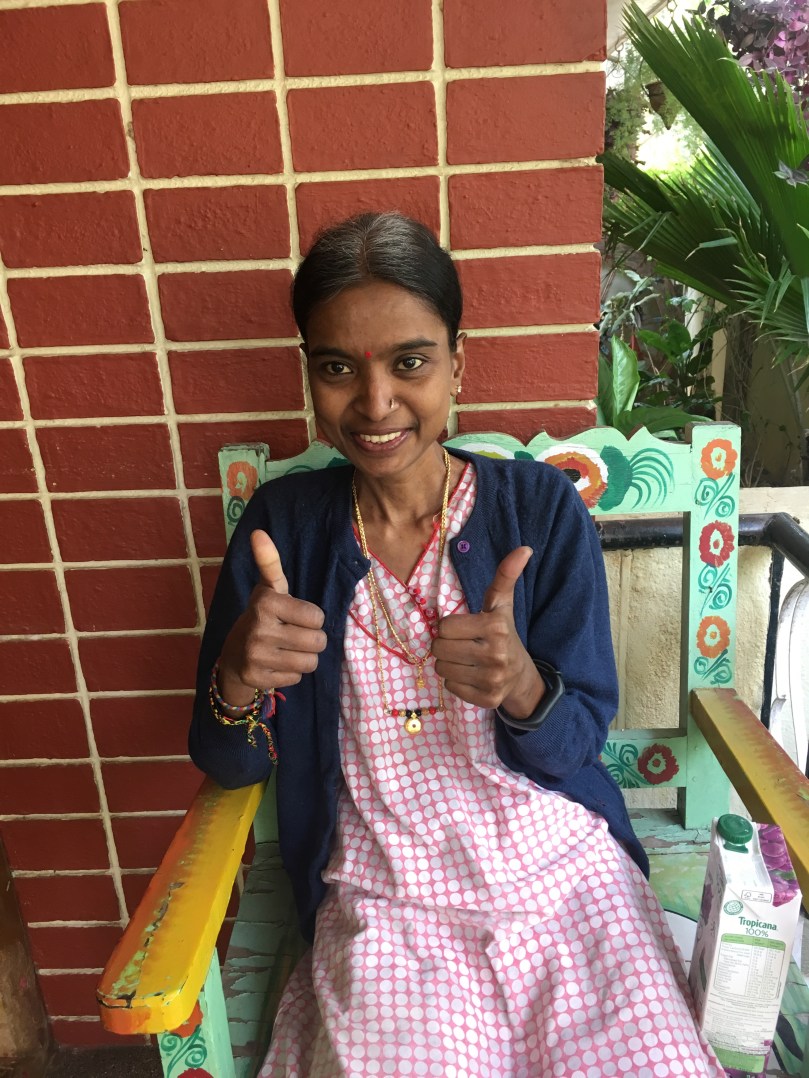
So, its probably 2010, Manjula the maid is now working for me at Moksha Marga. She’s an experenced Maid working for Indian families but what is her view of foreigners?

this quote is taken from a series of recordings made by Manjula in her own language and details an incident from before she met me and started working here….

img_0077

” I lived at my brother’s place. Once my brother’s wife and I were out to purchase something from a shop, it’s a small village, it comes after Hassan, it’s called Salgami. On our way back home we saw two foreigners, a couple, they were cycling. My brother’s wife said in astonishment, “Look how these English people are cycling in our village. I think they like to see villages.” She continued, “If you work at an English person’s house you will earn well enough, they’ll offer you good food, nice and rich food. Imagine, if I was not married, I would have worked at an English person’s house. I would have eaten the same food as they did, I would be happy and jolly. “
I said, “Ayyayappa! English person’s house? A big NO to their house. They eat insects, they eat all kinds of meat, they eat cow’s meat, pig’s meat and what not! And a few also eat insects.” I said this as I had watched in television; in a few shows which showed them eating many creatures “

P1080146
these are previous guests Simon and Fiona and we’re reliably informed that they don’t eat insects in Cheshire.

She said, “It’s not necessary that everyone eats. The ones who eat will eat and there are the ones who don’t eat at all. “
Later we reached home.

After 6 months, I came to Mysore. Look what happened with me? The same thing what my brother’s wife had said, I got a job at an Englishman’s house. I remember Stephen had asked for a maid for this house, a girl or an old lady. I was lucky to find his house and he was lucky to find me.
I was wondered thinking about all kinds of meat I might have to cook. Later I heard it from Vasanth that Stephen was looking for only vegetarian food to be cooked. “Thank God!” I was relieved.
I eat chicken, mutton and fish. I can cook them all but if it was any other meat I wouldn’t have touched it. I would have reluctantly said “NO” to cook any other meat.

Farrell Footnote

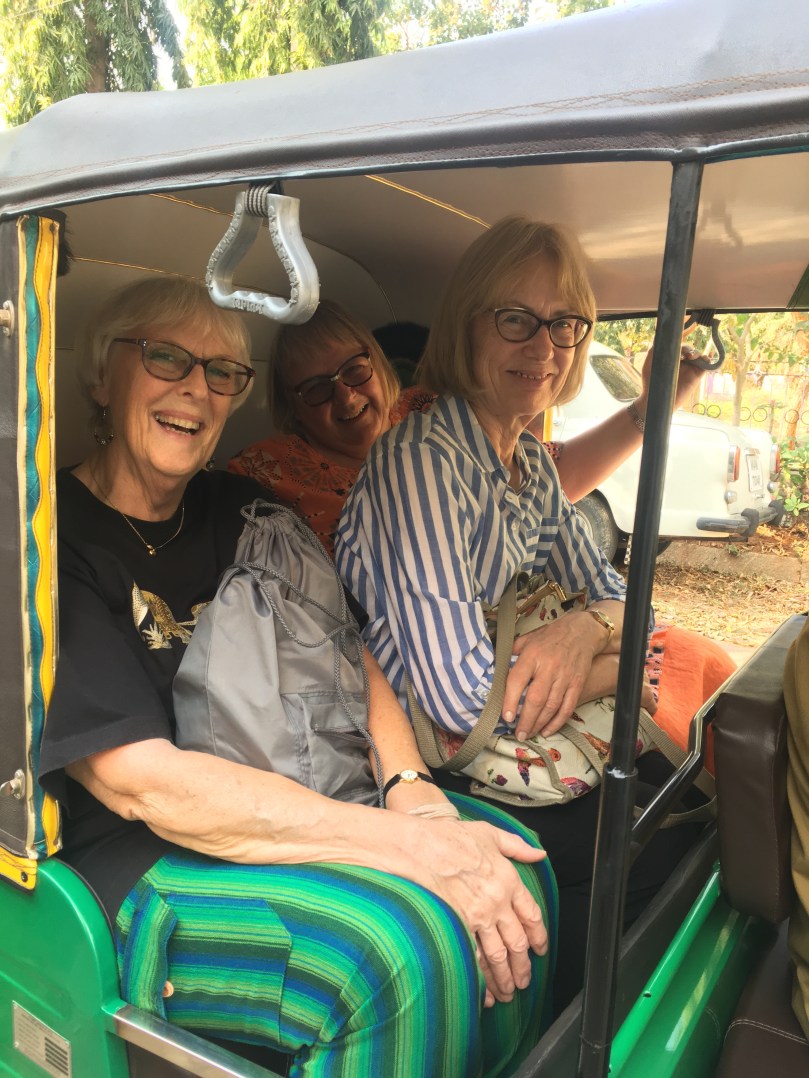
Vasanth with his trusty auto rickshaw (not its not a tuk tuk!) provides a great ‘Fare’s Fare’ service to our guests. I met him hustling for a fare when I arrived in Mysore on my very first trip after a few days in Bangalore. He’s become a great friend and an invaluable source of help and support.

Maid in India 5 plus one

img_0170we’ve had requests to provide a bit more of an explanation.

So this was over seven years ago, maybe a few months after she’d started at ‘Moksha Manor’. good old enlightenment street!  She came every day for two hours, had to make lunch and a range of other jobs for the princely sum of 1000 Rupees per month. In theory with one days holiday each week.

Starting from the top left and working clockwise in a sort of spiral. Some jobs were daily, weekly or monthly…

floor sweeping, sink cleaning,  pooja, dusting pictures, cooking, cleaning work surfaces, tables, f (special one this, looking after her skin. she was having a reaction to something, it worked out to be the sun, after a few false trails), watering flowers, cleaning toilets (yes cleaning toilets, more on that one later), being friendly to the dog, teaching me Kannada (big failure there, on my part, obviously) feeding the dog when I’m not there and bathing her, washing clothes, daily time keeping, cleaning the grills (anti crime and Monkeys) at the windows, floor cleaning, dusting and washing shelving in ‘hall’, cleaning bathroom.  Clearly this was also supposed to be fun! and there were a few other more complicated concepts such as trust 😉 believe it or not and it did take the involvement of a few friends but we even managed to discuss egalitarianism (using different words, obviously) so what had she let herself in for?

Maid in India 5

so, to explain the job. Ok we don’t speak the same language, she’s probably a little worried and intimidated, coming to work for an unknown quantity: foreigner, male, living on his own, can be a bit loud and over-energetic… so of course, I used my well developed training skills. …… and got out the whiteboard, flapped my arms and generally danced around a bit. I seriously wonder what she thought. On many occasions she shown people the photo of my drawings. Promptly followed by sniggers and giggles.

So I wonder what she really thought of working for a Firangi!

Maid in India 4

Well it’s pretty obvious it wasn’t a deal breaker. Not only did Manjula start working for me, that was almost eight years ago, she’s now taken over in more ways than one!

So what was the problem?

There was no electric mixer!

I can assure you one was bought the very next day. It’s done sterling service ever since.

The panic was actually created by the traditional method of grinding…..

Which just wouldn’t do. Manjula, as I was to find out is a very modern miss.

So, what next?

Explaining the job.

Maid in India 3

I arrived at my friend Cariappa’s house to meet the prospective maid.

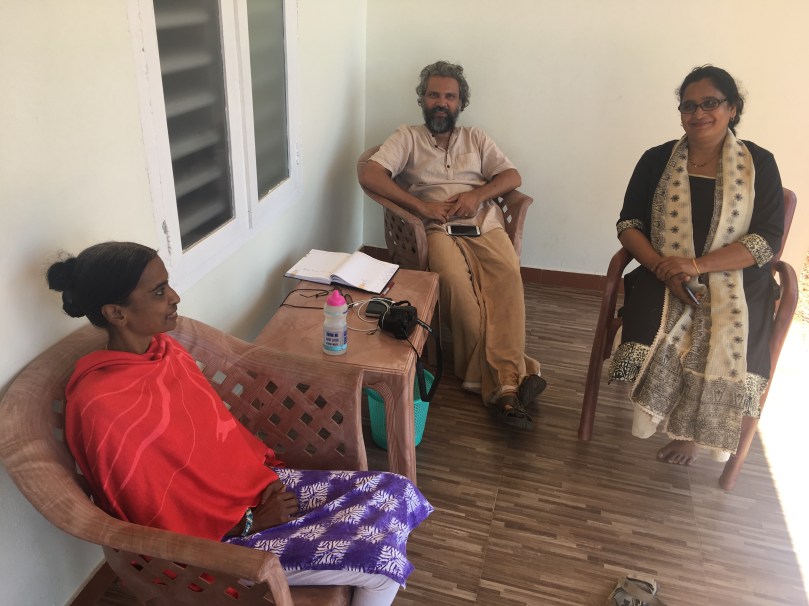
I have no photos of the meeting. I think the whole thing, for everyone involved was all too intense! We were checking each other out. How weird. Would we get on? How would we know? It’s quite an intimate thing. Inviting someone into your home to cook, clean, and look after things. This was a whole now experience for me. Manjula of course had been here before she had worked as a maid for over ten years for one family, amongst many other things. Me, I was the beginner, the intrepid explorer stepping out into the unknown.

Help!

I’d only supposed to come out to a India for a few months’ pilot. Now I was renting a house, furnishing it, employing a maid. What had happened there… A whole new adventure, in a crazy land and with so many twists and turns…. Whatever next!?

…. if only I’d known!

What would she be like? What did I want and how would I communicate it?

What would she think? (I found out later!) Working for a foreigner would be so different, maybe! It’s worth me remembering I’m from a poor background that’s shifted into the middle class and now living abroad in India.  ‘The old poor made good’ which as it turned out, is exactly the path that many in India are taking.

img_0077

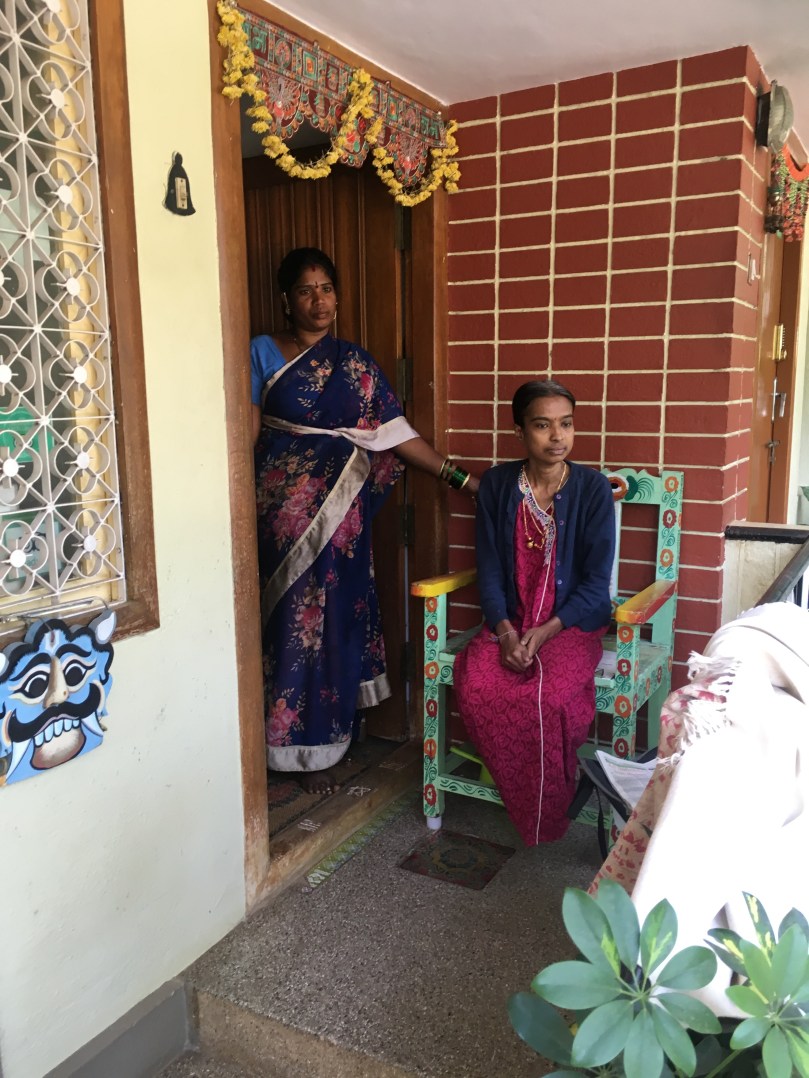
Manjula was quiet, shy, reserved. She’d brought a friend with her for moral support. Good idea! We spoke a few words with Cary and his wife Ganga helping out. I just wanted someone to cook a meal and clean. We  then walked round the corner to my house. Things seemed to be going well. They looked around the place, it seemed so big to me. There’s so much to clean but only me, honest! Just the upstairs house with three bedrooms (known locally as a 3BHK) the downstairs house came later. It was sparsely furnished with little on the walls, it’s hard to imagine what it was like ( so, so different now) but then oh no……..we hit a problem….. it was all off ……we’d found the deal breaker..

Maid in India 2

It’s almost eight years ago that I moved to India and mentioned to my grown-up sons that I was looking for a maid. They were horrified.

We’re from the UK, are quite liberal and left wing. I’m actually from a relatively poor working class background. The idea of having a servant was also way beyond the usual more acceptable (in the UK anyway) middle class practice of a cleaner.

It introduces a class dimension. It’s seen as a bit 19th century, old-fashioned, elitist and servants are employed by people who are not like us! Who see themselves a cut above the rest, or the hoi polloi , a case of upstairs/downstairs. In our world view, its all completely unacceptable.


img_7314
as you can see its a big house and I need help! Fact is, I only had the first floor eight years ago


I explained as best I could. It was important to provide employment particularly as there was no real welfare safety net in India. I was fitting in with the way things are, and my approach would be different (yep, it would be!) I would be a sensitive and caring employer.

So I asked my friends Ganga and Cariappa if they could recommend someone. The maid network came up with someone pretty quickly.

I was called round to meet someone.

img_0077

So what’s the bigger picture? once again Tripti Lahiri helps out:

“Britain saw the number of servants drop from 250,000 in 1951 to 32,000 two decades later.”

India followed a similar trajectory until that is, the 1970’s when there began a dramatic increase in the numbers of servants (we’ll come back to terminology later) employed and this is a situation reflected globally.

“According to international labour groups, as of 2010. there were more than 50 million such workers globally, an increase of nearly  20 million from 1995, most of this made up of women. There are now over 40 million female domestic workers globally.” 

So OK that’s enough with all the big numbers, what does this mean in practice for the women involved? who are they? where are they from and what lives do they lead?


Maid in India 1

Quotes taken from ‘Maid in India’ by Tripti Lahiri :


11023900603_31641bd177_o
an image from a postcard that we publish


“We eat first, they later, often out of food portioned out for them; we live in the front, they in the back; we sit on chairs and they on the floor; we drink from glasses and ceramic plates and they from ones made of steel set aside for them; we call them by their names, and they address us by titles: sir/ma’am, sahib/memsahib”


Think that’s in the past?

Well, think again.

“In today’s India its not unusual to see, often in largely empty restaurants, a couple seated with their child at a table for four, while the help is despatched to sit not one but two tables away….. or a nanny dandling a child on her lap at a nightclub while her employers and their friends drink cocktails as it creeps towards midnight, her hours of sleep dwindling since she is no doubt expected to be up and ready for another day at sunrise…. or for example children playing in a neighbourhood park, seeing a plump, light-skinned boy on a swing crook his finger at the petite darker woman standing nearby and utter a single word: Push”

Womens’ life experience is an incredible indicator of how a particular society works, from top to bottom.

In India the situation of women and particualrly those who are most socially and economically excluded, in this case, the ones that serve others, shines a spotlight on the social mores, the rules by which we operate, the structures and belief systems that helps maintain the status quo.

It also shows something else.

That is, how these women in often extraordinarily challenging circumstances not only manage but can thrive, can flourish and through that, show their astonishing abilities. In a sense, the influence they subtly exert and how they deal with the changes facing them can also demonstrate to us, on a macro level, how to deal with some of the challenges and opportunities facing contemporary India.

Let’s take a look.


The disconnected

He’s talking about coal but makes fascinating points about contemporary society, political challenges we face, how we’ve created this mess and the actions we need to take

We are, today, at the end point of a millennia-long process of disconnection. Since we first built cities and started leaving the land we have been disconnecting from nature; losing sight of it, quite literally; losing our vocabulary of it, to the extent that blackberry is no longer a fruit to be plucked and eaten but a device to tie us to our desks when we’re on the toilet.

Nature was just the beginning. While this slow severing has been going on for thousands of years, the last few centuries – the reformation, the enlightenment, the industrial revolution, and capitalism – performed the amputation.

In capitalism, we have created the first social organising principle based on selfishness, the first system to make greed, competition, non-cooperation its credo. In Thatcherism, we have the declaration that there is no such thing as society. In neoliberalism, we have a system which alienates us from each other, from our labour, from democracy; a system which declares we have great choice while turning everything into a supermarket aisle full of different but identical toothpastes; a system which insists we have great freedoms while systematically removing more and more of our capacity to have any real control or influence over, or stake in anything real in our lives.

That’s why we can have politicians actively discussing doing something which not only makes no economic sense but will actually kill people, while most of the population turns away to binge-watch the next series on Netflix.

There is only one way through this – we have to reconnect. And it’s already happening. Around Australia and the world, people are seeking out reconnection in all sorts of ways. We are starting community groups, getting involved in community gardens and food co-ops, starting childcare and health co-ops, joining sharing groups instead of buying more stuff. Instead of always doing things on our own, as disconnected individuals, we are looking for innovative ways to work together, to eat together, to live together. And, excitingly, we’re banding together to create social and political forces to be reckoned with.

Check the full article here

Top Tips

Number Two

India will change you. It’ll take you out of your comfort zone and you’ll not want to find your way back. Maybe 😉

Most people love India and it’s people, an admittedly a very small number find it a step too far.

Whatever you feel it’s unforgettable.

You just need to be aware that it will seem contradictory, and unfathomable but it’s a good thing.

It helps to find somewhere extra easy for the first few days while you find your feet.

If we’re from the west. We often wish to experience, analyse and understand. We try to place things in boxes and stick on a label. India by contrast is consistently inconsistent, so to put it mildly you need to expect the unexpected.

It can’t really be boxed. It’s important that you ‘go with the flow’ you might be the equivalent of bobbing about in the river, shooting the rapids or on the ups and downs of the rollercoaster. But whilst it’s exhilarating just follow the basic traveller rules and it’s safe with mostly helpful people that want you to love their country.

At times it can feel a bit full-on and in-your-face, so you may need to build in places to stay or find hangouts that provide some respite so you can just switch it off

There’s a great article on the BBC that might help, check:

Here

Any questions?

more Top Tips can be found on our main web site here

Contact us at Tours@mycycle.co

The lost king and queen

Once upon a time. Travellers from the north of India visited Mysore. They had an ambassador and a divan. 😉

The twits left behind their beautiful king and queen who became sad, lonely and dejected.

img_3743

They had each other but were used to living in a welcoming home, bursting with life, with lots of fairs including quite cool

Carousels, let alone that they had lots of friends (ok some were subjects, but they seem very liberal and easy going monarchs). Maybe there is another side to the story as they were left behind!


Then a joker (no not from a playing card) from a far away land happened upon them.

He was in Brexile.

img_3529

He fell in love with the couple and was saddened by their state. They were lonely without their people, a bit battered from their experiences, dejected and frankly a bit tarnished.

So he developed a cunning plan.

They were languishing in the Indira Gandhi Rashtriya Manav Sangrahalaya and the ransom for their release is hefty. So the cunning plan isn’t very cunning at all, as it’s a question of haggling. Unfortunately the joker is from England (there are a lot of jokers there) and they’re crap at negotiating. So we’ll just have to see.