New thing for Memory of Manjula

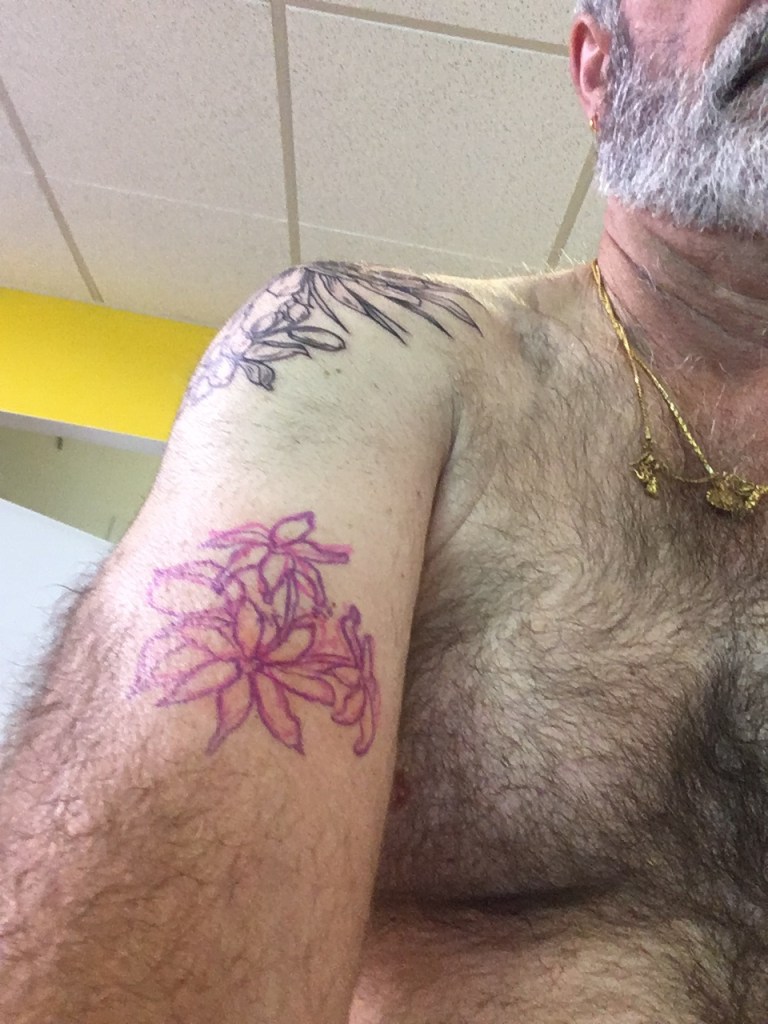
Please turn away now if you are of a nervous disposition. Alternatively you may wish not to visit our story site if you faint at the sight of blood or have strong feelings about body ‘art’.

Queen of the night, Brahma Kamal
Jasmin garland

Jasmin that grows on our terrace

Yes, that’s right. Old man gets marked again. They all have significance. Grand revealing next week!

They are Flowers that Manjula loved and celebrated.

Manjula would rush in with the beautiful smelling Jasmin fresh from our roof terrace or excitedly predict which night the Queen (check here for more info) also known in India as Brahma Kamal, would break out.

From a young age and when she first started working for me (yes SHE WAS Originally the maid) Manjula would tie garlands of Jasmin for sale by the roadsides.

Stephen with the artist the FourthCup aka Vanessa in Vancouver helping recognise fond memories

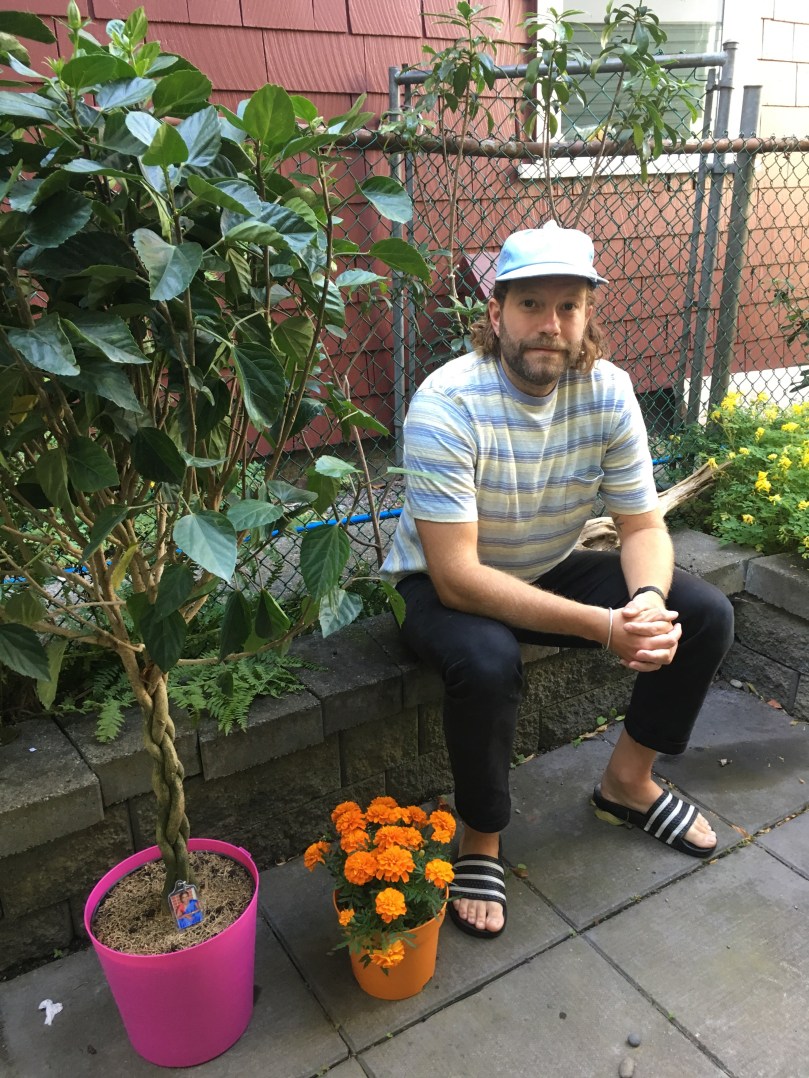
Ol, one of my wonderful sons with Hibiscus and Marigold a little example of our India flowers to leave behind in Vancouver

Jingle jangle

Son complains about jangling

I’m currently jangling as the gold and silver bangles dance along my arm. It reminds me of walking down the street with Manjula (yes absolutely everything has the potential to remind me of my star) as there was a jingle jangle of her ankle chains as we walked along. One of my wonderful Manjula Memories.

The silver bangle is temporary.

When the price is right I’ll have one to the exact specification made in gold that’s will be engraved according to a design created by my daughter-in-law who is a jewellery designer in Hatton Garden in London.

It will be a new Manjula Memory 🙂

With a little more help from our friends

can you help?

Please send a short (30 second?) audio message (video if you prefer) to make us smile, a recollection, a memory of Manjula, a joke or something else reflecting your enjoyable 🙂 time at Mysore Bed and Breakfast.

Our good friend Faizan is putting together a memory of Manjula and insights into Mysore BnB and this would be a great help.

It’s easy to do on your smart phone!

Thank you so much.

Stephen and Faizan

Please upload here

Or mail it to tadrebelproductions@gmail.com

Manjula’s watching

Steevern

I know what’s happening.

Don’t for one minute think ‘out of sight – out of mind’ or that I’m not still with you.

I am here…… and you worry me

Have you learnt nothing?

I came as your maid, then nine years later, do you know what I’m going to say?

Yes, you’d become my maid.

That doesn’t mean it’s alright to lean on me soooo much. You should also stand on your own two feet.

I taught you how to manage things. All you had to do was copy me. Now look at what’s happened. The house is in a mess, the cleaners aren’t cleaning even when they manage to turn up, and you just hang around doing nothing in particular. (reading? I’ve told you its overrated) and the list of jobs, like hanging those pictures you’ve not done, just gets longer and longer. You seem to be specialising in self-pity. Now that’s sad. I don’t know about glass half full more like empty empty.

You’re a disgrace 😉.

Please get your act together.

Above all ….. realise that I love you more than anything and will always be with you.

Our guests

Thank you …. thank you …. thank you.

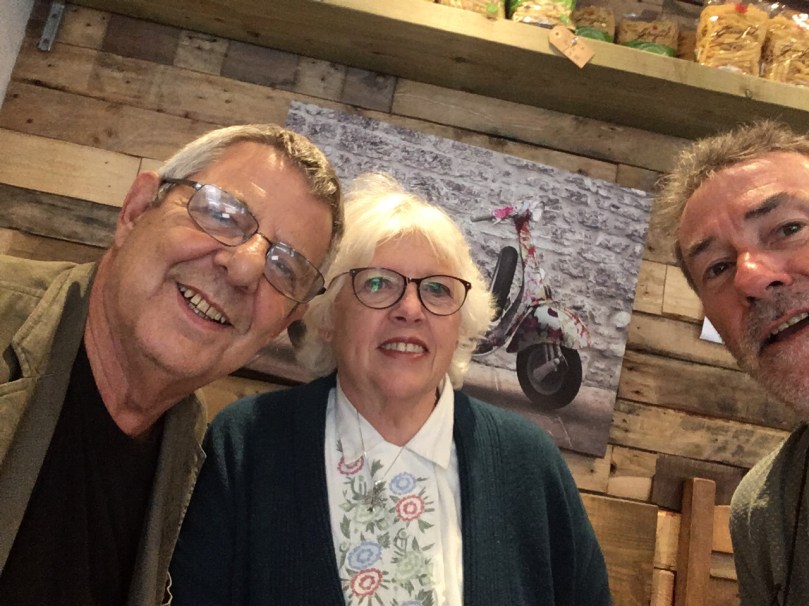
Friends, yes guests who have always become friends and all our other worldwide friends have been wonderful supporting me through email, messages, likes, you name it.

I’ve been in London less than a week, managed a days work, granddaughter sitting and met up for wonderful support from four different sets of guests. Amazing!

OK we’re English so invariably beer is involved.

Manjula more memories.

It’s eight weeks now. I’m in London and carrying with me a photograph of my beautiful Manjula.

We don’t have access to Mysore Market and it’s wonderful selection of beautiful fragrant flowers.

Manjula did however love receiving roses and the local Sainsbury’s has obliged.

Manjula is, of course, in my thoughts, every single minute but I also especially remember her by placing her photo somewhere prominent and displaying flowers on the monthly anniversary of that Saturday morning when she died.

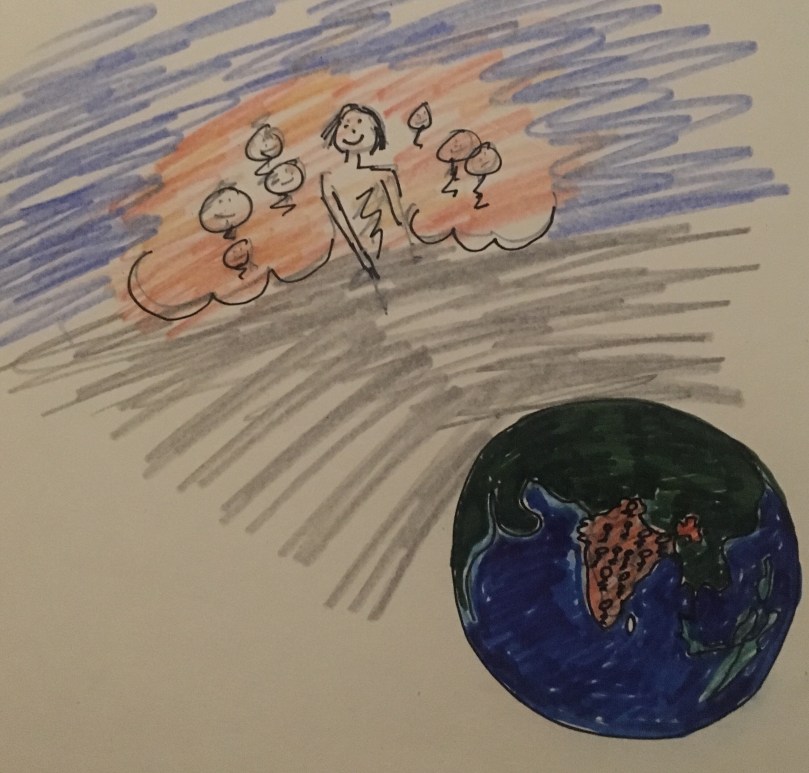
What happens after we die?

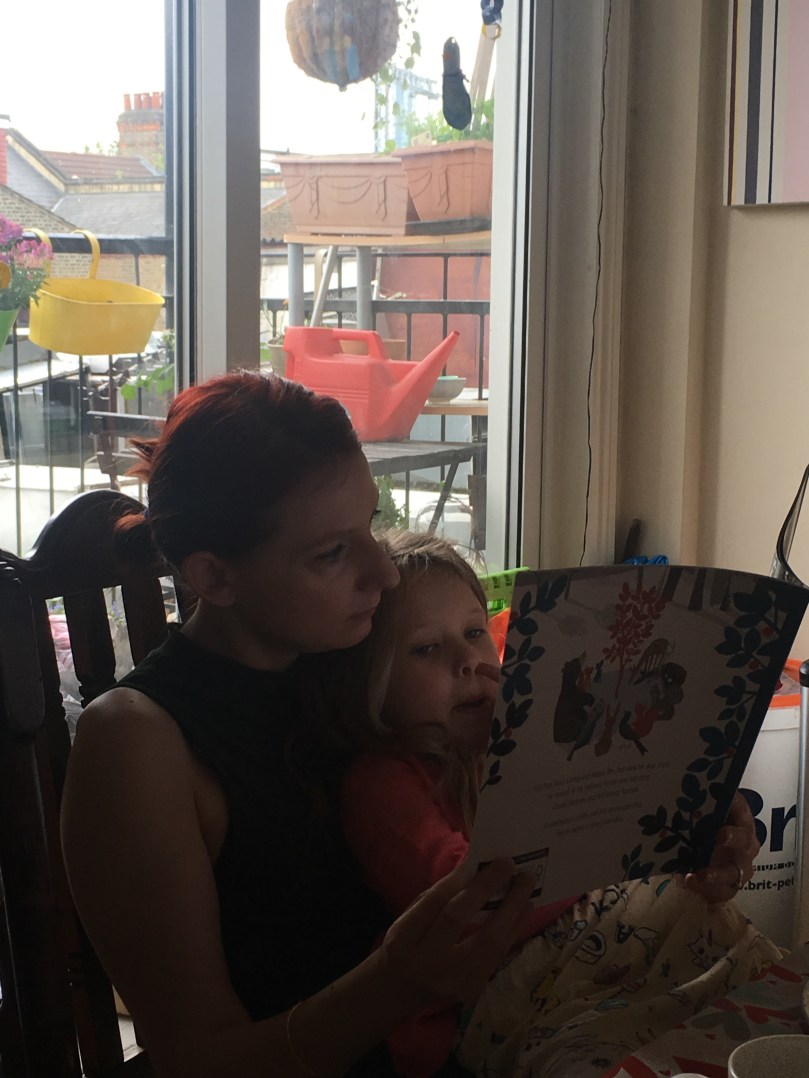
A letter to my Granddaughter Poppy.

I’m staying with her and her mum and dad.

It’s her dad Ben’s birthday.

This morning on waking Poppy gave me sweets and asked if Manjula liked them and if we could telephone her.

So she doesn’t know about what’s happened, or maybe she does and she’s looking to me for further explanation and understanding, hence this letter to be read out….. to her, which I’ve just done after supper
Manjula has died.

When people’s bodies become tired and can’t manage anymore they stop working, they die. Usually it’s when they are older, sometimes when they are younger.

It’s OK to be sad, to miss her and to cry. I do a lot of the tIme. She’s still with us in our hearts and in our minds.

We don’t know what happens to their spirit when someone dies because it’s not happened to us yet. Most of us believe part of us, usually called our spirit carries on.

Manjula (and I and lots of people in India) believe that part of us carries on and usually comes back and lives within another body. So that would mean we never really die, nobody really knows.

In India when someone’s body stops working it’s cremated and the funeral ceremonies are about helping her spirit move on….

Some people think that afterwards they hang around in a beautiful place, like a valley, where they sing, dance and have great fun.

Some believe we’ll catch up with each other again, hold hands continue to be friends and carry on.

Some people believe that butterflies or dragonflies are messengers or they find some other way to pass a message back to their loved ones.

I know Manjula’s spirit is still alive – where exactly I don’t know – maybe waiting for me, maybe waiting to be the spirit once she finds another body.

We know she was loved and gave love and we can’t ask for anything more we still love and miss her.

I know she had a happy life when we were together, she was a very good person, looked after others wherever and whenever she could. I think and believe our spirits will meet again somewhere in the future.

So it’s sad because we miss Manjula but it’s also happy because she’s left us with wonderful memories, she’s still in our hearts and her spirit lives on.

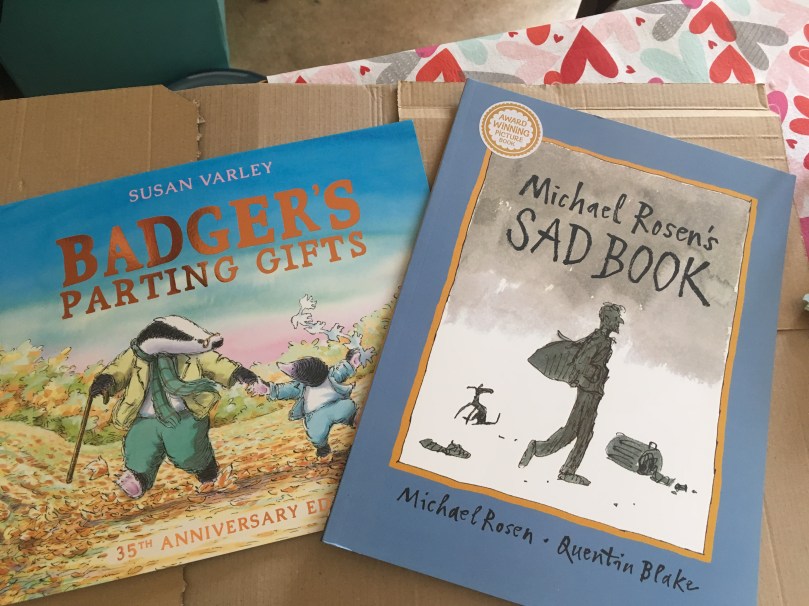
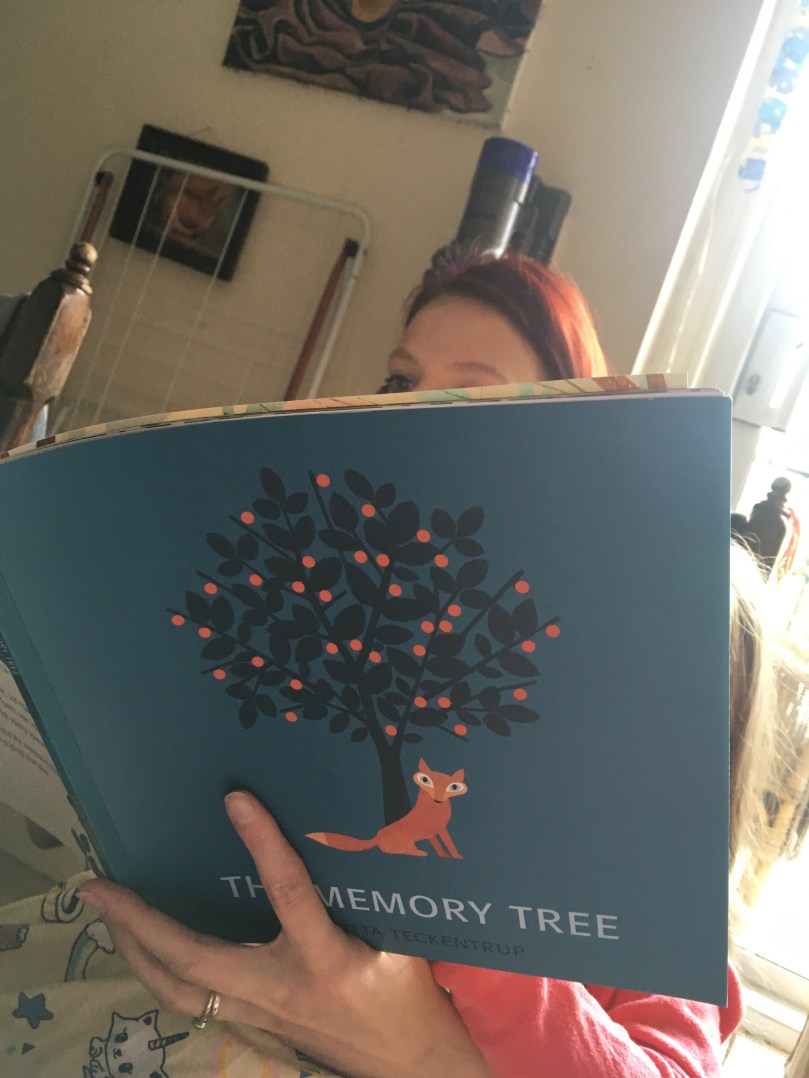
Follow this link for picture book suggestions.

Happiness is a choice you make

Great insights from older people. accepting ‘what is’ and it’s proving to be very helpful in my current situation. Loss is being human, shared by everyone. Quality of life is how we react to events not the event itself. Being thankful for everyday.

I chose Manjula and she chose me. That made us very happy for which I am very grateful.

Secrets of Happiness from the Oldest of the Old

A journalist spent a year following six people 85 and older. He found life lessons for all ages.

From The Guardian

 Mary Kane

Photo by Getty Images

Many of us worry about what our lives will be like in our final years. But after spending a year following six people ages 85 and older, The New York Times reporter John Leland came to some surprising conclusions about old age and contentment later in life. His work inspired his book, Happiness Is a Choice You Make: Lessons From a Year Among the Oldest Old (Sarah Crichton Books, $16), which comes out in paperback in January. In this lightly edited conversation with Associate Editor Mary Kane, Leland talks about applying the wisdom of the oldest old to our lives at any age.

You write, “If you want to be happy, think like an older person.” Can you explain how that works?

We know from a lot of research that older people are more content with their lives than younger people are. Thinking like an older person is thinking about resilience and focusing on what is as opposed to what is not. Accepting your mortality by not being so afraid of it. When you are older, you view the time horizons in front of you differently. You understand the days are finite, and we might as well enjoy the ones we have left. The big lesson for me, the really practical one, is waking up in the morning and saying, “Thank God for another day.” It’s the conscious practice of gratitude.

Can you explain what you call “selective forgetting”?

We do forget the horrible things in our lives to a great extent but not entirely. The traumas of our lives stay with us. But we’re constantly writing the stories of our lives, and there are lots of things we’re filtering out. Usually our stories are about the positive things. That flu that almost killed you—you forget about how miserable you were. You just remember that it didn’t kill you. That friend you made when you were 14—that’s something you remember.

[The people I interviewed] saw loss as part of what it is to be human. It doesn’t make loss any more fun. But you’re not being singled out for punishment. You’re sharing that same experience with every other person that’s ever lived.

What do you mean when you say happiness is a choice?

You come to understand that the quality of our lives isn’t based in the events of our lives. It’s really in the reaction to the events in our lives. That’s a really useful thing, to realize “I don’t have control over some of the events in my life, like the weather, but I actively have a say in how I respond to the weather.” The title of the book is Happiness Is a Choice You Make, but the key word isn’t happiness. It’s choice. It’s declaring that you won’t be defined or determined by the circumstances of your life. You have a say in this. That declaration is liberating. That liberation is happiness. Happiness isn’t just the thing you choose; it’s the act of choosing it that makes you happy.

You talk about the essence of what you learned: “to shut down the noise and fears and desires that buffet our days and think about how amazing, really amazing, life is.” Can we all do this?

There are things we can do to change our ways of thinking and improve the quality of our lives. I’m not talking about depression, which is a serious illness that kills people and needs to be treated. But you can be focusing on what is, not what you don’t have and what you’re missing. Optimism doesn’t mean the future is going to necessarily be better. It means seeing that the present is better.

We are so detached from the oldest old, in a way previous generations were not. How can we address that?

We think of old age as some sort of place to visit—and not a pleasant place. But just spending time with the old is sometimes all we can do, and the most important thing we can do. Give older people a chance to talk. Find out what they care about, and what’s important to them. Older people aren’t being asked about what they need. They are being told what they need by people who have never been old.

This article was written with the support of a journalism fellowship from the Gerontological Society of America, Journalists Network on Generations and Silver Century Foundation.

This post originally appeared on Kiplinger and was published December 31, 2018. This article is republished here without permission.