Critical management.

I’ve tried to help people become active participants in the decisions affecting them throughout my life.

I’ve worked to develop and improve their organisations as facilitator and manager since the early 80s.

Initially this was in NGOs and government but later in my career i was guide: consultant and trainer working with MNCs (multi-national companies) and by developing partnerships.

Occasionally, here I’ll post opinion pieces and insights from my experiences. These are for anyone but particularly young people and especially members of our reflective space group here in Mysore.

Here’s the latest.

Dancing Elephants about personal and organisational change

Management styles: whimsical

Management Styles: Banyan Tree

More subjects will follow about innovation, motivation, developmental stages of an organisation, responsible business, thinking…

blah blah blah

..

Uncanny coincidence.

With dancing elephants we introduced an award scheme. Years later we found an incredible coincidence.

Sometimes things were meant to be.

….

Manjula’s Library

There’s a great range of books including those on learning, management, history, philosophy and education in Manjula’s library at our house aka Mysore Bed and Breakfast. My favourites are the children’s picture books which are of course for all ages!

….

My MPhil was a research degree in Critical Management undertaken at Lancaster University in the 1990s

In my studies and practice, I focused on human behaviour in different contexts. When I reached my 60s, I realised I’ll never understand human behaviour 🤪

I’ve helped develop hundreds of projects over the years. As a facilitator no one probably associates them with me.

I’m satisfied with that.

Stephen

Awards

Everyone who visits Mysore Bed and Breakfast deserves an award, partly because they’ve tolerated me and also missed MAnjula.

Some people go above and beyond such as …

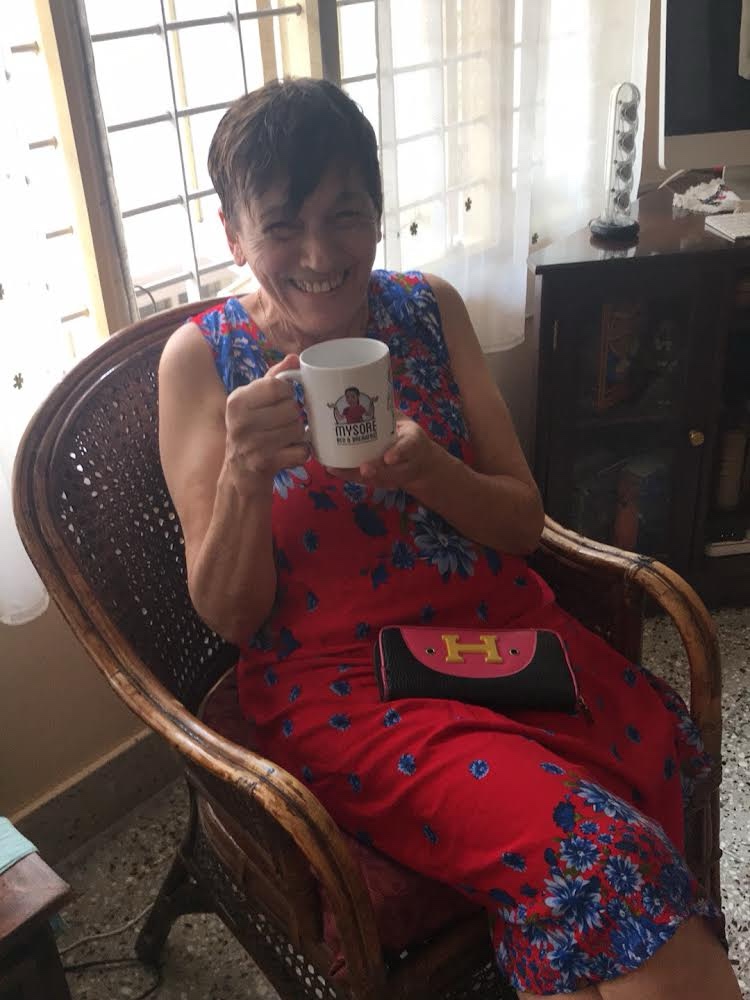
Ina visited every year and became our biggest and closest friend. Here she’s sharing memories about MAnjula.

Her award is for constantly reminding me of the wonderfulness of MAnjula, visiting us each year and being a solid support after ‘losing’ MAnjula.

Please meet Ina

Tom and Amy, also became wonderful supportive friends being part of our life, through many visits and helping me in so many ways including at short notice, visiting to support me after MAnjula died.

To MAnjula for filling up my life.

She adapted the ‘glass half full’ saying to full full.

Florian a good friend who recently returned to Mysore from Germany for some bizarre reason has read the blog site. He’s commended for fighting his way through that jungle.

Scary

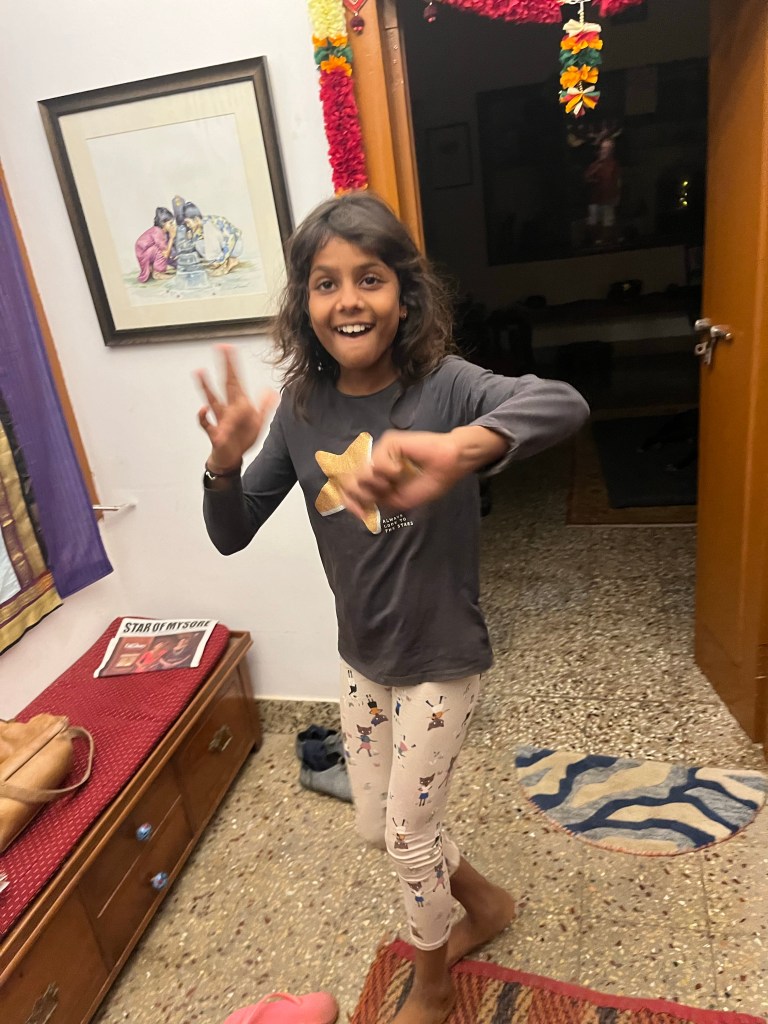
Kaveri for being my adopted granddaughter who miraculously popped into my life and with her fab character reminds me so much of MAnjula. She could have been our daughter. Here’s a video taken shortly after we met.

… and a thank you to the many people who’ve found us via the net and just said hello in the street, at a hotel, or visited us, particularly those who attend our reflective space event or come to stay in our home.

We couldn’t, of course, forget Lucie and Billet-Doux.

or Sowbaghya (aka SB) who

manages everything

Seen here with Ina

The very first reward was given fourteen years ago and still hangs in Manjula’s Library.

The T shirt was a later addition after I knew we’d fallen in love

Hanging out Srirangapatnam

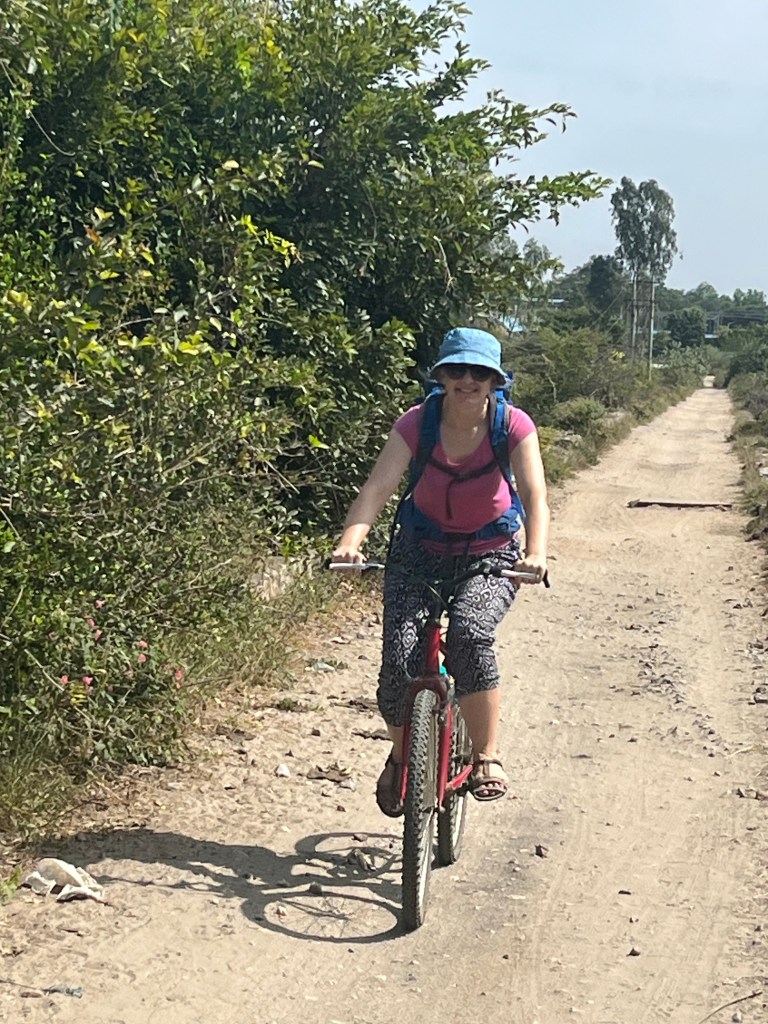
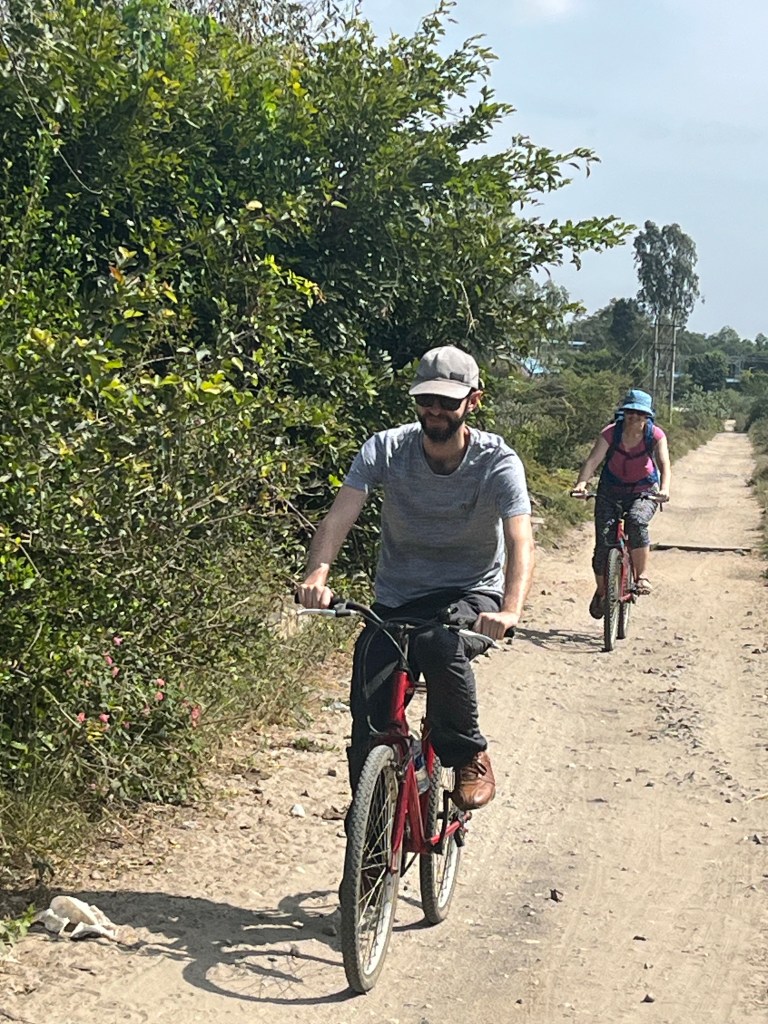
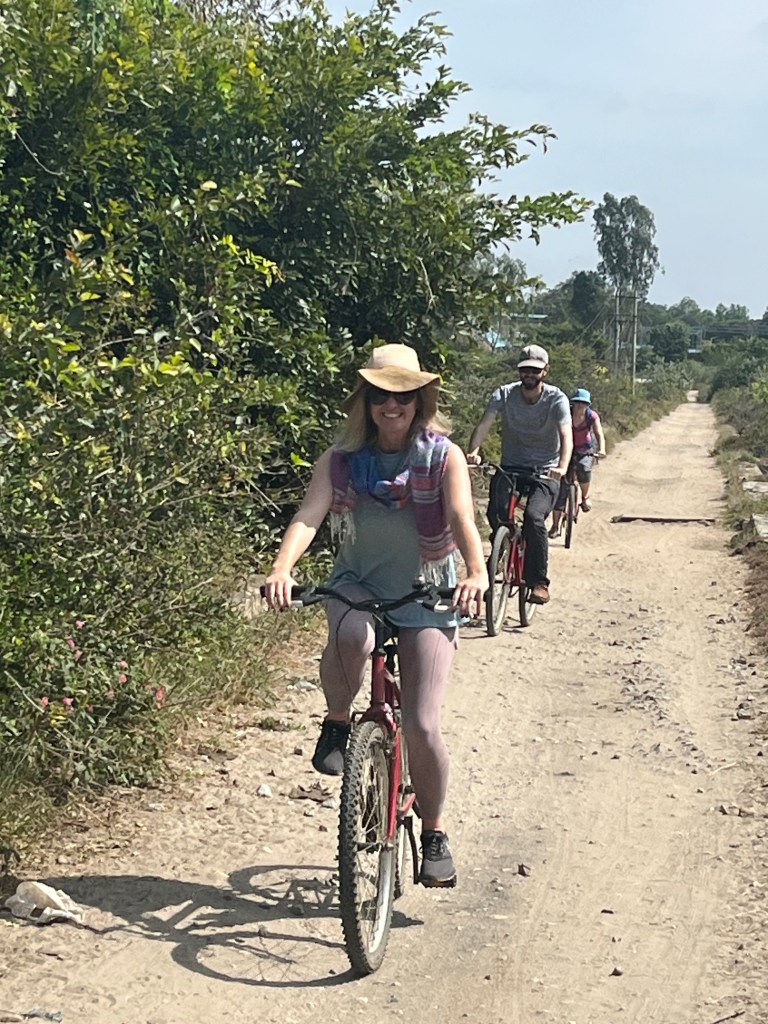
Here to prep the cycles for a student tour in two days.

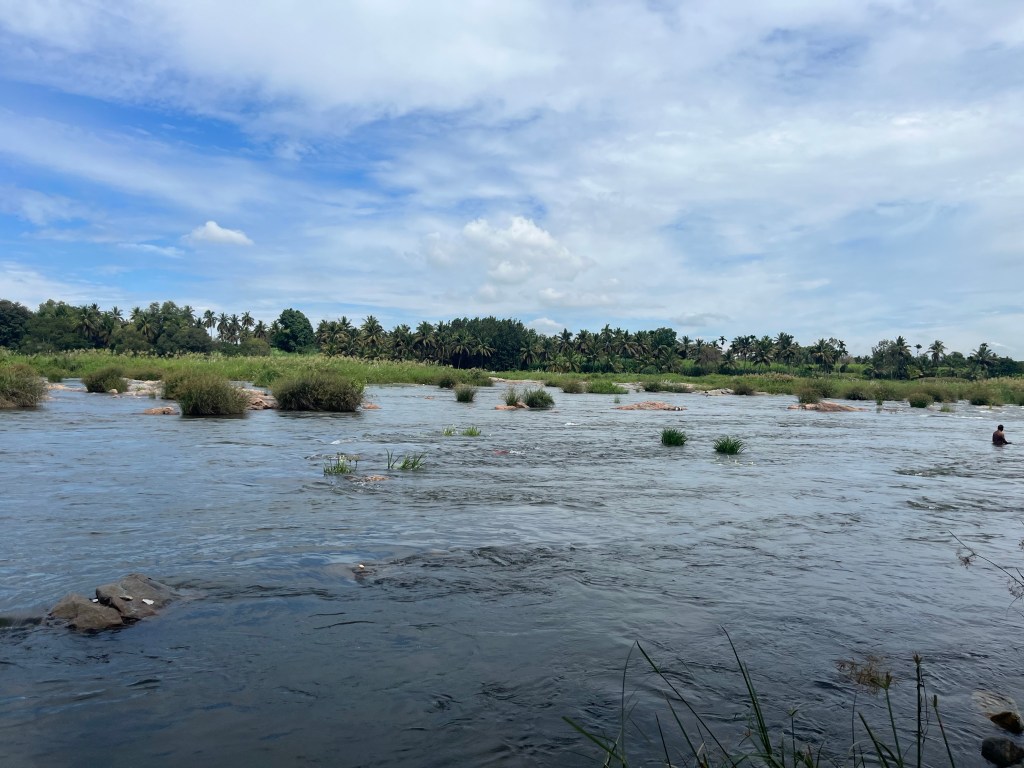
I’m now sitting on the most unusual steps by the bathing ghats, which are featured on our Srirangaptnam tour.

With various characters walking by

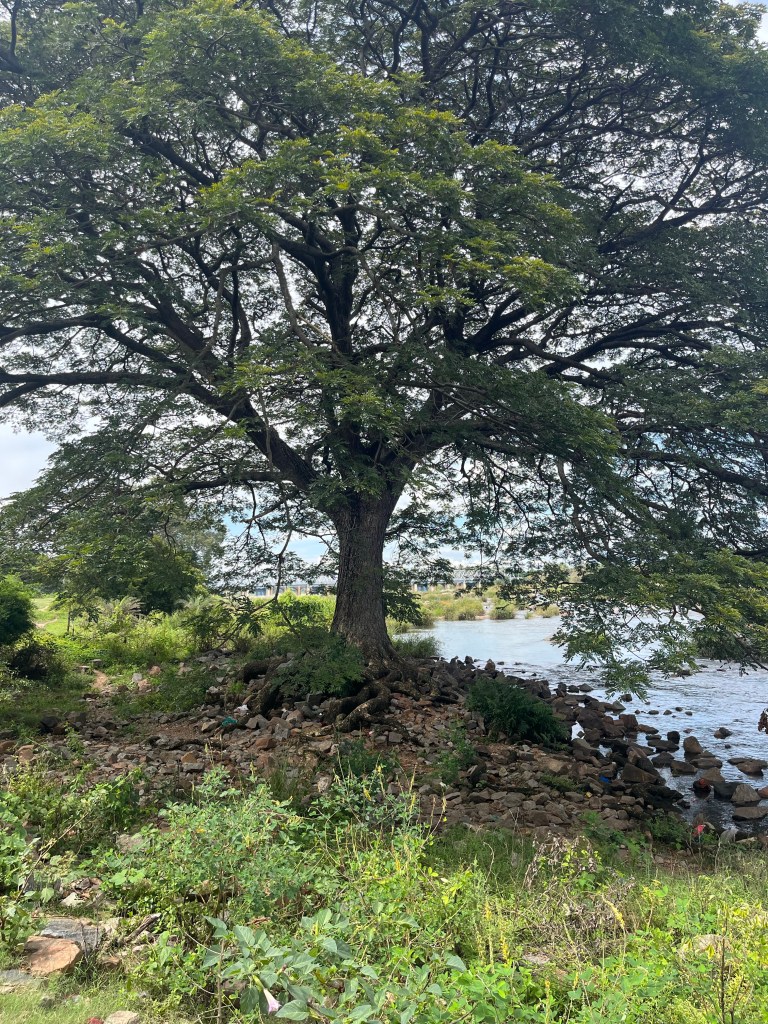
I was previously innocently sitting at the bottom of the tree.

A wanderer asked where I was from and then … am I a bachelor. No reward for guessing what that means. I’m married whilst pointing to manjula’s tattoo.
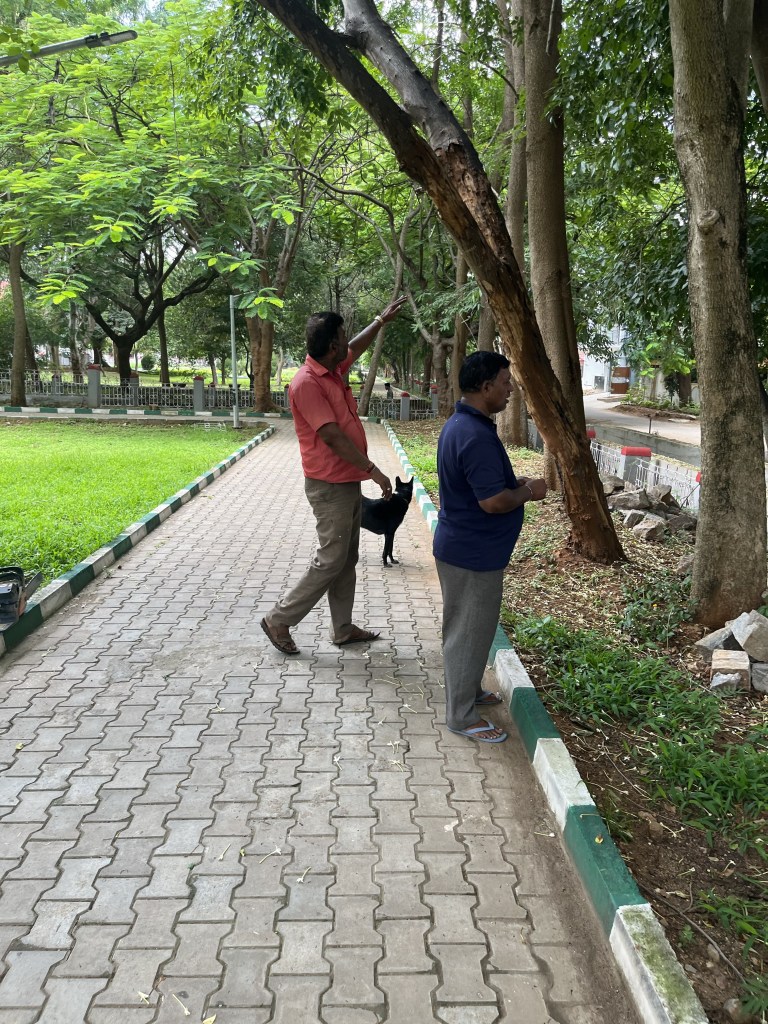
Useful.

I’m appreciating wonderful views, whilst trying to ignore, in both locations, the wafting aroma of the evidence of defecating in the outdoors.

The juxtaposition of India.

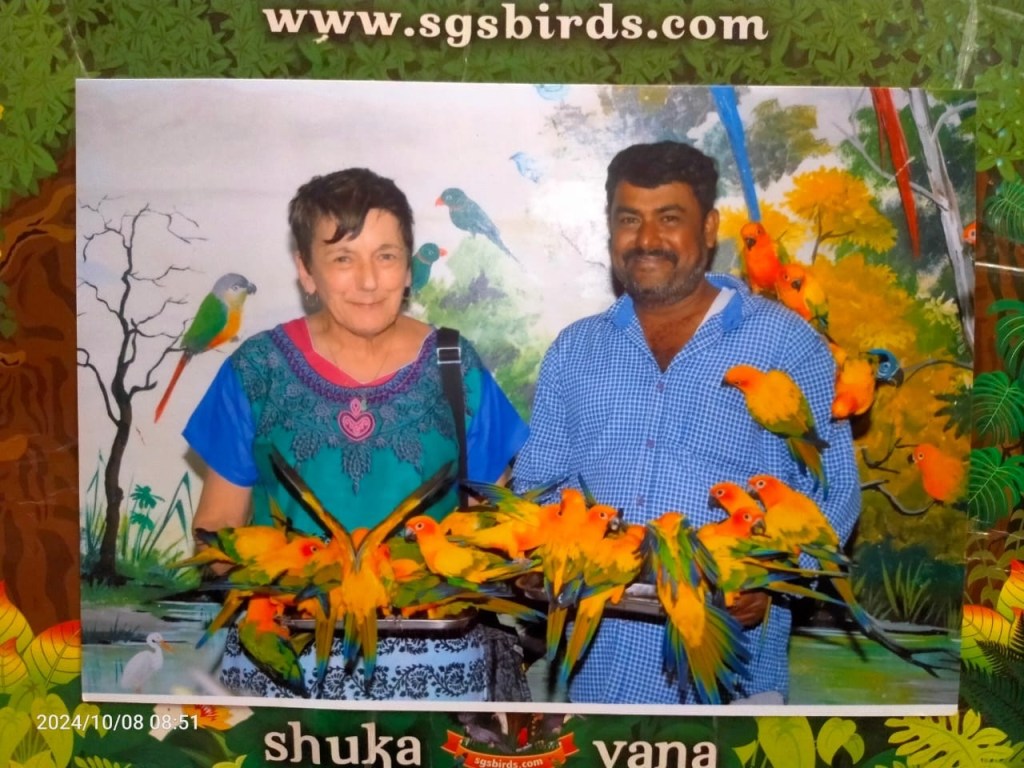
We had a great tour last week, Brits, birds (they’re twitchers) and not especially smelly

Butchers 2

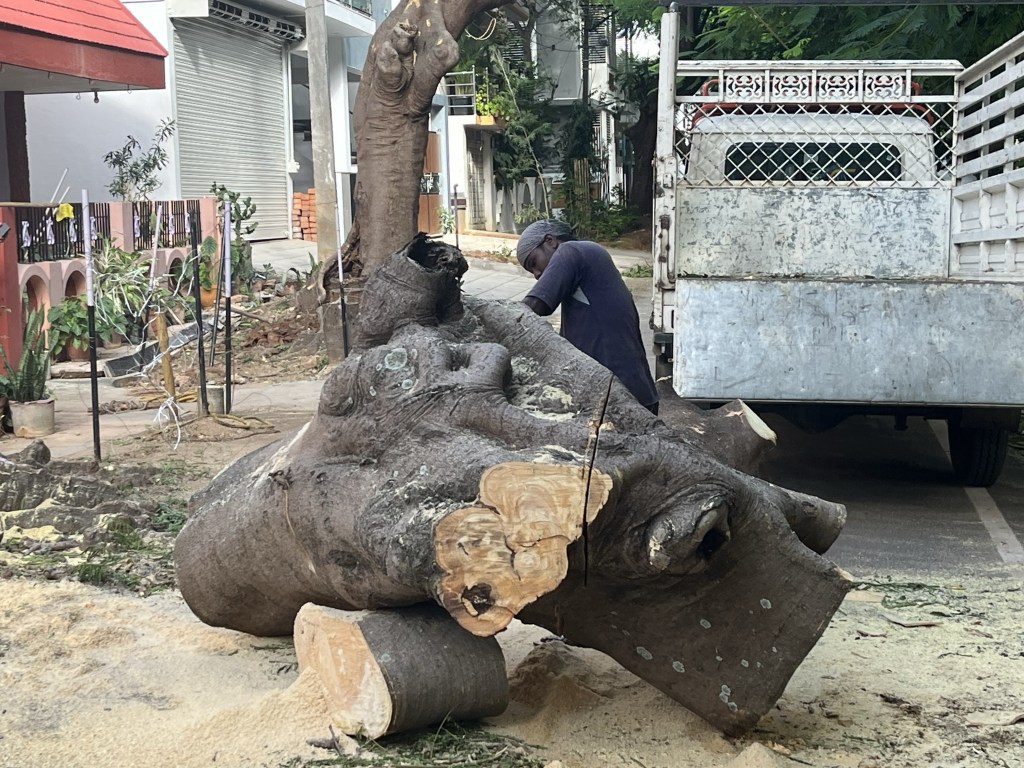
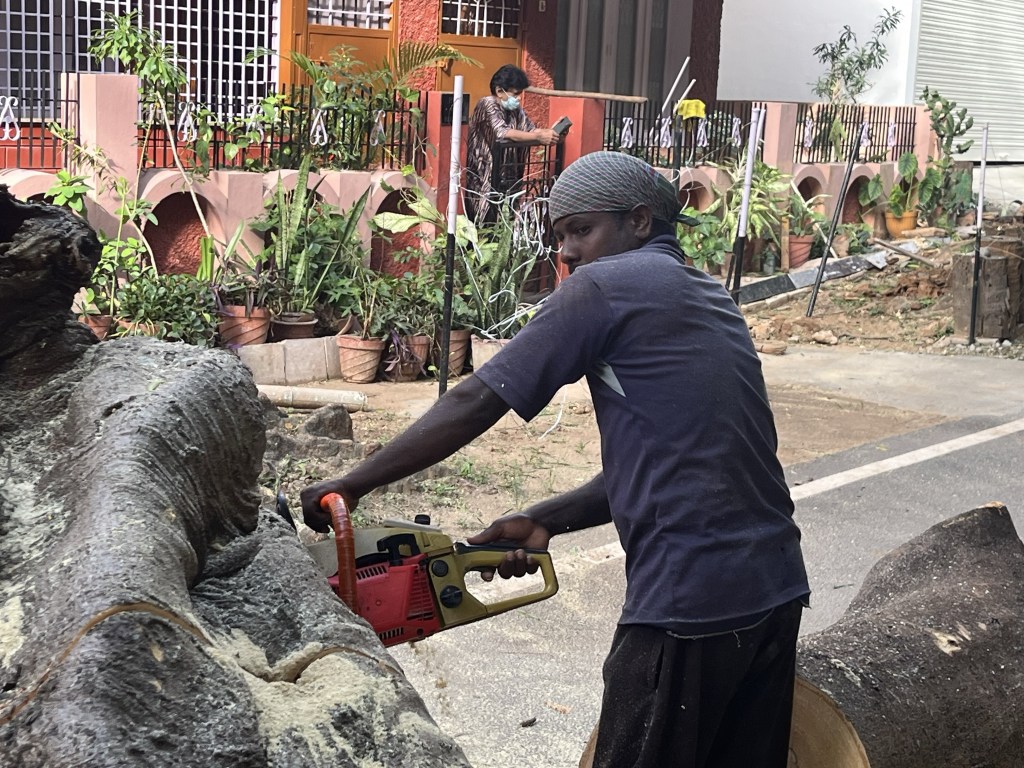
Another tree bites the dust without any heavy rain or wind but it’s the one next to it they were proposing to cut down

Part one here.

Here’s evidence, if we needed it:

1 the current team failed to spot which tree would fall next, their approach is random

2 in any case, it’s difficult to predict which trees will fall but it’s impossible without some expertise

3 we need some expert knowledge, supervision and accountability to target which trees are fundamentally weak and stop the unnecessary felling of trees

I have no idea where the railing is there. It’s not managed.

Butchers

Unnecessary butchering of trees

Three trees chopped down in little over a day.

One tree fell because of a rain storm so they’re concerned more will fall. it’s important to protect people but let’s get the balance right and check with those we can trust, who know what’s best.

Only cut when and where it’s necessary.

Staff shouldn’t be given tree rein.
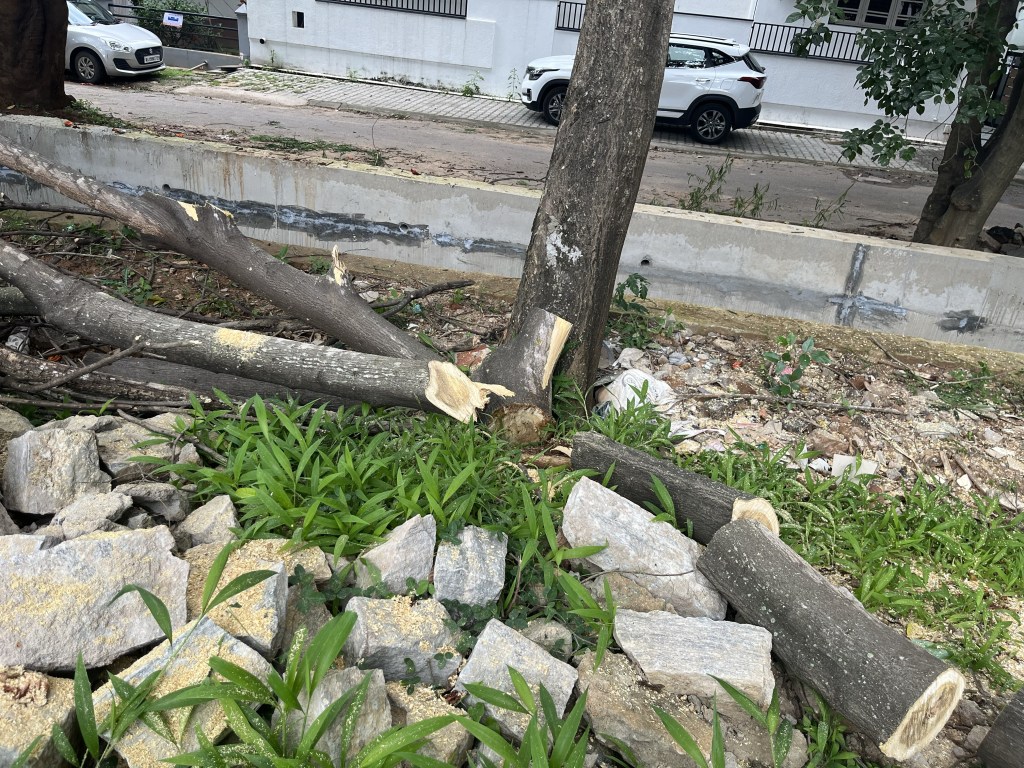
I failed to save at least one tree that didn’t need to be cut.

I’ve been advised that there’s no need to chop down the trees. Just trim the branches and reduce the ‘crown.’ So it doesn’t get waterlogged and top heavy when it rains, then it’s less likely to break and fall over .

I’ve seen a small chain saw at the end of a stick that’s ideal for the job.

It needs someone with the relevant skills and authority to take charge.

Do we care? Who is accountable? How do we stop it happening again?

I like this quote

Never imagined I’d be sitting in my lounge in Mysore quoting Shakespeare. It’s from Measure for Measure.

“Our doubts are traitors

And make us lose the good we oft might win

By fearing to attempt”

I’ve lifted it from a book by Rafe Esquith ( Teach like your hair’s on fire ) one of the wonderful books I’m reading about education. Some are analytical or like Rafes: stories of innovations to help motivate children to learn.

I’m certain many of us can recall examples of how our doubts or fears have stopped us making decisions or taking action. All of us hopefully will remember when we did have the courage of our convictions and acted successfully.

I often remember when I first started working in local government in the U.K. I thought it idiotic and time-wasting that certain powers hadn’t been delegated to officers (from the politicians : councillors/corporators). We would go to formal committee for what, to me, seemed small decisions. My senior colleagues ridiculed the idea. We’ve tried that before laddie (it was Yorkshire but I was 30!) 🤔 I did it and I got it. Result. 😛

The doubts and doubters didn’t win over.

Grumpy old man

One of my first clients as a student social worker was an old man.

He was seriously grumpy

We would joke about where grumpiness came from.

Was it inherent in the person? Was it learned through experience? Did it arrive with old age?

I now know the answer.

It’s all three

The key factor though is we can choose to be grumpy or not.

I was more grumpy, especially over the past few years, now I’m a bit less.

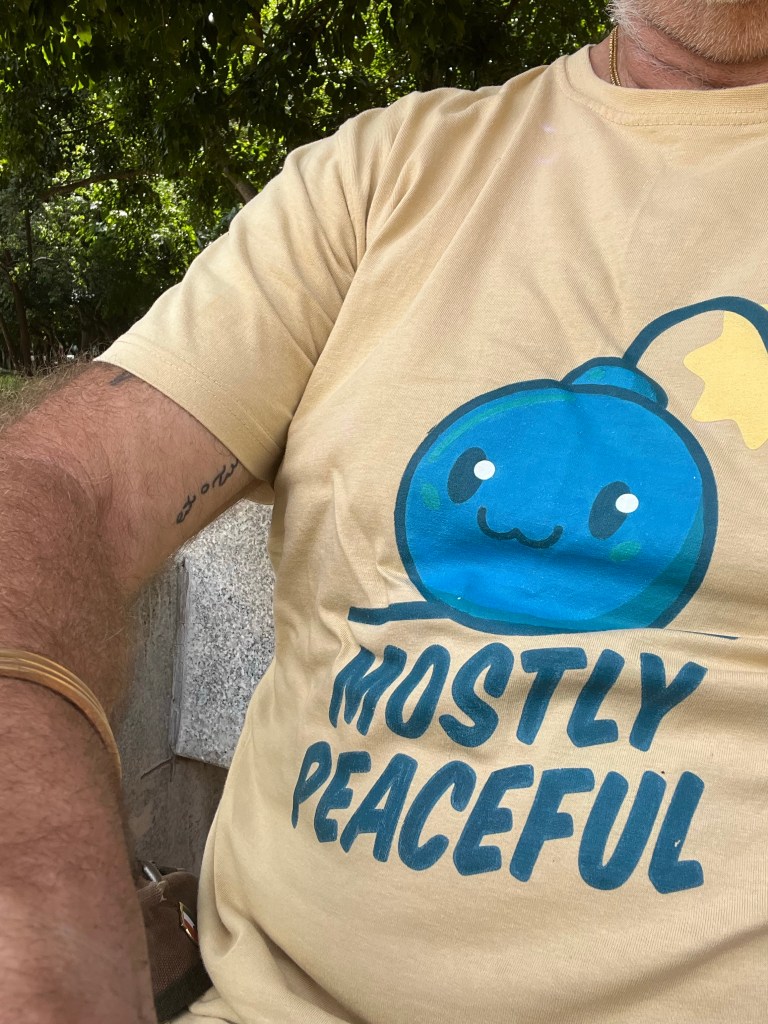
and I’ve not got the T shirt.

Footnote

As I can’t stop talking, writing, wording….

One flavour of grumpy is anger and I realise it’s derived from being sad. Another is post trauma and the impact it has.

Visit Manjula’s library there’s lots to discover that might help.

Me, I’m still working on it.

But I do have this one.

Outta here.

As we know—— Travel brings so many benefits—- broadening horizons, being challenged, learning outside our comfort zones, time for reflection, meeting new people….. blah blah

One overriding lesson, is from comparing and contrasting the two countries. I now know India is way ahead in so many ways.

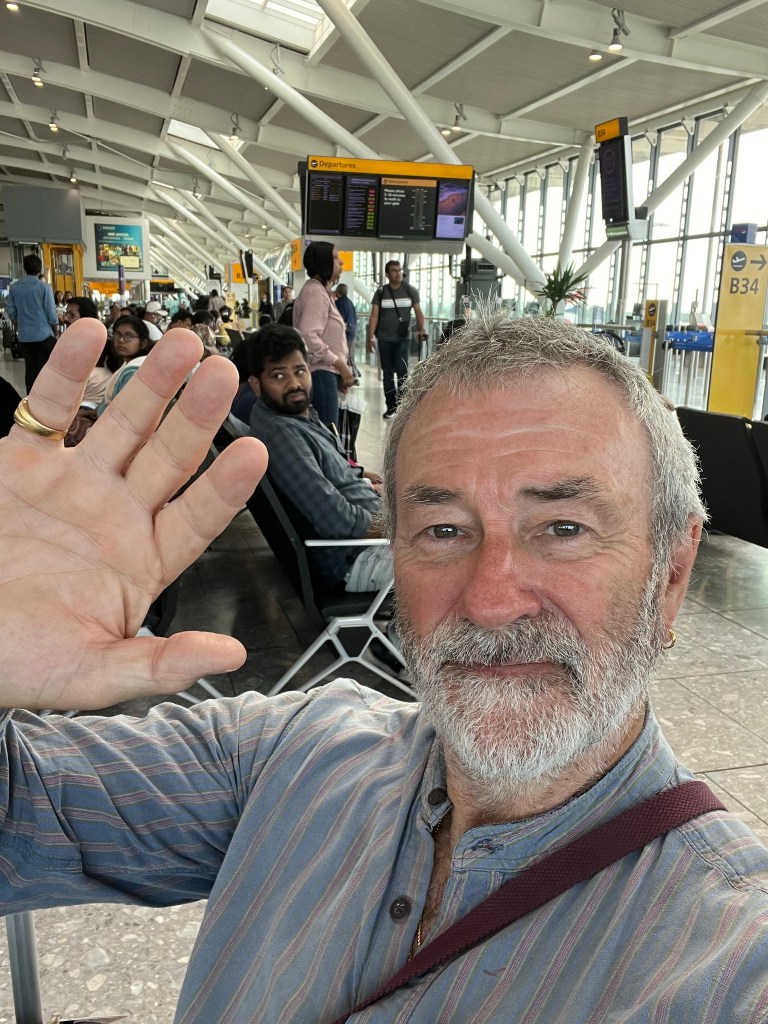
At the airport as I await my flight, there’s women in sarees, and shalwa but just one man (me) in Kurta.

As Indian kids would say Hi-Bye.

Grief and grieving

I have to say something about this….. but I’m not ready to yet, beyond the following…

… I’ve just had helpful discussions with my sons. It’s critical to be heard.

Other friends have fedback that they’ve recently seen a real difference in me.

“Grief is not one thing, and it is not linear. It looks and feels different for everyone, and it can hit you at any point – even months or years after the fact.” From this article in the Guardian Newspaper.

In my view it keeps coming in waves.

The Guardian feature writer Emine Saner reports on the acceptance of grief as a medical condition

I don’t recognise this, but as I say — it’s different for everyone.

There is the risk of ‘pathologising” ie to ‘label’ things unhelpfully and somehow blame the individual.

But back to the first point, I believe grief after we lose someone is always with us, as I’ve said before it’s a new life-long-friend that we have to learn to live with for the rest of our lives.

We don’t get over it, yes it changes particularly through the process of grieving but it remains with us.

I say again .. we don’t ‘get over it’ and such statements can be at the very least unhelpful.

I understand however that there are some situations when the raw roughness of grief can be absolutely debilitating. At times it has been for me.

I have however valued the opportunity to share my feelings online and directly with friends. To celebrate Manjula and shout about her from the virtual treetops. That helped.

To reiterate … the bottom line is that this situation is unique for everyone and we all deal with it differently.

and … It never goes away.

More later.

Teenage work

Reading an article and it’s photographs are flashing me back to work in the 1970s while still at school and later, the gap year before attending university.

I worked in a different location to the one featured in the article but similar situations in the steel city of Sheffield.

One crazy job, from age 17, was when the electric arc furnaces — creating steel — were switched off for the weekend. We’d climb on top of cranes that tipped scrap into the furnace then carried molten steel to be poured into giant moulds.

We’d clip our safety harness on to the structure, then walk along narrow gantries to brush the dust that had accumulated during the week, shovel it into bags to be carried down.

Here’s a photo of a similar crane in the Turbine Hall of the Tate Art gallery in London, formerly a power station.

It’s probably ten metres long and rests on tracks along each wall. The equivalent in the steel works was many (five?) times larger.

It was still really hot, even though the furnace was shut-down and always dusty. By the end of the shift, the dust had worked it’s way through two layers of protective clothing and ingrained into our skin. With sooty faces and light patches (Hanuman style) around our mouth and nose showing the masks did have some protective effect.

Footnote.

It provided insights into how others live that I value to this day. Men and women often working twelve hours, sometimes seven days a week.

It was my first opportunity to supervise a small team.