
The elitism and prejudice knew no bounds.
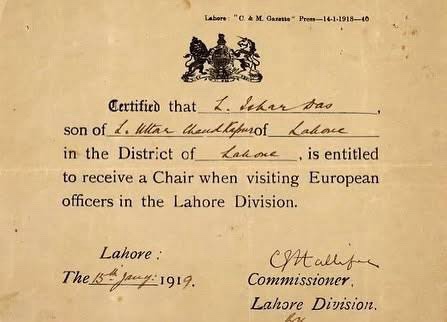
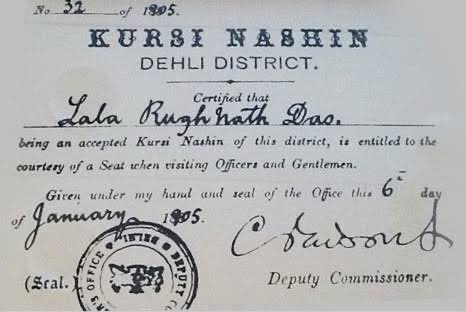
The “Kursi Nashin” (chair-sitter) certificate was a discriminatory 19th-century British Indian permit allowing select Indians the privilege of sitting on a chair in the presence of British officials.
These official certificates maintained rigid, racialized, and social hierarchies, forcing most Indians to stand or sit on the floor, thus treating them as inferior.
Key Details of the Kursi Nashin System:
Definition: Kursi Nashin translates to “chair sitter”.
Purpose: It was an instrument of imperial control and social status granted by the British to favoured individuals, such as landholders, respectable citizens, or those who served the government, to distinguish them from the common populace.
Operation: Those not holding this certificate were generally prohibited from using chairs in British offices, reinforcing social subordination.
Time Period: While rooted in earlier colonial dynamics, the practice became formalized and widely used during the 19th century, particularly after the 1857 revolt, and remained active through the early 1900s.
Regional Variation: It was not issued everywhere in the country but was common in regions like the Delhi District.
These certificates were typically signed and stamped with official insignia, making them a tangible piece of “submissive” colonial history
Thanks for the insights from Mahesh of the speak history group in Mysore.
 Me and MYCycle
Disgusting and reprehensible at the same time as reinforcing the existing caste system….
Sounds like something the orange clown would invent! 😢😂🫣