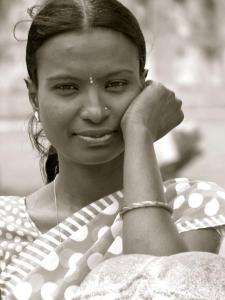
women’s role models

P1070040


From a few months ago….

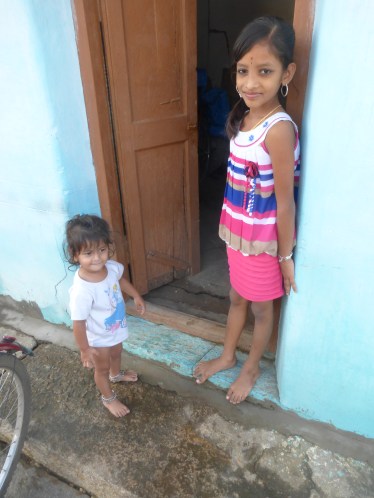
As I wait for today’s cycle guests. I’m chewing the cud with one of my Ganjam friends who is aged around 11,  she’s a neighbour of Satish’s where I store my cycles. We’re wondering why in India, most girls stop cycling when they become women. There are plenty of positive women role models cycling around the world and of course on our MyCycle tours. There were two from U.K. and Australia yesterday, two from Germany and Switzerland today and some very slightly older women from the UK and Australia tomorrow. Well done to them for setting a superb example! its really noticed by the girls as we cycle around.

But it’s VERY rare (exceptions above, prove the rule!) to see Indian women cycling and when we do see it, its clearly a change in society that comes from the growing middle class. That’s of course superb but we don’t see it often enough. Why?

DSC01559


Yes, why do Indian girls tend to stop cycling when they become women? Another conversation might help provide some insight.


Manjula tells me that part of the attractiveness of the opposite sex, (in addition to the usual rigours of determining suitability for an arranged marriage: caste, wealth, stars, parent’s occupation and much much more), there are certain physical characteristics that are looked for. (This doesn’t of course mean it applies across India’s diverse groups!) You know the sort of thing. Small feet for women etc. Well a novel one she’s just told me relates to foot arch. Men’s arch needs to be clear and distinct, women’s feet should be flat! really? its a patriarchal minefield.

My point is, this preoccupation with attractiveness and that includes all sorts of pressure to be perceived as ‘normal’ includes the barrier, the challenge, the tradition, the clear message that cycling when a girl gets older,  makes her less attractive or desirable as a poteniutal bride.

Another friend of mine, who will remain anonymous, as a young women, did some really innovative community projects, in terms of helping poor families. When it came time to look for a husband she had to ditch that work and commitment and hand over to others, to ensure she was able to find a husband!! Otherwise, she might be seen as less desirable with all that baggage!

So likewise, I reckon a woman’s desirability, eligibility, acceptability vis-a-vis marriage is enhanced if she DOESN’T cycle! What a shame! Its so the wrong way round.

Now I’m all for sensitivity to cultural difference, I pride myself on having designed and created many projects in tune and partnership with the communities they served BUT that doesn’t mean we shouldn’t be critical of tradition, there are also many things that should change. Patriarchy and oppressing the ladies to conform is one of them. Here’s to the different approach for these future women!

but I do realise that there is such a long way to go…

To be fair its an intenational challenge, women around the world face barriers to taking up or maintaining cycling. A previous guest and our good friend Tiffany Lam has written on this very subject, please follow the link here

to find out more.

Strength to the girls. (and women)… keep on cycling!
more change….

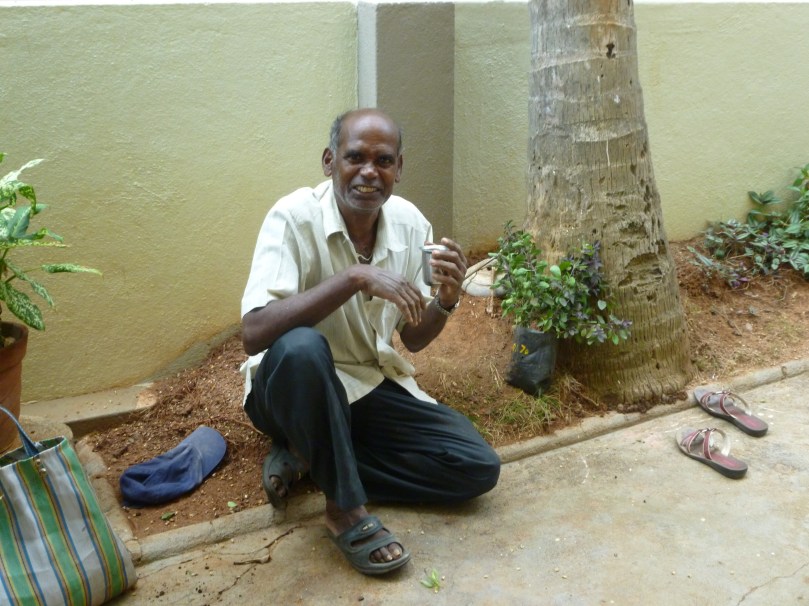
We, that’s Manjula, Kamlama and I, drive to the village in the Ambassador, round the backside of Chamundi Hill.

We park round the front of the small village house and follow the sound of the music to the rear. We’re met by a typical scene: a “tent’ a canvas decorated roof to provide shade,  these are often used for events at someone’s house, has been quickly erected that morning. The musicians are seated on the road in centre of the tent, the men are either seated by the music or constructing something out of bamboo.

Our gardener is laid by the side of the house door with his closest women relatives, particularly his wife and adult daughters, crying, prostate around his body. Small groups respectfully go and place flowers. the pile becomes so high that they are often scooped up and taken away to be added to the ‘litter’ the men are building.

p1040599

We pay our respects, leave flowers, wait a few moments and leave.

He will be buried later that day. I don’t know why. Most people are burnt on a funeral pyre (helps the soul escape?)  and then the ashes to be sprinkled on water. Locally that’s on the river such as the site we feature on the Srirangaptnam tour. Some are buried.

For the following thirteen days there are a whole series of rituals and customs to be followed. These vary according to location, caste, local and family tradition. They might include: no cooking at home, a process of cleansing, clearing and cleaning, redecorating the house, showering, Tulsi plants, new sari, bangles, sindu. The widow goes to the burial place to break her bangles, takes the flowers from her hair and wipes off the Sindu.

Its complicated, formal and informal and its significance is unmistakeable.

These scenes are common as we pass through villages.

This is the first close member of our team to die. Nariyanappa has worked for us for over three years and in that relatively short time has created a commerative to his abilities as a gardener. He’s made a real and lasting difference to the place.

You can see it, as you arrive at the house, in the downstairs sit-out, up by the back door with the bouganvillia or the best of the lot, the roof top terrace. Even to the very last moments he was concerned to ensure his daughter (who also works for us) was visiting regularly to water and keep the garden in good order.

Respect!

We visited his wife and family during this period of mourning to provide some cash to help them through and the gift of a little sun We thought it was approriate as he’d brought a light into our home with the beautiful garden he’d created which is appreciated by the hundreds of people who visit us here in Mysore.

Thank you Nariyanappa!


Why India? 2

Why move to India…

I fell in love with India, its culture, people and places from afar and planned to visit in the 1970’s when I took a year off from my university. (I made a bit of a habit of taking years off).

True or False

True

I was a bit of a wus and not an adventurous traveller. I’d got as far as Turkey and the message from those who’d travelled overland from India was that it was particularly dangerous at that time to go to India, via Pakistan as they had just hanged Bhutto. So my visit to India just didn’t seem destined to happen.

Would I even manage to get to India in the next decade?

Nope

I hooked up with Liz and Ben in my late 20’s (We’re in the 1980s now). Liz had already lived in India for a couple of years in the early 1970’s so with one kid already (Ben) and potentially another one to come (Ol), India, was most definitely not considered by Liz to be a suitable place to take a young family.  Her experience of India was as a hippy  and she wouldn’t reconnect with India for many more years.

So that means I wasn’t also going to get to India, not yet anyway.

Farrell Factoid

I have subsequently met many people who have found a love for India (not least the visitors to Mysore Bed and Breakfast). There are of course many different attractions and often its difficult to define what it is that they particularly like. For many people they are inexplicably drawn to India, it has a sort of magnetism from a great distance. Maybe it is the free flow of ideas crossing the ‘bridges’ west and east (especially Britain and India) that stimulate people’s interest, there has of course been many exported ideas (and zero) for hundreds of years. There’s been icons such as the Beatles, the travelling Yogis, the hippies themselves, Yoga, whatever, there is an incredible range of things that we’ve heard about that help feed our seemingly insatiable desires for India, India things and Indian-ness.

Michael Wood in his book (Big Recommendation) to accompany the BBC series ‘The Story of India’ writes of becoming ’emeshed with India’, ‘the great privilege to be welcomed into another culture and to spend time in it, especially one so rich and diverse and perenially illuminating’

Of course many cultures and countries could fulfil this but

…what is so special about India?

I’d have to wait, quite a bit longer to find out.

Why India? 1

So why did you move to India when you were 53?

Its a question often asked by guests at Mysore Bed and Breakfast. Top Ten answers

121_2122_r1

I loved the wild west and its stories from an early age. India seems to be just like the wild west.

True or False?

True, I did used to watch the westerns, with my Dad, on the TV from an early age and really got into it.

True, India in some ways is a bit anarchistic (to put it mildly) so can seem a bit of a free for all as in the old west, without the guns (mostly) but it is of course …..

FALSE, its not the reason I moved to India.


STOP PRESS

Here’s further evidence of a young interest in the Wild West and that it runs in the family

will she, wont she?


img_5449
a littler girl rehearsing for a FUTURE date!


The girl is a little tall and her forehead is a little big (maybe Manjula means she’s a little plain). She’s the daughter of a friend of Manjula and as she’s reached her mid twenties she’s looking for a husband. A broker, a family friend (gets commission from both sides for an intro and a second bigger payment should they subsequently get married) has found another possible husband.


She’s already seen eleven or twelve potential husbands.

Her mummy (getting a little desperate) says “go outside” meaning find someone you like get married and move out to his home. She worries that at 26 and having already seen so many prospective grooms she might get too old to be married!

An added pressure is, we’re just entering a month when it’s inauspicious to marry and even to hold the introductory meetings.


Yesterday’s meeting was convenienty held at party that was a continuing celebration of her cousin’s wedding. It was used as an opportunity for boy to meet girl (another potential match) and check each other out.

At the meeting, at the cousins house, were representatives of both families that’s ‘girl’ her family including mummy, auntie, cousins, and the ‘boy’ together with his mummy, daddy, auntie and Manjula snuck in.

They’ll all sit round having tea and biscuits, boy and girl just checking each other out visually but not speaking, parents from each side asking questions related to family and background primarily about the job, their parents jobs, how much they are paid etc…

The parents ask the ‘prospectives’ in turn if they are OK with the other and with their head bowed do the ‘head-rock-and-roll’ each, to confirm that they are happy  to progress to the next stage

They are both bank managers! big tick

Today, next day, the families will visit the priest (poojari) and check that they are a proper match taking into consideration their Gods (mustn’t be the same, this is maybe a safeguard to ensure they are not too closely related, just my half baked theory) birthdate and who knows what else. At some stage horoscopes are checked for compatability.

If they get the go ahead, from the priest today, they’ll meet up at the home (when it becomes auspicious again in Jan) and make plans for the wedding.

There are however a few more ordeals and potential pitfalls, for example the potential bride doesn’t cook, will this present a problem?

Now get your head around this one if you can…… at some stage the ‘girl’ will have to walk a few steps to enable the ‘boys’ family to check the arch on her foot. A woman’s foot is not supposed to show an arch i.e. be flat foot, for a man it either doesn’t matter or an arch is good. Just don’t ask me! I have no idea.

Just always remember, India is consistently inconsistent, so what’s apparently true in one context is not in another situation, family or caste, or whatever 🙂

Please note: the photos are from other weddings and engagement parties!

is this a little too soon?

Mysore is a wonderful city, feels like a Town as its human scale and hasn’t YET been irrepairably damaged by over-development. Its a great place to cycle and our many MyCycle tour guests are a testament to this. However, I worry that there is the risk that half-baked projects might do more harm than good.

dsc04441

We already have the first dedicated cycle lane that I’ve ever seen in India. We also have cycle lines on main roads formed by a white line. (no, its not a joke, its real. Yes, in a country where no one takes any notice of lines on roads!)

In my view they do no harm and are a great asset but on their own withough being part of wider infrastructure changes, effective measures to educate other road users and promotions for people to take up cycling, it has limited value.

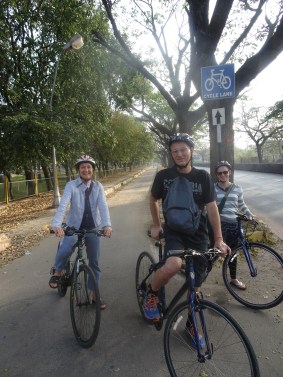
Here are yesterday’s guests on our Mysore tour on the cycle lane.

I’ve lost count of the number of times I’ve been consulted on the viability of a cycle share scheme on the lines of the one first developed in Paris and subsequently copied by cities such as London. In places they’ve been a great success, in others an abject failure. This morning on my (occasional ) cycle back down Chamundi Hill I saw this…

It looks like its the installation of shelters for a cycle hire scheme. In principle that’s fantastic, the more measures to promote cycling, the merrier, but might it just be a little too soon, particualrly if its not part of a wider programme to support cycling?

My worry is that currently cycling is seen as a traditional activity of the poor villager or something for the crazy foreigners. Admittedly we’re seeing a dramatic increase in cycling as a leisure activity and the fact is we get a fair number of enquiries for cycle hire at MyCycle BUT many are the early adopters, the young people who are particualrly interested in high end cycles and going out on races! The question is will the mass, the people in the middle of the ‘market’ buy into cycling in Mysore and use the cycle hire scheme. I’m not sure that they will and it might be a bit early.

I hope I’m wrong and a good friend of ours may take on a role helping research take-up and help develp the initiatve. I worry that if it fails it will set back the progress of cycling in Mysore. You know the sort of thing… “promoting cycling? we tried that with a scheme, in 2017 but it didn’t work so no point promoting cycling again”. I reckon it will only work if its part of a wider programme to educate other road users, infrastructure development, promote safe cycling in schools and encourage young people (and especially women) to continue cycling as they get older.

I’ve developed lots of projects over the years and in my view its critical to understand the patterns of behaviours in a particular community (interest or locality) and build on that and not to blindly parachute in ideas from elsewhere, which might have worked in one place but need significant amendment and careful timing to work in another.

Many people worry about cycling in the city but are nicely surprised once they join a properly guided tour and they gain the confidence to go out on their own. Its no accident that our most popular tours by a very long way are in the low traffic routes on Srirangapatnam.

A better idea might have been cycle hire shop(s) in places where there are a network of potential cycle routes. That’s not a big capital scheme that reflects well on the powers that be so it would not be favoured. I know of such a place. It’s where our most popular cycle tour is held 😉 I’d wait to introduce automated cycle hire schemes to a time when there is more of a critical mass of cycle users, tamed traffic and more dedicated cycle lanes in the traffic intensive built up areas.

Wow

what a day!

Biscuit (aka Brexit) pales into insignificance. UKAOs just seems so small and so less relevant.

img_1137

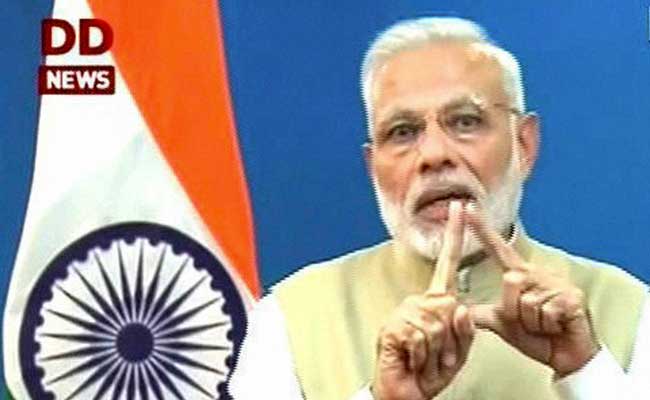
India was MODI-fied, over two years ago, with the election of the BJP party to govern India. Today in a country of one billion people Modi announced that OVERNIGHT all large denomination notes (500 and 1000 Rupees) would be abolished, imagine that? In a country with so many people, where the majority have a stash of notes at home and a significantly large minority aren’t known by the tax authorities, operate in an under-the-table-informal economy will now have to take their cash to the bank to get it exchanged. It is intended to tackle counterfeit notes, bribery, corruption, ‘black’ money and add to other polices such as IDs, bank accounts for poor people etc. that together help contribute to formalise society fully onto the ‘radar screen’.

Astonishing! img_1138

There will be much more to come. Banks are closed, ATMs not working. Once they reopen cash can be exchanged up to a maximum of  4000 Rs per day or put into a bank account within the next fifty days! These new notes will be issued in limited quantities from Thursday.

Cash chaos.

But it’s India so somehow it will all work out.

Next, we can now look forward to a President Trump!

img_1134

There’s an Elephant in the room.

Is this another example of how people in UK and now the US have become so disconnected with the political classes, the establishment power and the orthodoxy they represent? People are angry and are providing a strong message, wanting a different future.

Meanwhile, ‘laid-back’ Manjula relaxes, munching on the Roses Chocs I smuggled in (equivalent of five tubs) from the UK. She gives them out to friends, neighbours and relatives…..

img_1136

Manjula’s Background

379003_10150528283149937_1371457865_nManjula is from a poor background. Her poverty, family instability and her experience as a woman in a patriarchal society is not atypical. She  has shown great determination, fortitude, even stoicism. It’s a common story in India. Women (and men) managing to survive through very challenging backgrounds and life circumstances.
Manjula’s story helps illuminate what life is like for so many people living in contemporary India. There may be explosive growth of the economy and the middle classes – we can see the evidence in many ways – higher disposable income, rising prices, spare money sloshing around, building-building-building, the glorification of ‘development’, leisure holidays, flash cars, waste everywhere, traffic jams, disposable nappies (diapers), house dogs… you name it, we’ve got it!

But as with everywhere else and even more so in India, the rich and poor whilst living cheek by jowl are far far away from each other. People are left out and behind, there is the risk their story is not told or realised, their needs forgotten, a myopia of the modern age.


the not so local locals

Foreigners who’ve made Mysore their home

In Mysore there’s quite a few foreigners living here. They seem less like the type you’ll find in Bangalore, who knows!

Here in Mysore, some of us have homestays, manage subsidiaries and have set up our own businesses, one even exports Henna/Indigo to south Korea!

One of these oddballs is Victor Len Bailey, he’s 75 nearly 76.

IMG_0305

We’re just back from a trip to visit him way over the other side of Mysore. He’s a bit of a mix!

This visit to Len is poignant as he’s likely to be back in the UK in the next few weeks to finally leave India after being here for the past fourteen years, most of them in Mysore.

On this occasion, he was remembering his first trip to India.

In a former dry cleaners Bedford truck, he’d converted into a mobile home, him, his Anglo-Indian wife and their two kids travelled overland to India, in 1970. He’d been working as a mobile crane driver, his wife in an Indian restaurant (he lived above when they first met) and there were a few others travelling with them who had paid for their passage. That helped pay for their trip.

Christmas 1970, he was aged 30, a bit old for a hippy, as he declares! Here he is, that January, ‘turning native’

IMG_0307

You can just see the truck in the background. They travelled along the great trunk road, the last stage being from Lahore to Nagpur to a stone that marked the very centre of the Indian subcontinent. Then they hit the road again to take in the south visiting Mysore for the first time and including: Ooty, Coimbatore and Chennai. A total trip of six months.

The return journey, normally reckoned to be 22 days was more like 40 days. Being stuck in the mountains, with snow storms, broken roads, picking up distressed back packers, breaking down, running out of money and a coming to the aid of a local newly wed bride. The mobile home continually being  a magnet and attracting locals, especially children fascinated by the fluorescent lights, generator, toilet and shower, and probably, the odd people 😉

He remembers Afghanistan and that Kabul was the nicest city, laid back, friendly people with some sadness because of how it’s been damaged by the interference of foreign powers. He recalls stopping for coffee and snacks and making Instant Whip for the Children from the Kuchi Tribe that had gathered around.  I ask you …. of all the things to give 😉 well anyway. They’re eating it in the plastic containers he’s provided with teaspoons and slowly stepping backwards until they could just slip back and run away with their well-found souvenirs.

Road conditions were so poor in places, they would be lucky to make a 100 miles in a day.

He remembers another vehicle, a bus from the UK with plenty of paying customers, a version of ‘Magic Bus’ just 21 days to Delhi “roll-up roll-up”, which had all its windows fall out through the incessant shaking.

There was no guarantee you’d arrive!

I could have been one of those innocent travellers. A few years later, still in the 1970’s in my gap years before and during university, I’d hoped to follow in the footstep of the hippies. I’d managed to get just over the European border onto the Asian side of Turkey (what a wimp) but I never succeeded in fulfilling that burning ambition in getting to India until just ten years ago.

Len has so much depth, a self-made man who can hold forth on an unlikely range of subjects in phenomenal detail (so not like me at all), a genuine guy with guts, determination and a heart of gold. He also has links back to the early days of the Labour Party so he’s also 100 years plus old 😉

During their stay in Teheran it was obvious that society would not last. The rich would spend the equivalent of someone’s annual income on a night out and it was fashionable to buy obscenely expensive things such as learning to fly helicopters. Big gaps between the rich and the poor, ostentatious demonstrations of wealth. Ring any bells?

I wonder how he will find going back to the UK and its current austerity with slashed public services and near bankrupt local authorities. He really has little choice financially. But how will he manage? The different culture, the weather, the cold? He is a bit frail and has no accommodation to go to or places to crash. Maybe he’ll just dump himself on the doorstep of the first London Borough he arrives at…  Southall which also happens to be the place where the majority of the residents come from the Indian Subcontinent!

IMG_0306

We’ll miss you Len, you’ll leave a gap and we hope your re-entry to the land of your birth will go well.

Len at 17.

Yes he got his snaps out!

It strikes me after listening to some of Len’s stories about how many  memories we have of experiences that help create who we are and how that will in time disappear as if it’s just a puff of smoke

…. or will it?