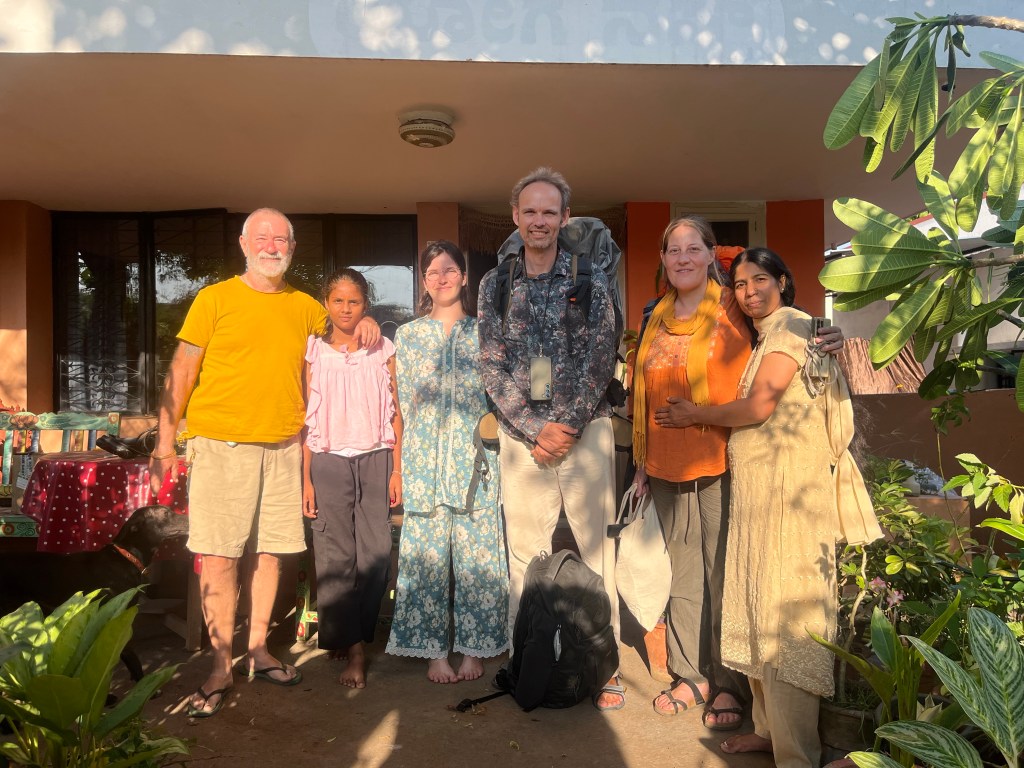
We’re almost moved in — well sufficiently to welcome our new guests.
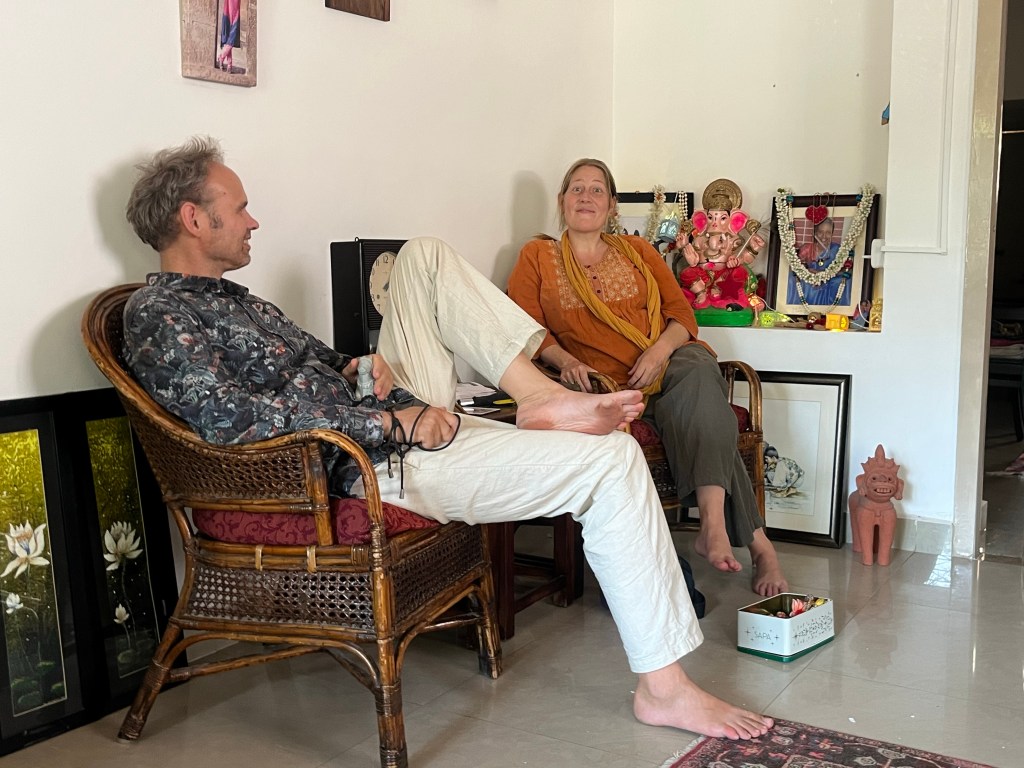
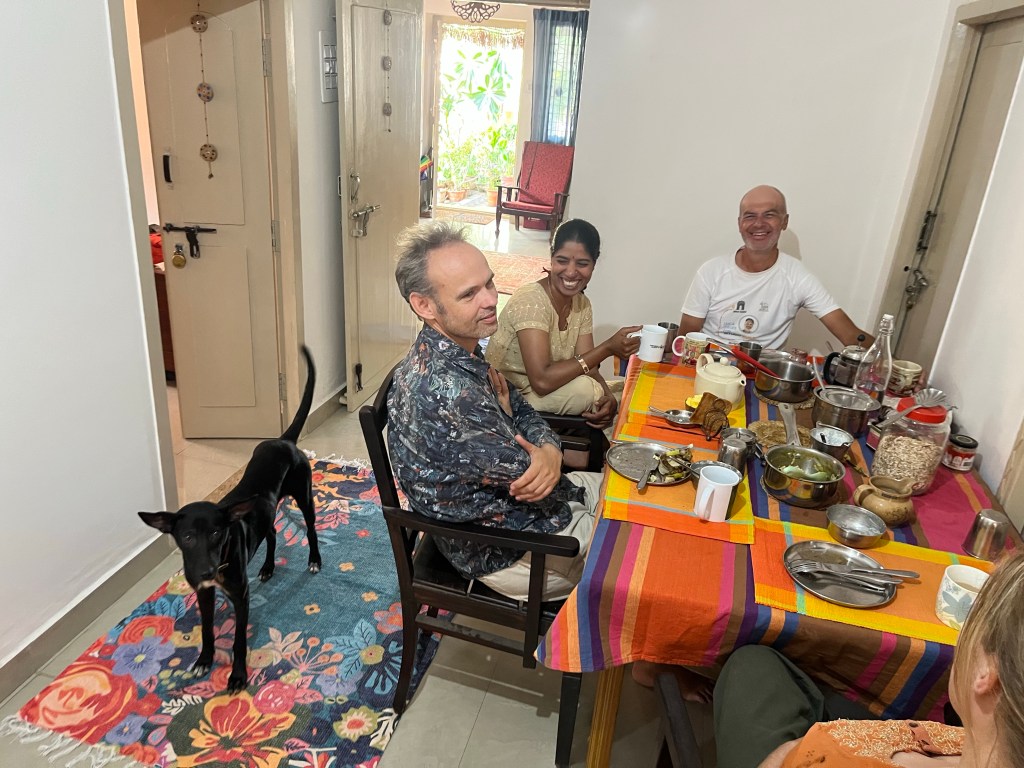
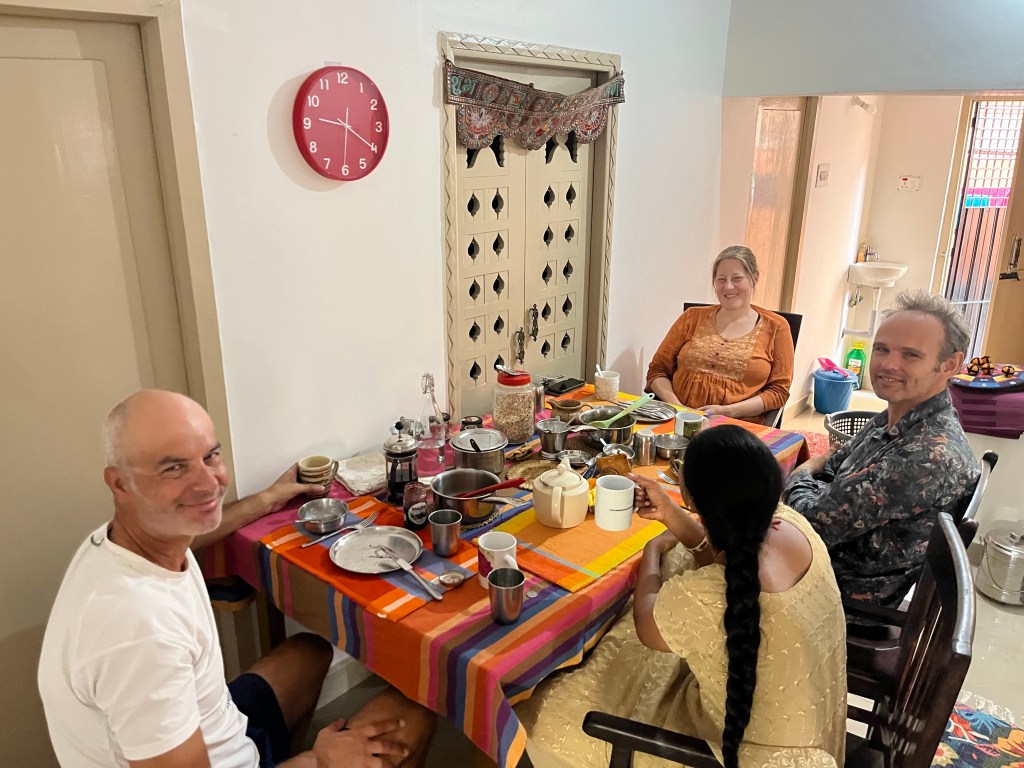
Kurt and Loe from Belgium, the very first guests and returners, having first visited us a few years ago. How cool is that? Complete with a soon-to-be new family member.
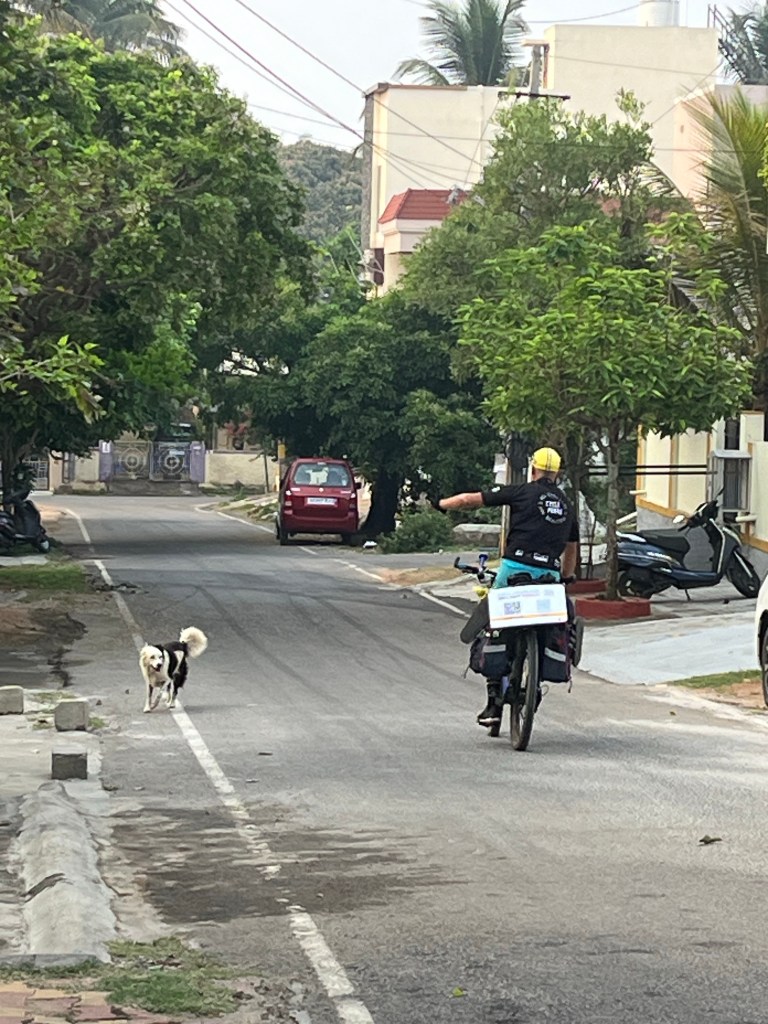
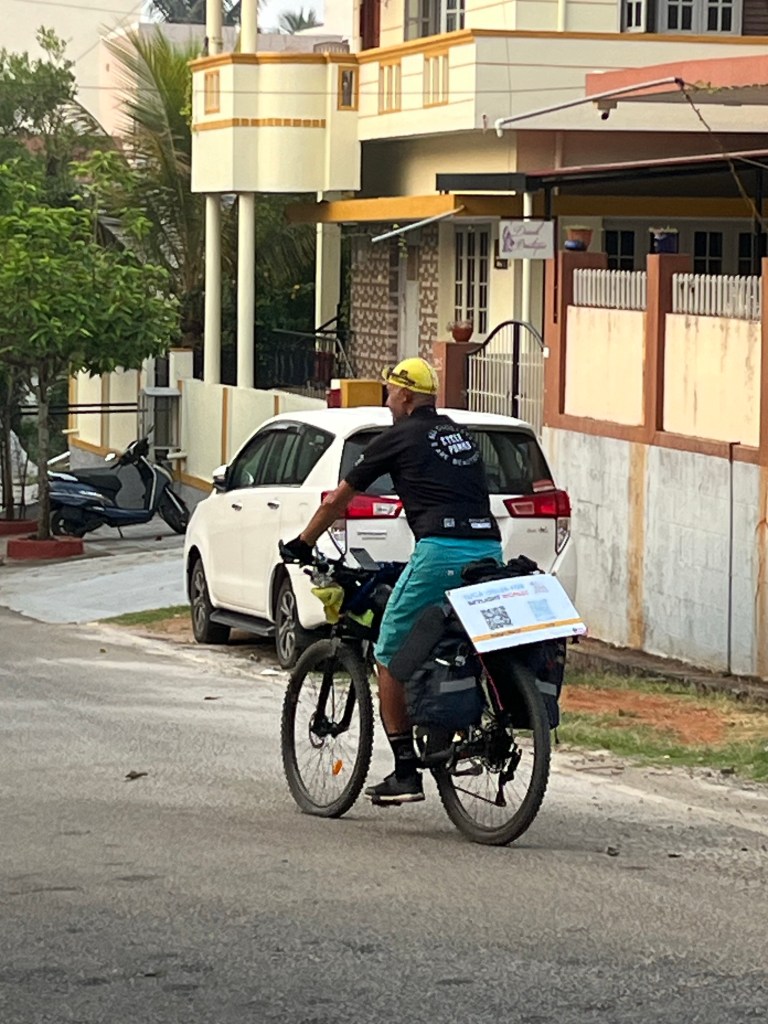
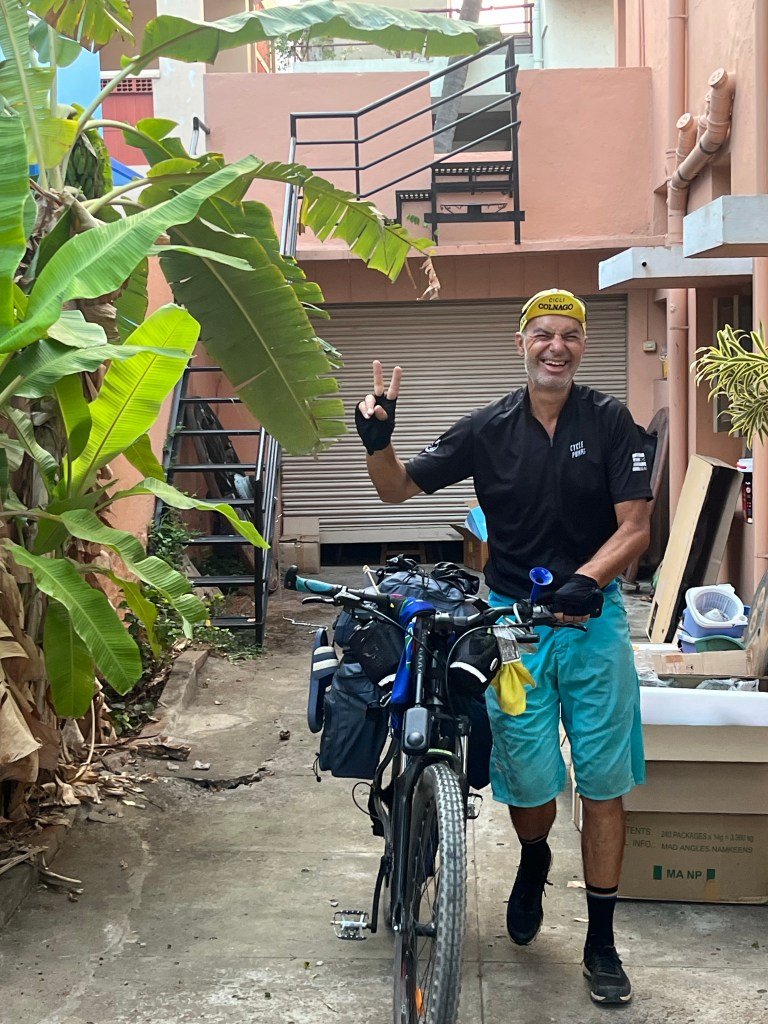
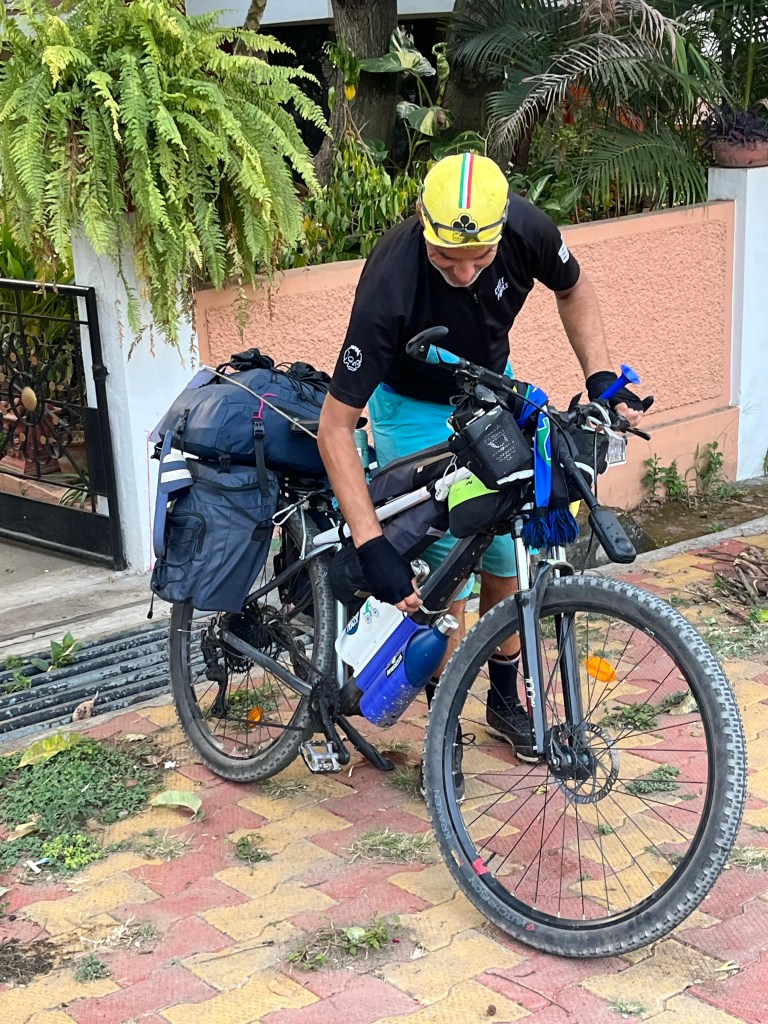
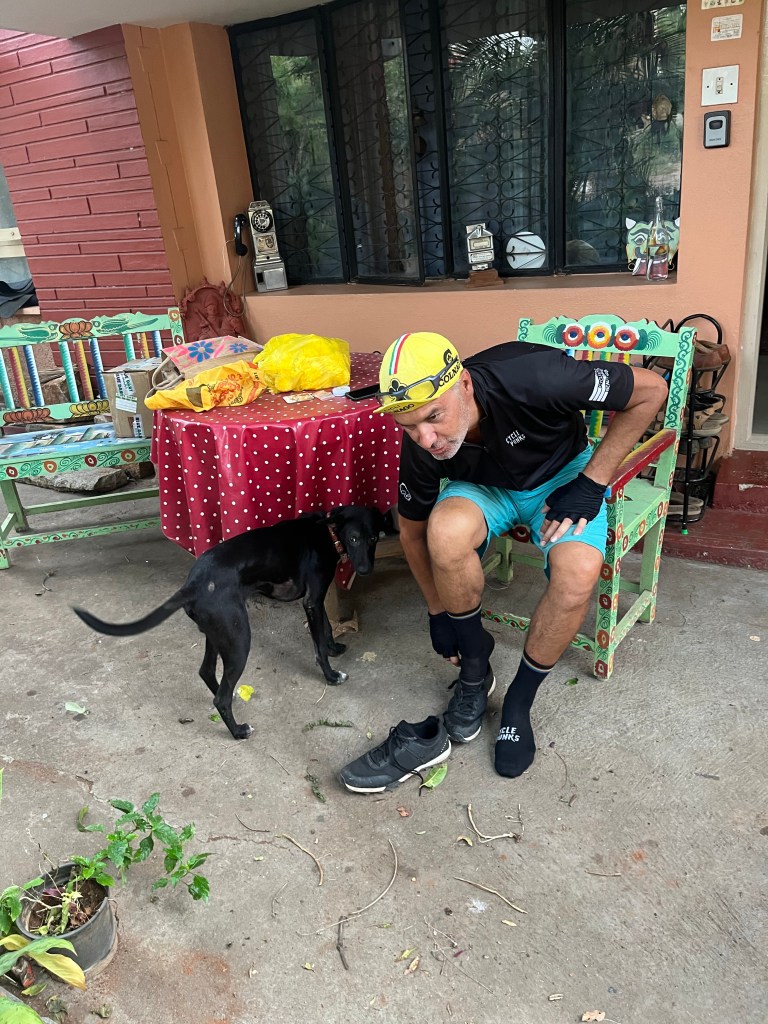
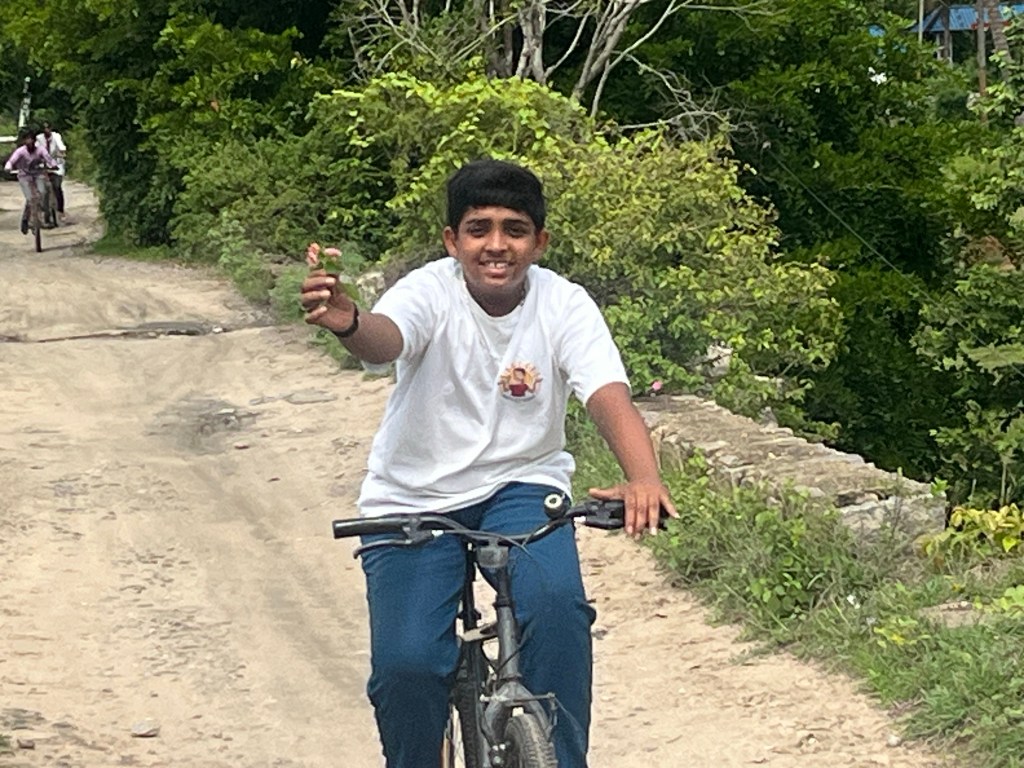
Luca, a ‘warm showers’ guest, has reached the final stage of his fund-raising cycle ride for a school in Bangalore.
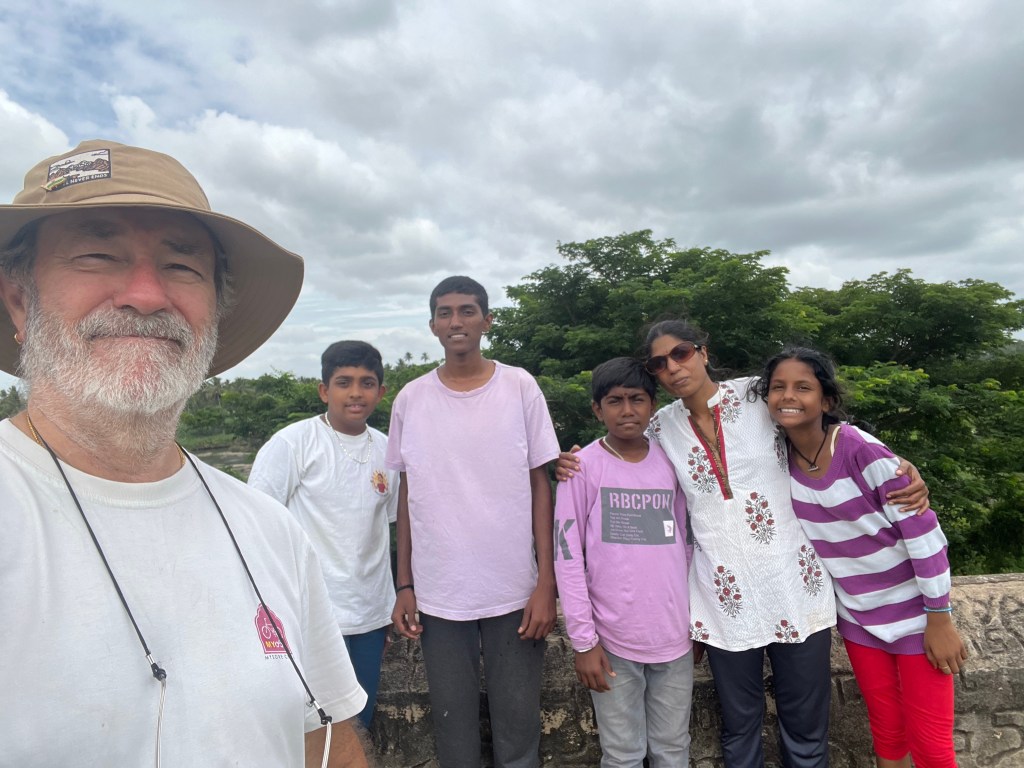
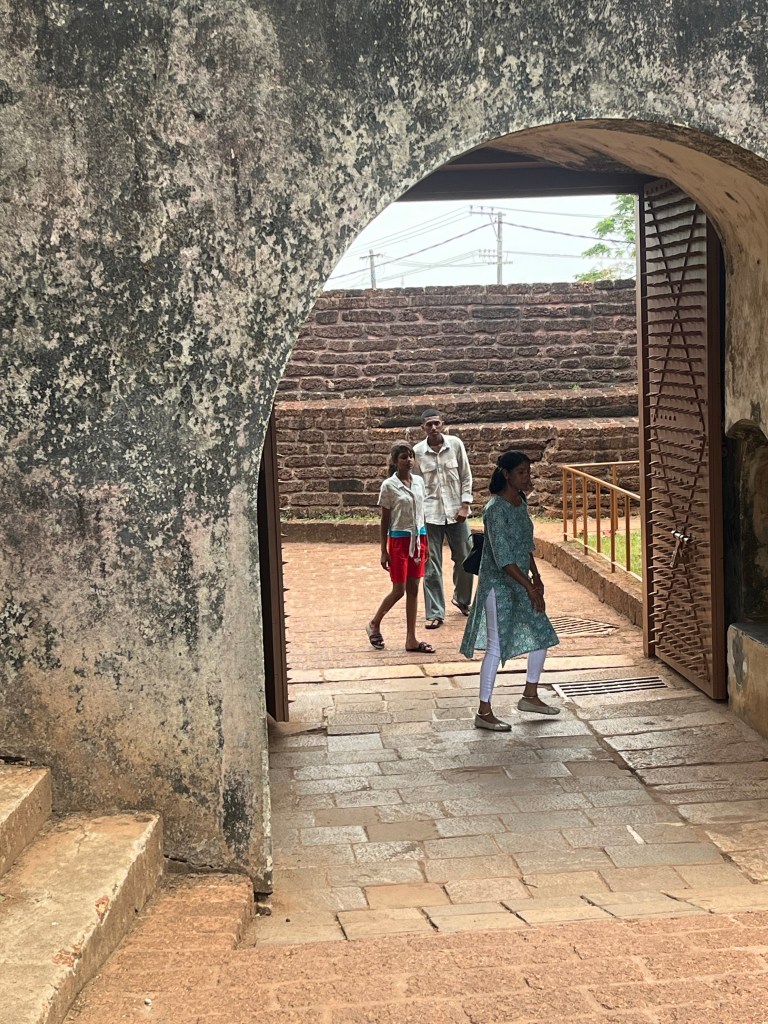
I led an unusual cycle tour today on Srirangapatnam.
Four teenagers, ok one isn’t yet but no one would know. Were invited to join me for a cycle tour ostensibly to better understand how to be a guide.
My objective which alines with my latest thinking on how we might better prepare young people to be more rounded and better active citizens as they mature.
I’d hoped that the day’s adventure would help improve their confidence, communication and assertiveness.
Big ask but a tiny step.
Coincidentally Kaveri asked me why a horse had blinkers. I lost no opportunity to use the analogy in how it’s important for them to get a wider view.
I delivered the standard tour with more emphasis on how they should manage it, rather than the content.
SB the ever present aid and family member was her usual great support.
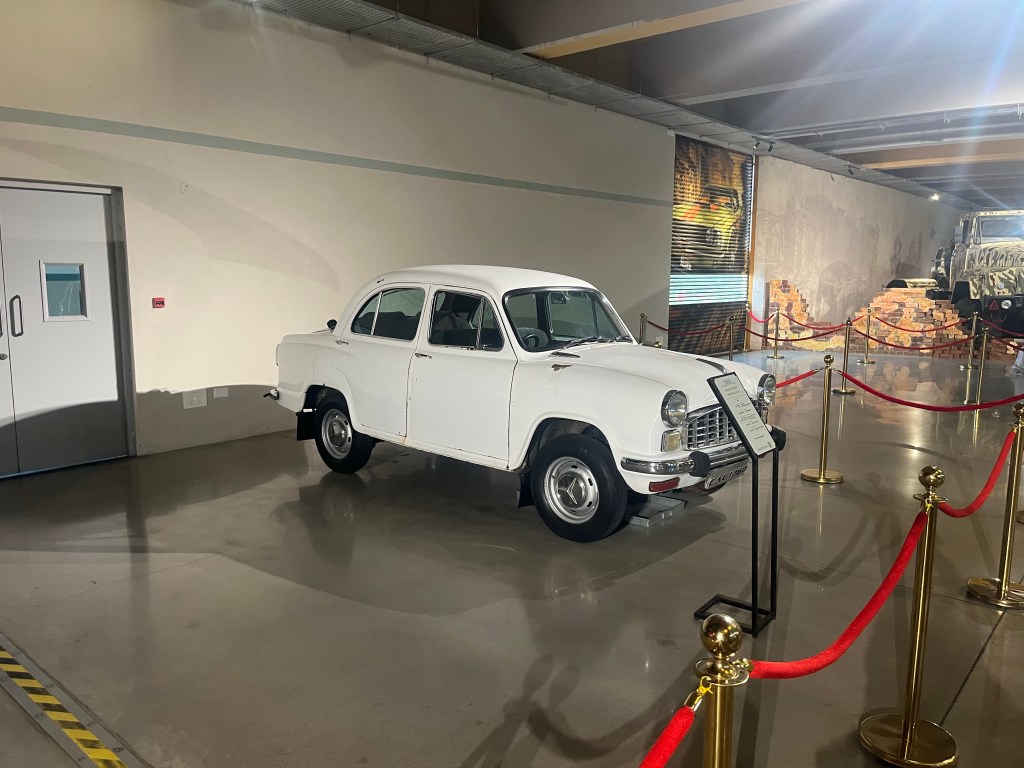
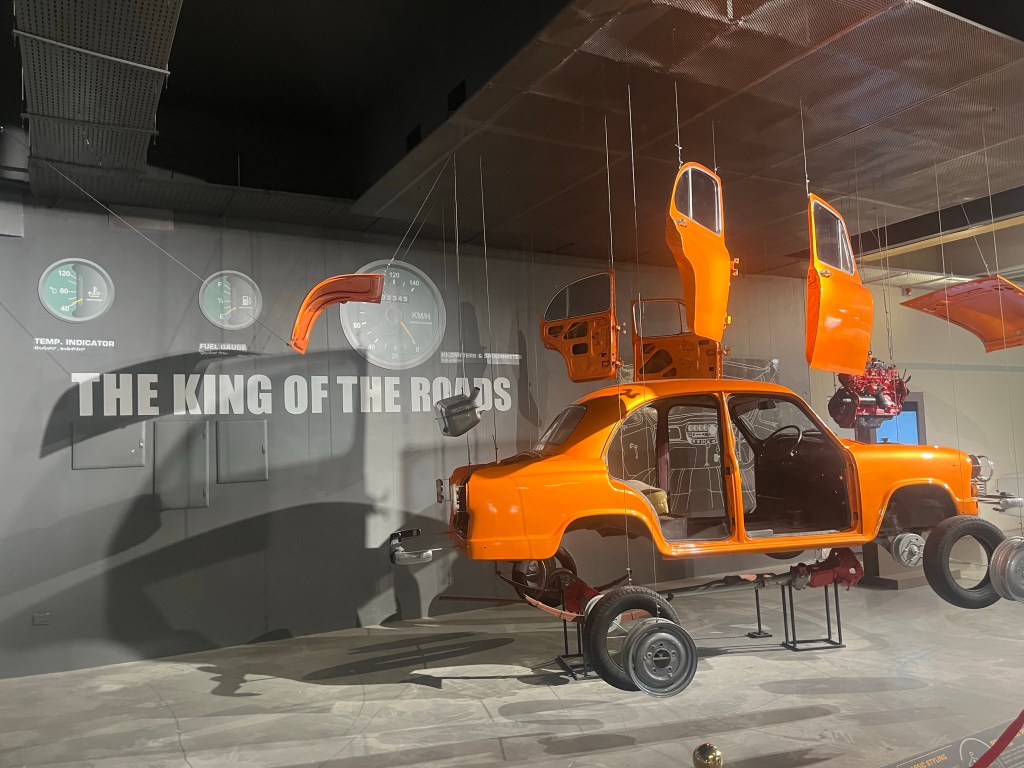
After the tour we visited the recently opened car museum
The museum included a similar Mercedes to one I owned in the 90s, my wonderful inactive Ambassador and a candlestick telephone like one at home.
…
I’ve invited them to continue with this journey, if they wish, so that within a year ( much less!) they should be able to lead a tour.
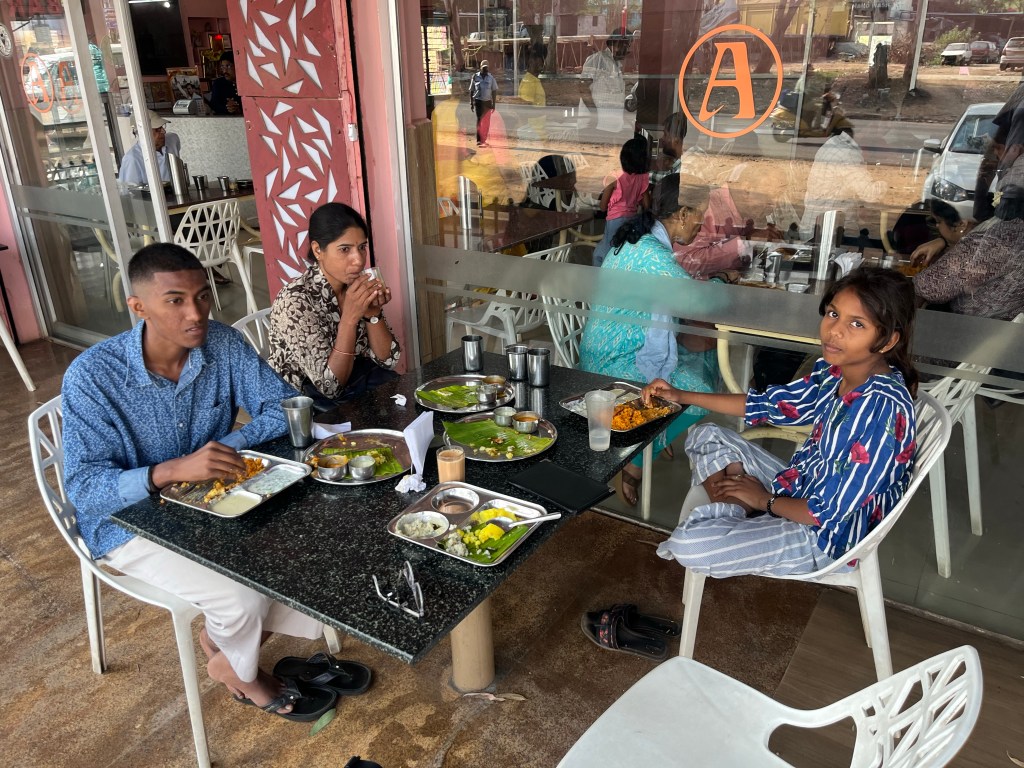
Maybe more meals might do the trick
Who knows where it might lead —- greater personal competencies at least.
If it happens— I’m open to them leading tours and maybe taking over and expanding. I have absolutely no expectations.
They’re all very different characters but of course, all have potential.
The house hosts her presence in every room (and outside).
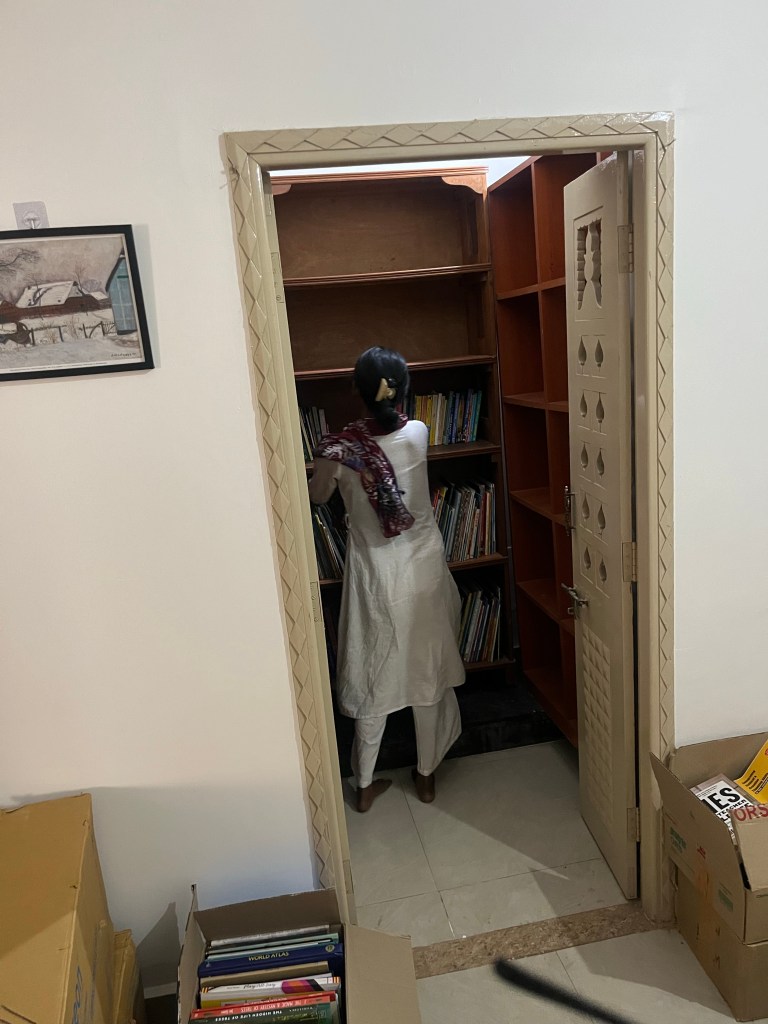
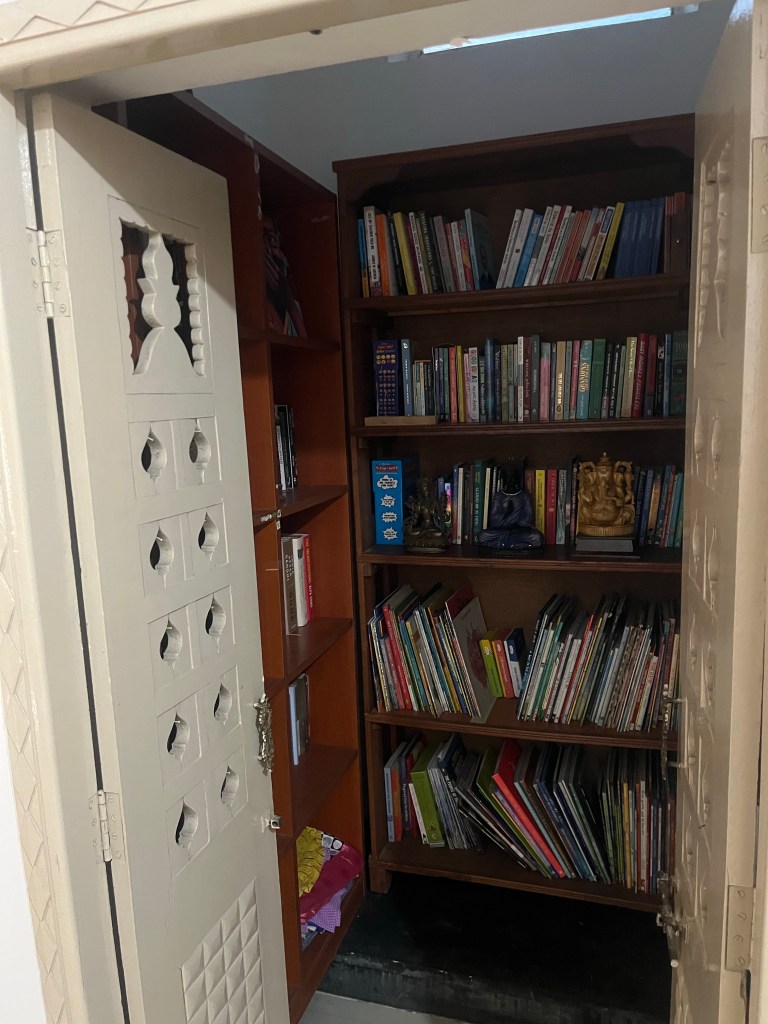
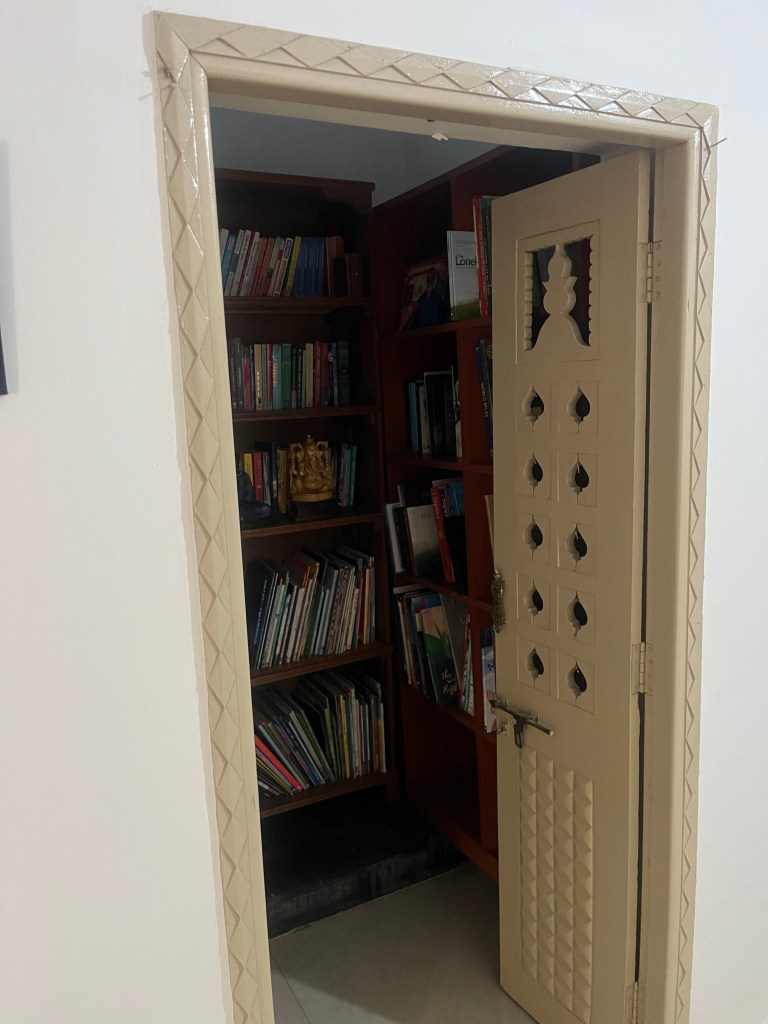
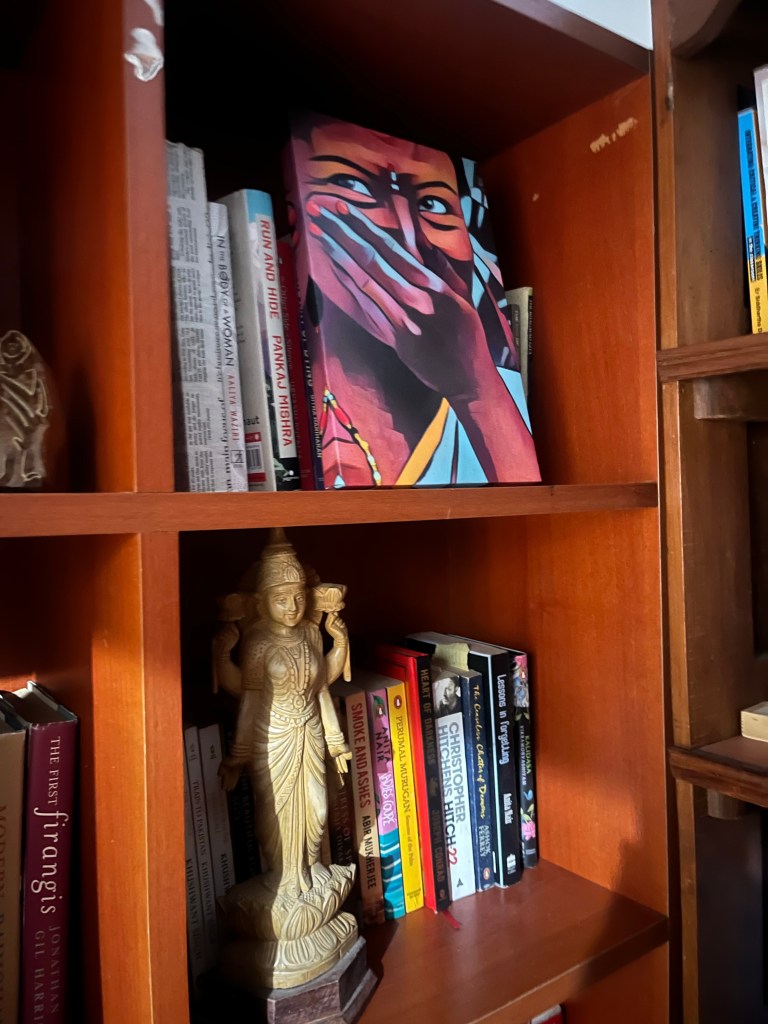
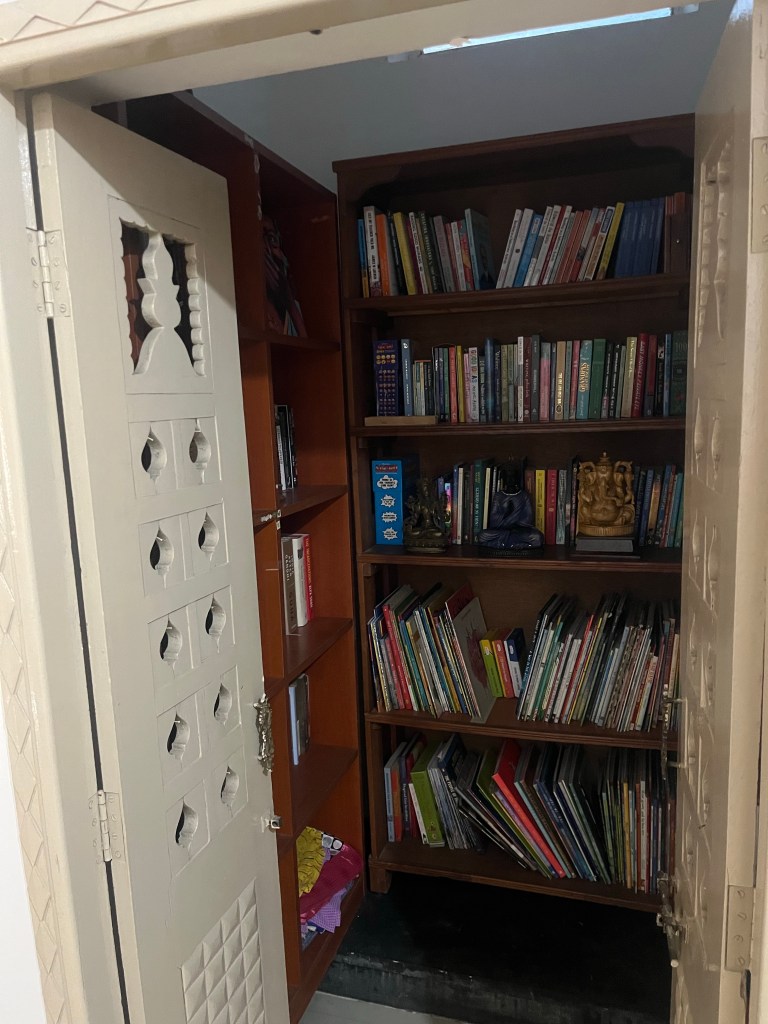
Sowbaghya and I have kept the Bed and Breakfast as she envisioned it and even have a library named after her.
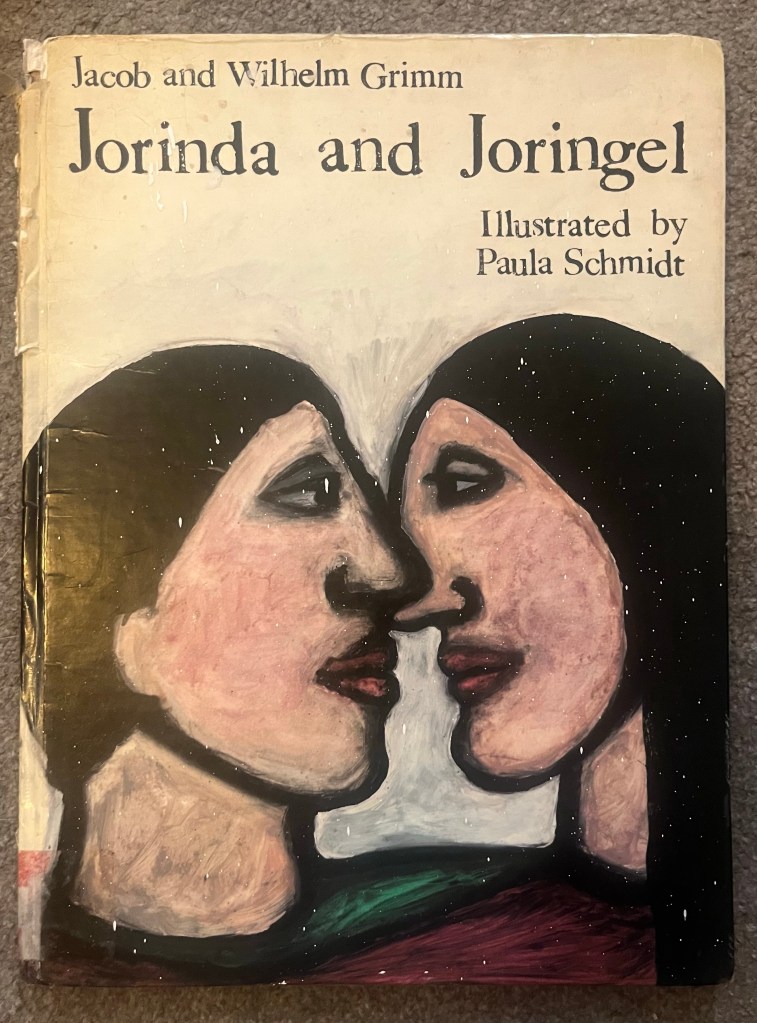
Our children’s and education section.
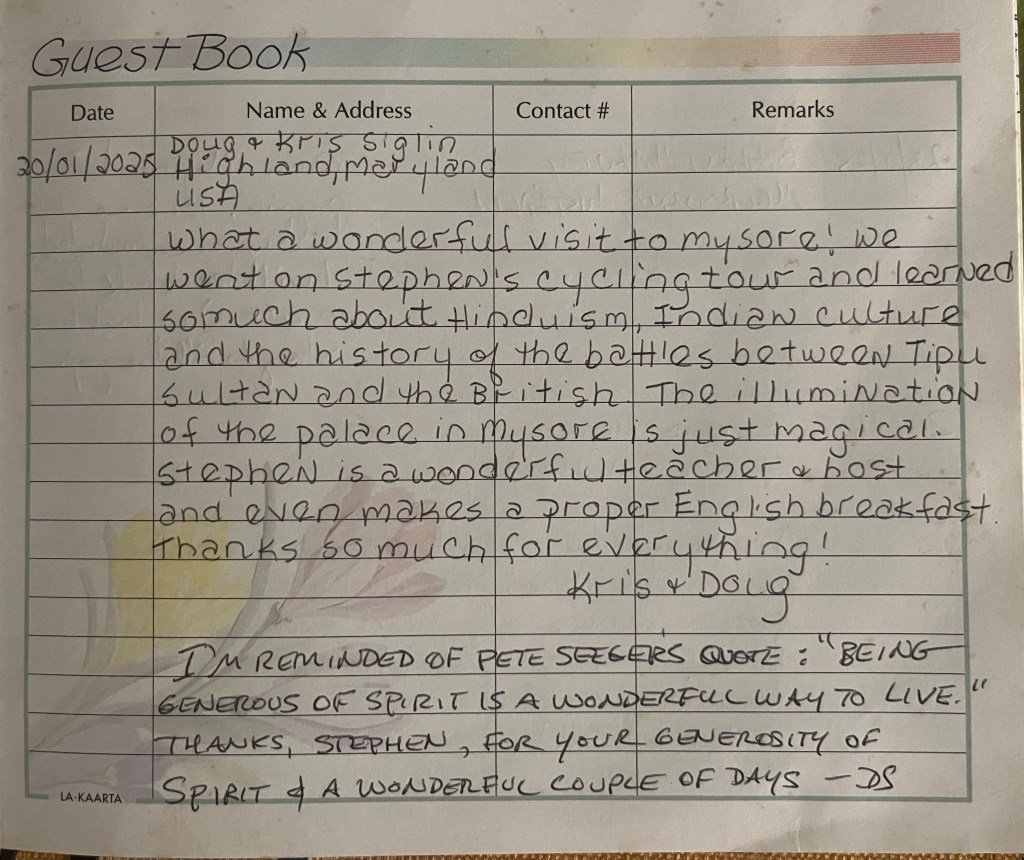
Our guests love meeting her. she even gets mentioned in our guest book
images of MAnjula and Lucie decorating the fan switch!!
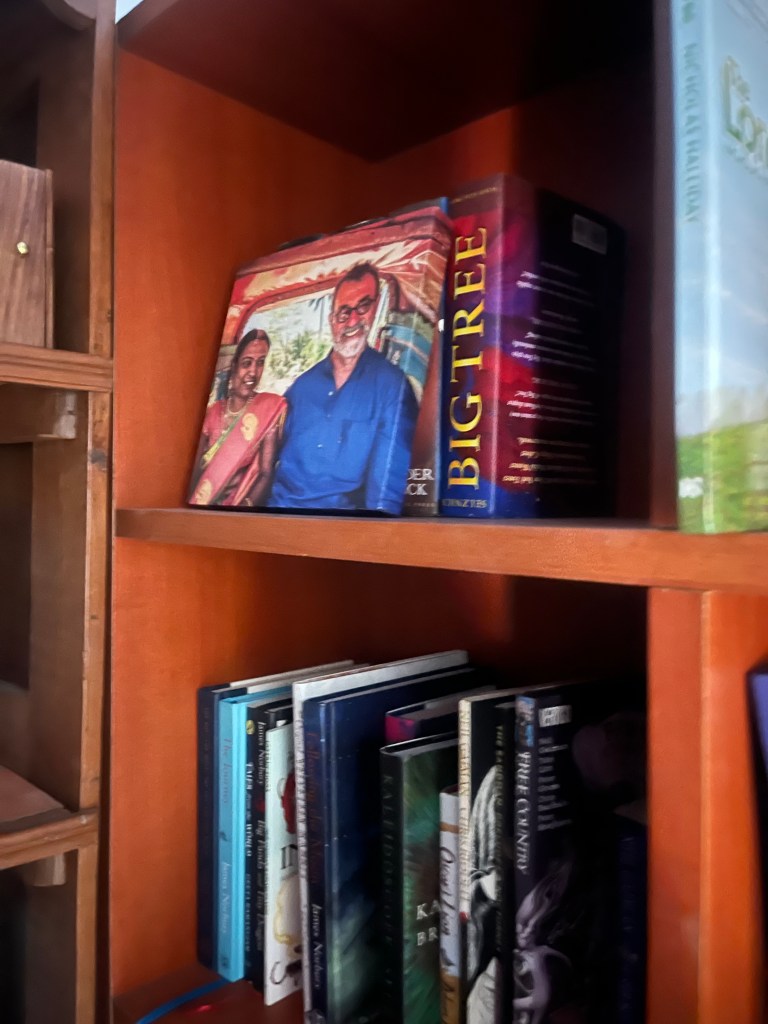
At least once a year I bring out this image in memory of my beautiful MAnjula. It’s just for a few days. I started by cycling her around Mysore, at other times she’ll be in the memorial garden we created for her in the park or resting in our drive. Otherwise she’s stored in the Garage.
Unfortunately, you can’t please all the people all time. Some people you never can.
My insensitive neighbour complained that the image of MAnjula was outside and should be indoors. It’s a Hindu rule. I know there’s no such rule or if there is it’s often not followed. People remember their loved ones with posters around the streets or images in the newspaper.
He represents the brahminical elitism that can sometimes rear its ugly head (read your ‘games people play’). He’s even complained about the boys and girls sitting on the park benches that I’ve installed. It’s as if the Firangi (foreigner) is responsible for people’s behaviour. His prejudices are mildly entertaining but we generally ignore him.
PS
As AI tells us on the internet
The saying “Guest is God” (Atithi Devo Bhava in Sanskrit) is a core principle in Indian culture, emphasizing the importance of hospitality and treating guests with respect. While the saying is rooted in tradition and spiritual significance, the reality is that it’s not always a practical or realistic expectation, especially in modern life.
Stomach Churning HandWeaving LighthouseRight Next To the beach Chera RocksFortress En route
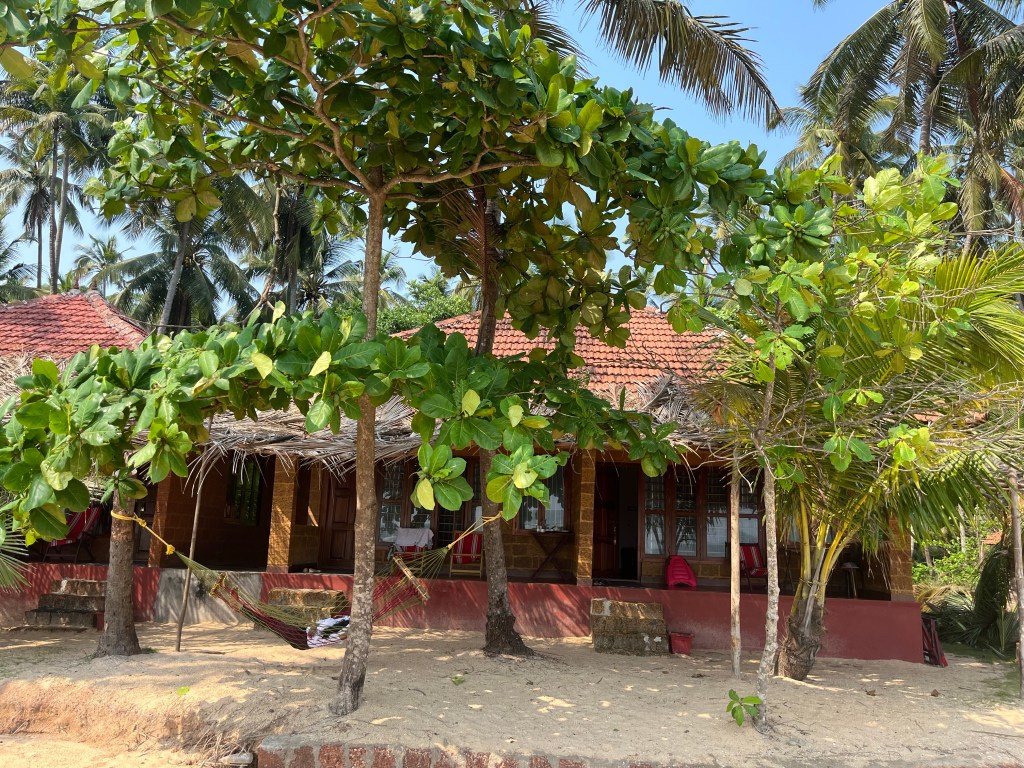
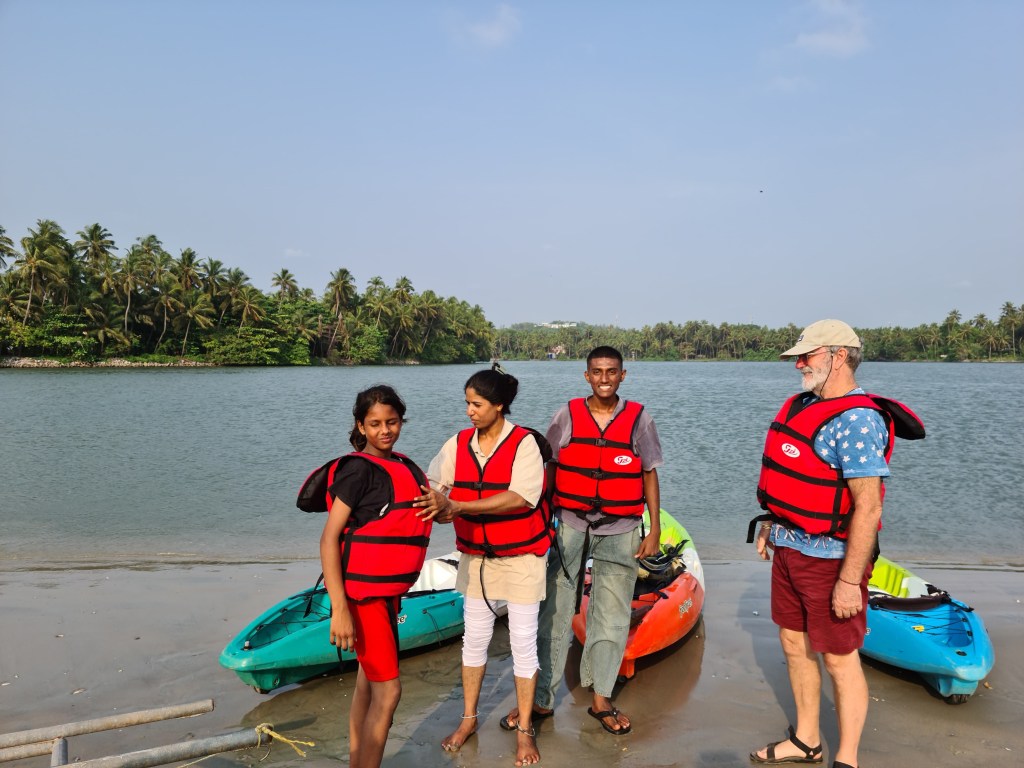
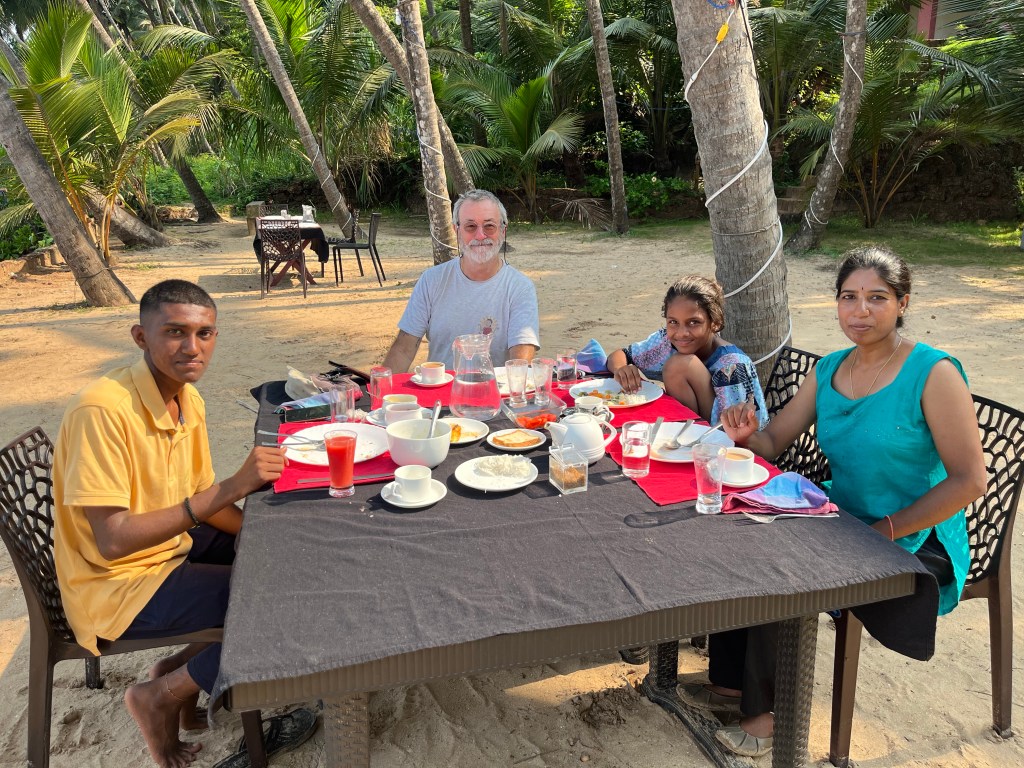
I’m away with Kaveri for a few days with Naveen and his mum Sowbaghya.
Manjula’s Mysore supports their education and now we’re on holiday together.
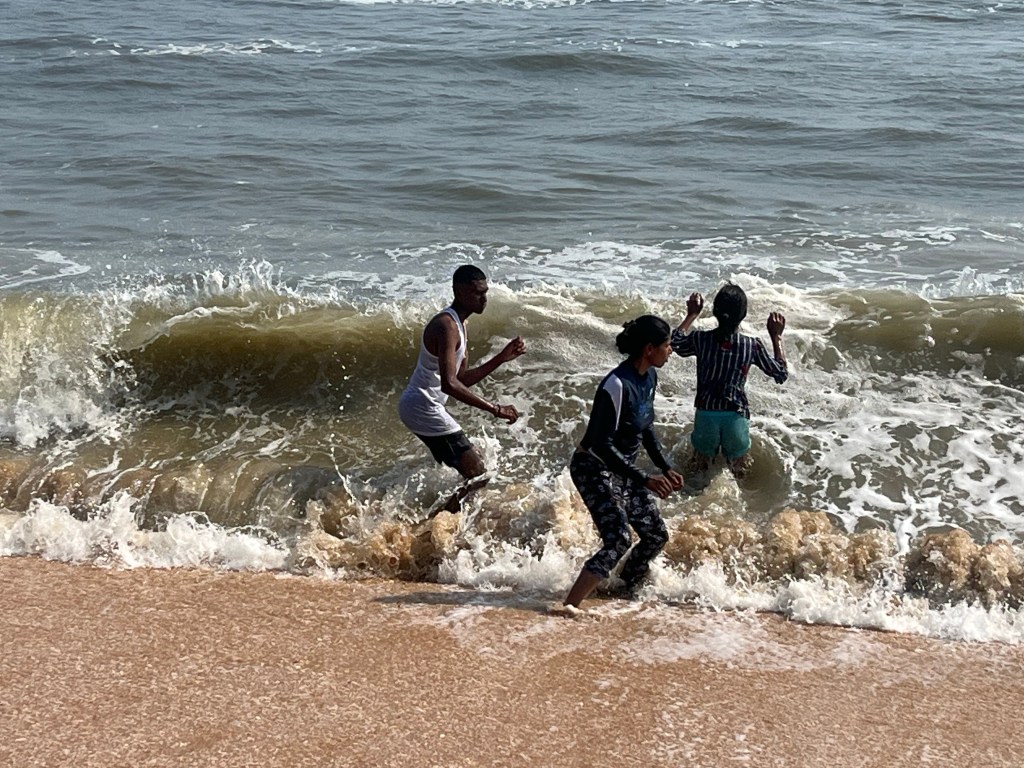
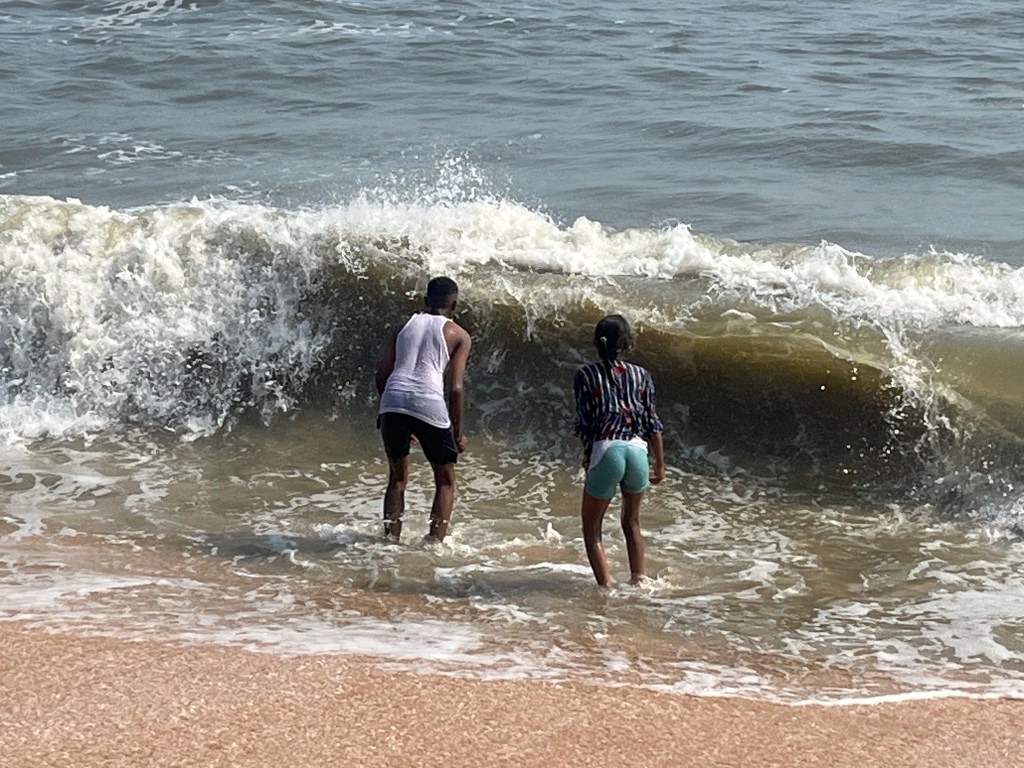
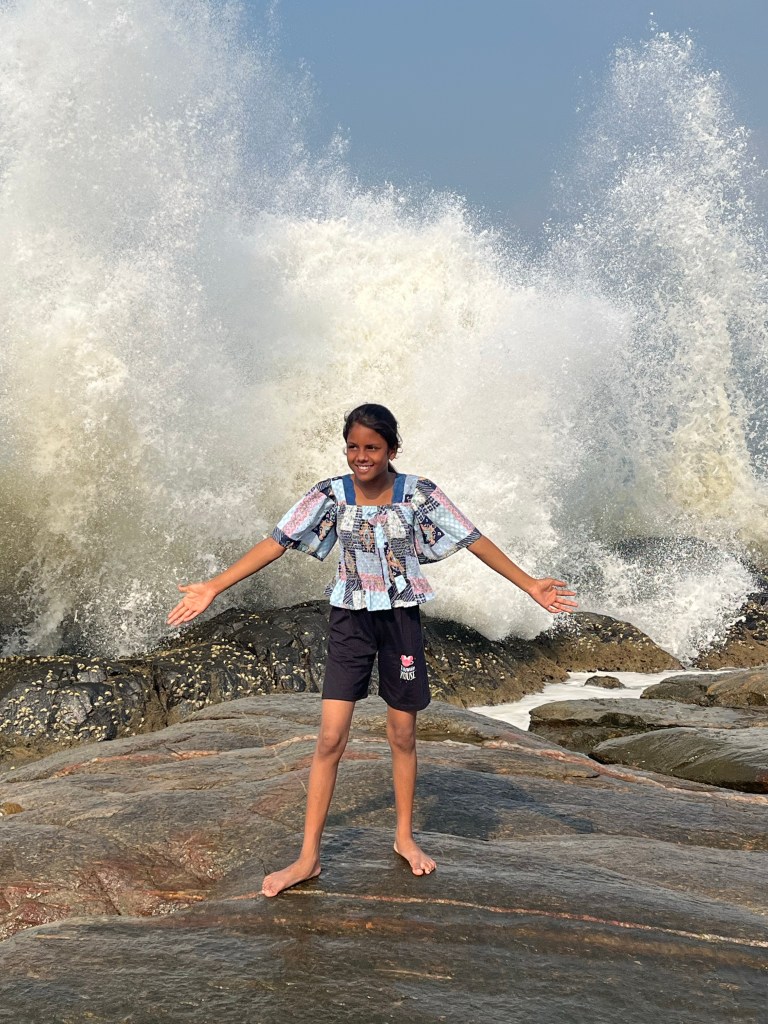
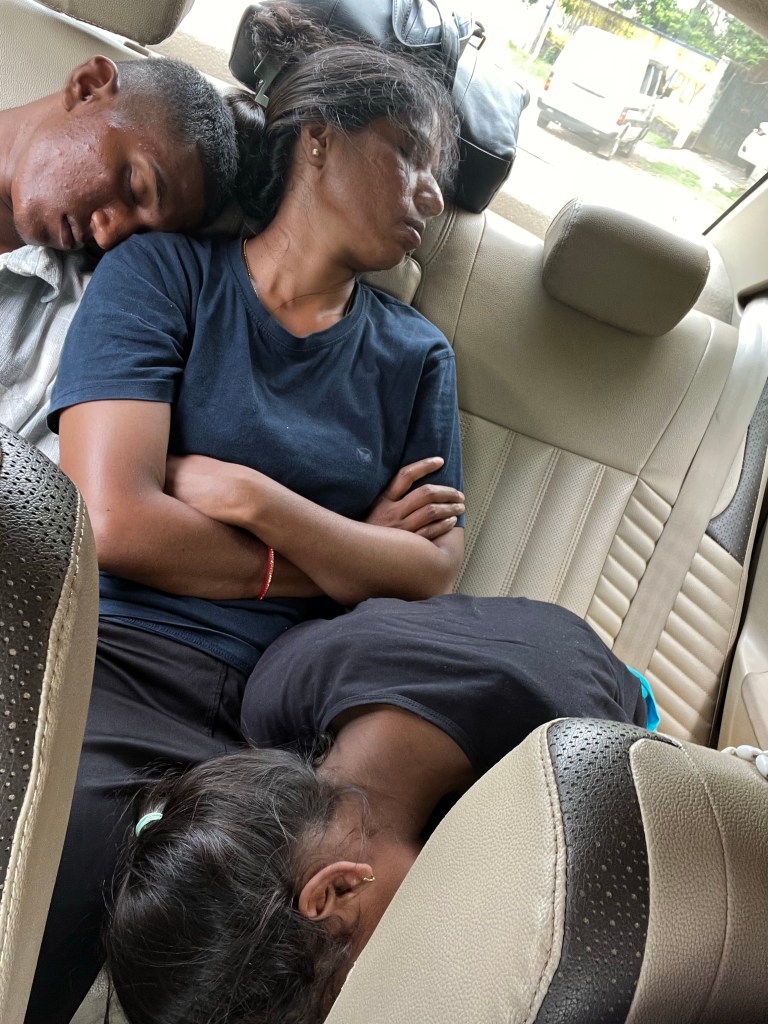
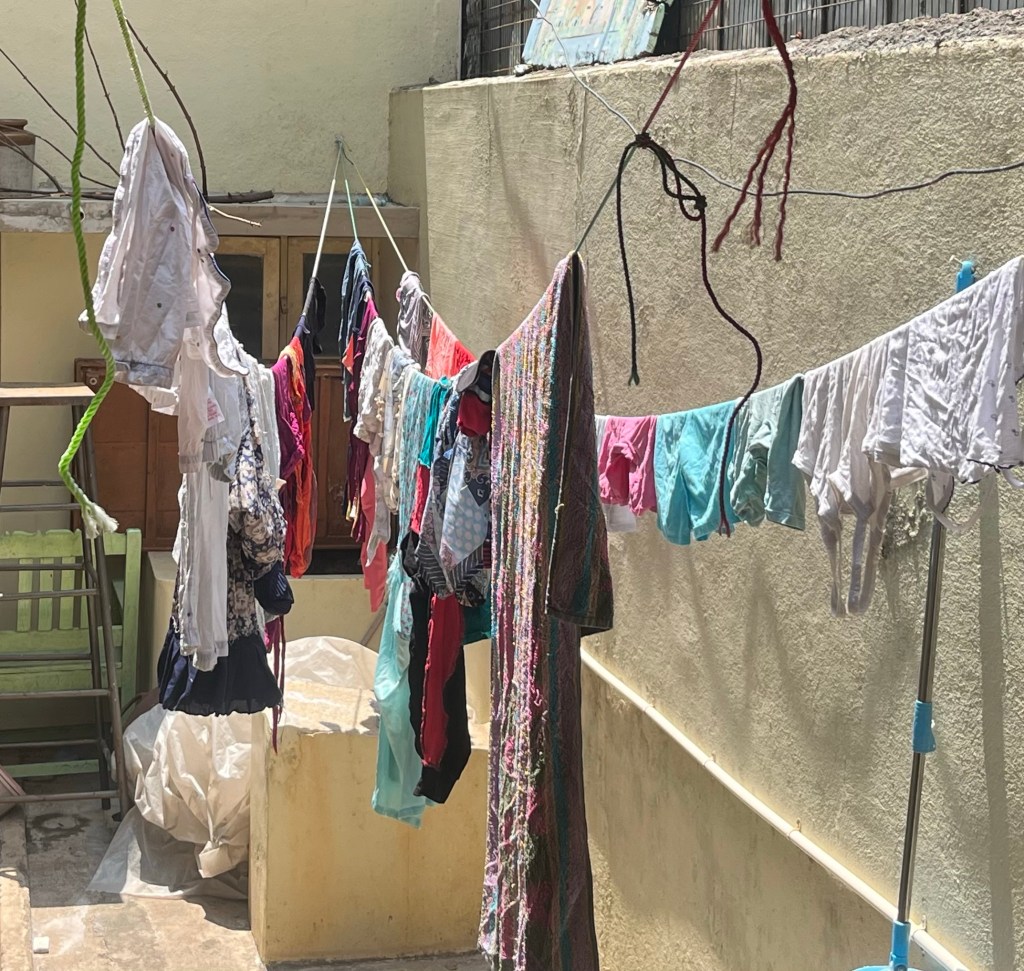
At Chera Rocks FabNewActivity Splashy Chera RocksShabaz, our wonderful friend always on hand to make it a great success. Time to go home Who does the washing? Where have you been?
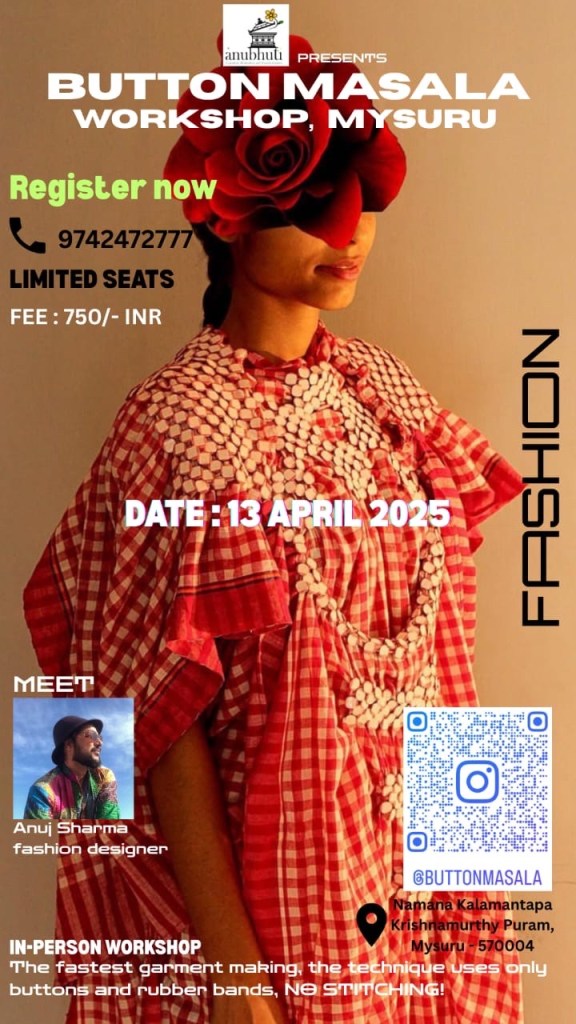
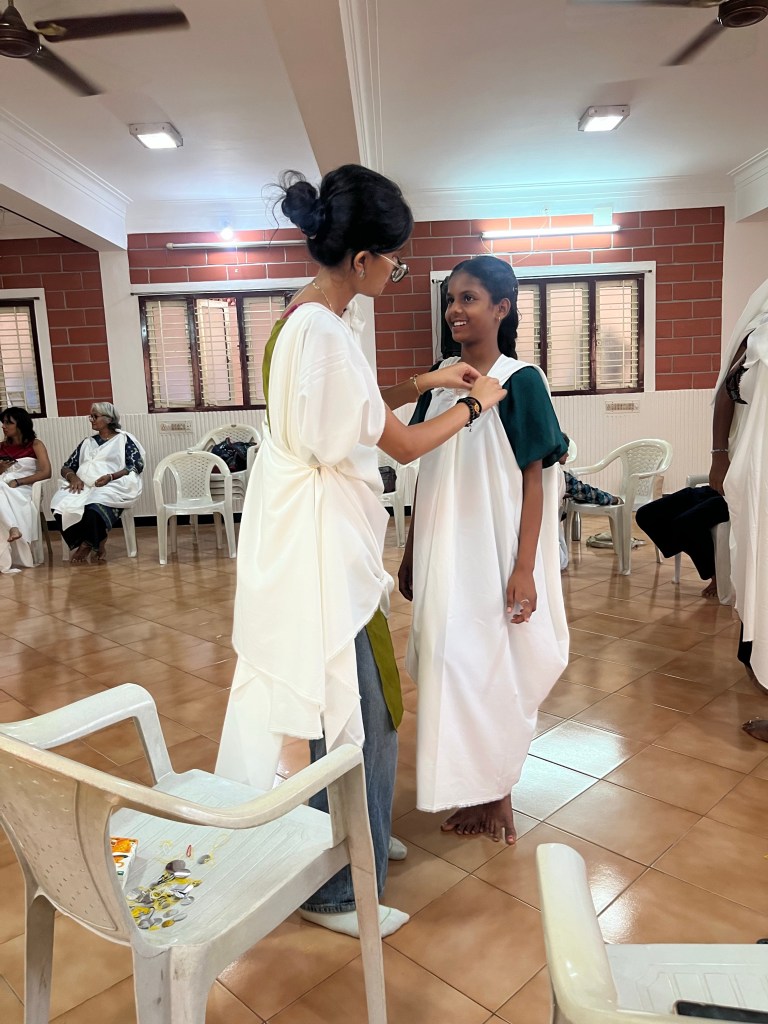
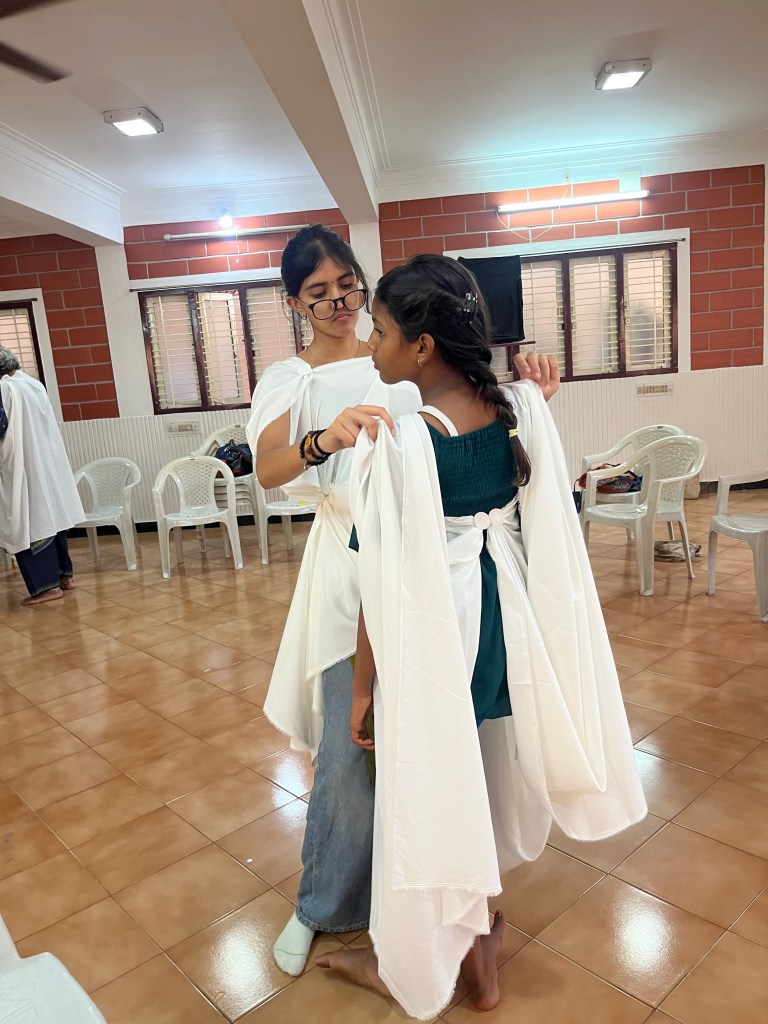
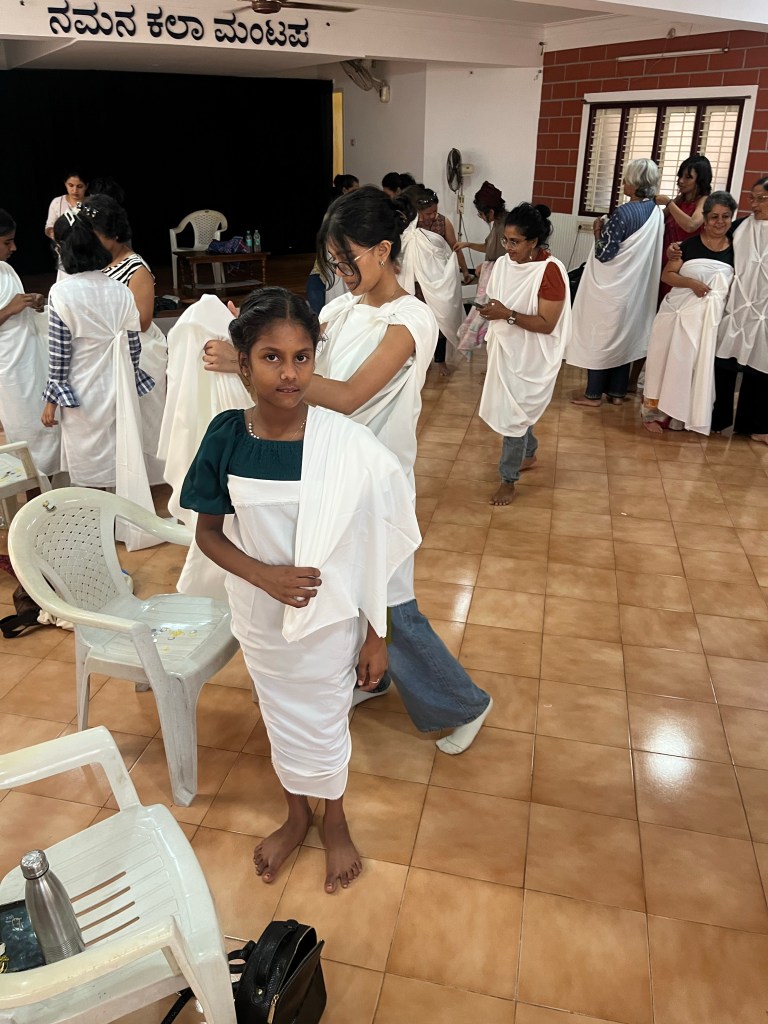
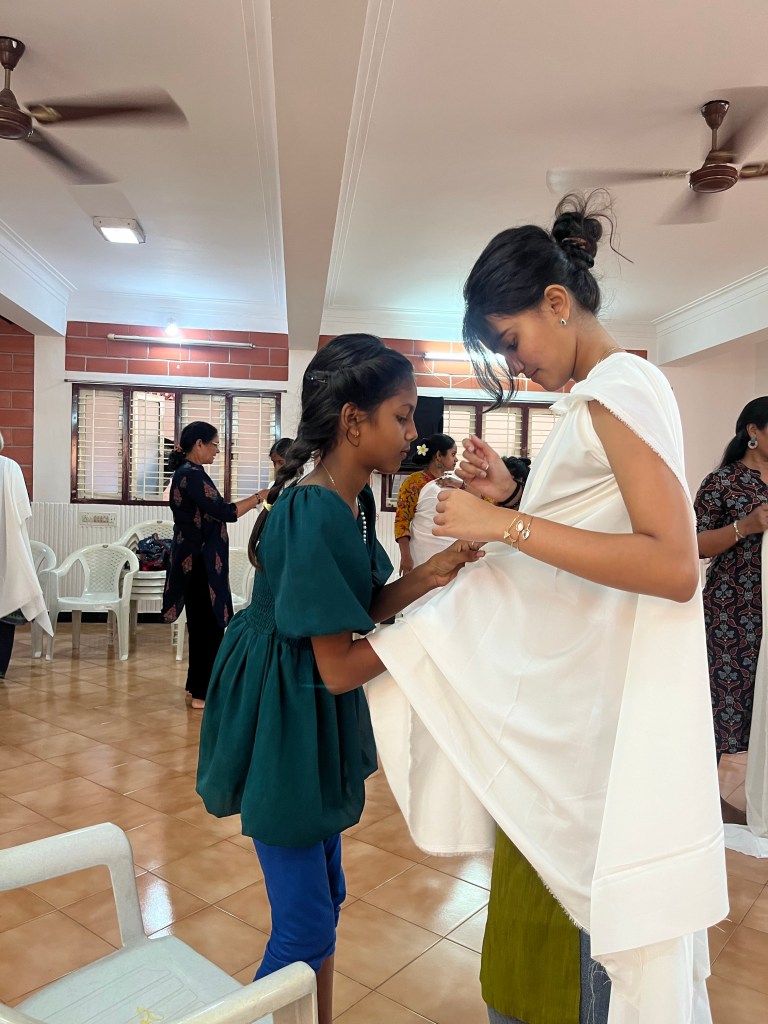
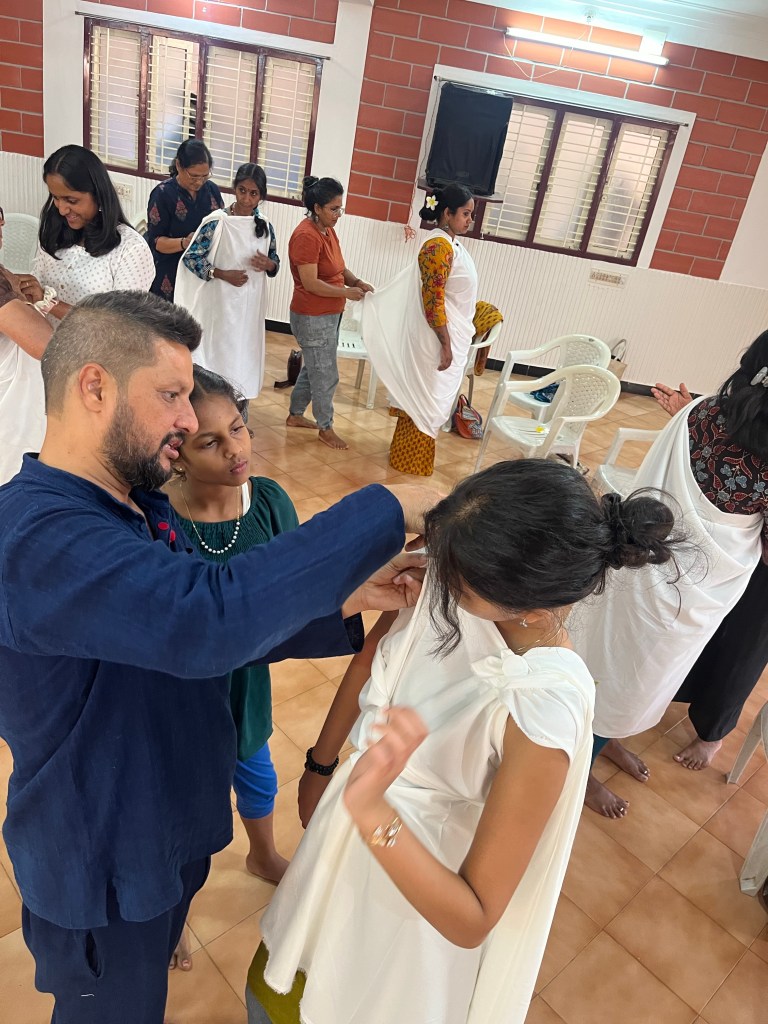
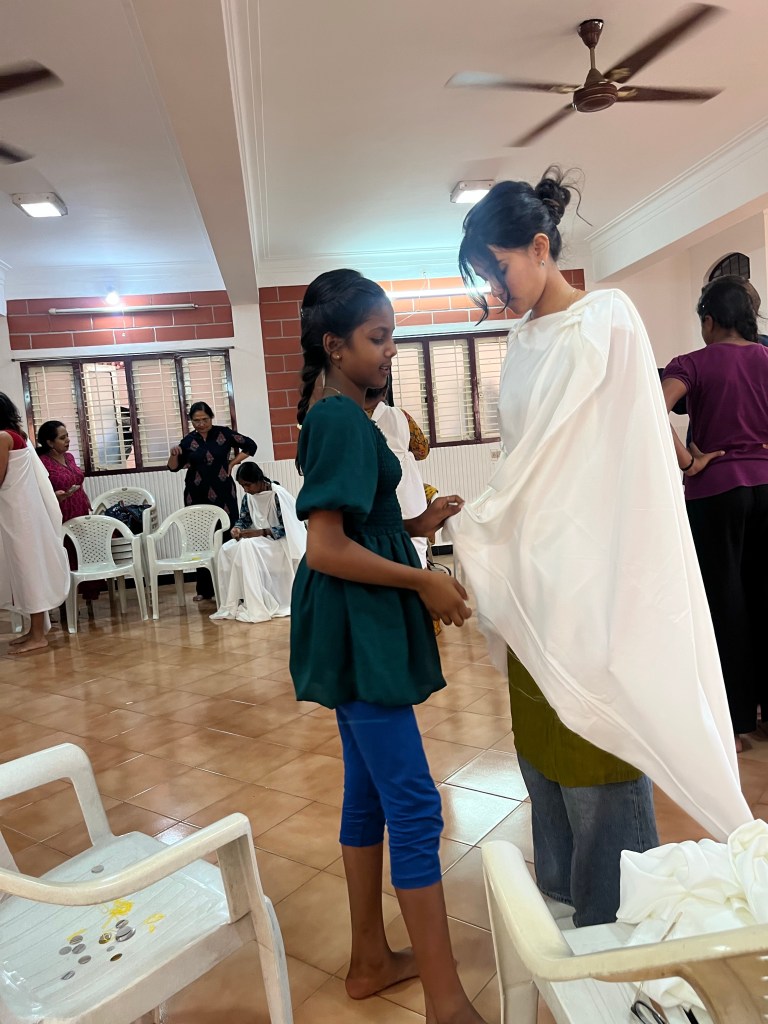
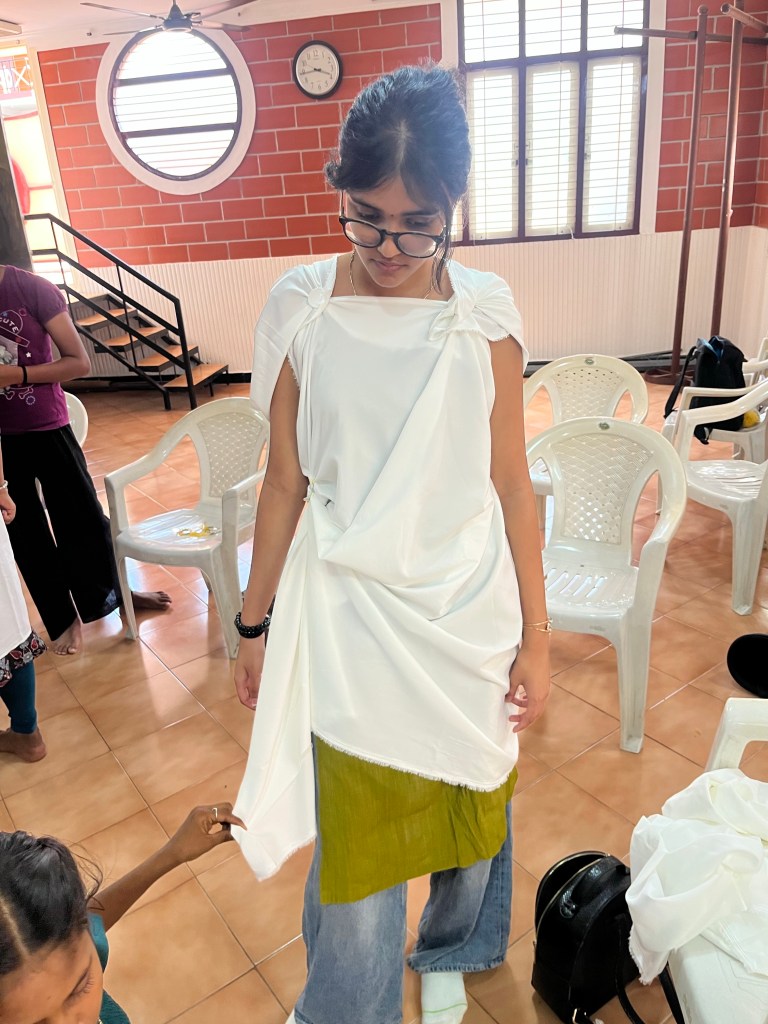
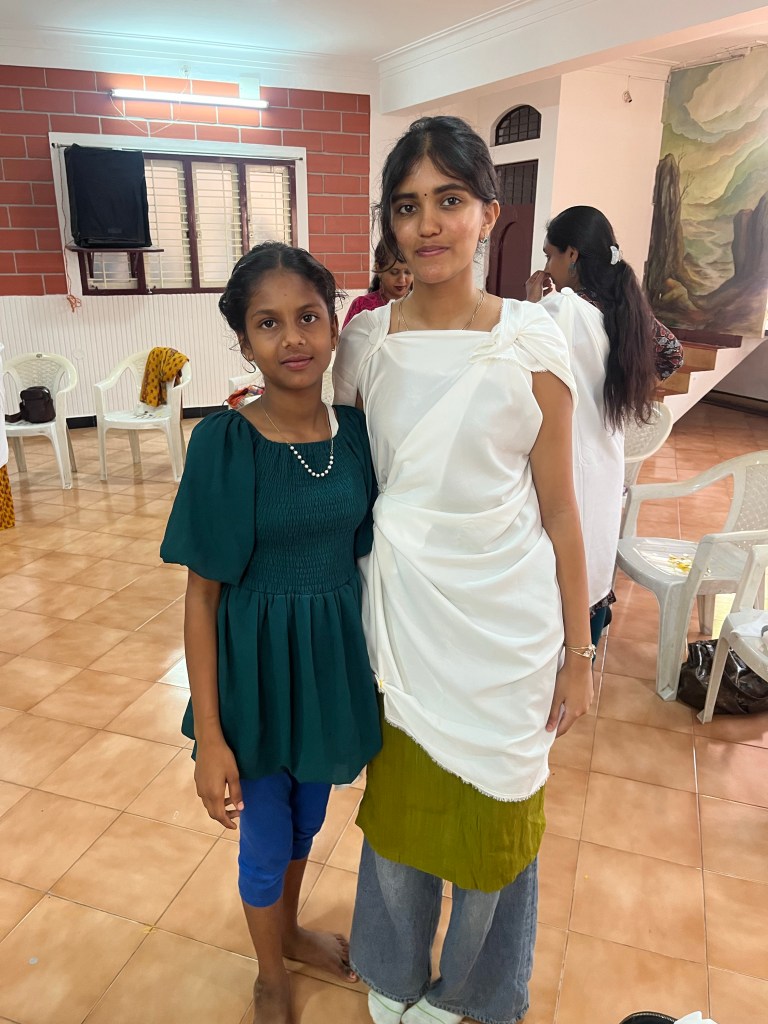
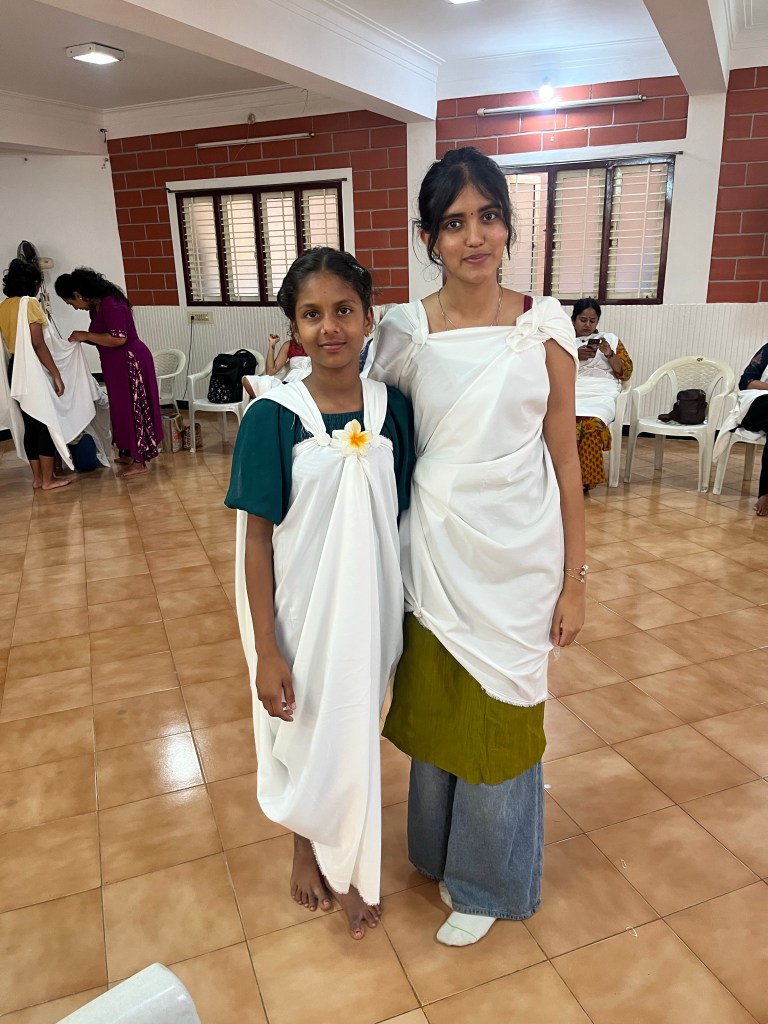
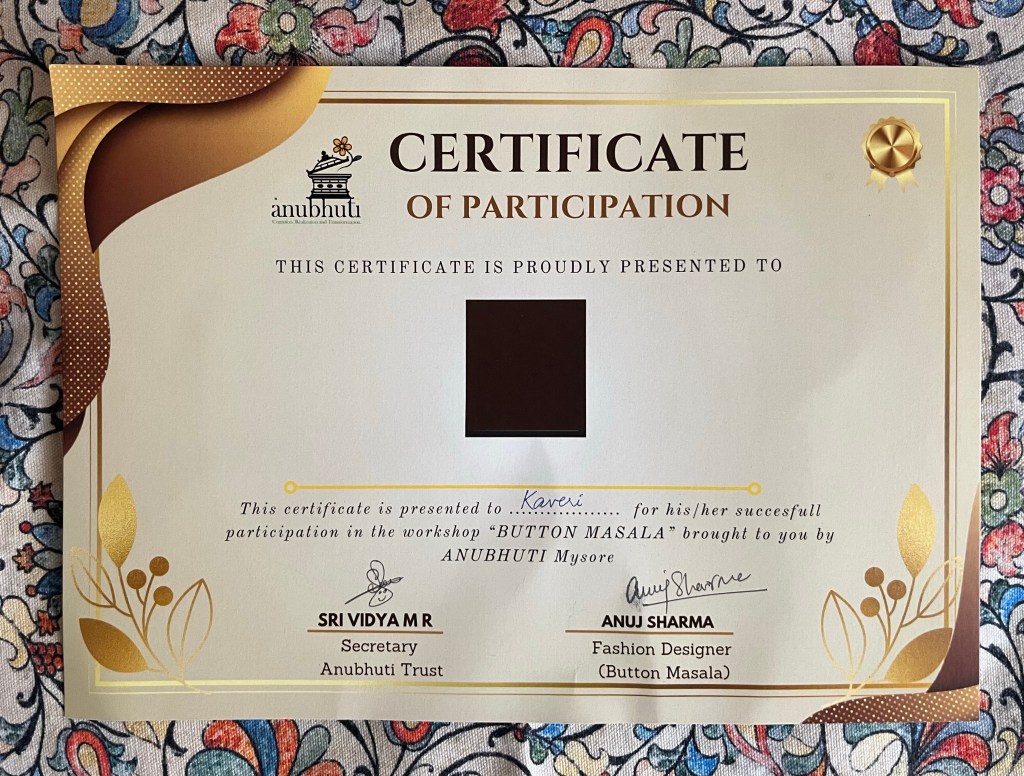
A new summer school holiday activity — Button Masala.
Incredible creativity and innovative design from cloth, button and rubber band!
A great addition to the swimming, summer camp, reading, storytelling, crafts, skating, seaside, badminton, cycling, TV and phone that’s become a staple of Kaveri’s school holiday
A really cool event presented by the creator of Button Masala —Amuj Sharma and supported by Sri Vidya MR of the Anubhuti Trust.
What then is love? Not much, not much; I come back to this idea. Sensitivity, imagination, fatigue, and this effort to depend on another; the taste for the mystery of the other and the need to admire… What is worthwhile, is friendship… this profound mutual confidence between [two people], and this joy of knowing that the other exists.
“The ancient Greeks, in their pioneering effort to order the chaos of the cosmos, neatly taxonomized them into filial love (the kind we feel for siblings, children, parents, and friends), eros (the love of lovers), and agape(the deepest, purest, most impersonal and spiritual love).”
I decided that we would continue Manjula’s sunshine goodness, sharing her love, through events and activities for young people.
The most obvious example is our continuing support for Kaveri.
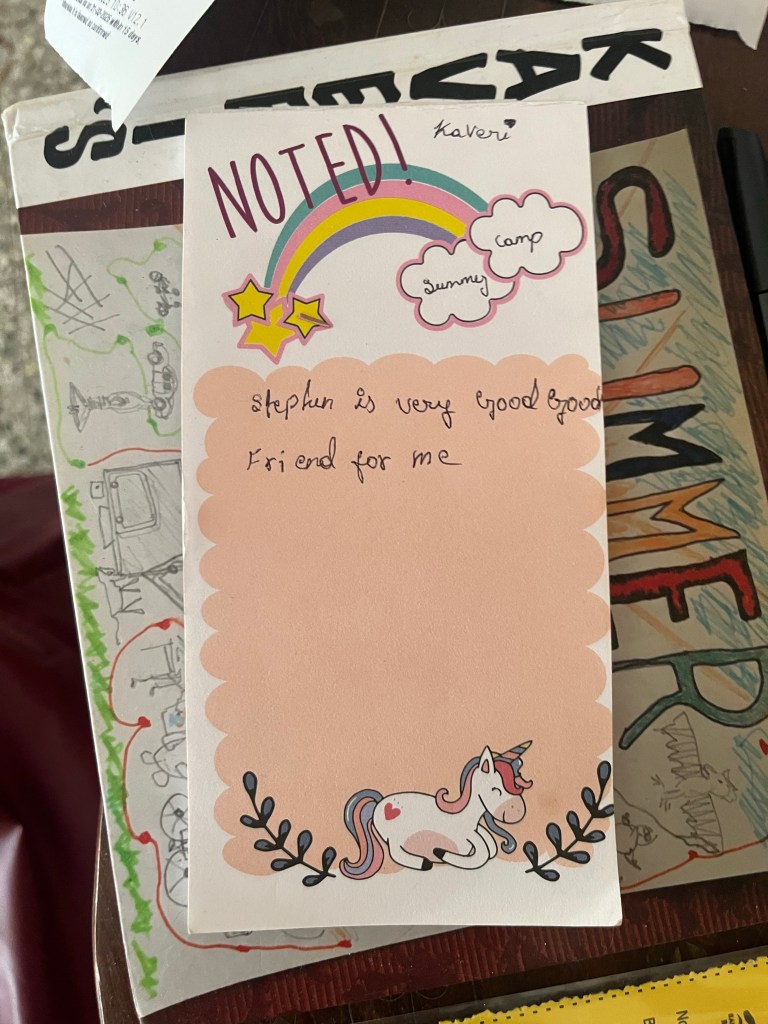
Kaveri’s most recent art from this weeks summer camp She also leaves me little messages.
If I can find a guide (supervisor?) I hope to do a PhD
I’m about to ask people at the university if they can help.
A big challenge is to work out what type of research to use and what to study, especially as I tend to cut across disciplines.
But I wonder if I can find someone to help me do a PhD using the sort of research I prefer?
I’ve researched things before but not what we normally associate with (empirical) more traditional scientific research; which starts with some assumptions (such as a hippopotamus sorry hypothesis), then you go gather information to check them out, analyse and conclude. That will indicate if you agree with the assumption or reject it. Hopefully at some point it leads to action.
I understand why it’s done that way but — my attempts have been a bit different to that — a bit more ‘off the wall’.
In the late 80s we used public meetings, market research panels, a reference group and interviews to find out disabled people’s wants and needs and then writing a business plan from what we learned. This enabled us to reorganise their services provided by the local authority (like a city corporation/council), using the money, the best way
It was called LEVEL BEST. We organised a conference to share our work.
Later, I read a book ‘Being Digital’ by Negroponte about the internet and the future of technology. We wanted to help all the communities to access the internet so invented — ‘cyber coffee morning’ — which was an introduction to the world-wide-web a year or so after it was launched. We set up a team, and delivered it to hundreds of people in the locality. People loved it. My MPhil (critical management) research was to learn about how a project develops, the key roles people take on and what motivates them. I was in and amongst what was happening and changed things in real time depending upon what I learned.
I’ve used the knowledge from that research in many ways, since then. This projects title was CYBER CITIZENS.
Career-wise, it helped me shift from being a manager in government to be a facilitator and consultant with multi-national companies.
A few years later I was asked to work in a small town to help bring people and organisations together. I facilitated it on behalf of the council to help respond to the community needs in our planning, help organisations collaborate and respond by developing new projects and practices.
A challenge for all governments is to develop continuing relationships with its voters between elections. Things change so quickly and representation needs to be supplemented. As I began the project I was interviewed by the local journalist. He asked me how I’d decide what projects and ways of consulting I’d develop. My response was that I’d try different things and go with what worked. Over thirty years later some of the projects are still going strong. That’s a form of action research. It was called CANDo
I develop slogans and brands and my methods are most like market research which always involves action and continual analysis. I was often the participant who is constantly observing and analysing with groups and networks to advise and support
All of my research has been ‘suck it and see’ and actually sometimes lead to quick responsive action.
It’s usually been about …
Creating opportunities to involve stakeholders (those with interest and influence) and making things happen, as we go along. That’s not waiting for wisdom to be handed down.
If I even go back to my earliest jobs after graduating I supported groups of young people who were ‘in care’ to share their opinions with their social workers, helped develop half way houses to help them develop the skills to become independent. This was critical as many had lived in institutions.
I became coordinator of Notting Hill Social Council continuing their work from the 50s. This involved working with the diverse communities (African Caribbean, Moroccan, Indian sub continent, Filipino peoples) to raise people’s voices, influence the council and develop community responses
It’s probably no accident that I’ve facilitated workshops in London for over twelve years based on developing values based organisations built on stakeholder engagement.
When I helped organise events in India starting in 2006 we created interactive experiences with Indian communities for company directors from multi-national companies to learn and inform their business strategy. I featured pukar at the first of these events as they followed a similar approach to mine https://pukar.org.in in engaging stakeholders.
So, I’ve done lots of research but usually through the active engagement of the communities themselves.
I wonder if I can find someone who help me do a PhD using the approach I have experience of: participant observer, dialogue, reflection, real time action?
I hope so.
This idea of doing a PHD isn’t really new, in some ways I’ve been building up to it for years. In each of my roles I’ve tried to help people learn by doing and becoming active participants. More recently it’s arisen from Manjula Mysore’s support to young people through creativity days, reflective space and the sponsorship of Naveen and Kaveri.
It’ll somehow relate to this.
It also reflects the work I first stared on my BA in the 1970s
I just hope I can find someone at the university who will support a slightly different approach.

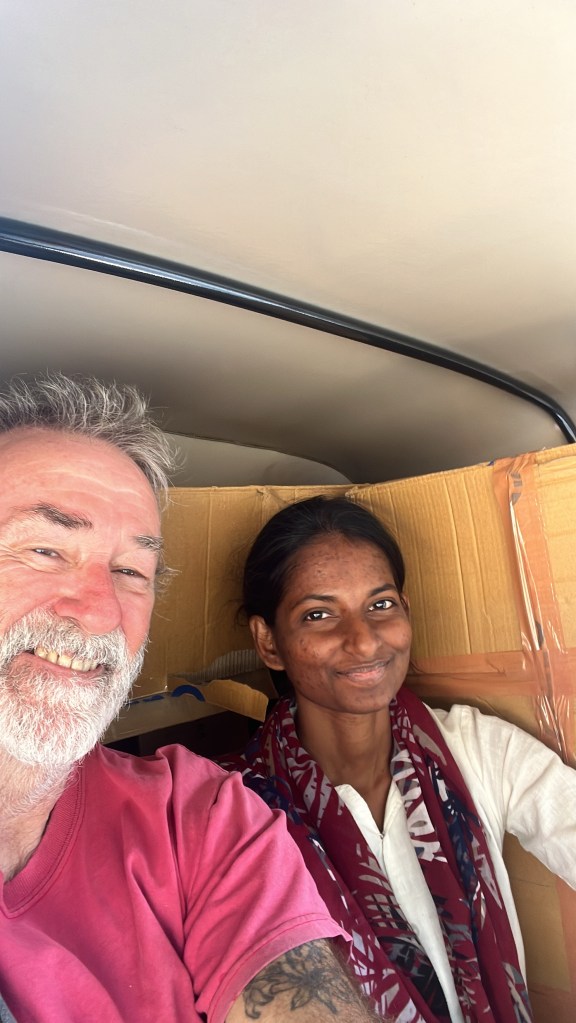




































 Me and MYCycle