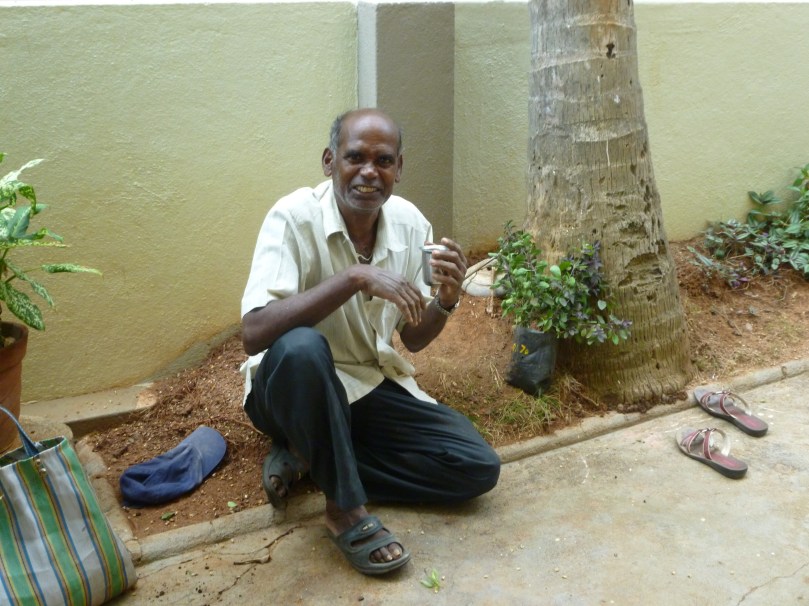
Stakeholders? Who?

the arrogance of the British?

BUT they were sent packing decades ago!

The powers that be, in this case Mysore University, are planning to commercialise the best natural lake in Mysore: Kukkarahalli Kere used by hundreds of locals for invigorating walks and a wonderfully diverse population of birds.

They seem to be stuck in the past.. development-itis means buildings, creating a boating lake (we already have a boating lake –  why not  buy some better boats and get that one working properly?) destroying the very aspects of the lake that attracts the birds and creates the necessary life-enhancing biodiversity. A case of throwing the baby out with the bathwater?

Well this morning, there was a tremendous turnout of local people from allsorts of local organisations and all political affilitiations, to highlight what will be lost with this inappropriate development. Appreciating their picture show of birds to be found on the lake and signing their petition were hundreds of local people who love the lake as it is now.

Well done the managers of Mysore University, who are acting just like the autocratic British invaders with no sensitivity to local needs and wishes. They might as well be invaders from outside given the complete lack of sensitivity to local stakeholders with little understanding of our need to live in harmony with the natural world. Maybe their brain is not in tune to a real world,  they are contributing to the destruction of Mysore and what makes it unique. Maybe they will realise our loss when its too late.

Unfortunately it was too foggy this morning to properly appreciate the place. Maybe that’s appropriate as it helps illuminate what it will be like after the ‘development’ as we’ll see fewer birds. There will however, always be a place in the hearts of the heartless for the lesser spotted digger, the painted TATA Hitachi, the tool of develpment -itis.

Farrell Factoid

The thread throughout all my careers has been engaging people. One of my current workshops, delivered in the UK as part of the Corporate Responsiblity Academy is a ‘development’ model that is based on stakeholder dialogue and their active participation.


more change….

We, that’s Manjula, Kamlama and I, drive to the village in the Ambassador, round the backside of Chamundi Hill.

We park round the front of the small village house and follow the sound of the music to the rear. We’re met by a typical scene: a “tent’ a canvas decorated roof to provide shade,  these are often used for events at someone’s house, has been quickly erected that morning. The musicians are seated on the road in centre of the tent, the men are either seated by the music or constructing something out of bamboo.

Our gardener is laid by the side of the house door with his closest women relatives, particularly his wife and adult daughters, crying, prostate around his body. Small groups respectfully go and place flowers. the pile becomes so high that they are often scooped up and taken away to be added to the ‘litter’ the men are building.

p1040599

We pay our respects, leave flowers, wait a few moments and leave.

He will be buried later that day. I don’t know why. Most people are burnt on a funeral pyre (helps the soul escape?)  and then the ashes to be sprinkled on water. Locally that’s on the river such as the site we feature on the Srirangaptnam tour. Some are buried.

For the following thirteen days there are a whole series of rituals and customs to be followed. These vary according to location, caste, local and family tradition. They might include: no cooking at home, a process of cleansing, clearing and cleaning, redecorating the house, showering, Tulsi plants, new sari, bangles, sindu. The widow goes to the burial place to break her bangles, takes the flowers from her hair and wipes off the Sindu.

Its complicated, formal and informal and its significance is unmistakeable.

These scenes are common as we pass through villages.

This is the first close member of our team to die. Nariyanappa has worked for us for over three years and in that relatively short time has created a commerative to his abilities as a gardener. He’s made a real and lasting difference to the place.

You can see it, as you arrive at the house, in the downstairs sit-out, up by the back door with the bouganvillia or the best of the lot, the roof top terrace. Even to the very last moments he was concerned to ensure his daughter (who also works for us) was visiting regularly to water and keep the garden in good order.

Respect!

We visited his wife and family during this period of mourning to provide some cash to help them through and the gift of a little sun We thought it was approriate as he’d brought a light into our home with the beautiful garden he’d created which is appreciated by the hundreds of people who visit us here in Mysore.

Thank you Nariyanappa!


want a boy or a girl 2

Remember back in November I relayed Manjula’s discussion with friends about whether they would want a boy or a girl? Its here if you wish to check back.

It was triggered by the pregnancy of one of her friends.

Well, as I mentioned in the postscript, the pregnant woman’s husband subsequently died

Now we’ve just heard even more news of the suffering of this poor woman. Her mother has just died during a visit to her daughter whose baby is due this week. Manjula and her other friends have now gone to console her.

I’ll let you know how things develop but imagine what the poor woman must be going through.

a valuable member of our team

I’m often struck by how much serious illness there is around. I know there is a LOT of it around and the older one gets there is even more ! But there is a lot here.

We have a great team at Mysore Bed and Breakfast, the cleaners, the drivers and we even have a very part time Gardener. Manjula keeps them all in order, which is not a simple task. We unfortunatelay lost Yogananda one of our local drivers, just recently.

Our Gardener, Narianappa, who has created a lovely garden not only on the roof terrace, but also on the first floor landing and has visually made the entrance and front of the building a great inviting welcome.

He always works in a non assuming sort of way, peddling everywhere on his trusty old sit-up-and-beg cycle gets on well with all his many clients in Mysore and has created luscious, lively gardens all around the area and further afield.

Here is Narianappa with his daughter and nephew working on the garden.

Well he’s been at home for some weeks now after an operation for cancer. They think his kidney is not now working and he may be jaundiced. His daughter who also cleans for us has passed on a message that we should look for another gardener. He goes back to the hospital today and the family are offering their own kidneys.

It doesn’t look good

Why India? 2

Why move to India…

I fell in love with India, its culture, people and places from afar and planned to visit in the 1970’s when I took a year off from my university. (I made a bit of a habit of taking years off).

True or False

True

I was a bit of a wus and not an adventurous traveller. I’d got as far as Turkey and the message from those who’d travelled overland from India was that it was particularly dangerous at that time to go to India, via Pakistan as they had just hanged Bhutto. So my visit to India just didn’t seem destined to happen.

Would I even manage to get to India in the next decade?

Nope

I hooked up with Liz and Ben in my late 20’s (We’re in the 1980s now). Liz had already lived in India for a couple of years in the early 1970’s so with one kid already (Ben) and potentially another one to come (Ol), India, was most definitely not considered by Liz to be a suitable place to take a young family.  Her experience of India was as a hippy  and she wouldn’t reconnect with India for many more years.

So that means I wasn’t also going to get to India, not yet anyway.

Farrell Factoid

I have subsequently met many people who have found a love for India (not least the visitors to Mysore Bed and Breakfast). There are of course many different attractions and often its difficult to define what it is that they particularly like. For many people they are inexplicably drawn to India, it has a sort of magnetism from a great distance. Maybe it is the free flow of ideas crossing the ‘bridges’ west and east (especially Britain and India) that stimulate people’s interest, there has of course been many exported ideas (and zero) for hundreds of years. There’s been icons such as the Beatles, the travelling Yogis, the hippies themselves, Yoga, whatever, there is an incredible range of things that we’ve heard about that help feed our seemingly insatiable desires for India, India things and Indian-ness.

Michael Wood in his book (Big Recommendation) to accompany the BBC series ‘The Story of India’ writes of becoming ’emeshed with India’, ‘the great privilege to be welcomed into another culture and to spend time in it, especially one so rich and diverse and perenially illuminating’

Of course many cultures and countries could fulfil this but

…what is so special about India?

I’d have to wait, quite a bit longer to find out.

Why India? 1

So why did you move to India when you were 53?

Its a question often asked by guests at Mysore Bed and Breakfast. Top Ten answers

121_2122_r1

I loved the wild west and its stories from an early age. India seems to be just like the wild west.

True or False?

True, I did used to watch the westerns, with my Dad, on the TV from an early age and really got into it.

True, India in some ways is a bit anarchistic (to put it mildly) so can seem a bit of a free for all as in the old west, without the guns (mostly) but it is of course …..

FALSE, its not the reason I moved to India.


STOP PRESS

Here’s further evidence of a young interest in the Wild West and that it runs in the family

Well she can’t

Wedding update….

On the very next day we get news that the father of the boy has called the girl to ask what her fathers job is and to how much money will be given by them as dowry.

It works out that the boy’s family is quite rich, the dad is a civil engineer and they have cars and maybe three houses.

So it’s off. There is a mismatch on wealth and occupation. Quite why this wasn’t sorted by the broker before they even met, who knows.

So mum is a bit sad, daughter says she doesn’t care, even if she doesn’t ever get married.

So the apple cart is upset. This must be a very stressful situation. The individuals involved must feel the rejection very personally and familially.

So whilst it might be illegal, dowry is still a BIG issue. I think it’s just one of the ways that suitability and comparability is clarified. It’s a short cut. Back in England in the upper classes, the man would approach a woman’s father to ask for her hand in marriage. Their suitability would also be determined maybe by their wealth, and income but above all by class. Is this really much different?

In life, in India, caste is incredibly significant. It not only reflects one’s position in life and how one will be treated by others, it will affect life chances and experiences. And as we’ve seen with this example, even caste alone is not good enough to determine someone’s suitability.

In my view it’s one of the most corrosive things in Indian life.

will she, wont she?


img_5449
a littler girl rehearsing for a FUTURE date!


The girl is a little tall and her forehead is a little big (maybe Manjula means she’s a little plain). She’s the daughter of a friend of Manjula and as she’s reached her mid twenties she’s looking for a husband. A broker, a family friend (gets commission from both sides for an intro and a second bigger payment should they subsequently get married) has found another possible husband.


She’s already seen eleven or twelve potential husbands.

Her mummy (getting a little desperate) says “go outside” meaning find someone you like get married and move out to his home. She worries that at 26 and having already seen so many prospective grooms she might get too old to be married!

An added pressure is, we’re just entering a month when it’s inauspicious to marry and even to hold the introductory meetings.


Yesterday’s meeting was convenienty held at party that was a continuing celebration of her cousin’s wedding. It was used as an opportunity for boy to meet girl (another potential match) and check each other out.

At the meeting, at the cousins house, were representatives of both families that’s ‘girl’ her family including mummy, auntie, cousins, and the ‘boy’ together with his mummy, daddy, auntie and Manjula snuck in.

They’ll all sit round having tea and biscuits, boy and girl just checking each other out visually but not speaking, parents from each side asking questions related to family and background primarily about the job, their parents jobs, how much they are paid etc…

The parents ask the ‘prospectives’ in turn if they are OK with the other and with their head bowed do the ‘head-rock-and-roll’ each, to confirm that they are happy  to progress to the next stage

They are both bank managers! big tick

Today, next day, the families will visit the priest (poojari) and check that they are a proper match taking into consideration their Gods (mustn’t be the same, this is maybe a safeguard to ensure they are not too closely related, just my half baked theory) birthdate and who knows what else. At some stage horoscopes are checked for compatability.

If they get the go ahead, from the priest today, they’ll meet up at the home (when it becomes auspicious again in Jan) and make plans for the wedding.

There are however a few more ordeals and potential pitfalls, for example the potential bride doesn’t cook, will this present a problem?

Now get your head around this one if you can…… at some stage the ‘girl’ will have to walk a few steps to enable the ‘boys’ family to check the arch on her foot. A woman’s foot is not supposed to show an arch i.e. be flat foot, for a man it either doesn’t matter or an arch is good. Just don’t ask me! I have no idea.
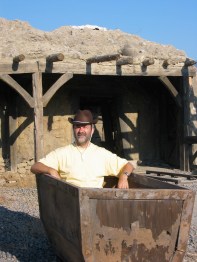
Just always remember, India is consistently inconsistent, so what’s apparently true in one context is not in another situation, family or caste, or whatever 🙂

Please note: the photos are from other weddings and engagement parties!

Hampi again

What a lovely place!? everytime I visit (and now twice with Manjula) we discover more and more wonderful dimensions to Hampi.

IMG_4195

This time we stayed in the Hampi village rather than crossing over to the island. We love both. We actually stayed two nights/three days and didn’t repeat the main ruins listed below as ‘further away’. We did however repeat our visits to the recommended places to eat, at least twice and called in at Anagundi again.


We travelled on an overnight train from Mysore to Hospet and back (Hanuman flew), journey time 12 hours, we took our own food in a Tiffin. The food supplied on the train on our first visit, a year ago, was not so good in the evening but we were happy to order the Dosa in the morning.

Hampi is of course mostly famous for its ruins of the Vijayanagar Empire from 5-700 years ago (don’t challenge me on the facts, I’m not being a guide now!). It does however have a very special feel to the place. The following suggestions for one days are at slow paces, if you’re being manic you can cover it in half the time BUT Hampi is a relaxing laid back, shanti shanti place! Its now a UNESCO site and has already changed a lot and will do some more but its still fab.

Interestingly the Srirangapatnam Island (12kms form Mysore), location of the famous MyCycle Tours, was also the site of the southern outpost of the Vijayanagar Empire. There are no ruins left of that period but still plenty for a Yorkshireman to bore hundreds of people about!

Here’s a small selection of our photos, more are to be found on flickr here.


Top Tips

Best places to eat:

Sagar Hotel, the ladies offering street food breakfast (on street opposite Mango.) I particularly like the small Dosa balls (what are they called again?)

Mango Tree, (now shifted to Hampi Village) great food.

Please note there is no alcohol in Hampi you have to travel across the river via the ferry to the island (aka Israel) or into Hospet to get any.

Usual places to visit: 

One (or half if Vittala is covered in auto) ) day

Virupaksha Temple, main Temple in Hampi, check the lovely Temple Elephant (Lakshmi?) who is bathed in the river early (7.30?) in the morning,

Ganesh. Watch out for getting your feet oily.

Hill above Temple for the sunset (there’s another one for sunrise)

Main Ruins: walkable from Hampi Village:


Vittala Temple, including the Stone Chariot and ‘balance’. Head past the ruins in the first picture where there is a Nandi Bull or retrace your steps  200 metres to walk towards the river for a nice riverside walk to Vittala. The police station where you MUST register is on the left jsut before the first pic ruins.

Main Ruins: Further away

img_4283


One day

Lotus Mahal, Queen’s Bath, Elephant Stables, Narasimha Statue, Mahanavami Dibba, Underground Temple

can be covered in a day on a cycle or auto rickshaw, combined entry to the sites (is it now 500 Rs?) might mean its also worth doing Vittala as part of the same day but you may need Auto for that.


dsc04676

One day

A trip over to the island (if you’re not staying there) takes a few minutes on the ferry and then scooters are for hire just up the path to use to take you to Anagundi village, the lake and the monkey temple (there is another temple a bit further north on the top of a hill and hard to find but with fab views that could be visited with Krishna tomorrow!)


One day

Even more and different places

Krishna (our Auto driver, one of our friends on Stephen or Manjula’s facebook site, we also have his number) took us to a series of quite different places, some on hill tops with fantastic views, some were key locations in the Ramayana story. Well worth it. Madam (aka Maharanai) takes credit for getting Krishna to take us to these places.

We now have a simple file at Mysore Bed and Breakfast with more details of Hampi, guide books etc.

Farrell Factoid

Ani Samten (of the Tibetan settlement) has just visited us at the BnB. She asks how it is for  Manj and I holidaying together and how are we treated by Indians. The fact is we choose our accommodation carefully so that we know and expect people will be more liberal towards a couple from different backgrounds. There is of course a whole back story there, check the blog!