My tour of England led me to Sheffield, my home city.
Warm showers
I was visiting Julia and Tom intrepid cyclists who’d visited us last year, in Mysore, on their journey across Asia, through Europe and back home to England.
Warm showers is a network we’re part of where hosts offer an overnight stay to distance cyclists.
They now live in Sheffield the city of my birth and their new home is just round the corner from the first place I escaped to at age 18
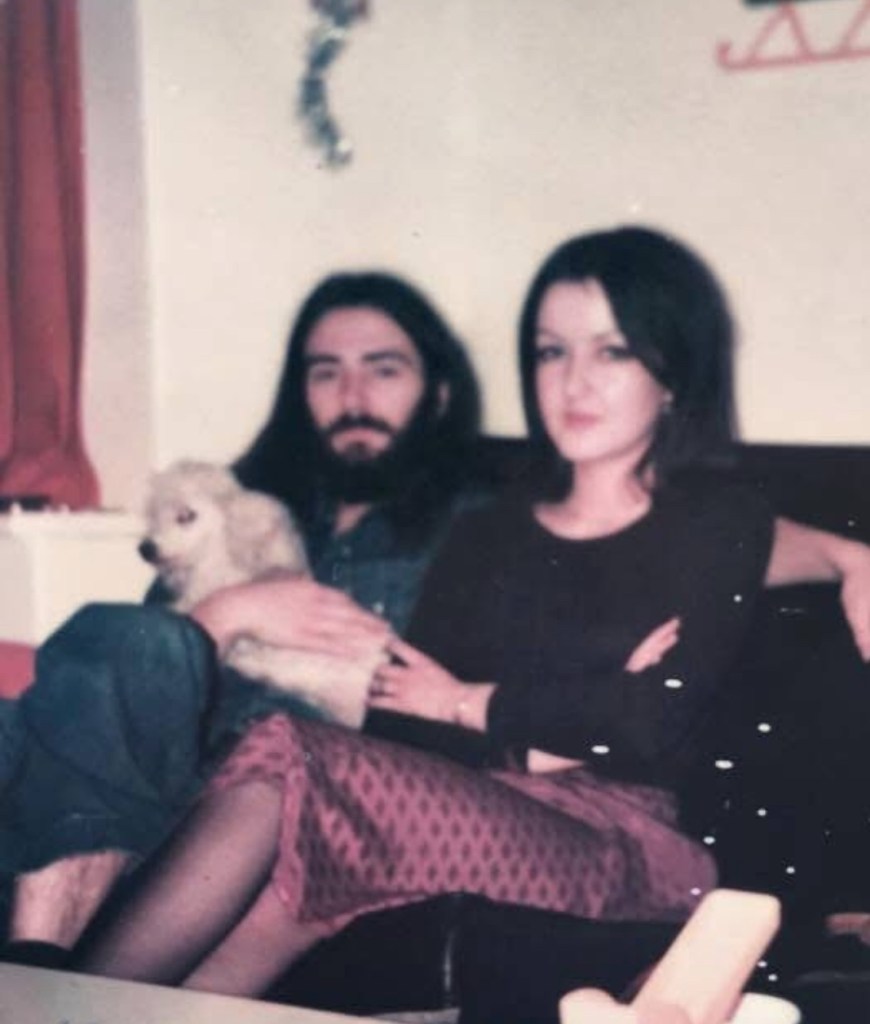
That was fifty years ago. I lived with my first serious girlfriend Tricia who kindly supported me for the final few months of school
Stephen and Tricia with my mum’s poodle.
A great revisit. The house no longer exists but there was plenty of reminiscence.
Getting people to work together and actively engage in their locality is a critical part of participative democracy.
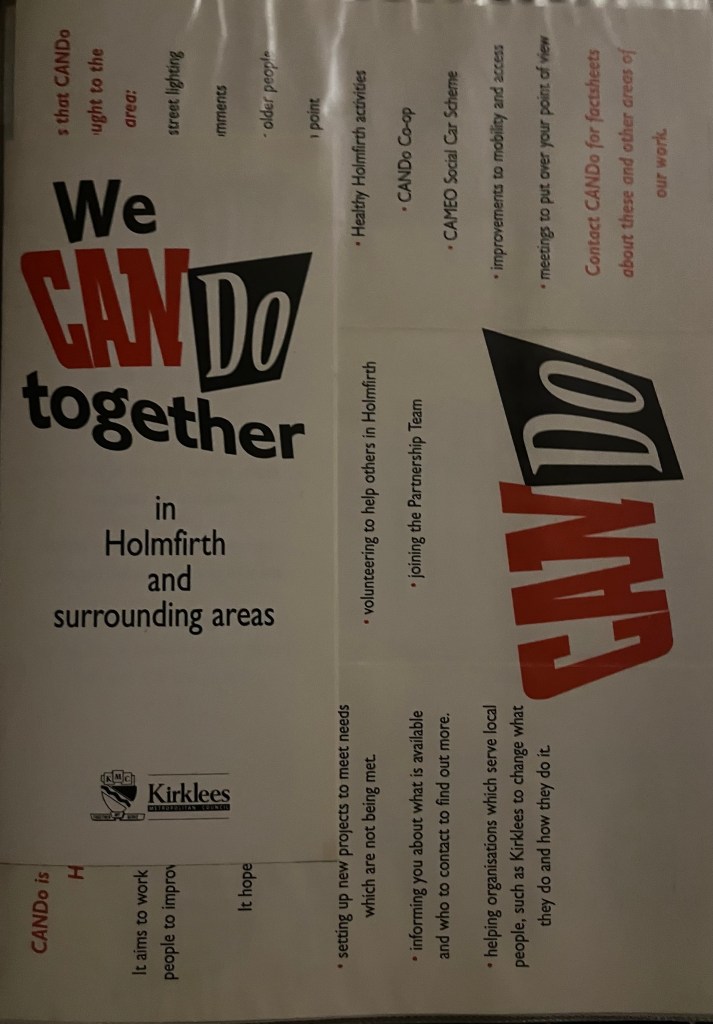
In the 90’s I was asked to focus on the town of Holmfirth in West Yorkshire to consider how individuals and local organisations could work together to service and support each other.
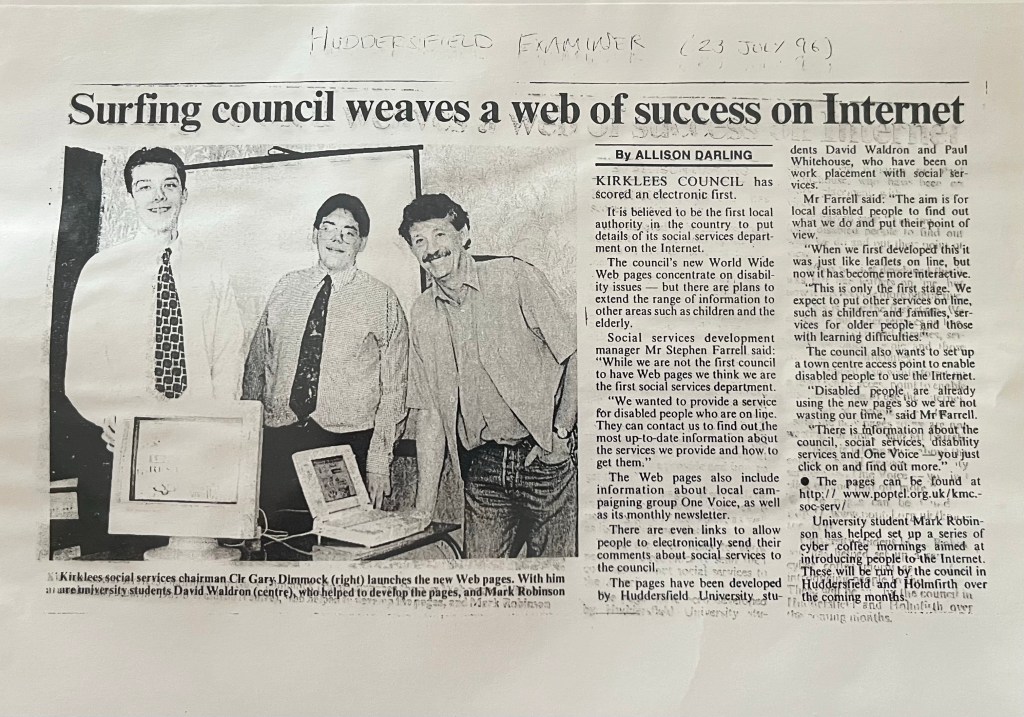
As the project developed I was interviewed by a local reporter.
I was asked what initiatives would we establish and what projects are likely to work. “We don’t know until we try. We’ll use action research, suck it and see.”
“So,” said the reporter, “it’s as if you’ll throw a series of custard pies and see which ones will stick?” .
I like the analogy.
That’s about it. Spending time on research is too slow, it’s best to dive in there, changing and adapting as you go along.
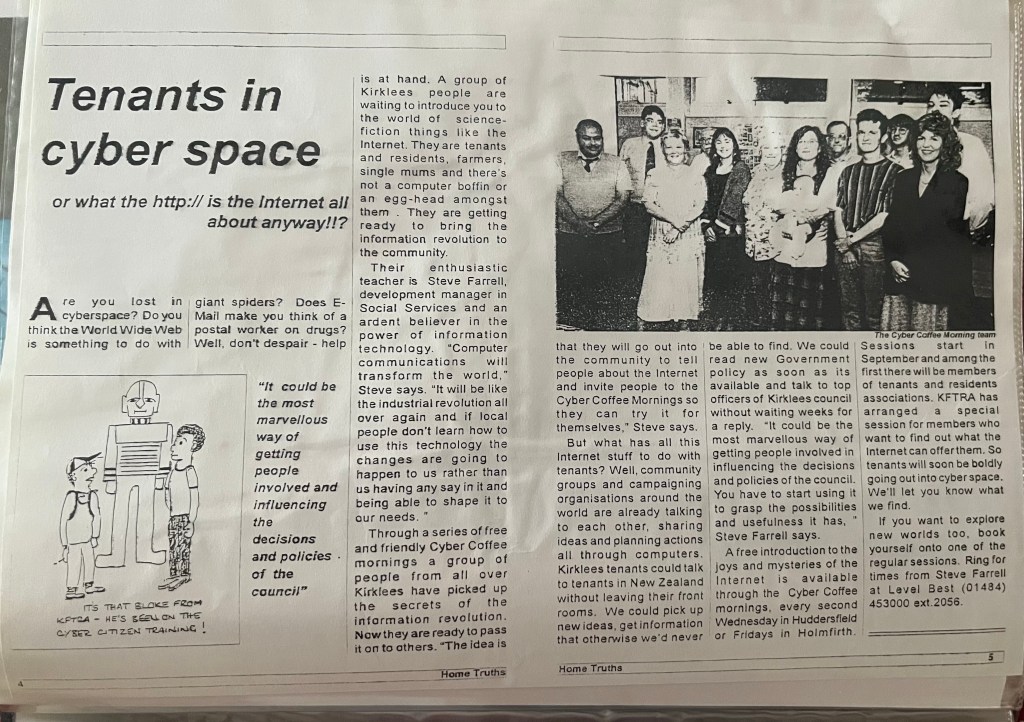
We also brought our Internet workshops to the town A great success wherever we introduced it, including to young people in Leeds and veterinary practices throughout the U.K.!
Footnote.
Background
Representative democracy is our current system but wherever possible we should be participative, helping people be active participants and not passive recipients of the decisions others make on their behalf.
Voting is necessary but what does it mean on a day to day basis? it might involve single issue campaigns, volunteering to serve, joining measures the council’s introduce to garner your opinion.
The council/local authority/corporation called Kirklees Metrolotian Council I worked for, in West Yorkshire, brought in great innovations.
As well as reaching out to engage we tried to support people to have the confidence and competencies to take their part.
That was over thirty years ago and such experiments are struggling as the government role is decimated.
Today’s conference reminded me of some of my innovations in the 90s
I was inspired by Negroponte’s book ‘Being Digital’ to explore the Internet … and develop projects to help others to do it … before it became monopolised by big business.
Commodore Amiga
A friend Dave and I would use the Commodore Amiga (much more than a games machine) in the late 80s and gopher to visit US Sheriff’s offices wanted lists.
It got me thinking. As Negroponte stated in ‘Being Digital’ we were going through a revolution as significant as the invention of the printing press.
Often my thing was ‘how do we engage people so they’re actively involved?’
Here was a great inspiration
….
My senior role in government with Kirklees Council — who were very supportive of ‘wild thinking’ — had already provided me with the opportunity to innovate.
Here was another possibility: a creative challenge ..
Cyber Coffee Mornings.
Within a year of the introduction of the world-wide-web we hit the local community and throughout the teams in government introducing them to this revolutionary new way to access the internet.
Coffee mornings are community gatherings to meet and share.
Invading these community events with lengths of phone leads, modem, over head projector, LCD panels (what we’d use before digital projectors became available) and a Toshiba laptop.
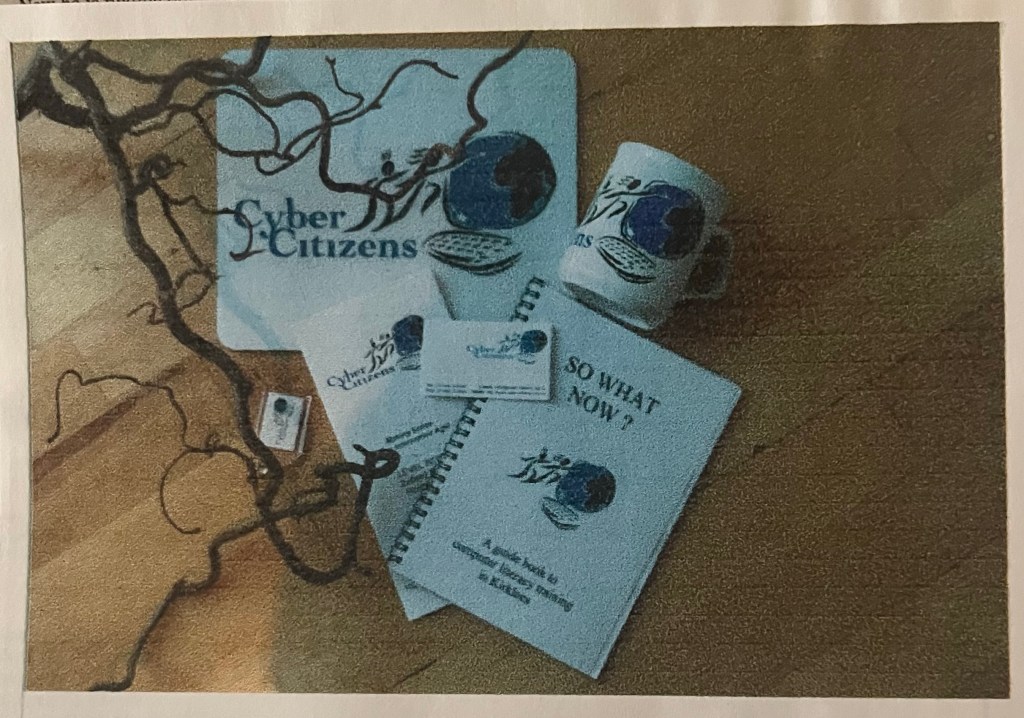
Cyber Citizens
Was the group that took it to the wider community.
The innovative projects came thick and fast.
We were the first Social Services (social work) department in the U.K. web site in the country and electronic information service
Disabled People’s Electronic Village Hall an idea borrowed from north Europe. This was a community project to promote access to learning about computers, becoming confident and surfing the net.
To help all this along we had ..
An EU — European project to share experiences between Athens, Crete, Manchester and Kirklees.
An exciting time
I initiated the projects but they worked because people got involved including students from the university to make them a success
I was also privately sponsored by Pedigree Petfoods (MARS) to provide a workshop to veterinary nurses throughout the country.
…
Footnote
Reflection
For many this was an opportunity to make money
But not for me … as usual my motivation was to serve the community.
In the 1970s and 1980s, in my early adult years I joined political campaigns and demonstrations. I believe — that’s part of our democratic rights — nowadays the right wing media might label it woke in a divisive way.
We marched and disrupted against war in principle and the locating of US Cruise missiles in the U.K., in particular.
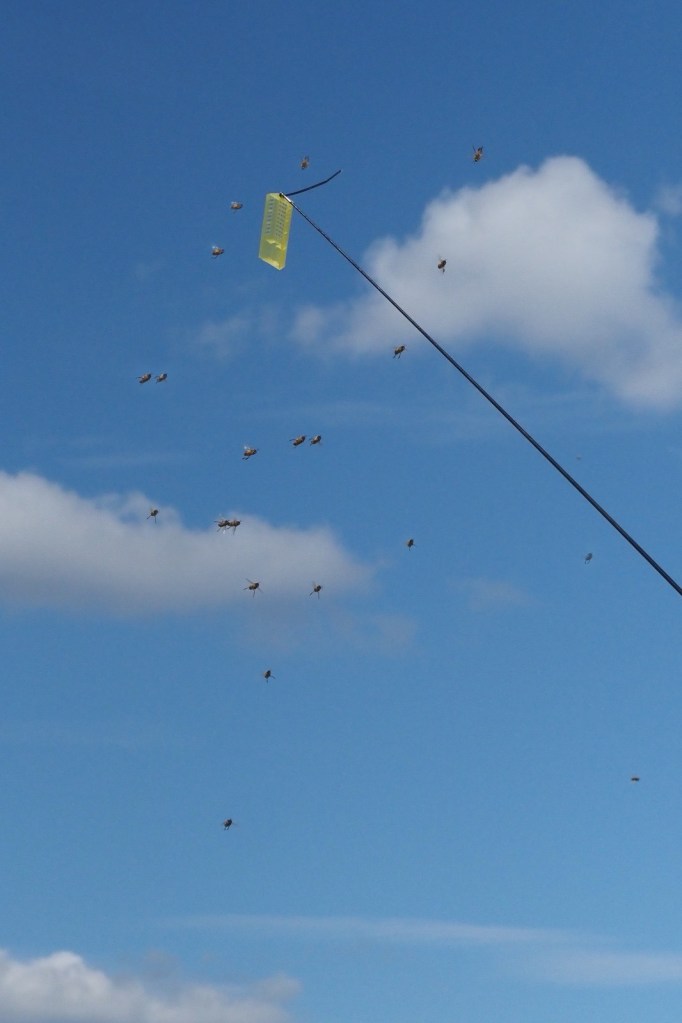
More recently I’ve revisited one of those places and had people from the military on my training workshops. For example, I participated in research about drone bees on Greenham common ewhere the cruise missile airfield is now closed. I’ve also had a manager from the warfare research institute attend one of my corporate workshops (on ethics 🤔🤭) in London.
There’s a long tradition of this around the world, given focus and energised by Mahatma Gandhi in the campaigns against the autocratic, racist British colonialists in India
In addition to anti-nuke demos from the Campaign for Nuclear Disarmament or CND (1950s onwards so before I was born) we campaigned against apartheid and fascism.
Modern day examples might be seen as the response to Gaza
BUT in countries around the world governments (for example in the U.K.) are legislating against peaceful demonstrations or intimidating demonstrators through arrest (or in India demolishing their homes.)
Our democracy is diminished through these actions. Our rights to challenge and demonstrate are critical parts of an active participative democracy.
Footnote
Let’s be absolutely clear and challenge a blatant untruth here in India.
The demonstrations in the west against the inhuman attacks on Gaza are organised and attended by a great big mix of different people from all communities including Jews and Muslims.
The choice is ours, whether it’s on an individual, organisational or societal level.
Some changes come easier then others but let’s stick with the question of — should we challenge and change?
In my view there’s an unequivocal yes.
As an individual and the networks, groups or communities we form, of course we change.
What’s learning if it’s not adopting and adapting to changing situations, and developing new ways of doing things (and thinking!).
Some people and organisations will challenge change and prefer to stick with the status quo.
When that happens, look a little deeper.
What’s their motivation not to want to change? Fear? Retaining or enhancing power?
One of the most important aspects of change is personal development, it helps create who we are.
But it’s also nonsensical to suggest there shouldn’t be change in our wider groups and society
It’s critical that we innovate and adapt, developing the requisite abilities. That might be number one priority.
Well not quite.
Our actual biggest challenge is friction, and by this I mean between people, their organisations, communities, and nations.
We need to develop effective sustainable relationships and to achieve that we need to learn to be kind.
That requires us to see things from the others’ point of view, to communicate, to connect, to be flexible and adapt.
Yes… change, constantly.
Maybe we can actually reduce violent conflict …. Now that would be cool.
So we can choose to change and not be stuck …
… in what previous generations have handed down to us
NOR
…. in our personal experiences and traumas
We can shift.
Simple eh?
Admittedly. It’s not straightforward … No it’s our life long challenge, to choose who we want to be and hopefully find happiness and contentment.
But if we’re not conscious and try we might just lose this lifelong opportunity.
There’s books I’d recommend, in Manjula’s library that help cover this.
So when we next hear someone rejecting change, said in so many ways: ‘that’s not our tradition’, ‘that’s how we do it here’, ‘it’s our culture’ we can’t, etc etc then it’s for the WPB
Ok, that might be a bit harsh, at least dive into more reflection and re-evaluation.
– Are our ways of thinking and doing fit for purpose anymore?
– Is it appropriate in this day and age?
Now that’s maybe opened a reactionary can-of-worms.
The following books are in Manjula’s library.
You might also want to check Vedanta! Perhaps recommend a book for the library.
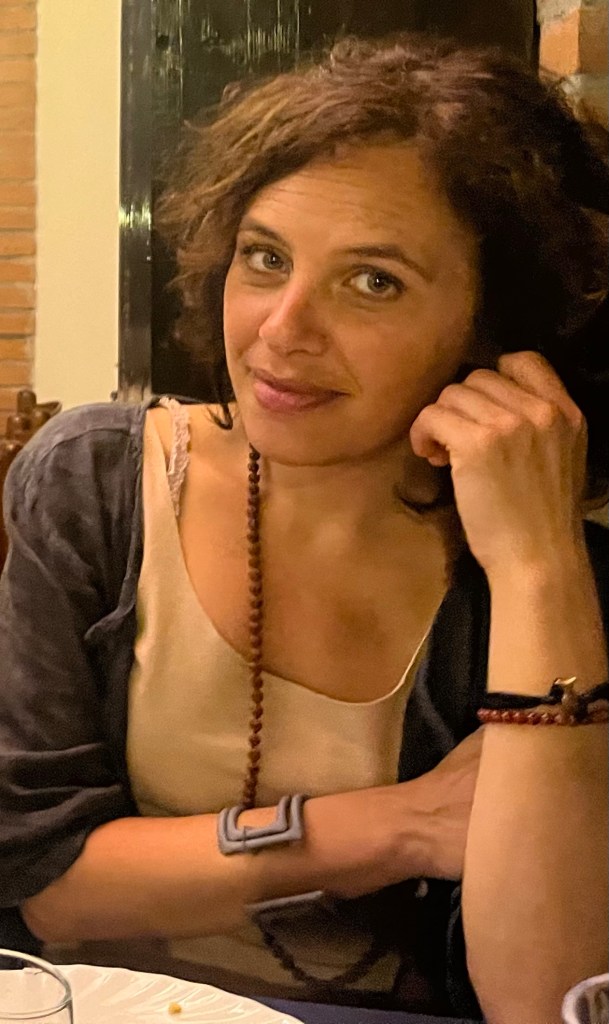
Maria checks that I’m properly equipped for the day ahead.
Maria first visited Mysore five years ago, a few months after I lost MAnjula.
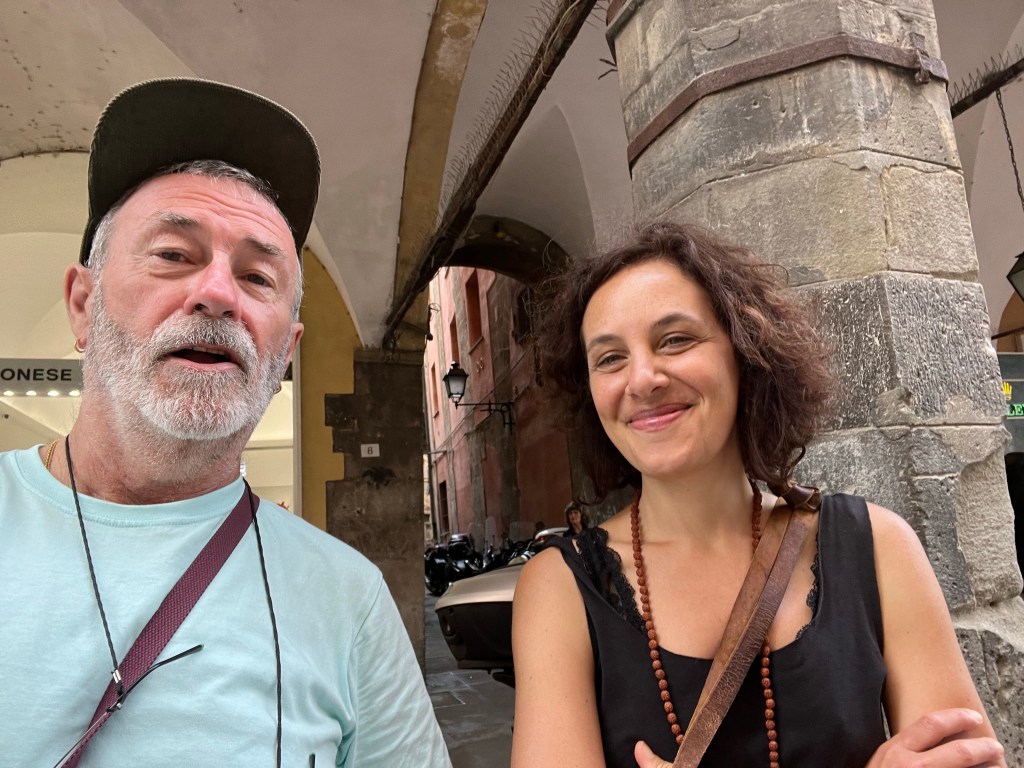
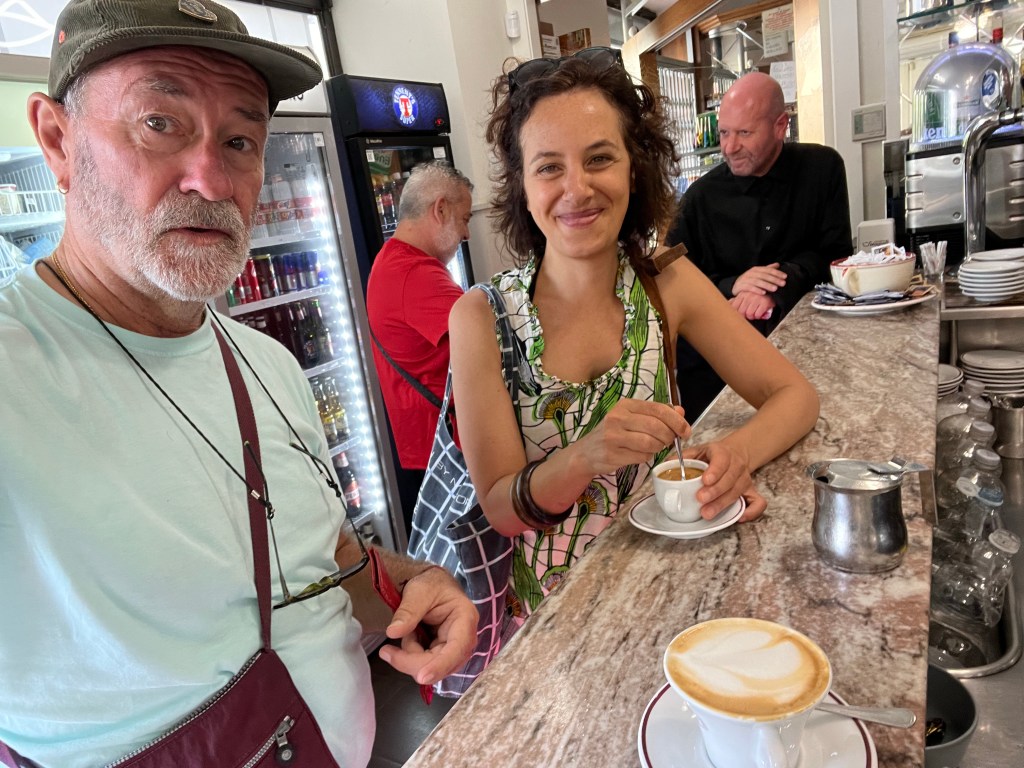
I’m on my annual trip to the U.K. but Maria had noticed I was coming and sent an invite for me to visit her in Italy
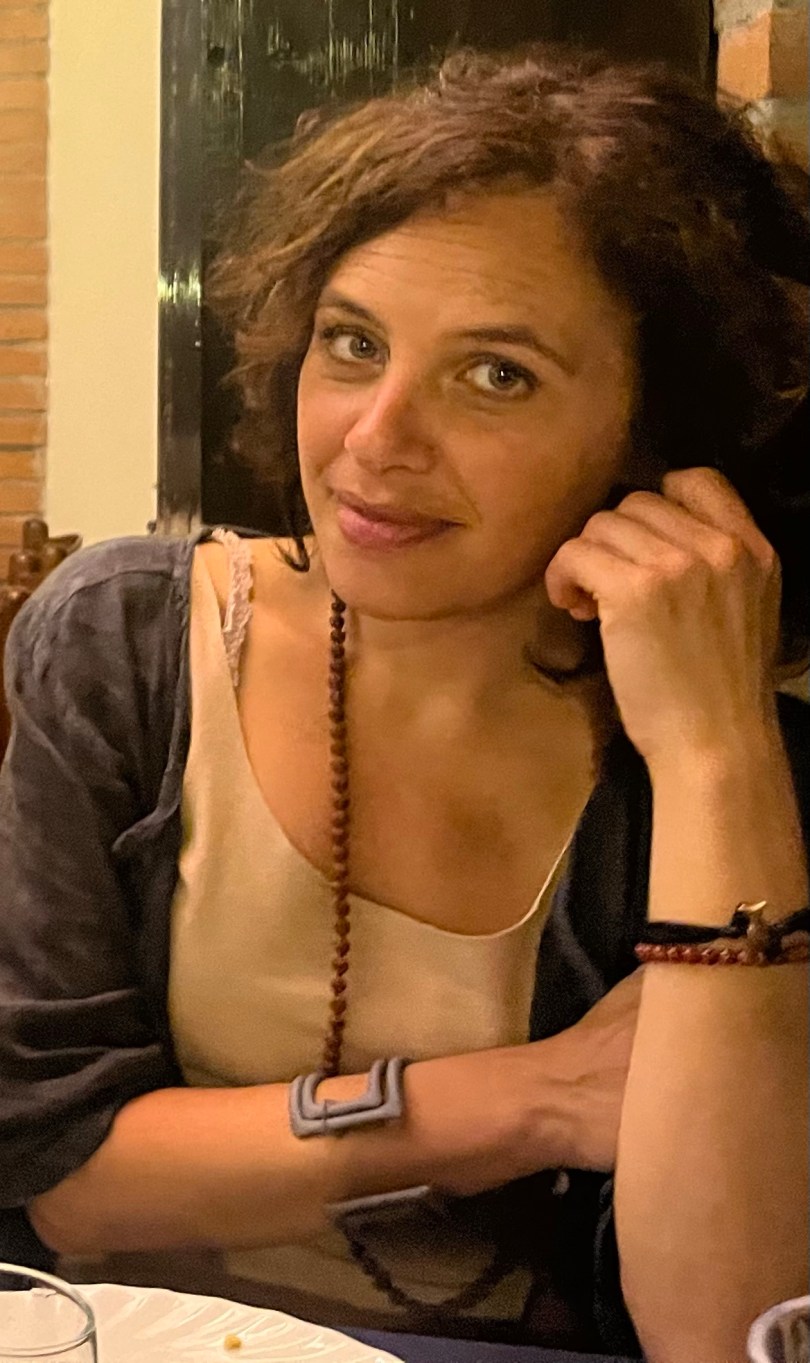
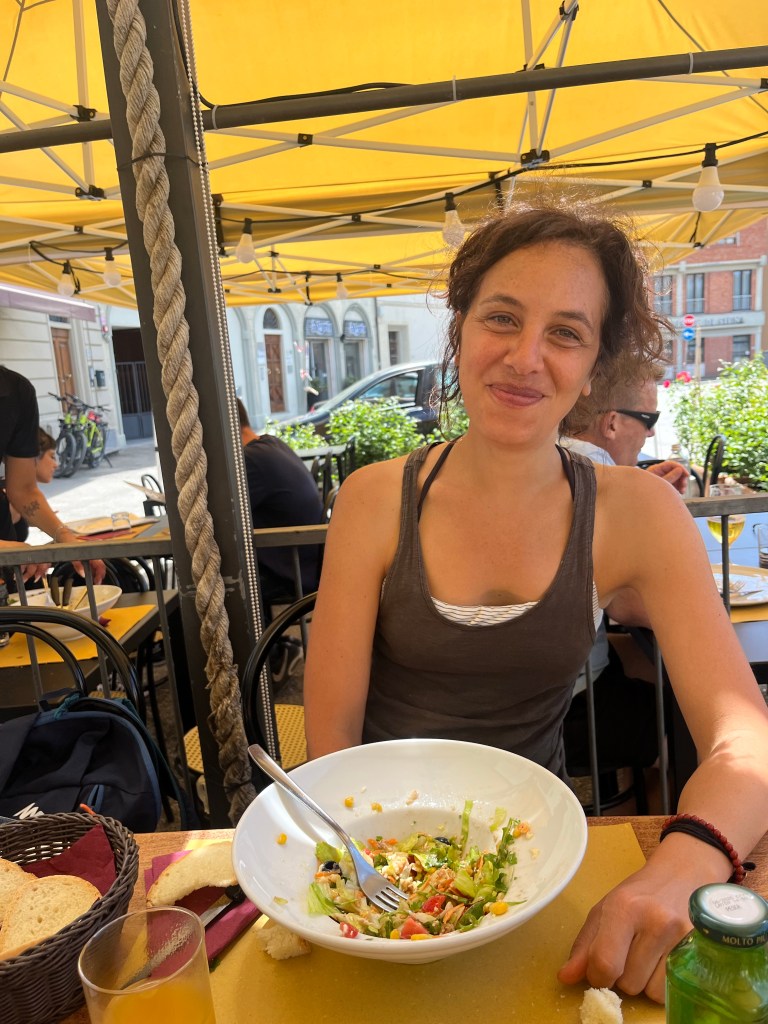
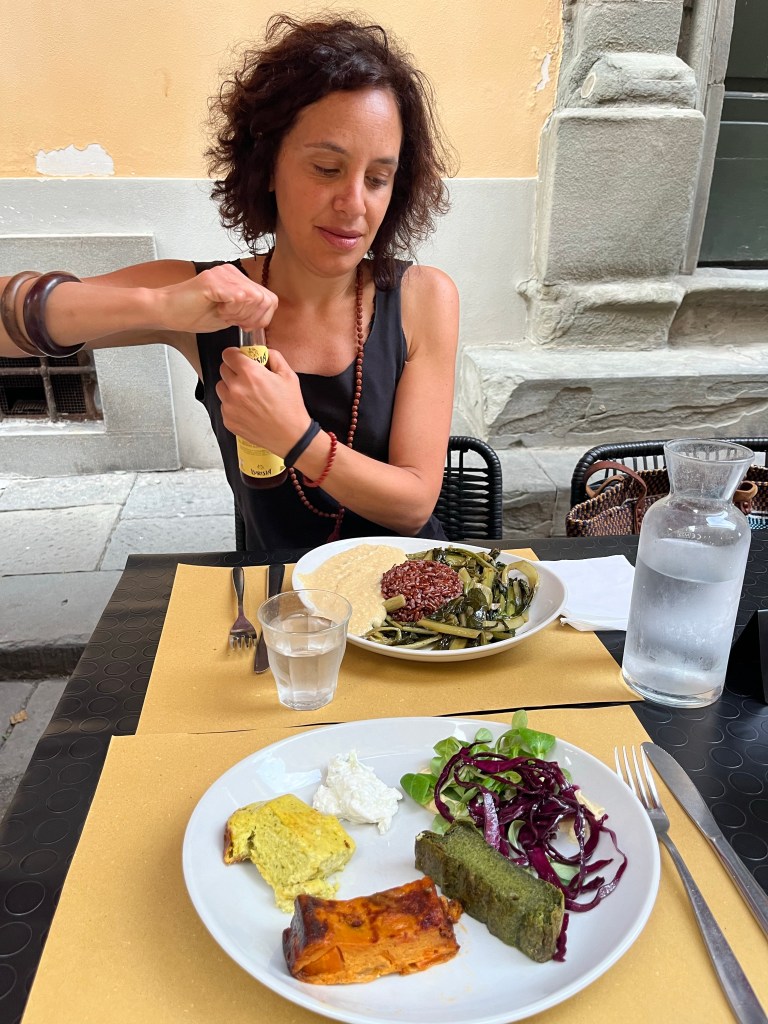
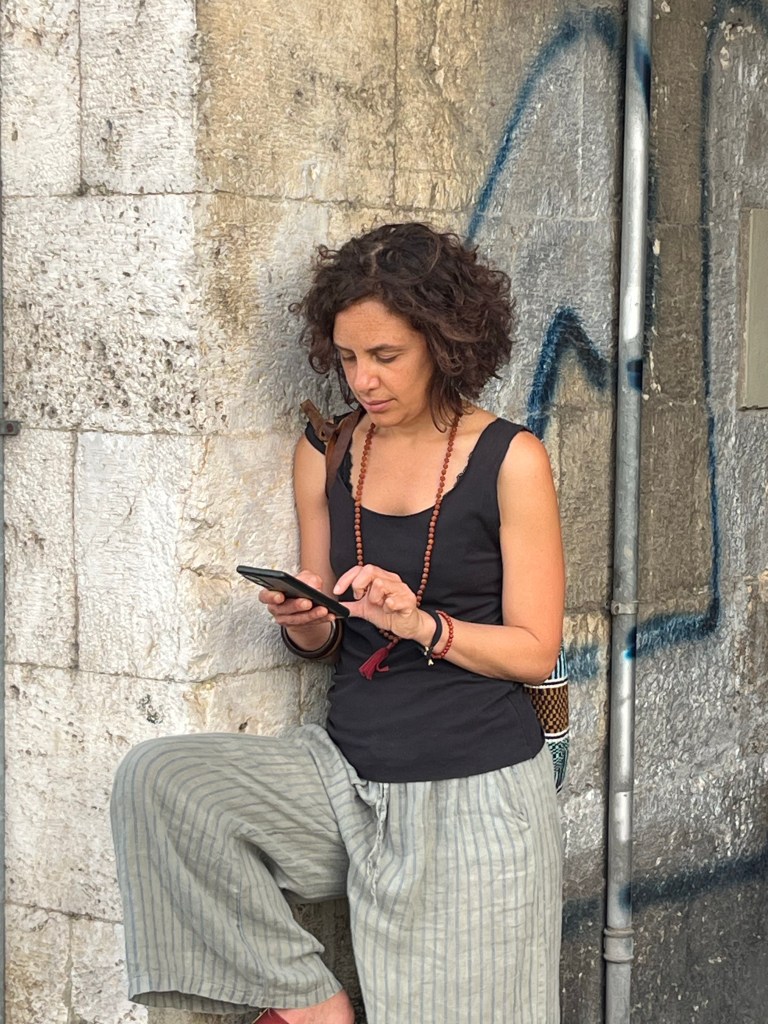
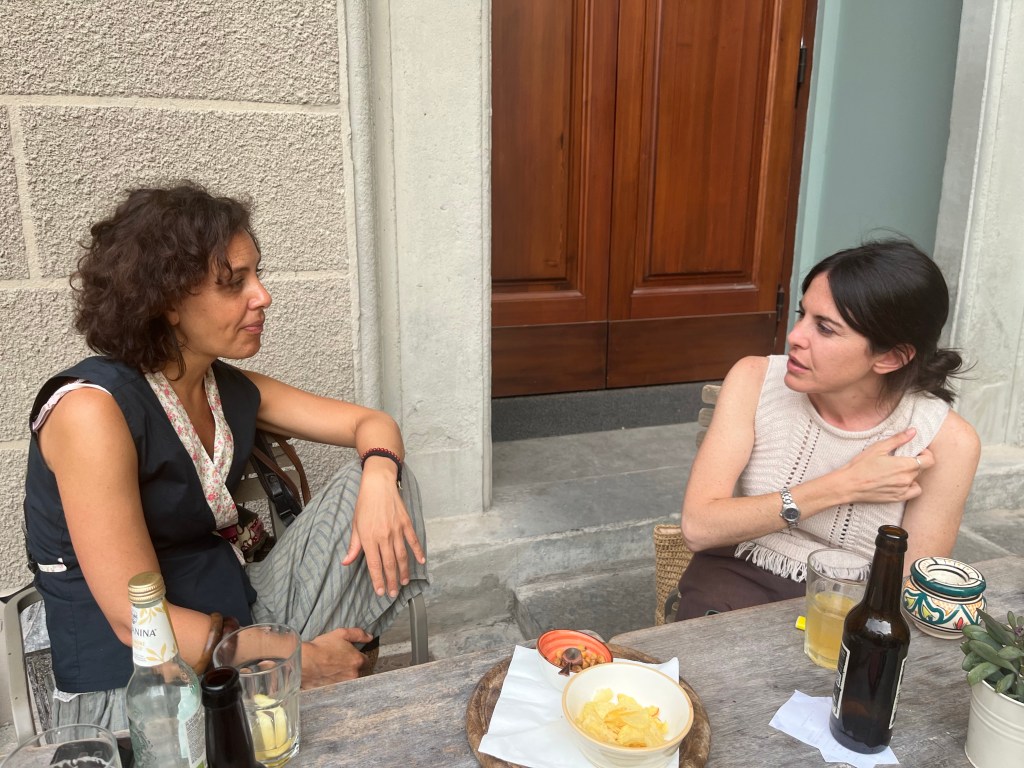
This wonder puts me up at her house, ferries me around, provides simple sophisticated food, takes me on day trips, guides me on walks, introduces me to her fab friends, provides happy insights into her own life and Italianeeeeez.
Maria is a good example of the lovely people that visit Mysore Bed and Breakfast but she’s even more special.
I’m trying to emphasise BK with Kaveri who can quickly tell me what it means: Be Kind.
Well Maria is overflowing with kindness.
Not just in hosting me…
That’s nothing by comparison with the total package …
…. she goes way beyond the stereotypical caring mama … to be a caring precious friend.
She has a social conscience reflected in the life she leads and her work in helping others to flourish through the organisations she sets up and the services they provide. She lives and breaths this throughout her living.
She’ll be revisiting Mysore again in August to undertake training as a yoga teacher and look forward to her becoming Kaveri’s Italian auntie.
I’m honoured to count Maria as an important person in my life, a cherished friend.
Footnote
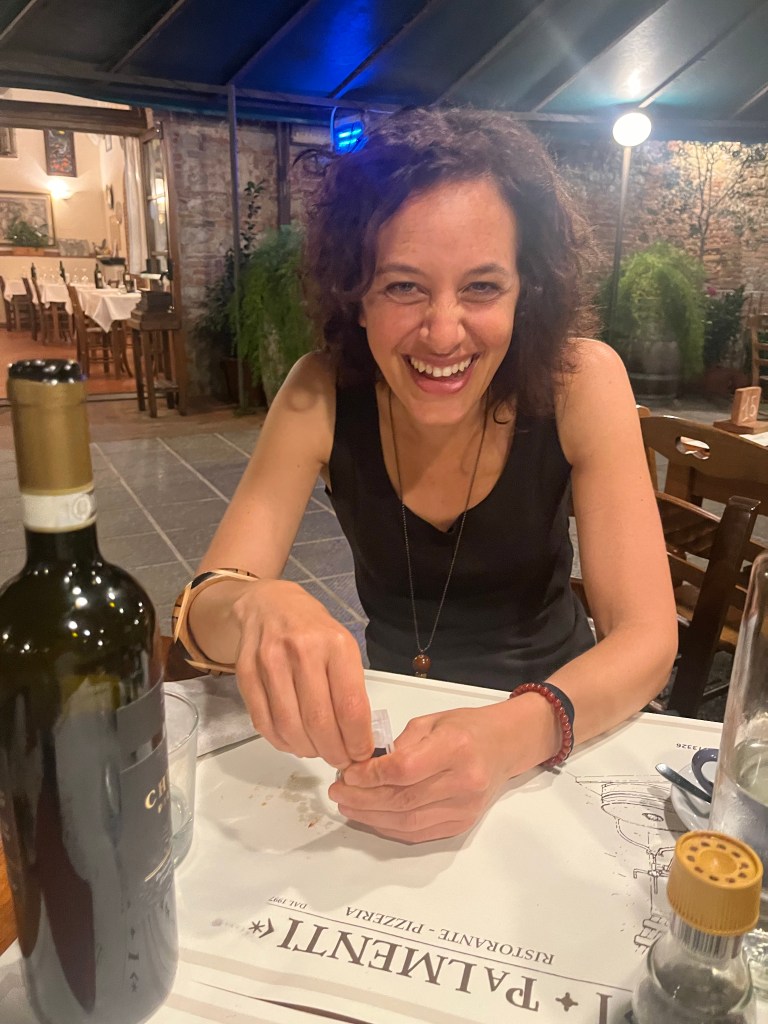
She claims I photograph her as much as her dad (I think mine capture her essence as I’m certain her dad does) but she’s tolerant and I love that she’s my friend.
….
Thank you Maria for a happy time and the closeness we’ve established. I look forward to more to come.
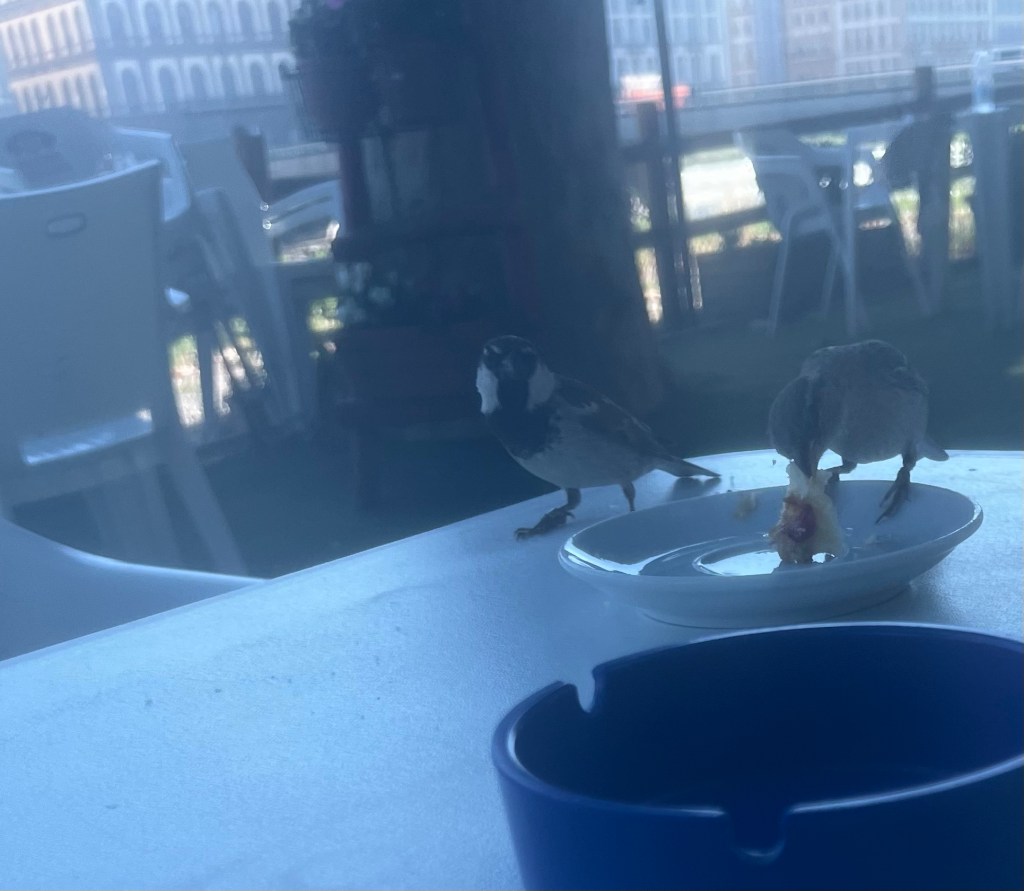
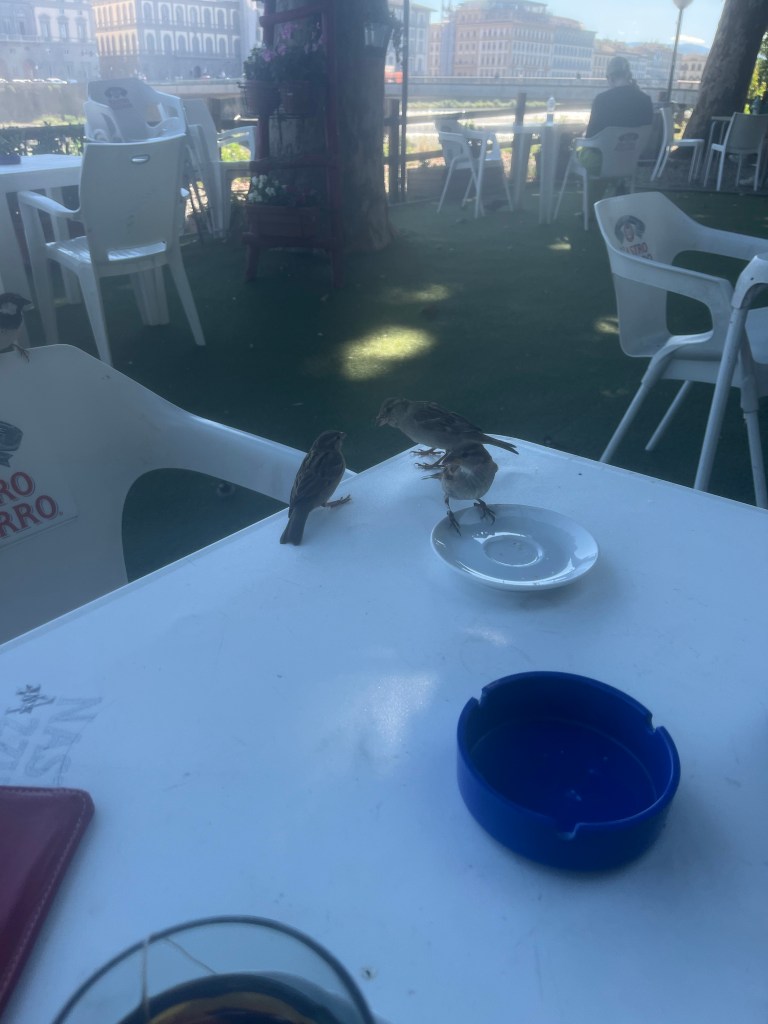
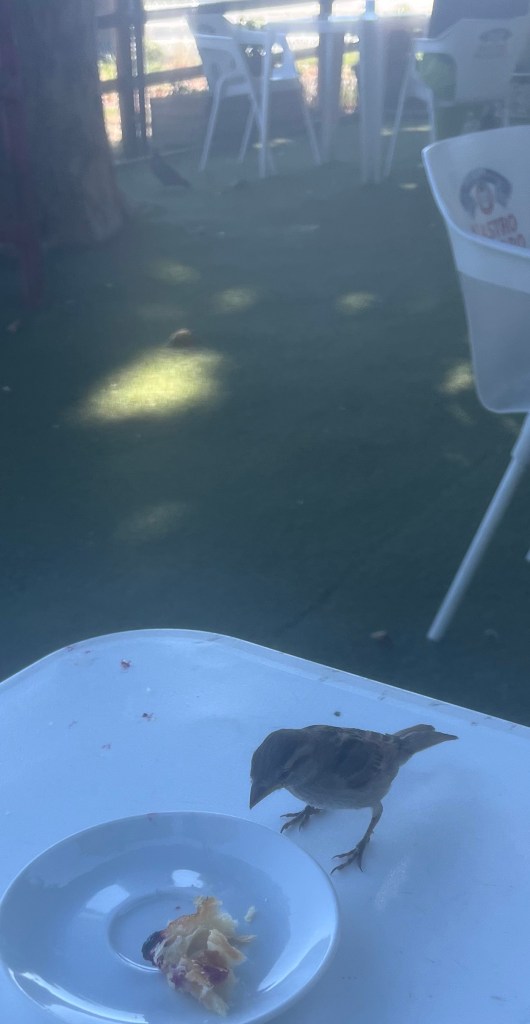
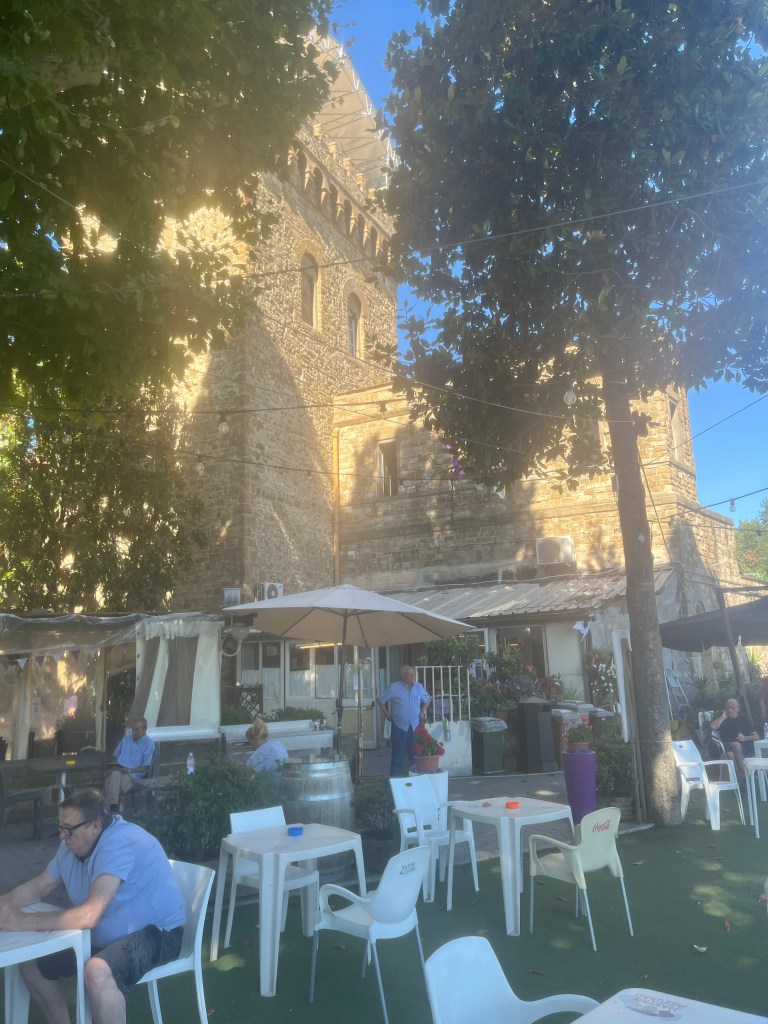
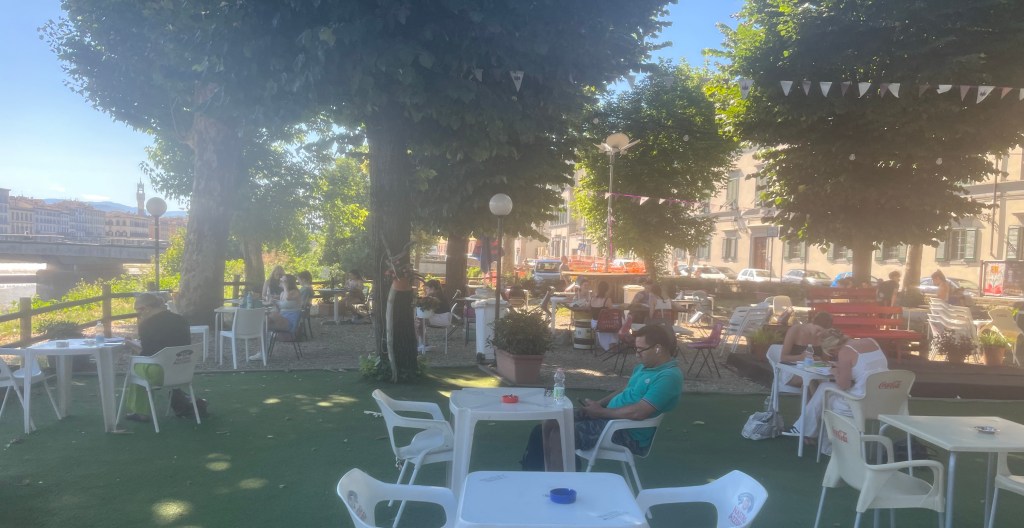
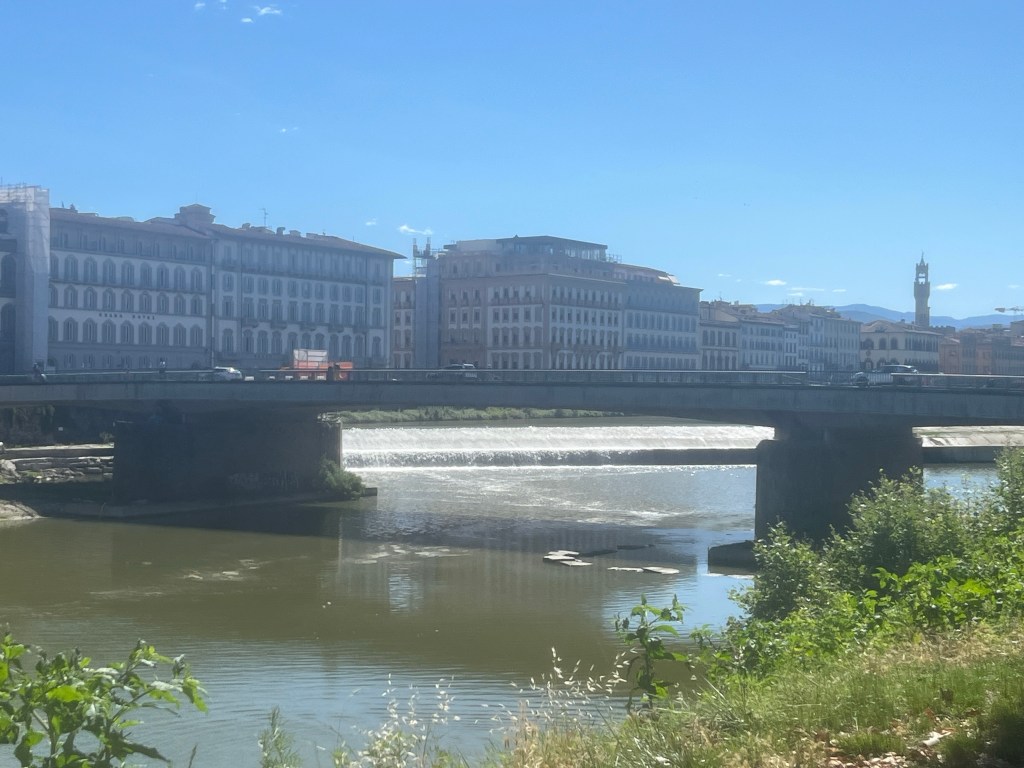
I’m now in Firenze visiting the incomparable Maria, more later but first to the birds ….
… sharing my second breakfast
It didn’t take too long to attract many new friends
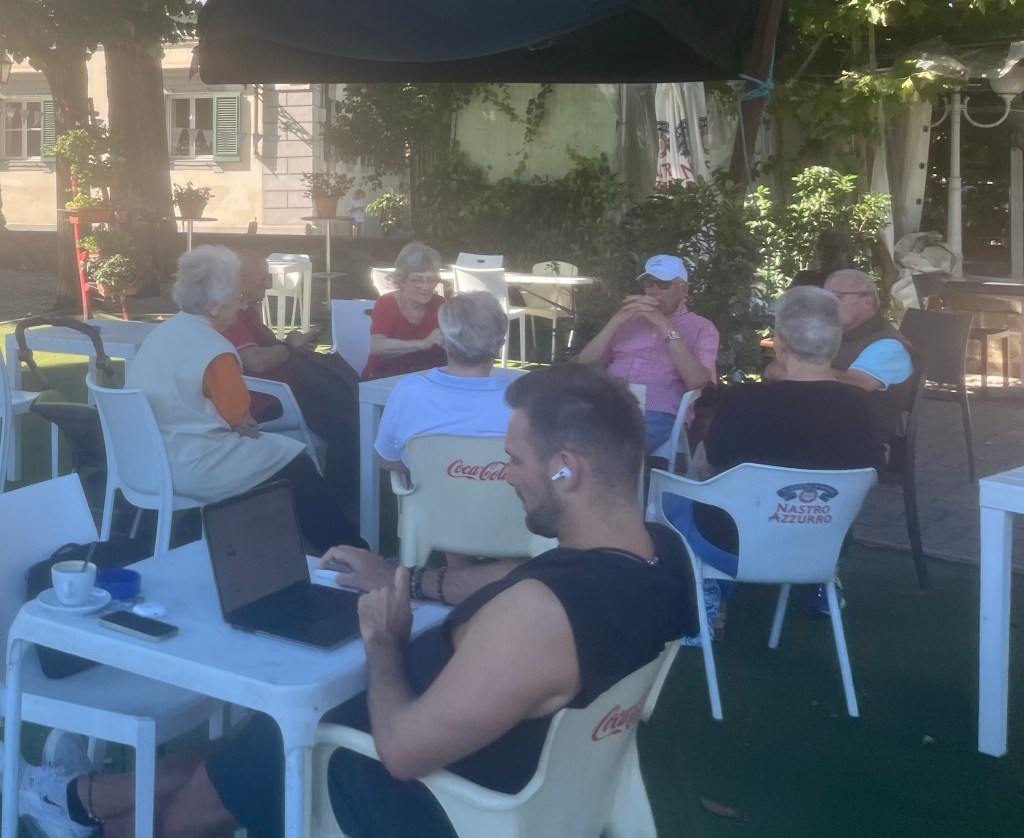
I’ve discovered a riverside cafe: great location, bargain breakfast. It’s a low cost place where the community of all ages (and some foreigners), and especially older people meet, chat, draw, paint, work, support.
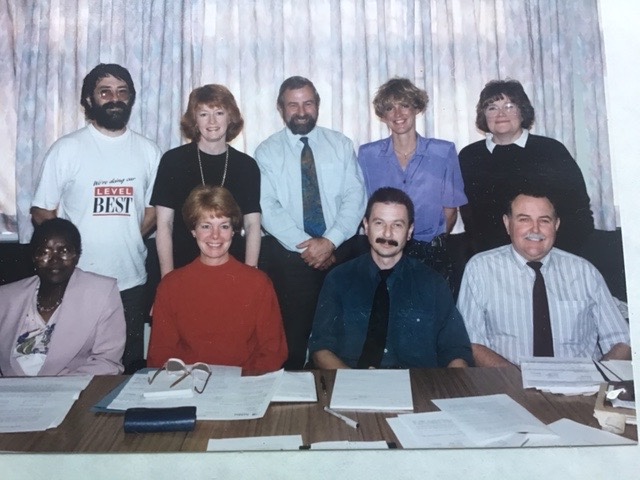
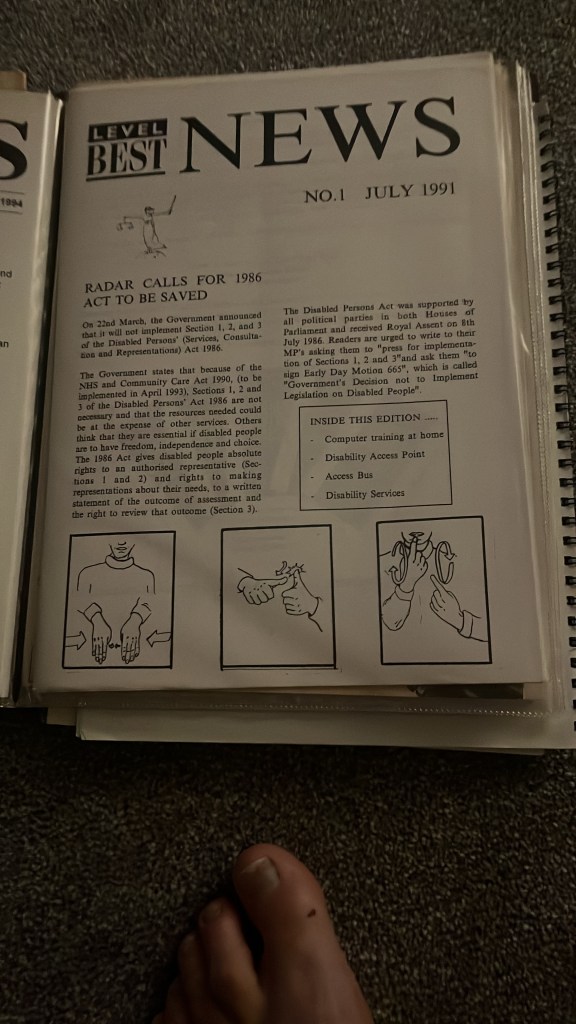
Jill and I, top row and left, led our team of managers of the Kirklees government section that provided services to disabled people, in the 1990s.
Disability Services included day and residential centres, equipment and adaptations to their homes, WORKLINK to get integrated employment, daily meals, care at home, social work and housing.
I have very fond memories of our time together and the dynamic team we created that made a difference in so many people’s lives.
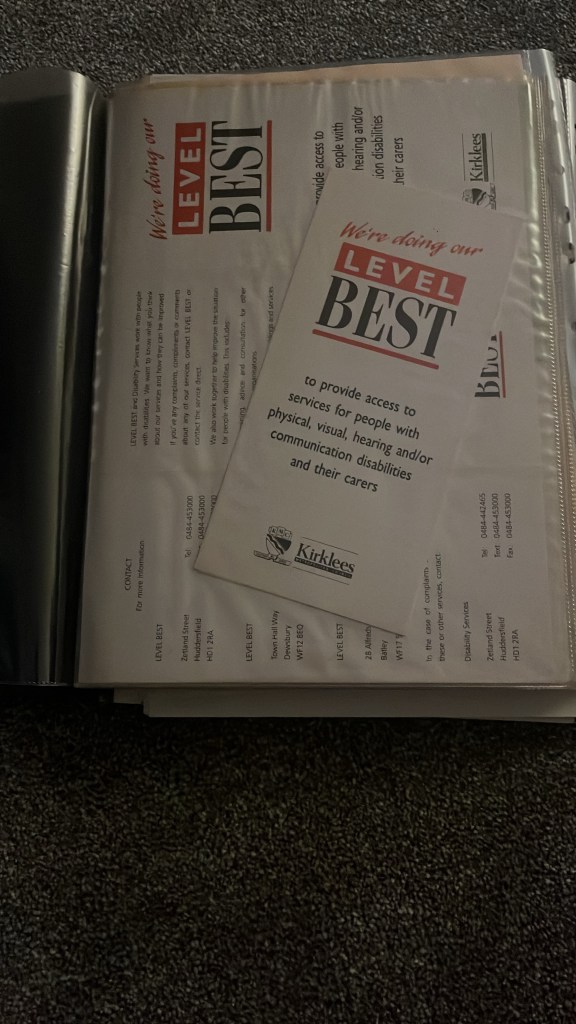
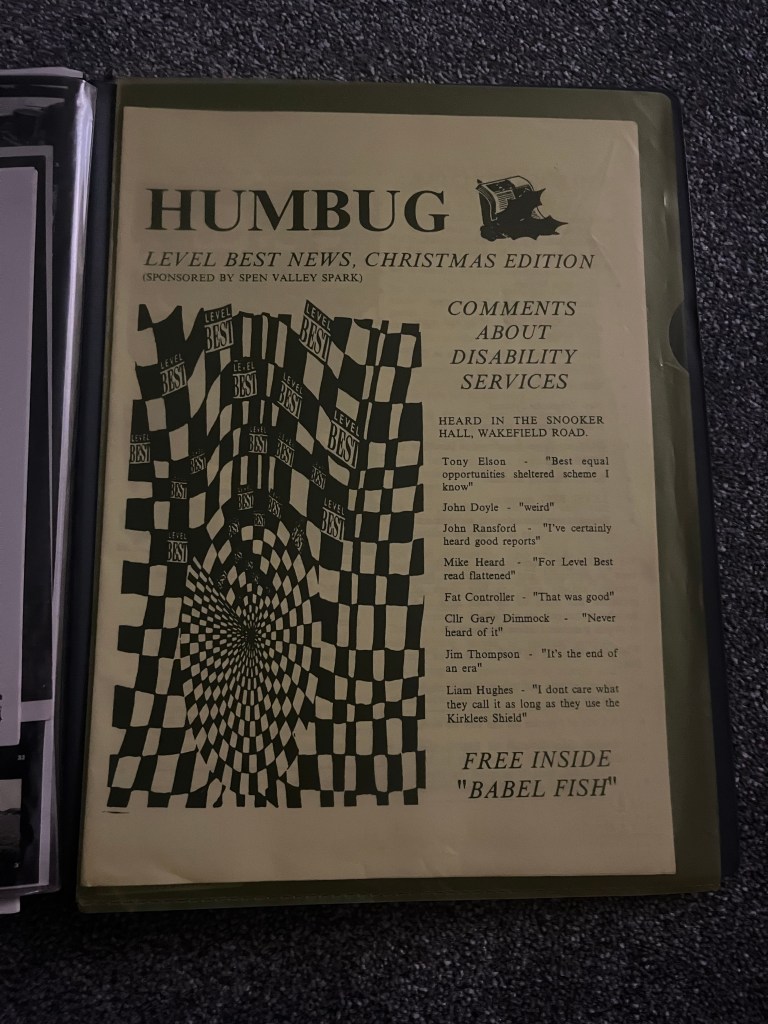
We were fortunate and known for a programme of work (LEVEL BEST) to be able to involve disabled people in telling us what they wanted from the services leading to a series of innovations, including ….
– information service
– advocates to help people understand and get the services they needed
– community based daytime activities
– integrated housing
– disabled people’s electronic village hall providing access and training to computers
– a shop selling equipment
– accessible transport service to the wider disability community.
…and a conference to pass on our learning to other organisations.
We were a wonderful team, at a special time who found ways to do things differently .
Thanks guys.
Footnote
LEVEL BEST was a campaign of different methods such as: a reference group, market research panels, public meetings, interviews, to involve disabled people in telling us what they wanted from a reorganised public service. It led to a business plan and fundamental reorganisation of the overall service.
After footnote
That was thirty years ago. Unfortunately the money available to provide such services is reduced and demand has increased. Political priorities change. People are however continuing to provide essential services in difficult circumstances.