Well not really
I have flown a chipmunk trainer and glider in my teens. I can tell you … Cycling can’t match it.


Nor is it like swimming
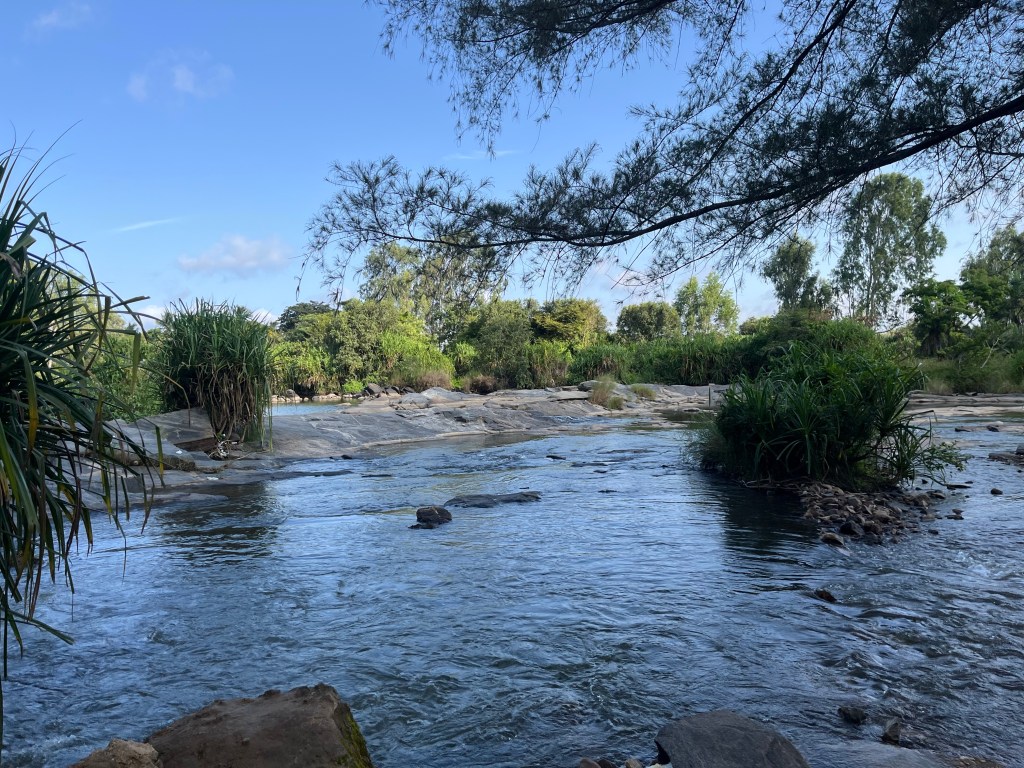
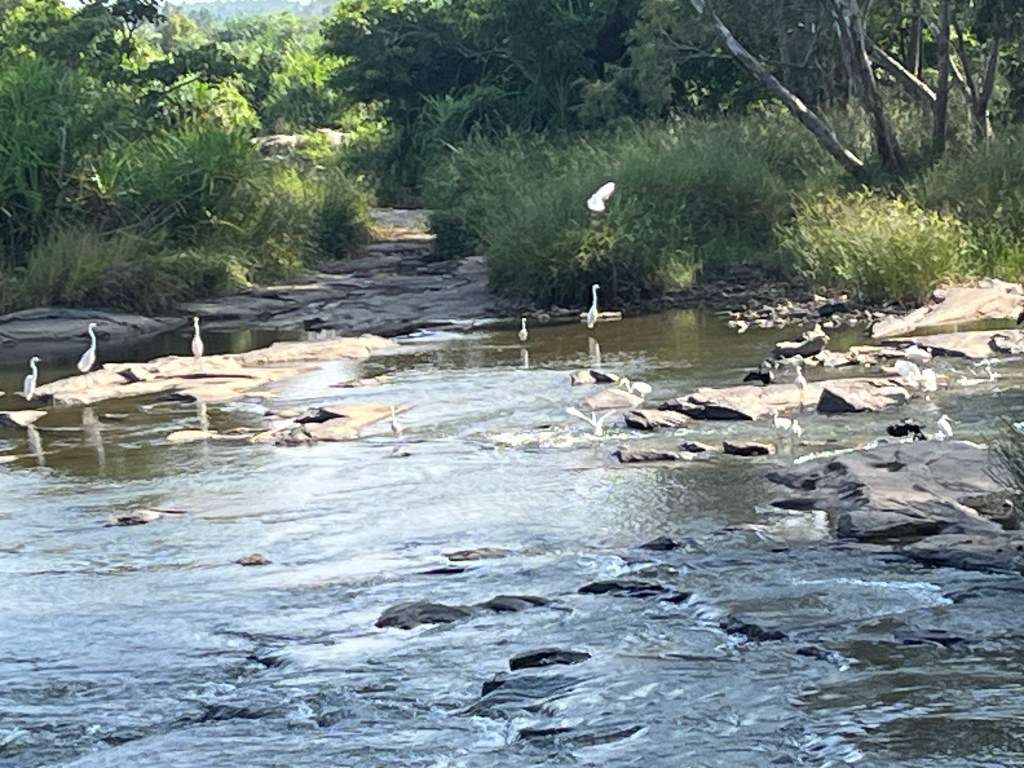
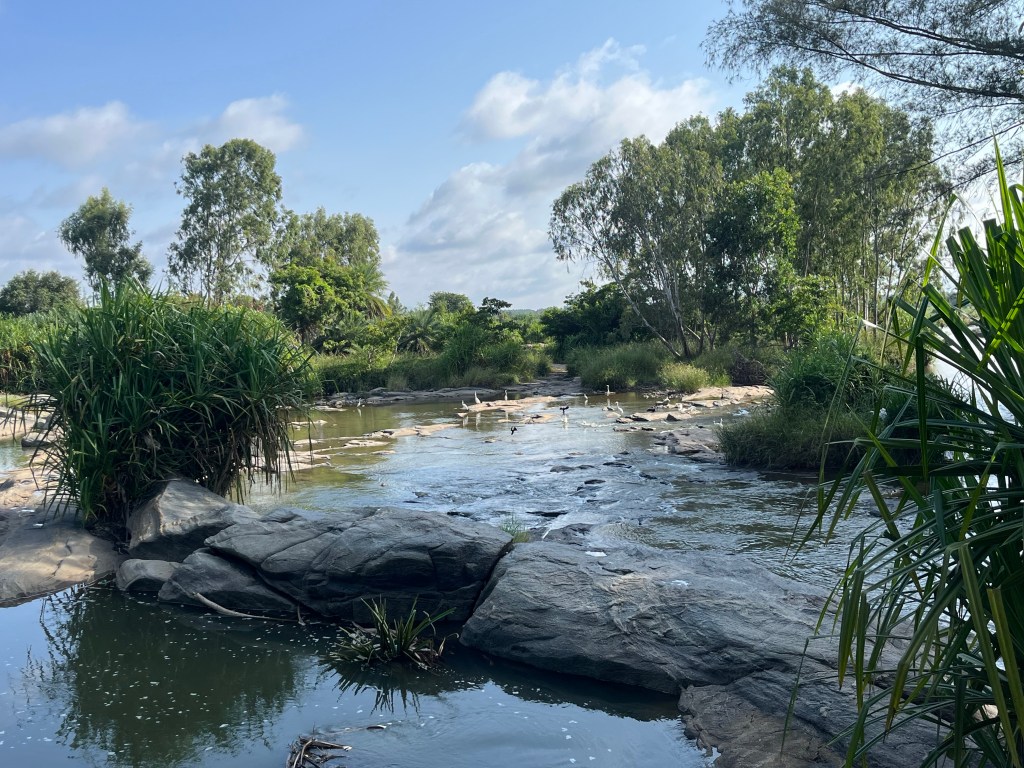
But IT IS liberating.
It’s one of our best ways to adventure and get us moving.
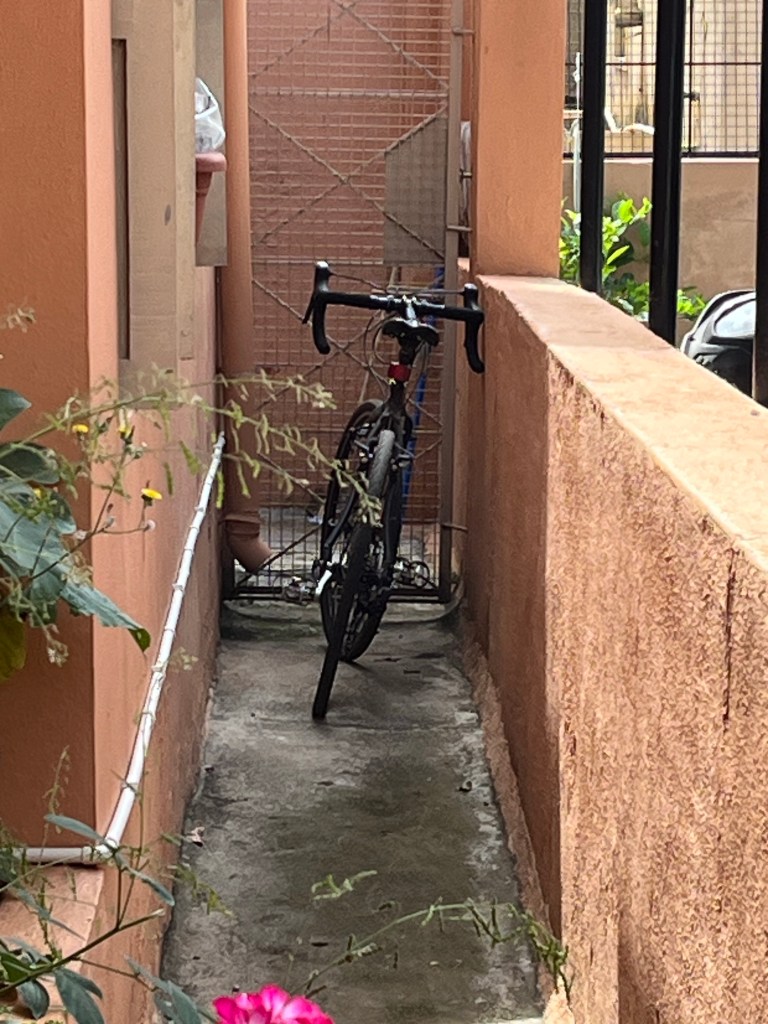
And it’s cheap!

Well not really
I have flown a chipmunk trainer and glider in my teens. I can tell you … Cycling can’t match it.
Nor is it like swimming
But IT IS liberating.
It’s one of our best ways to adventure and get us moving.
And it’s cheap!
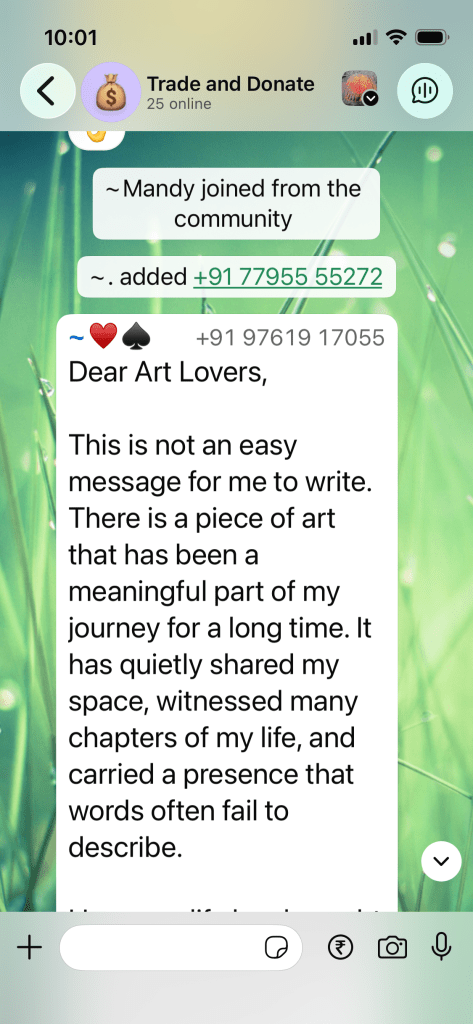
This was my response to the message posted in our local Mysore community….
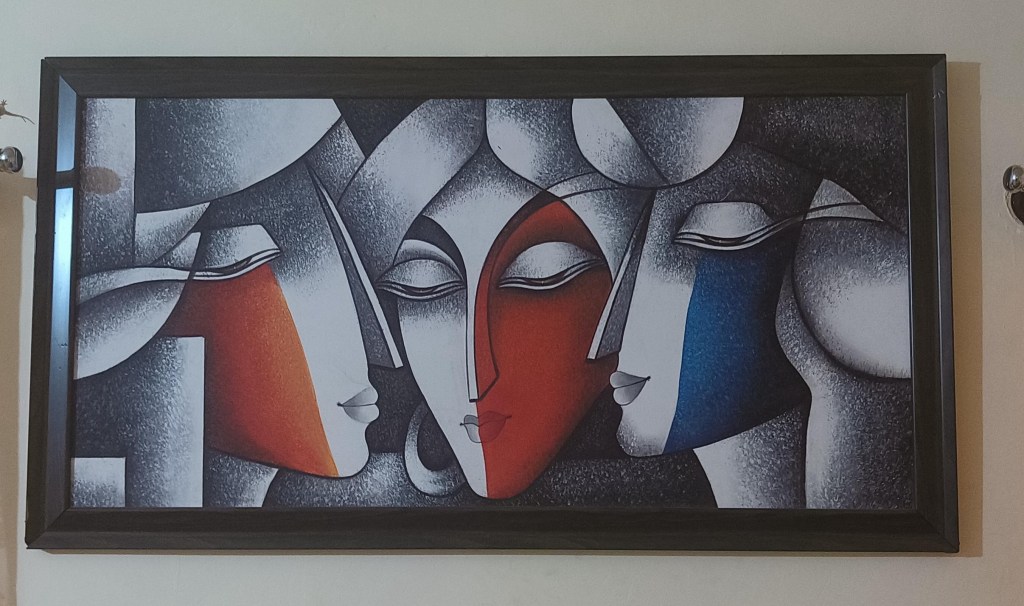
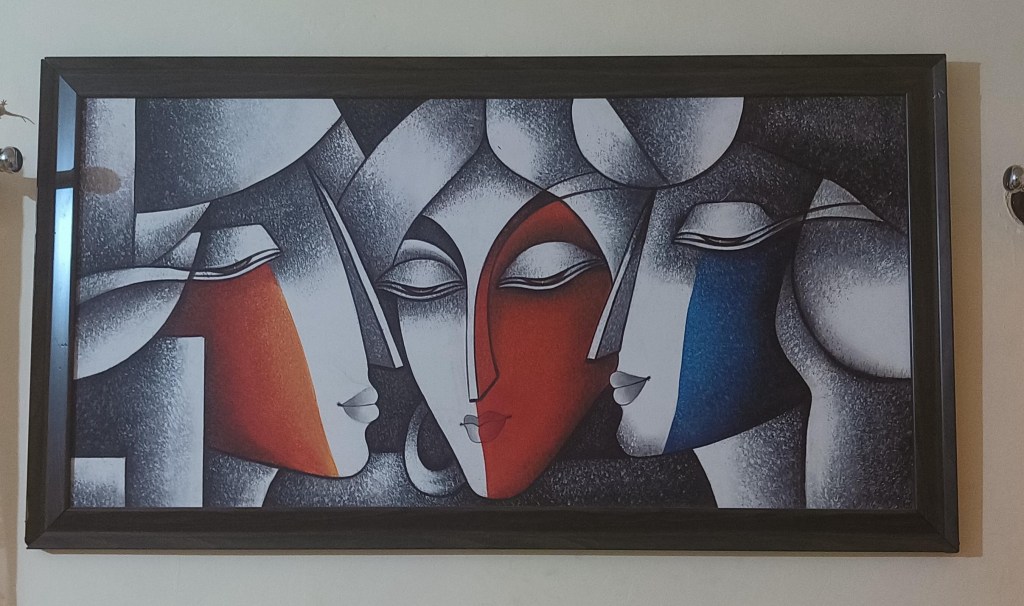
I’d love it, but I just can’t. To me .. It reflects different dimensions, feelings or moods. MAnjula my wife who sadly died seven years ago would reveal all
These layers.
Starting from the left Her smile, shining like the sun would infect everyone she met. The middle is her action, being there always helpful and determined. The third her calmness in whatever situation. The style reflects her embracing the tradional and the modern. Wrapping it all up would be her attention to being present and attentive.
I can’t take it as I’ve just moved and already have too much art
https://meandmycycle.com/2026/05/08/behold-beauty-in-so-many-ways/
…
The full message …. posted to our local WhatsApp group in Mysore.
Dear Art Lovers,
This is not an easy message for me to write.
There is a piece of art that has been a meaningful part of my journey for a long time. It has quietly shared my space, witnessed many chapters of my life, and carried a presence that words often fail to describe.
However, life has brought me to a point where I can no longer hold on to it. While letting it go is difficult, I feel that this piece deserves to continue its journey with someone who truly connects with it and appreciates it from the heart.
I don’t want to place a price tag on this artwork. Some things cannot be measured by a fixed number. Instead, I would love to hear from those who feel genuinely drawn to it.
If this piece speaks to you, I invite you to send me a personal message sharing:
• Why you feel connected to this artwork.
• What story, feeling, or memory it awakens within you.
• And what amount you would be comfortable offering for it.
Over the next few days, I will read each message with gratitude and care. My intention is not simply to find a buyer, but to find the right home for this piece—someone who will cherish it as much as I have.
Thank you for taking the time to read this and for honoring the journey of this artwork.
It is a canvas painting on a wooden frame.
Dimensions 28 by 58 inches.
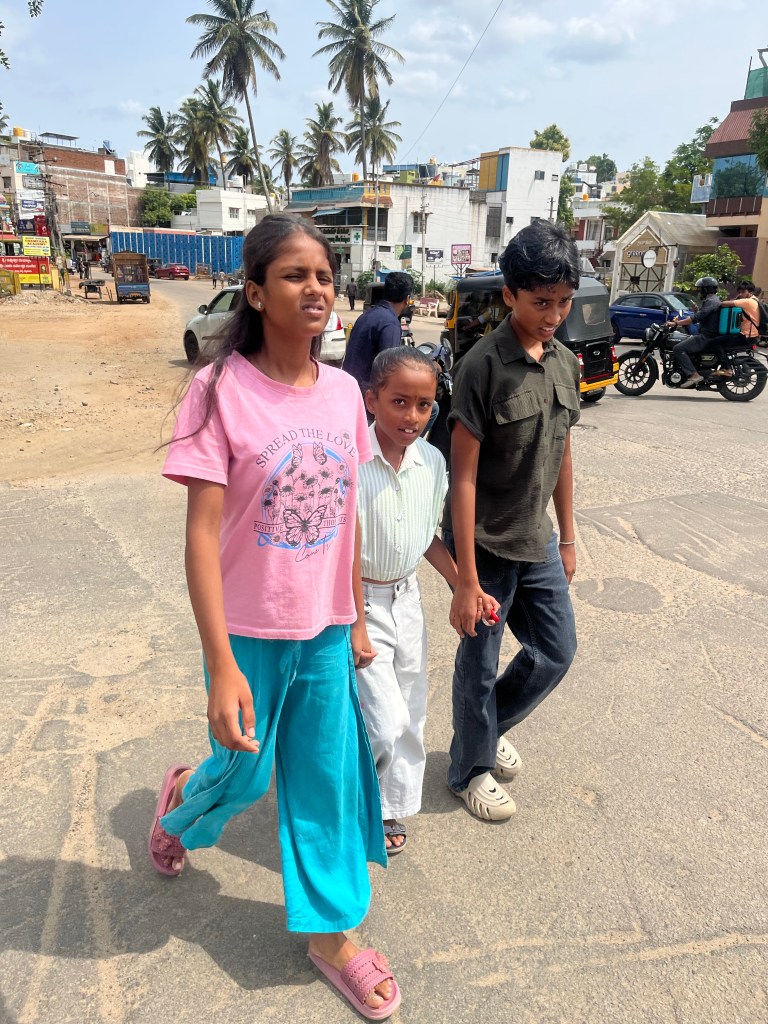
Chandrika and Mani collected Kaveri to go to school this morning.
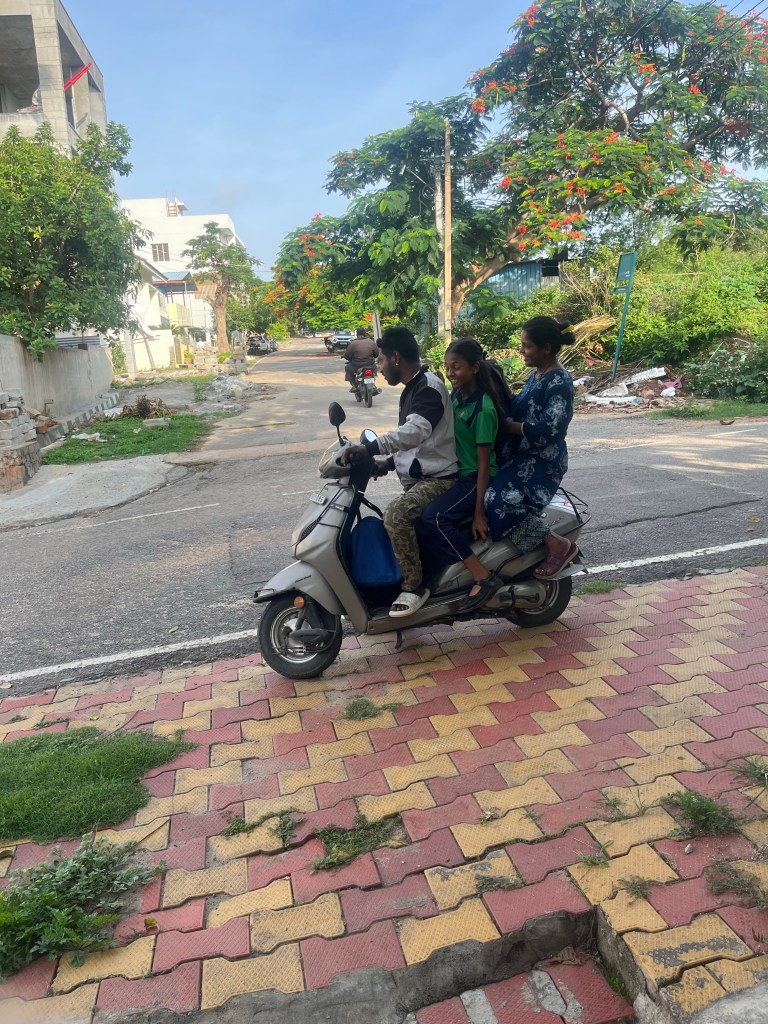
Beforehand we had a conversation about ‘centre of gravity’ and how more people on two wheeler makes it less stable.
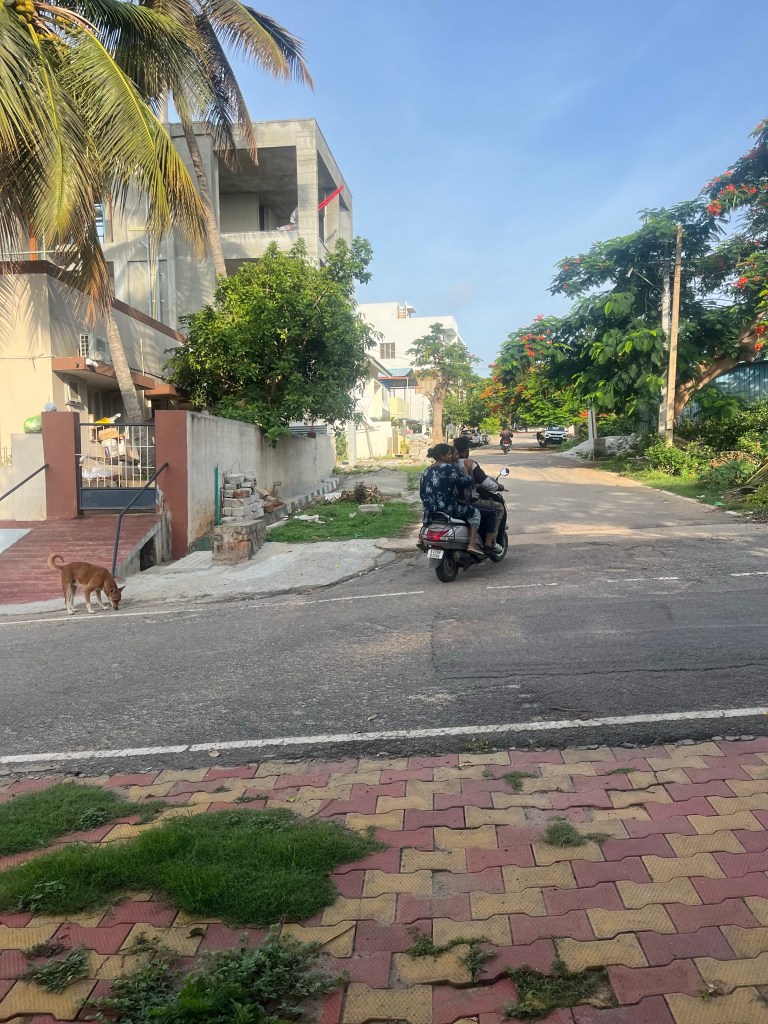
I do worry that we’re not careful enough.
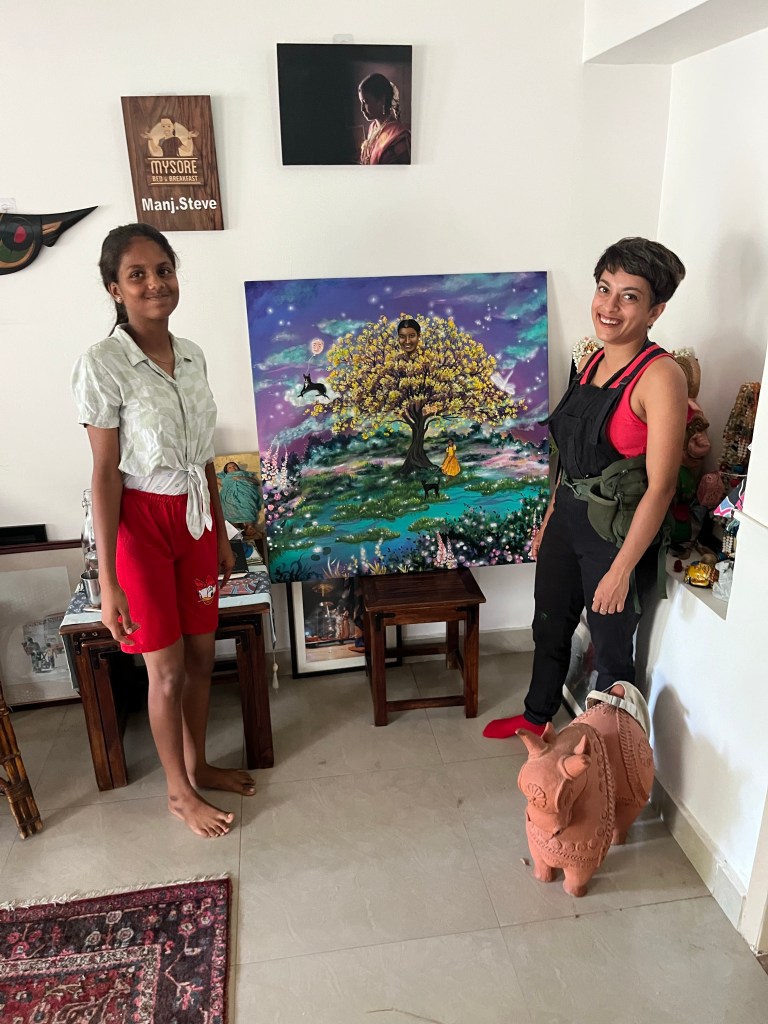
The three musketeers went into the city to negotiate for a new piece of art we’d seen the day before
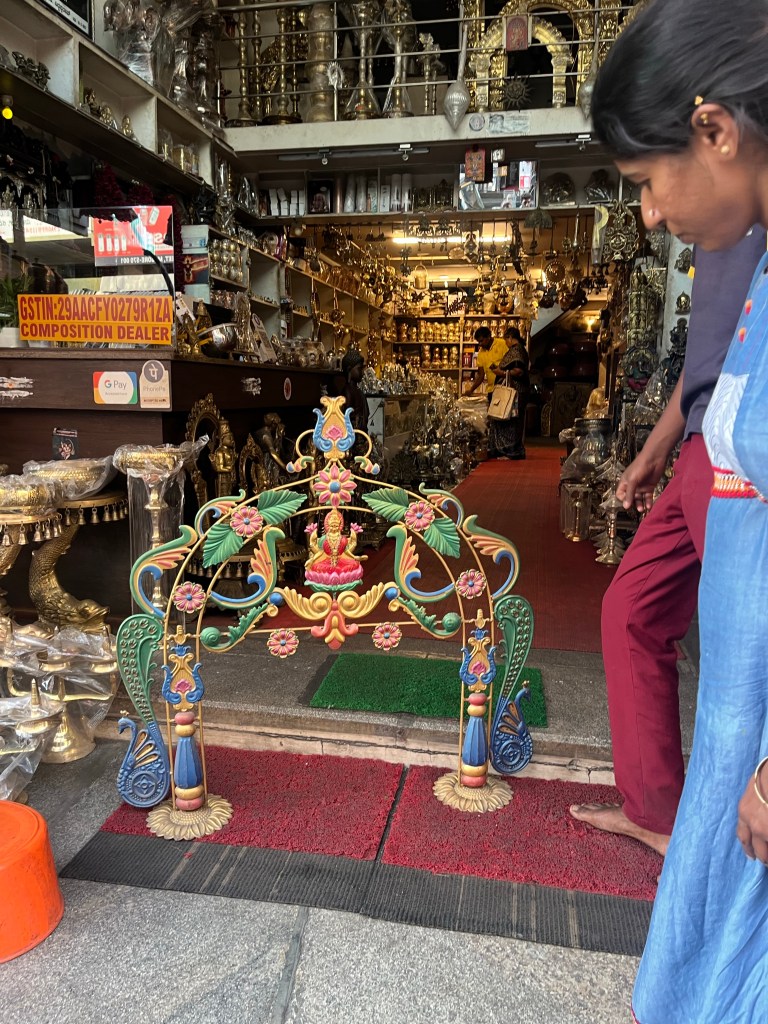
Their mission was to get a good discount on the asking price
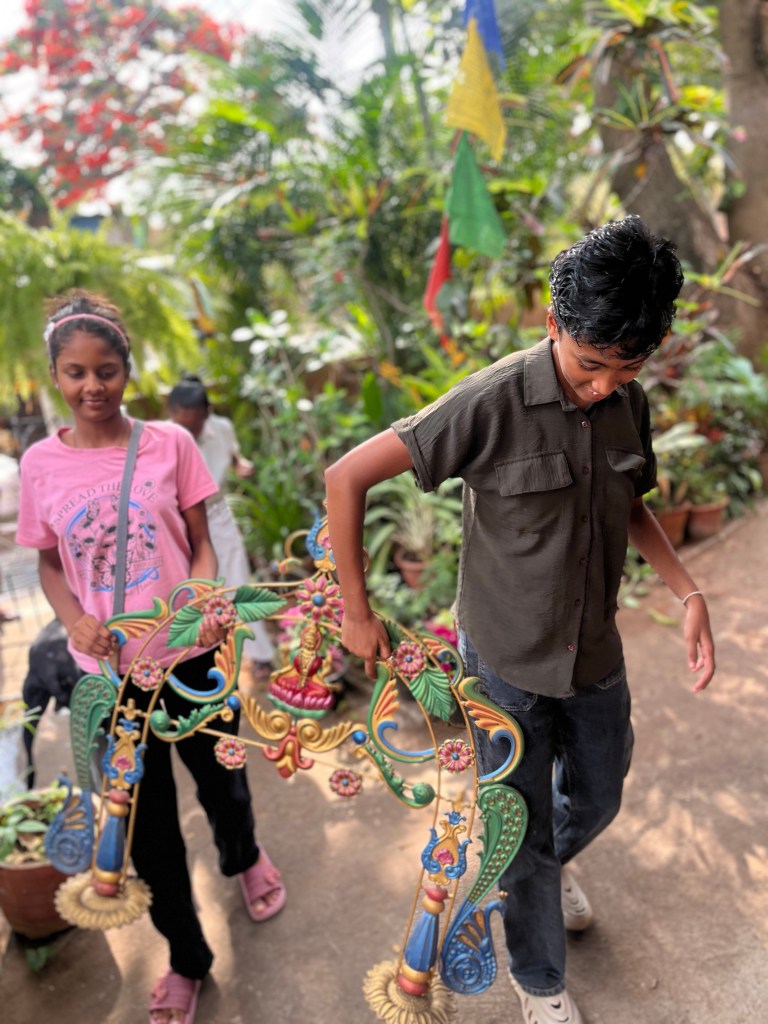
They were a great success🙂
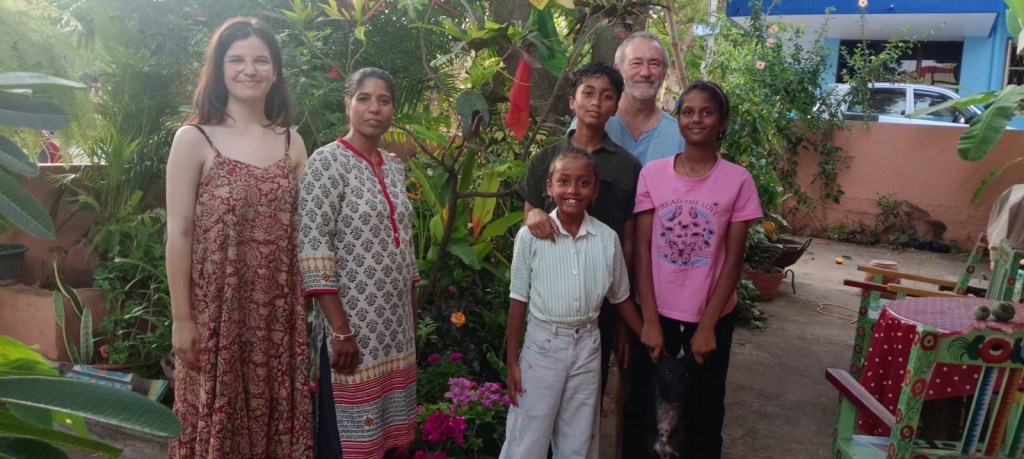
The winning Musketeers are Kaveri with her two new friends: Naimishambha and Pragathi, lovely, confident girls.. daughters of Deepak who works with our friend Florian.
They’re seen here with Maïlis, Sowbhagya and Stephen
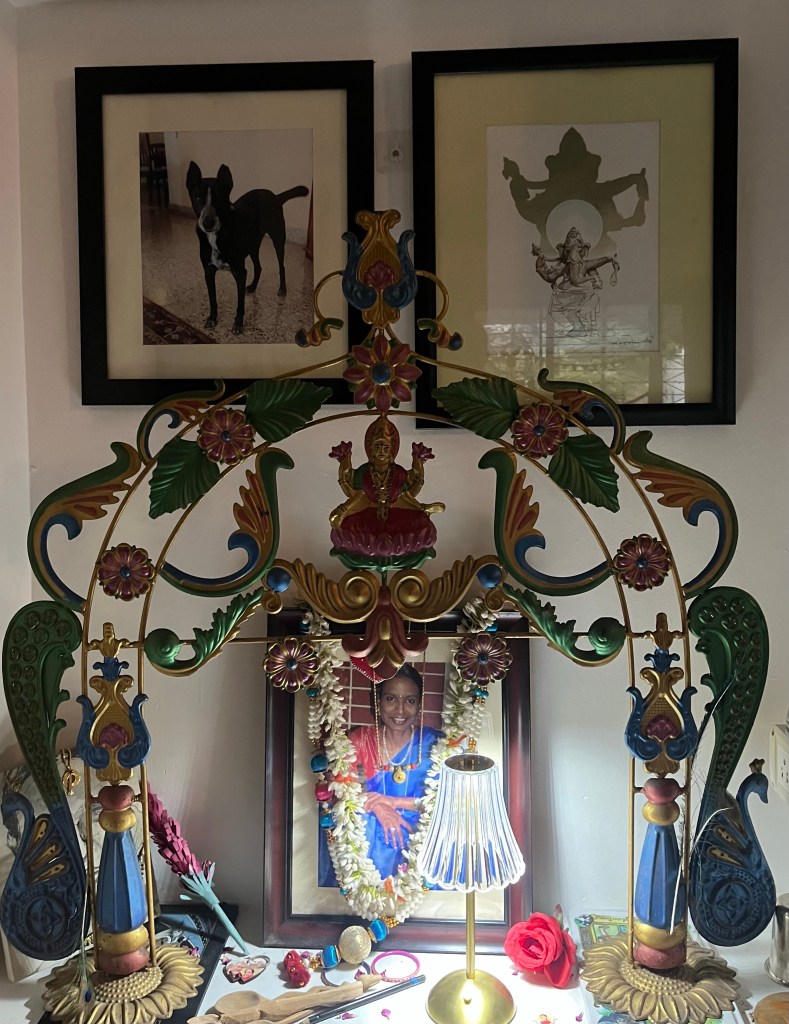
It’s got pride of place in our new lounge, highlighting Manjula with her pals Lucie and Ganesh
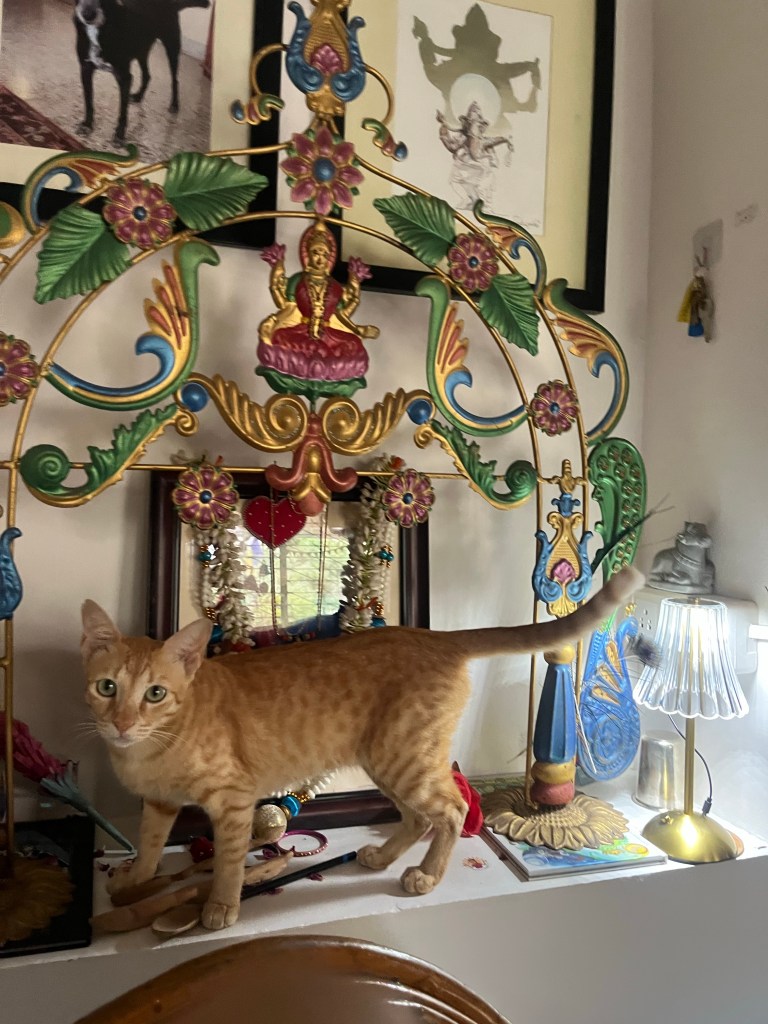
and that’s not all.
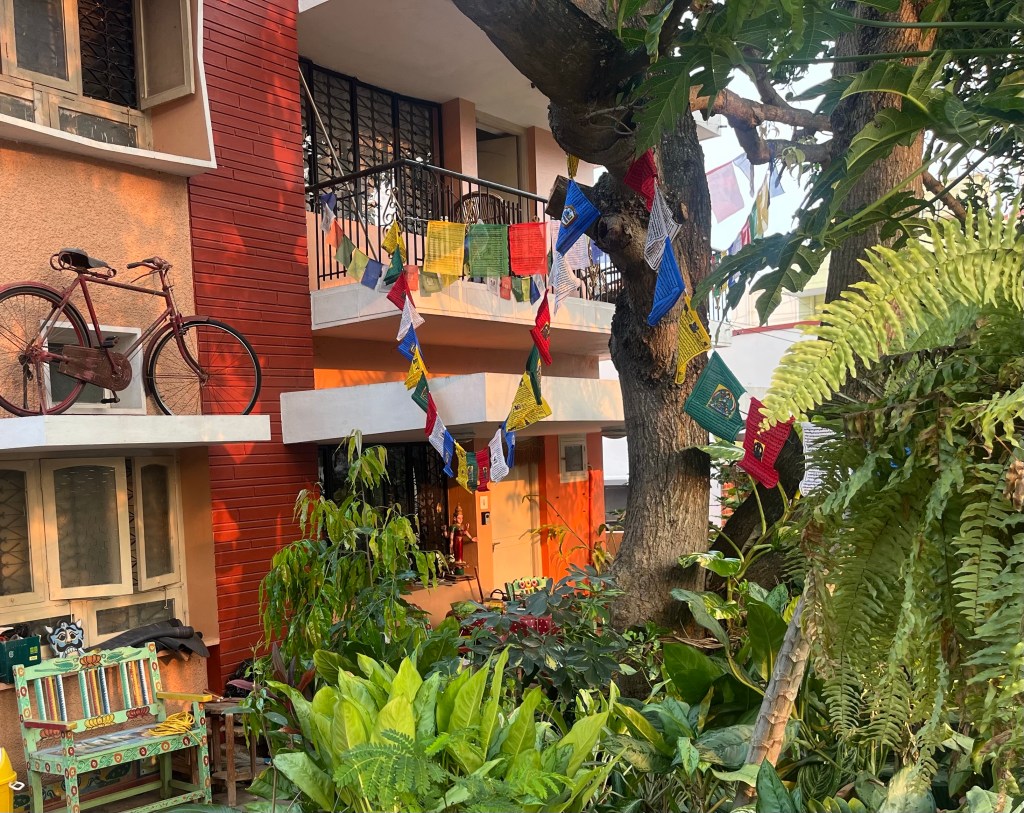
At the weekend I shifted plants and heavy stones around a bit to hang my old Mexican hammock.
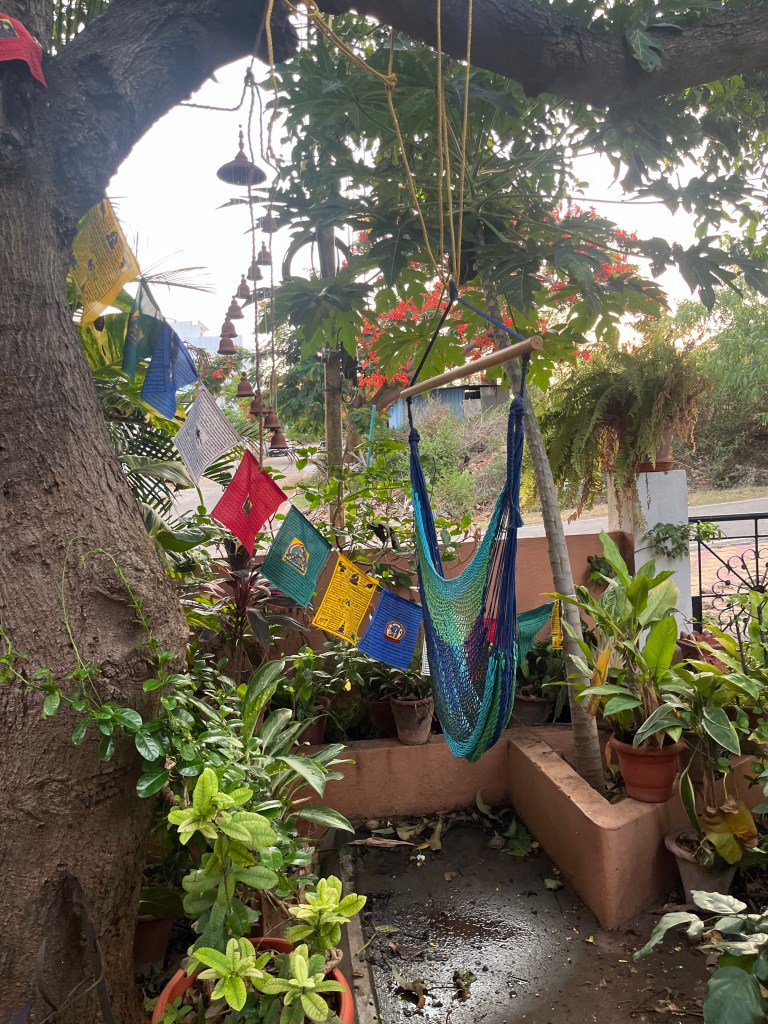
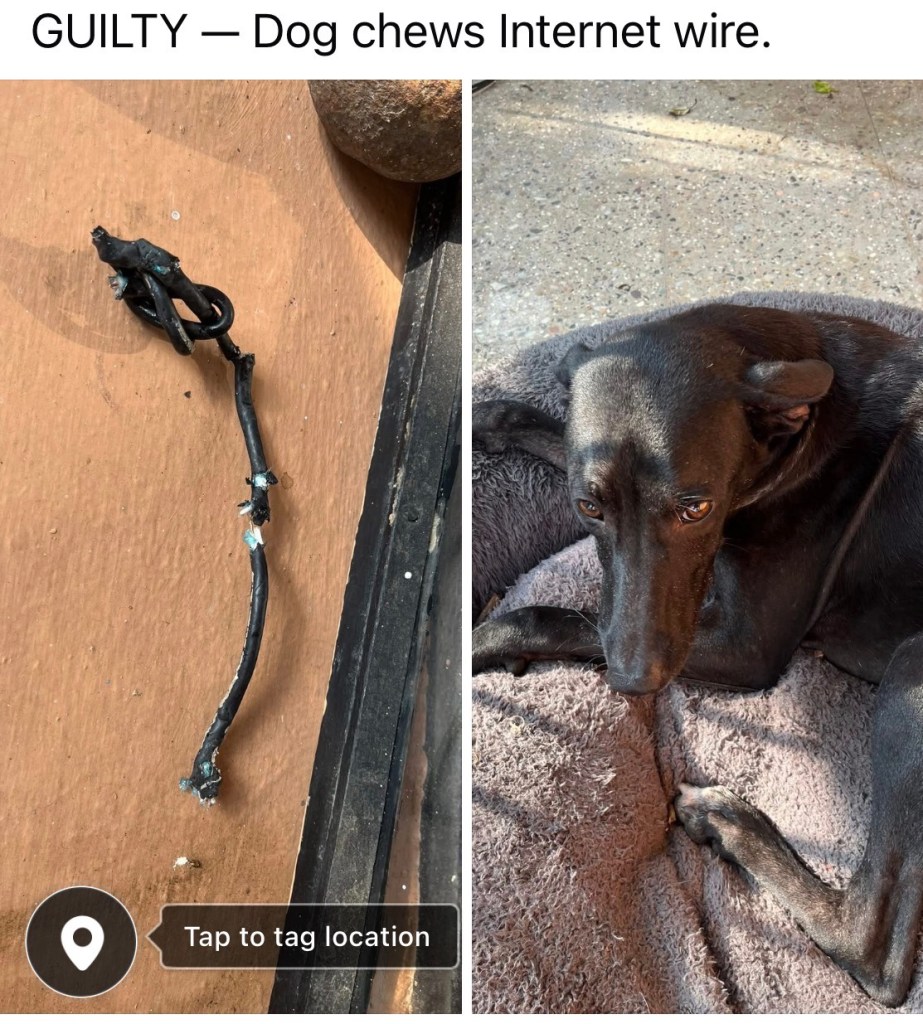
When we came to use it …
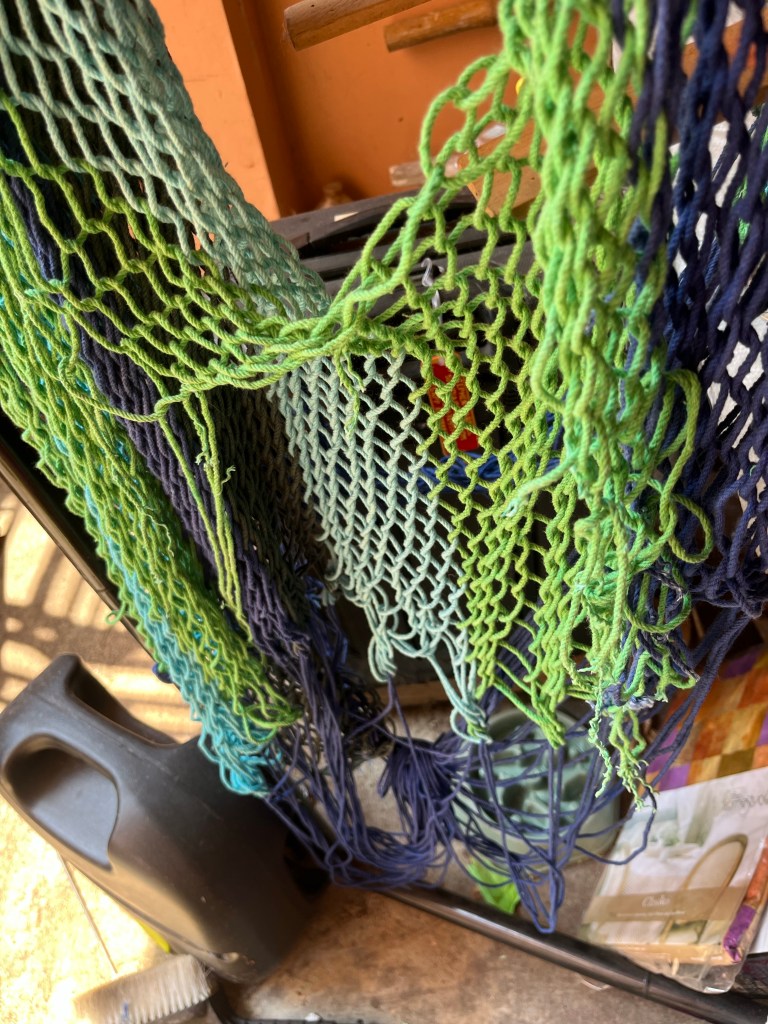
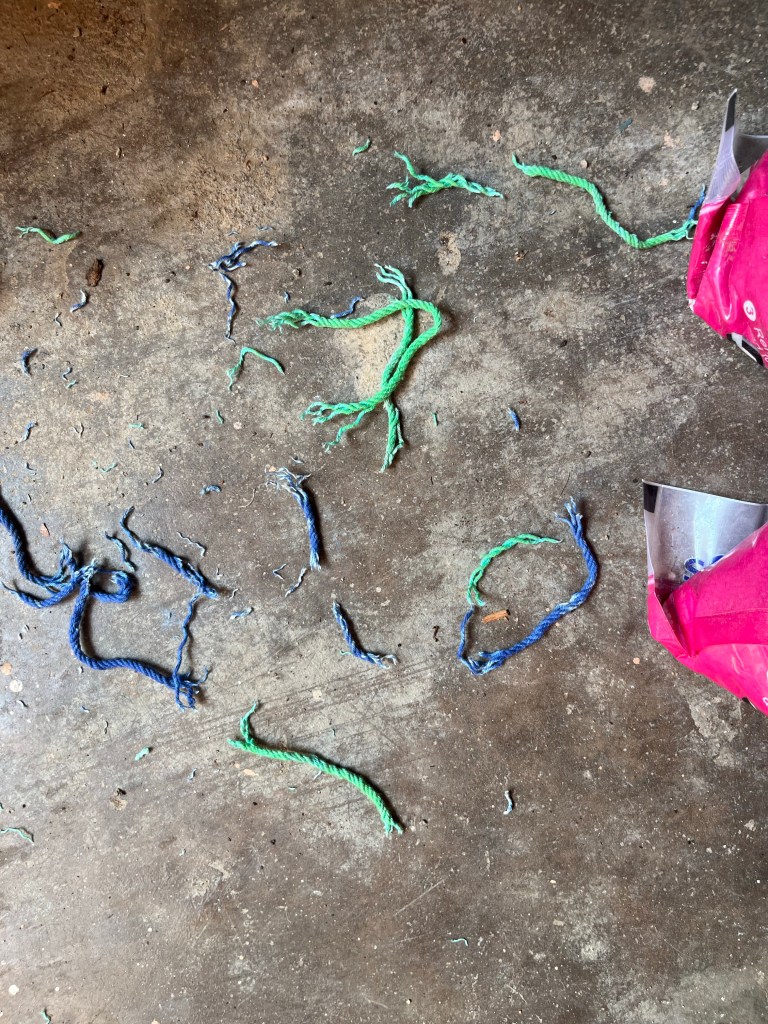
Yes the guilty had had a party.
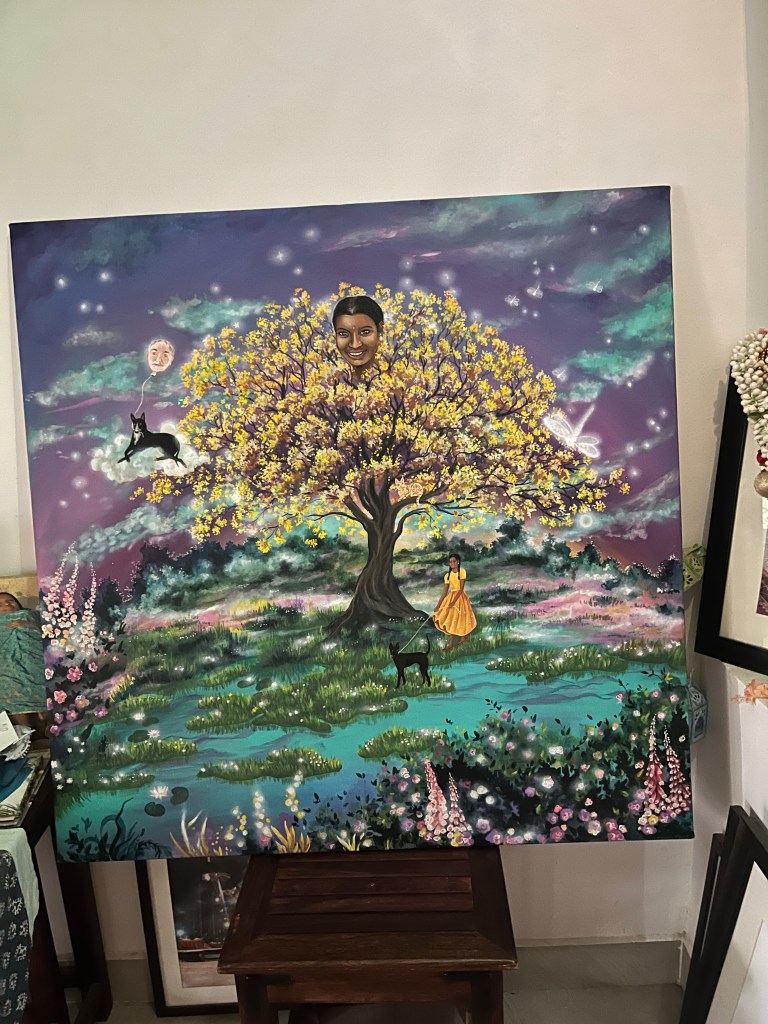
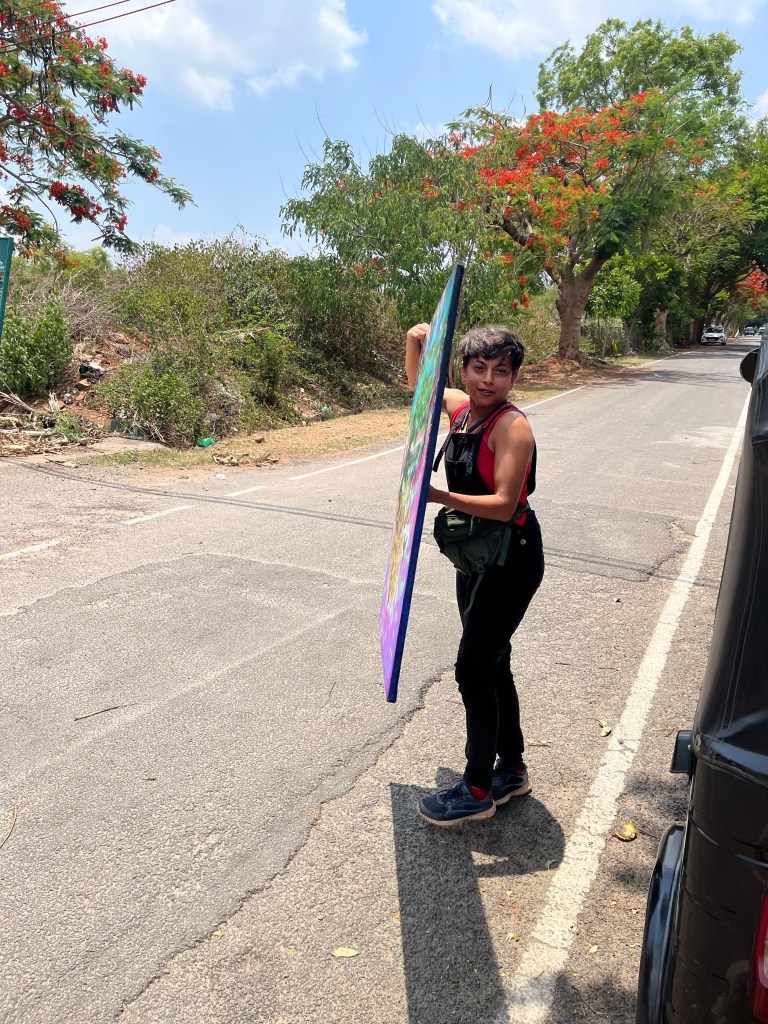
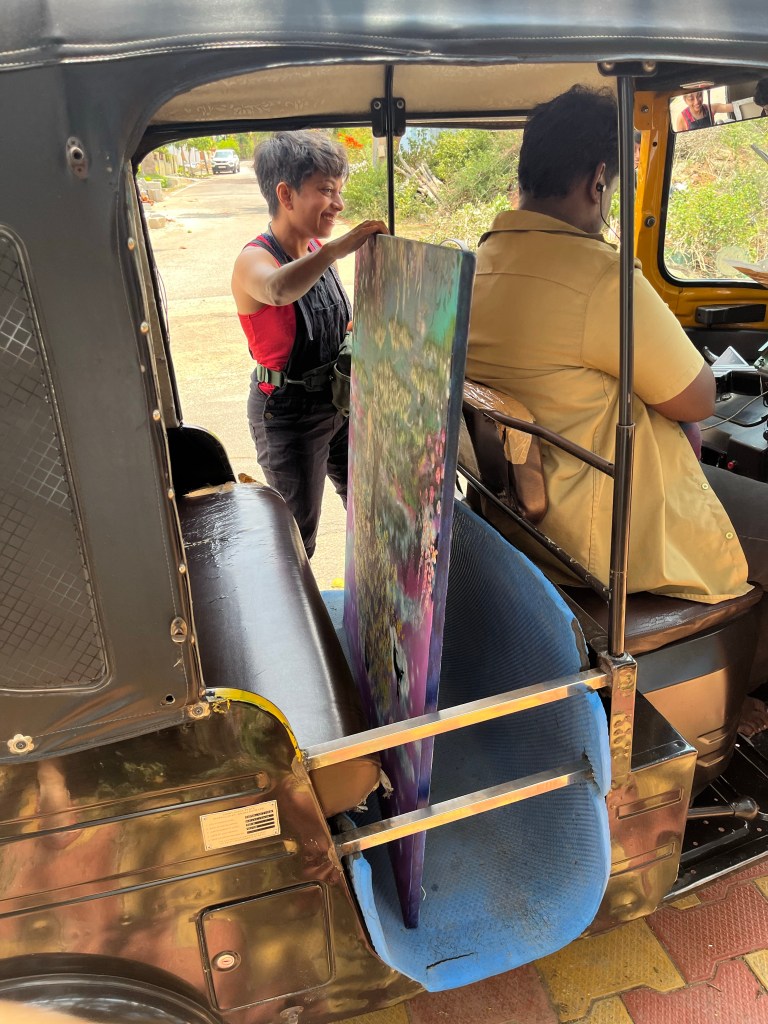
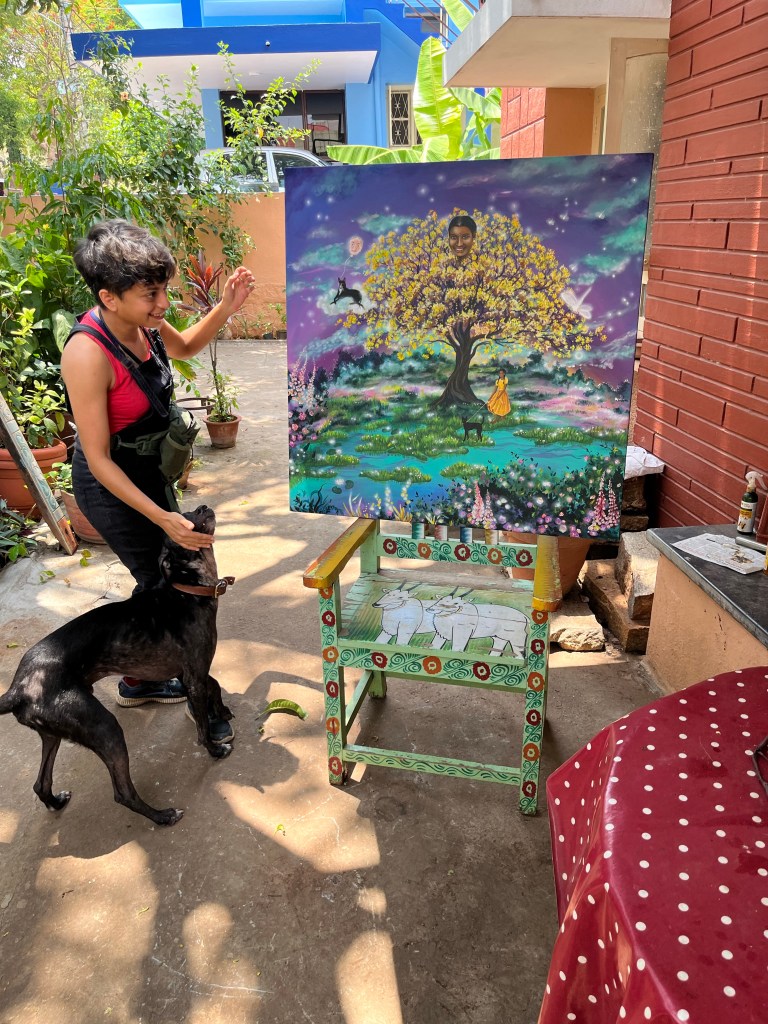
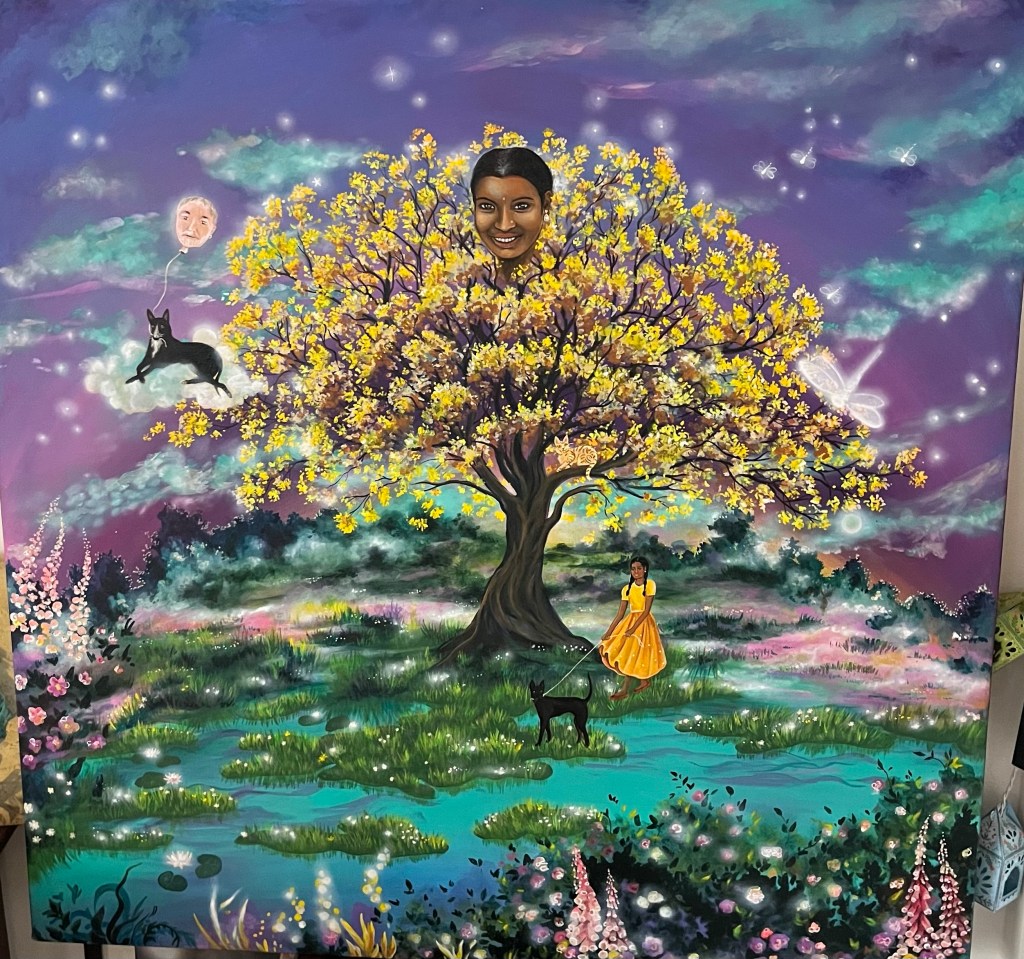
The latest wonderful creation has arrived from Aadirika aka —Mostly beautiful Maya— (check Instagram) has now created three fab memory portraits of MAnjula
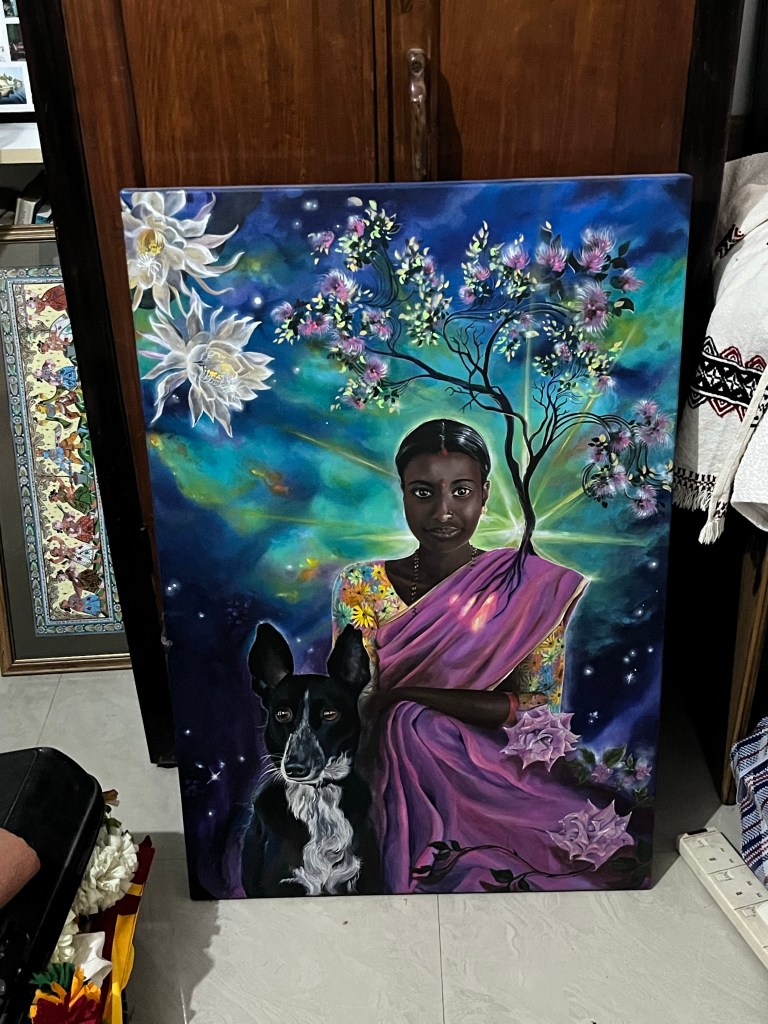
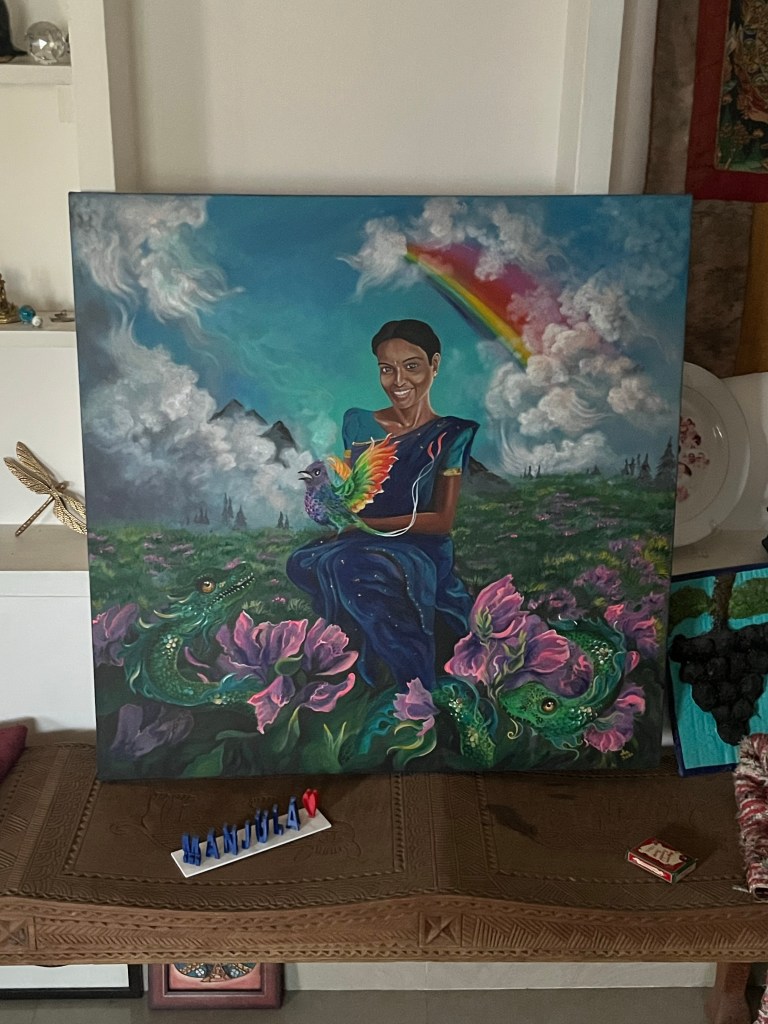
All to be found at Manjula’s Mysore.
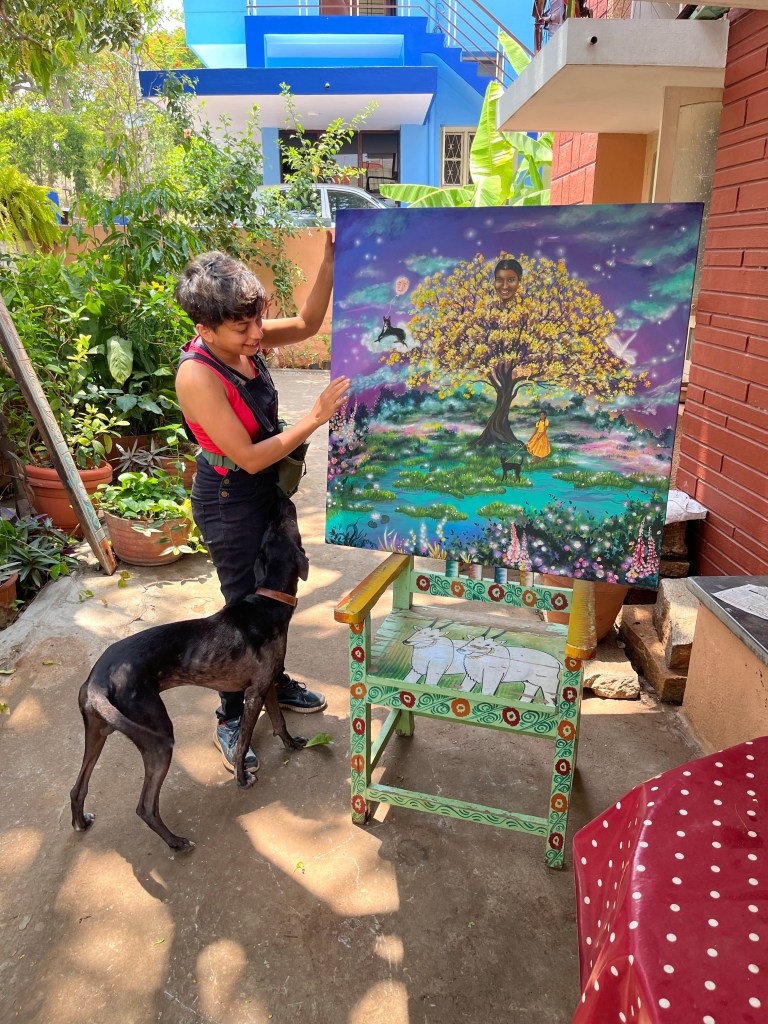
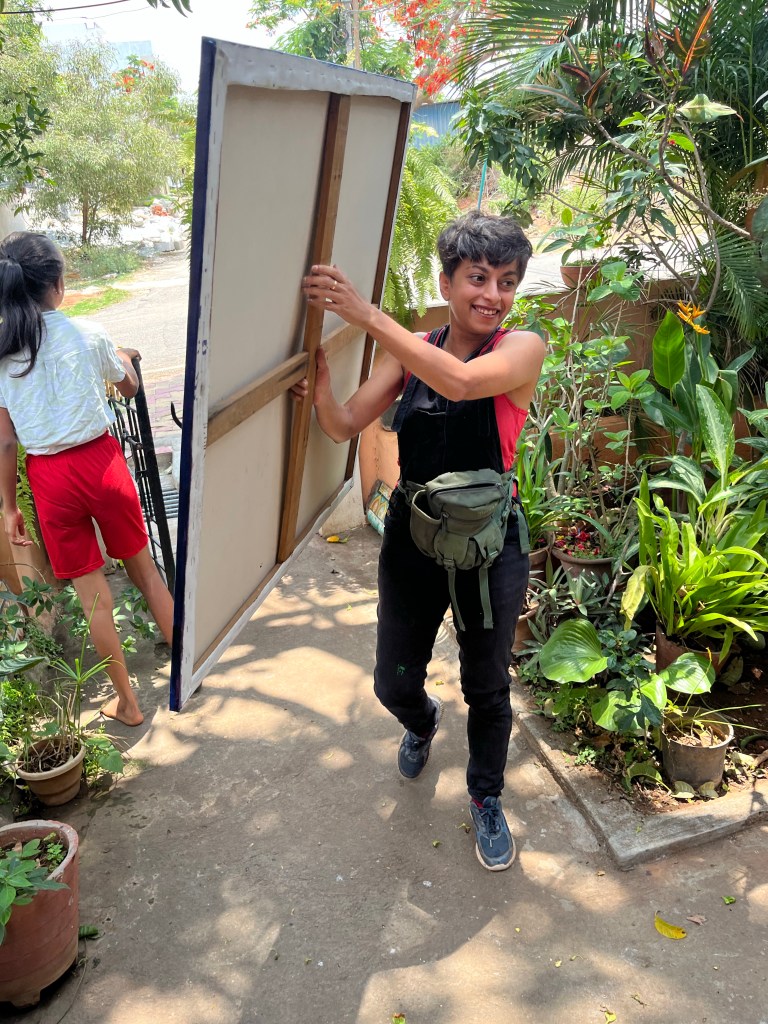
Out third
Thank you Aadirika, for your intimate understanding of what MAnjula meant to me and representing our wonderful life here in Mysore.
…
Manjula (obviously), Lucie our first dog of the family of over 15 years, Kaveri, walking Luca — our latest addition and in the tree. —- Billet-Doux my sweet (love) letter sent by Manjula, a few years ago. Plus the dragonfly and old man with his head in the clouds.
…
Did you find them ?
It’s amazing how people are so gullible to believe the propaganda that there’s an antifa organisation.

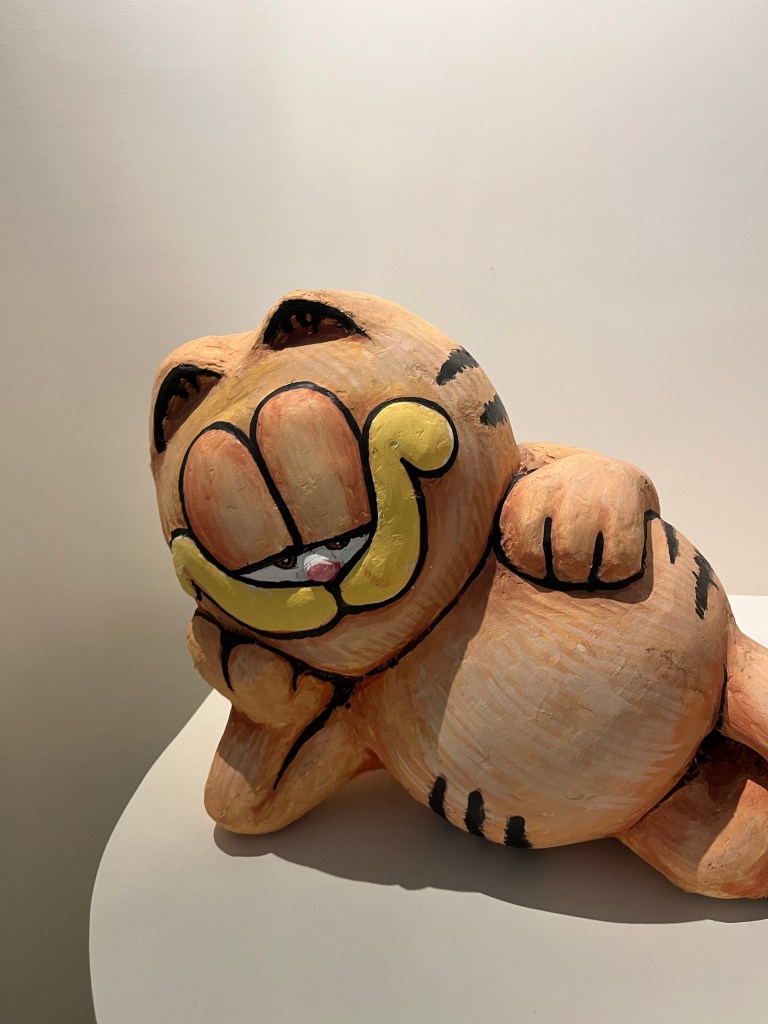
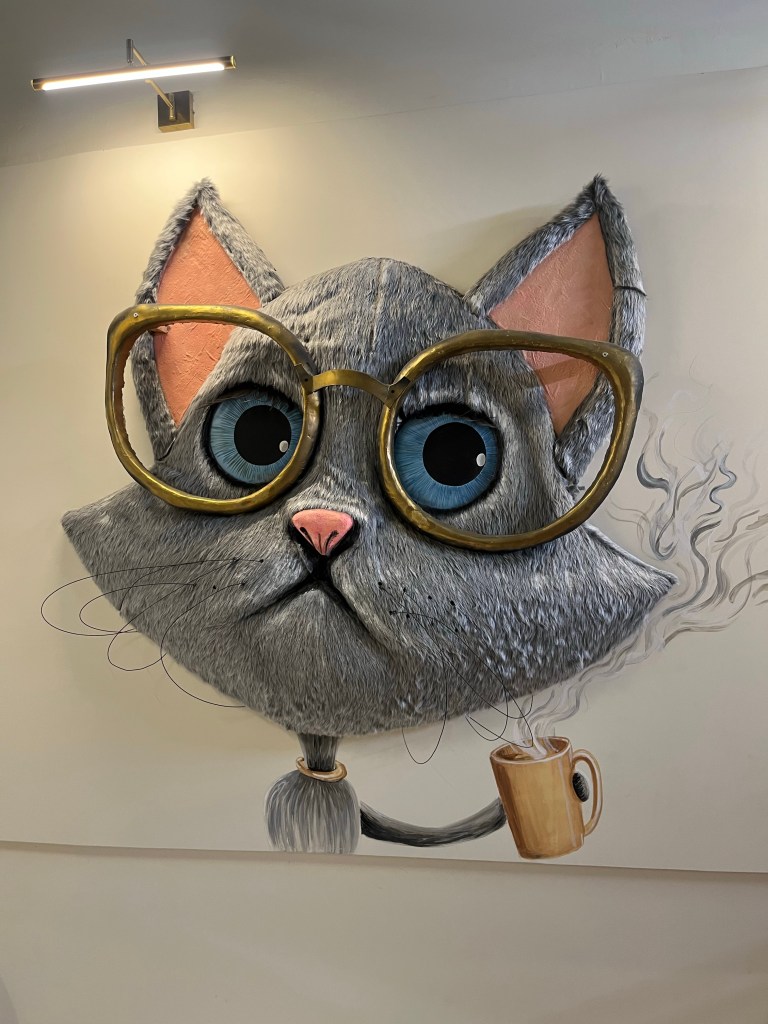
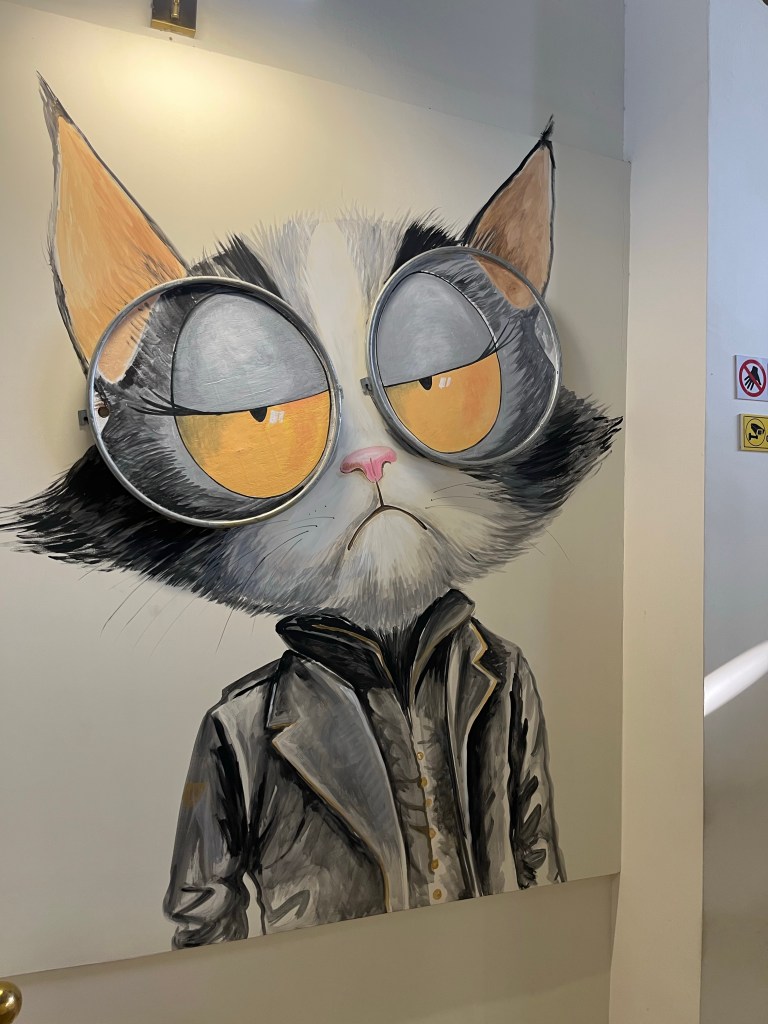
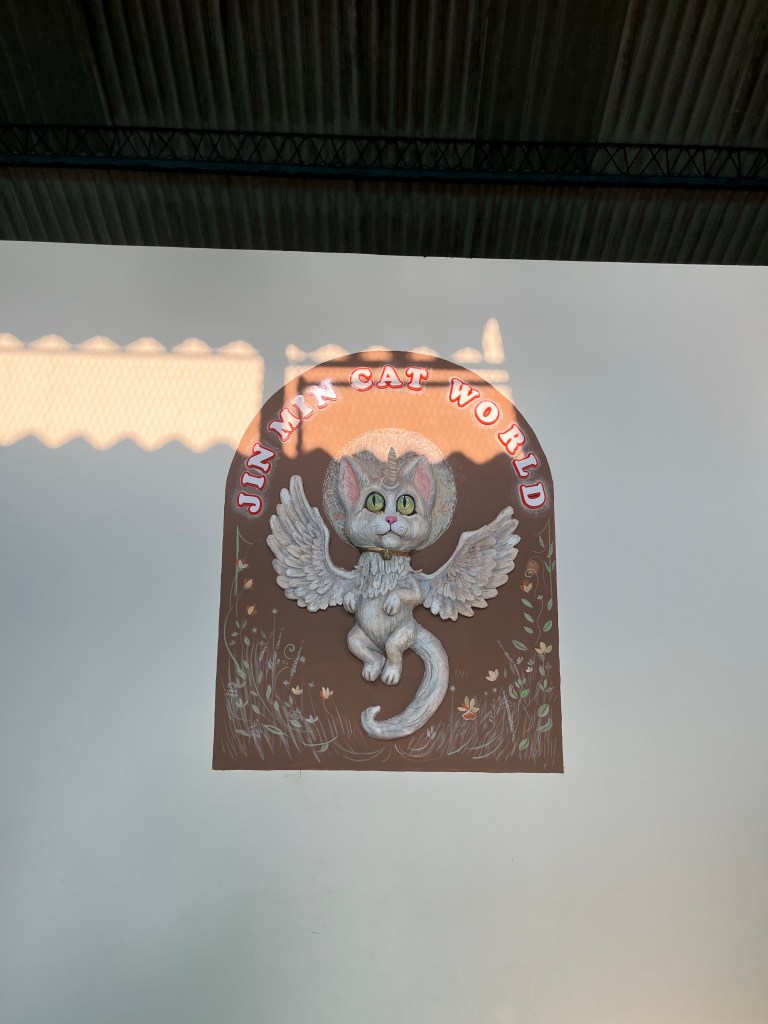


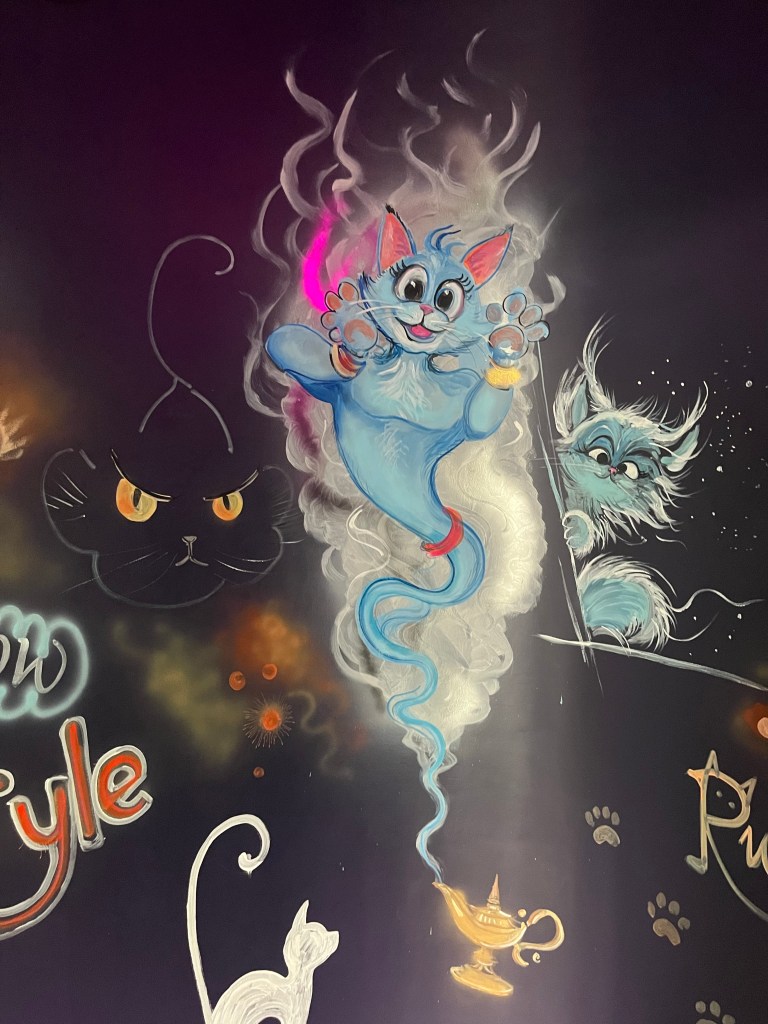
and another chapter for our family community.
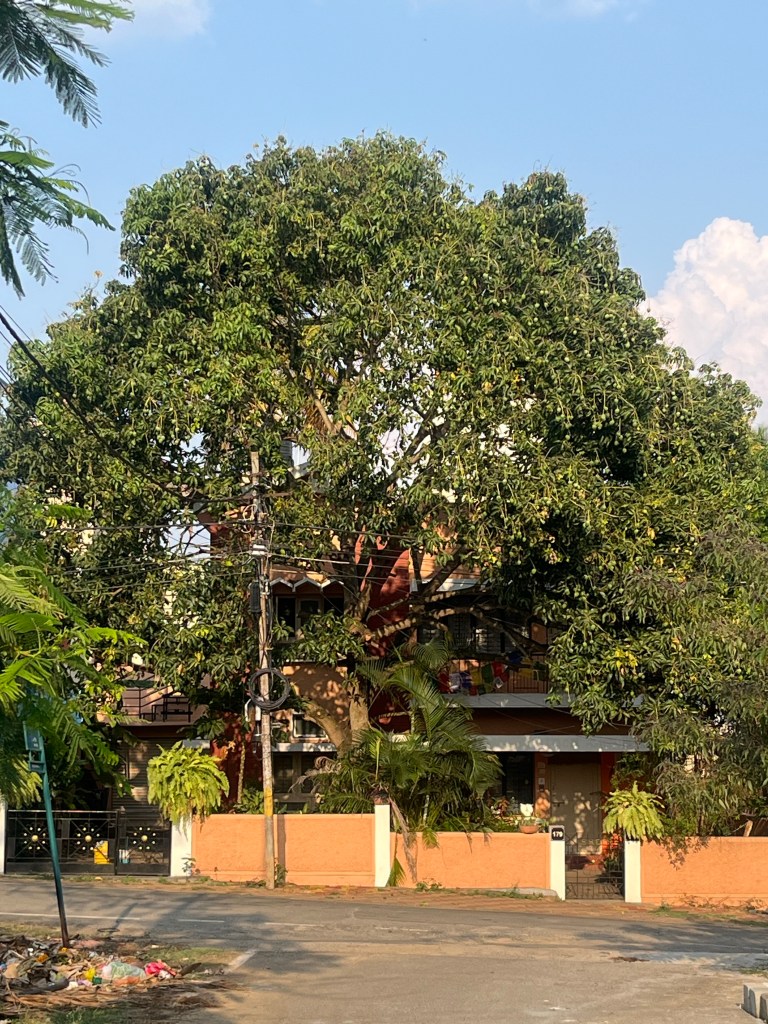
We’ve been here a week.
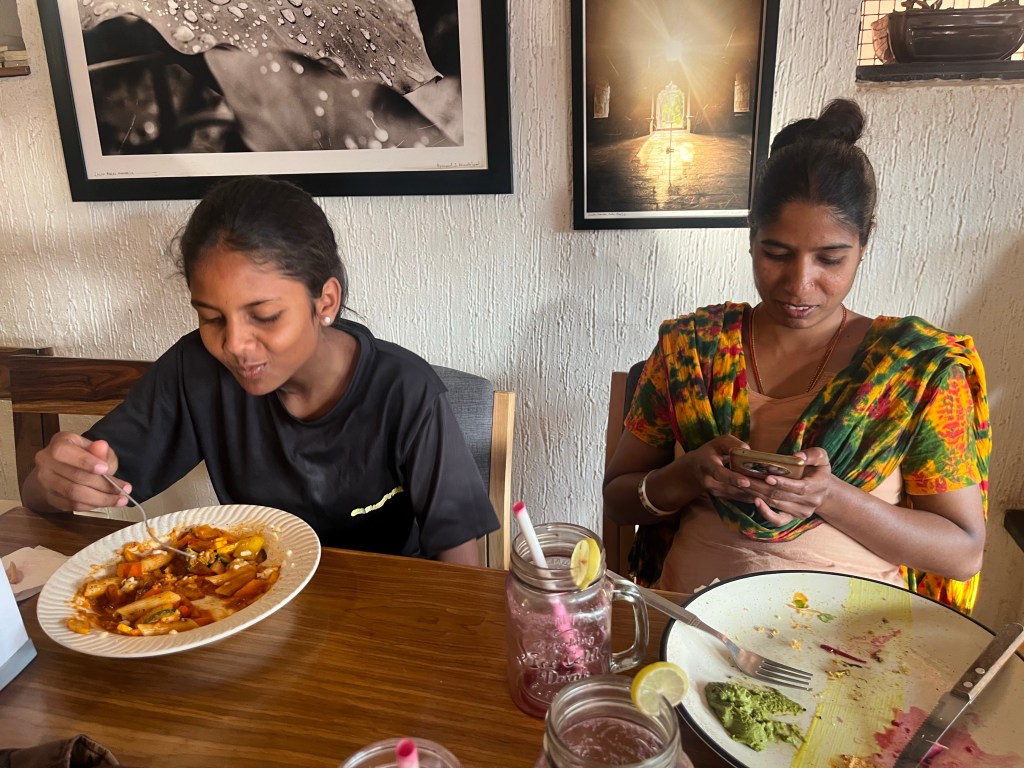
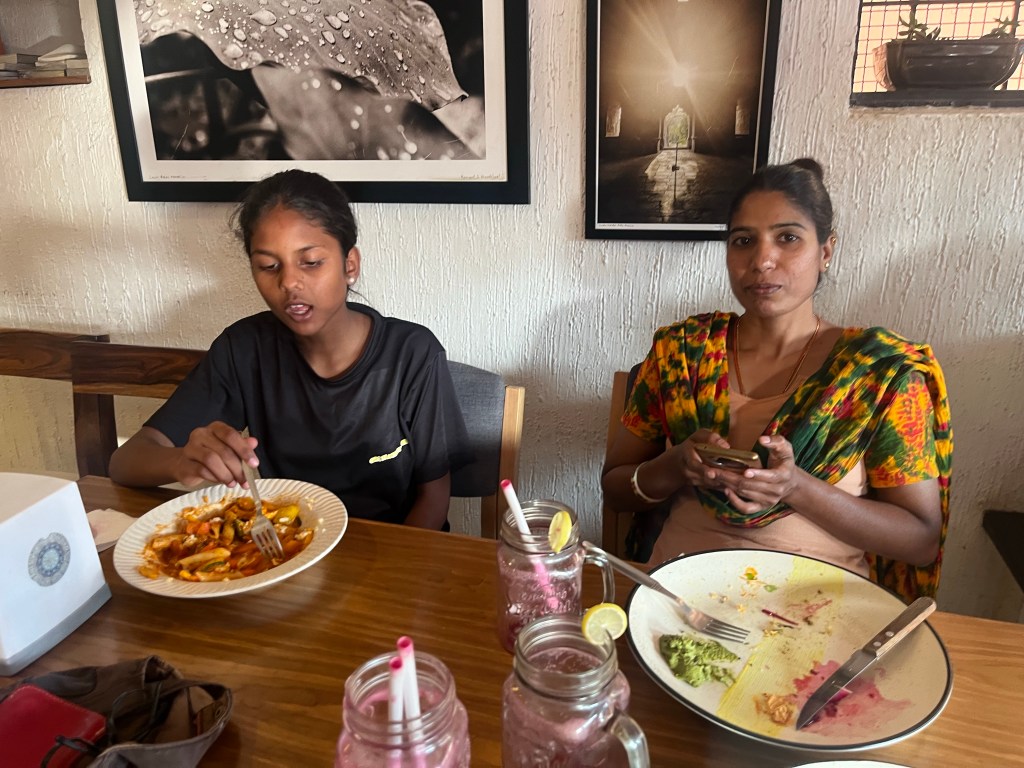
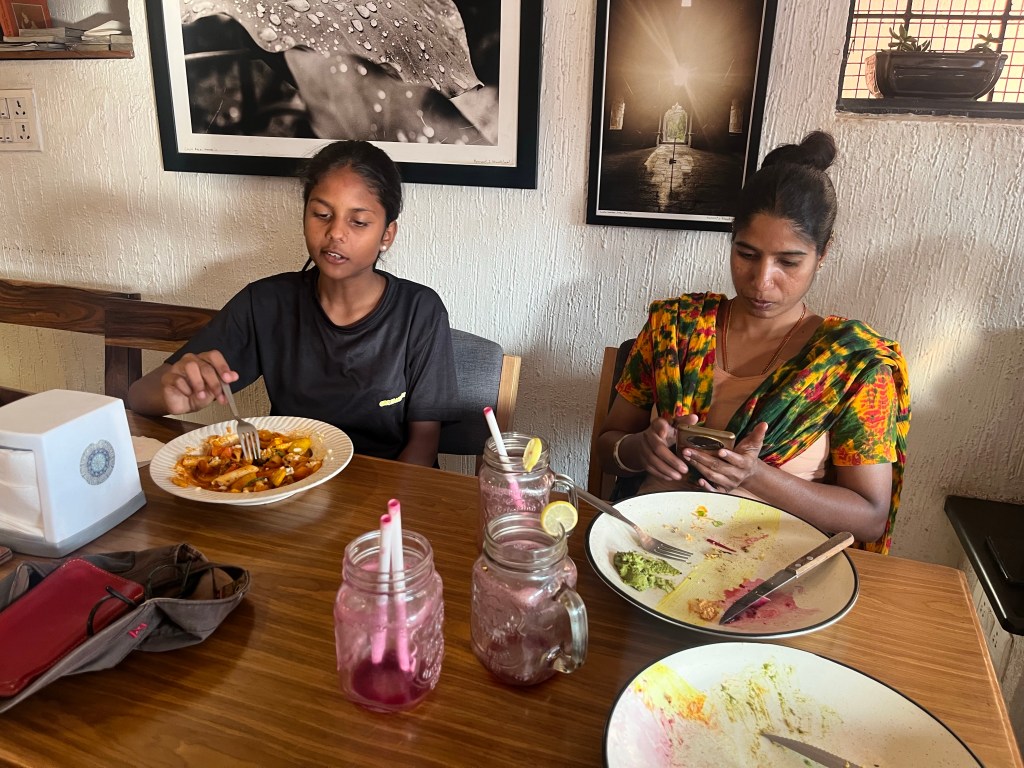
and visited Depth and Green
Nearly everyday. My fave drink is Beetroot, ginger lemonade and we all like the veggie burger, pasta, pizza and apple pie! When they’re available.
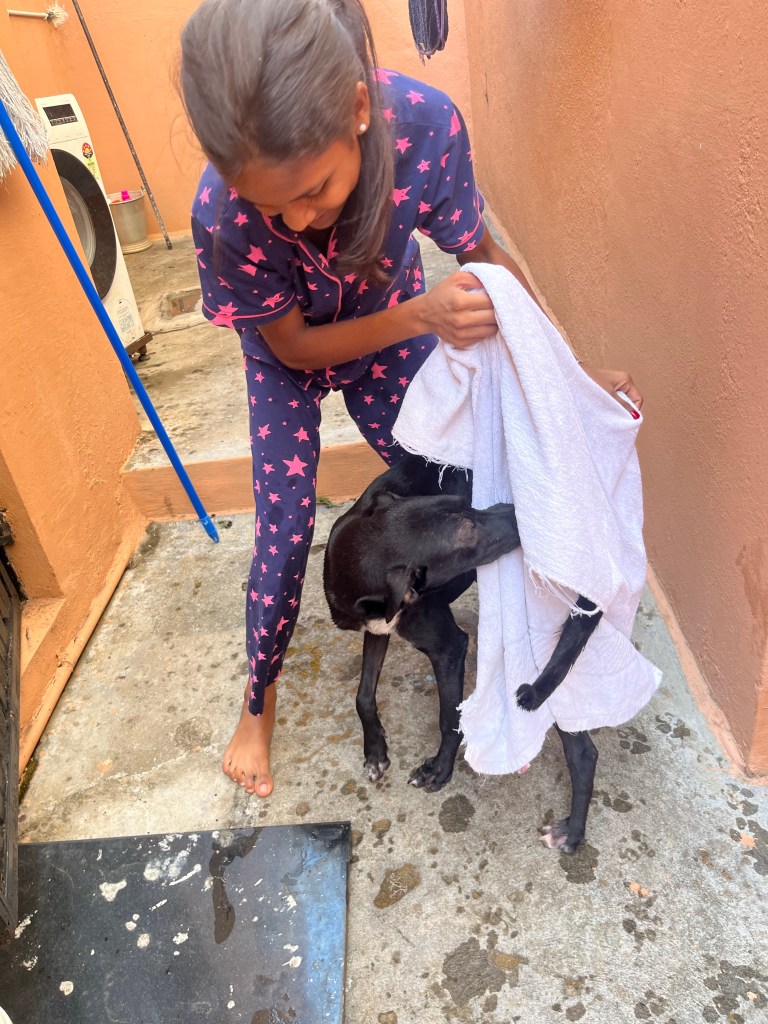
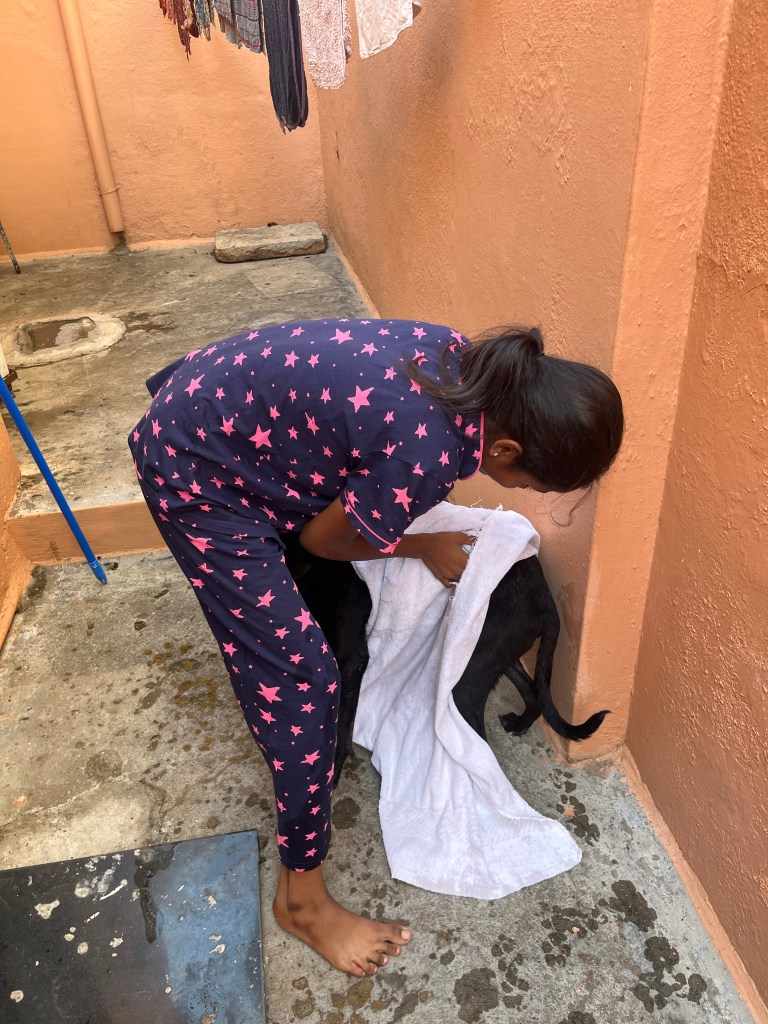
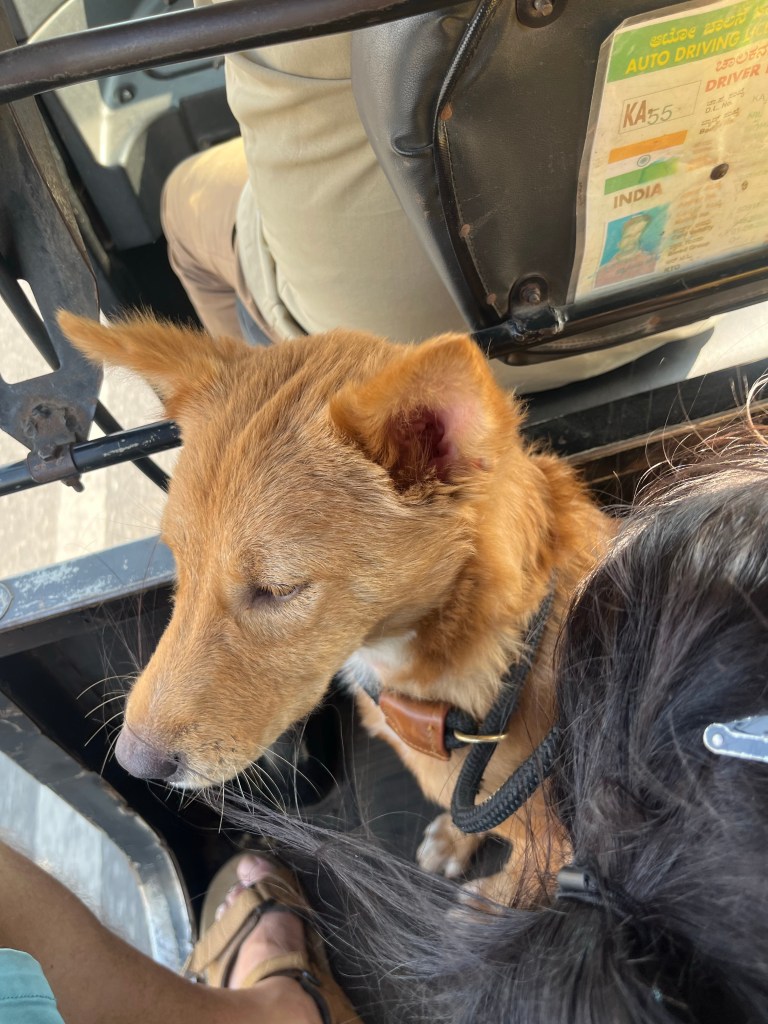
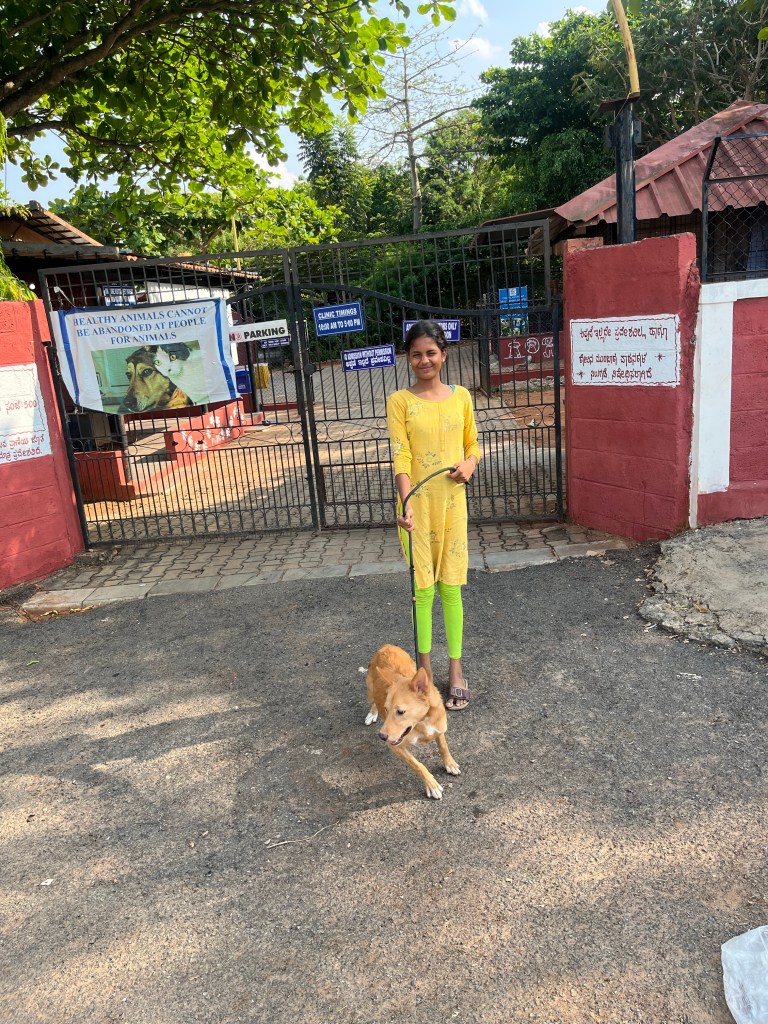
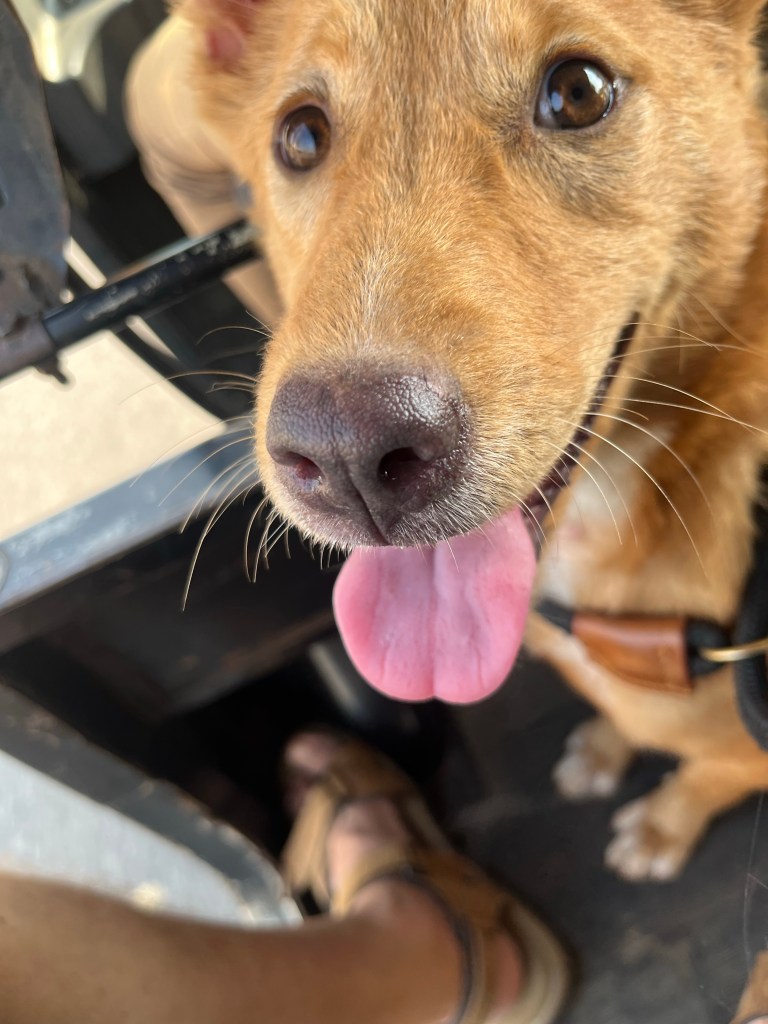
But very sorry to let Gingee go …
Two young dogs had proven too much.
And Kaveri set out on a ‘new foot’ with a bath for Lucca
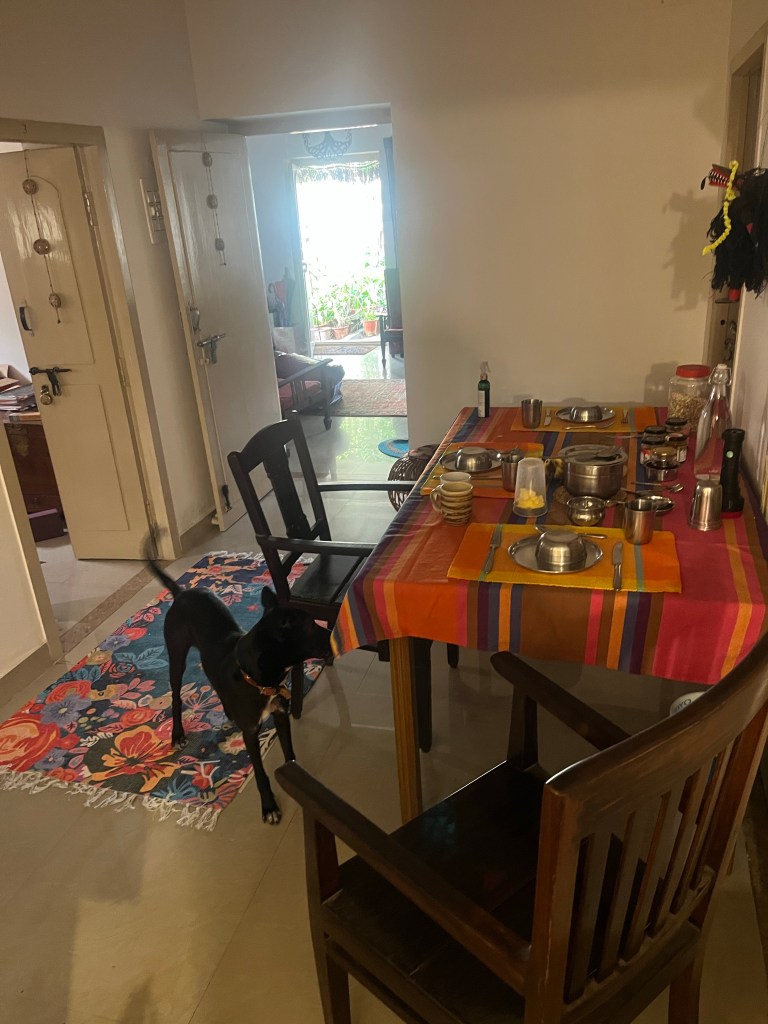
Breakfast is ready.
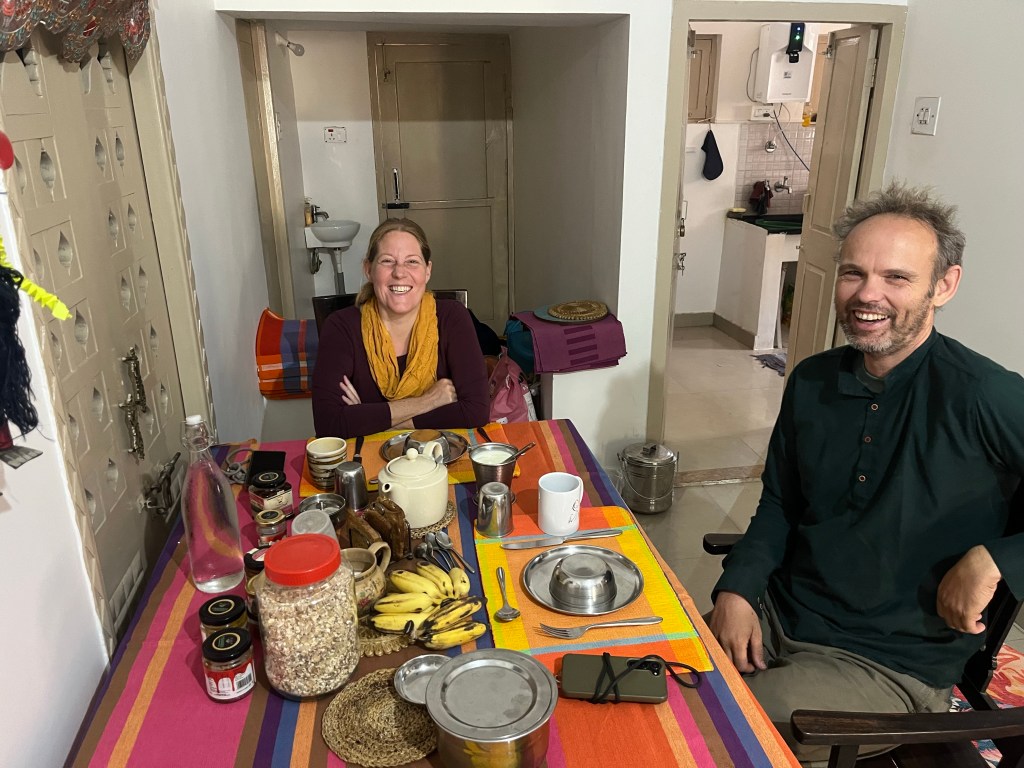
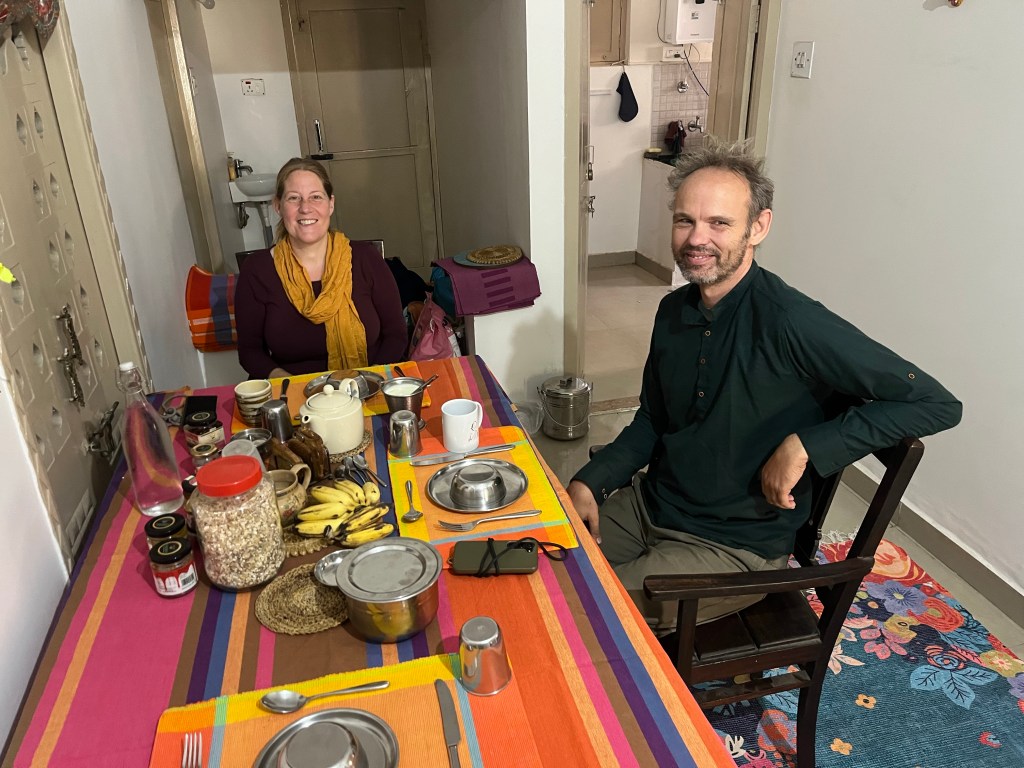
We’re on a slow start with Kurt and Loe returning to visit from Belgium (with a third member of family) our very first guests.
Last evening we even had games night.
Thanks for helping relaunch us.
…
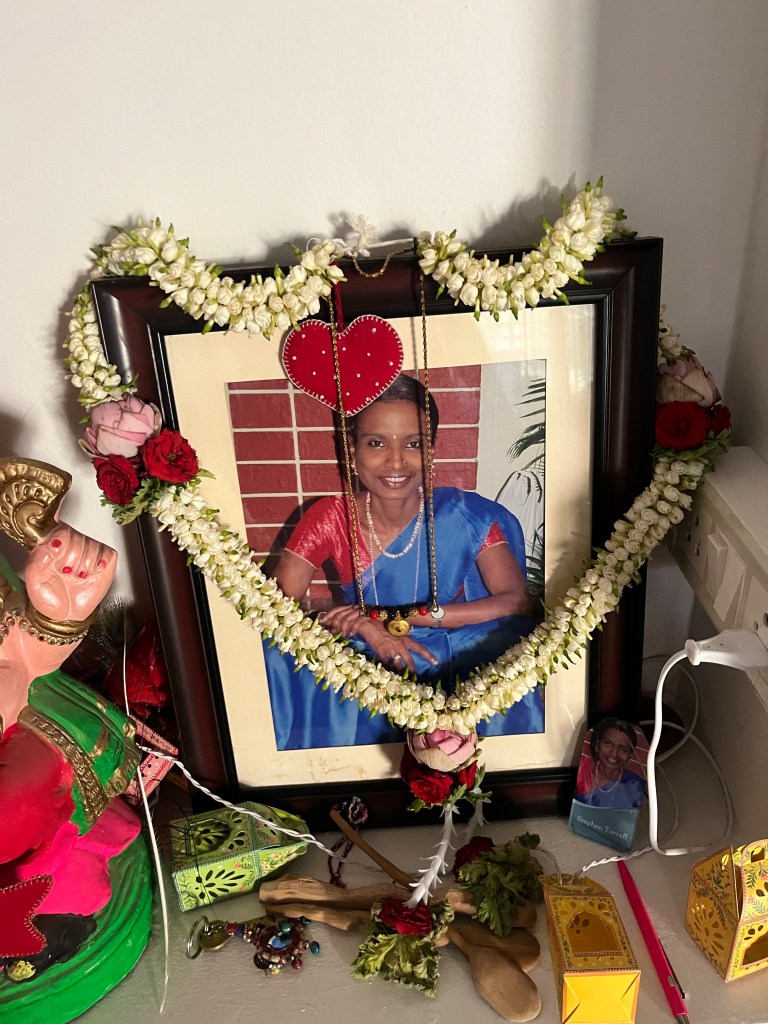
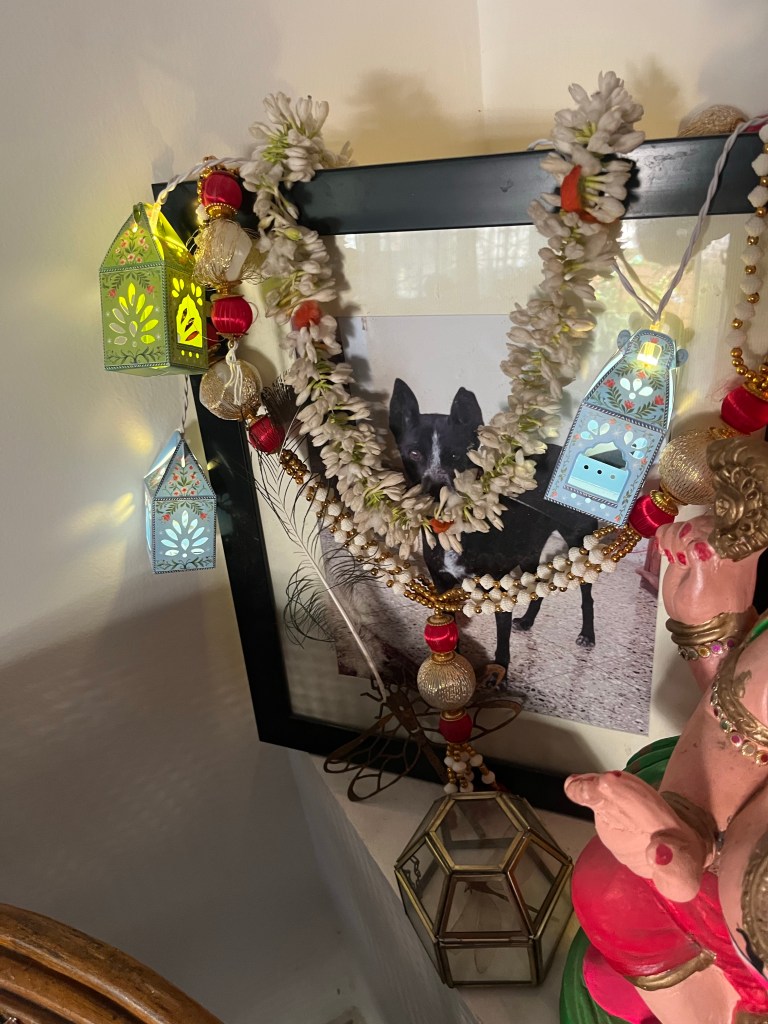
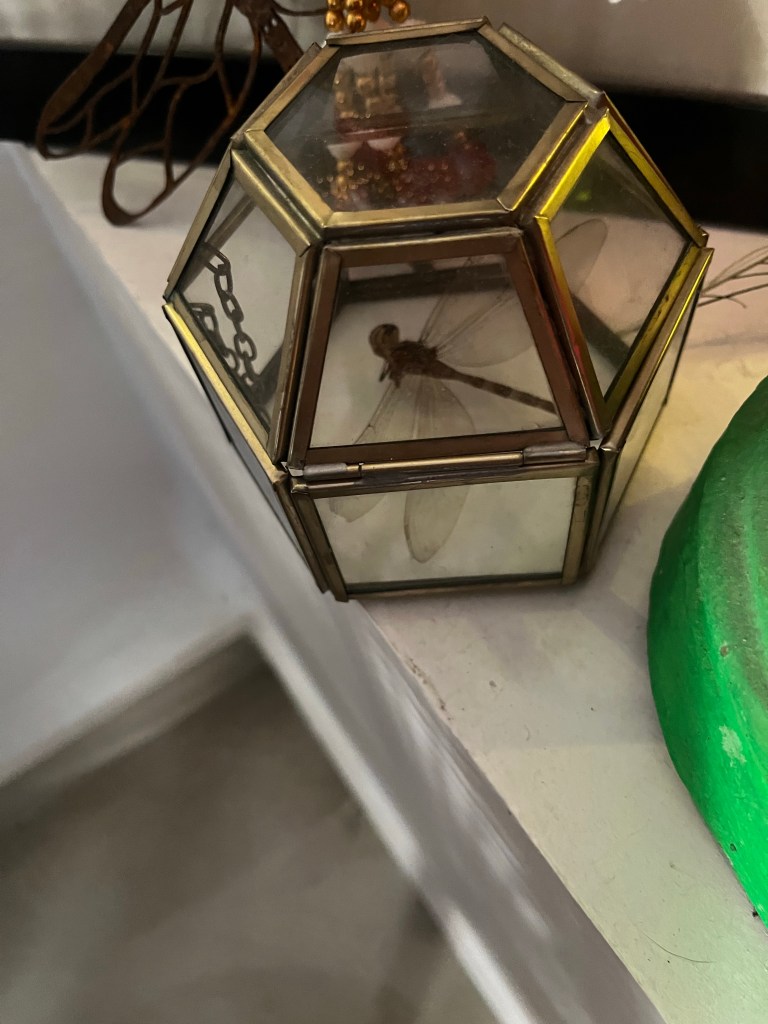
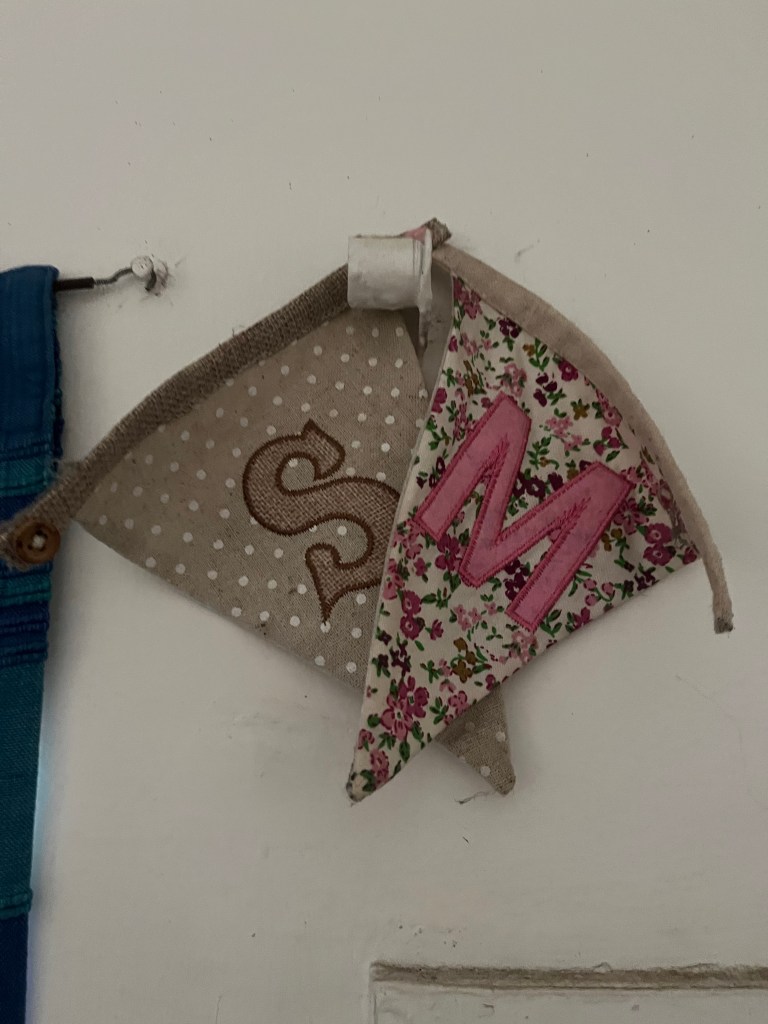
Manjula and Lucie in their varied forms are beginning to settle into their new home. Dragonfly and pennants are already here with a dramatic new episode to their story.
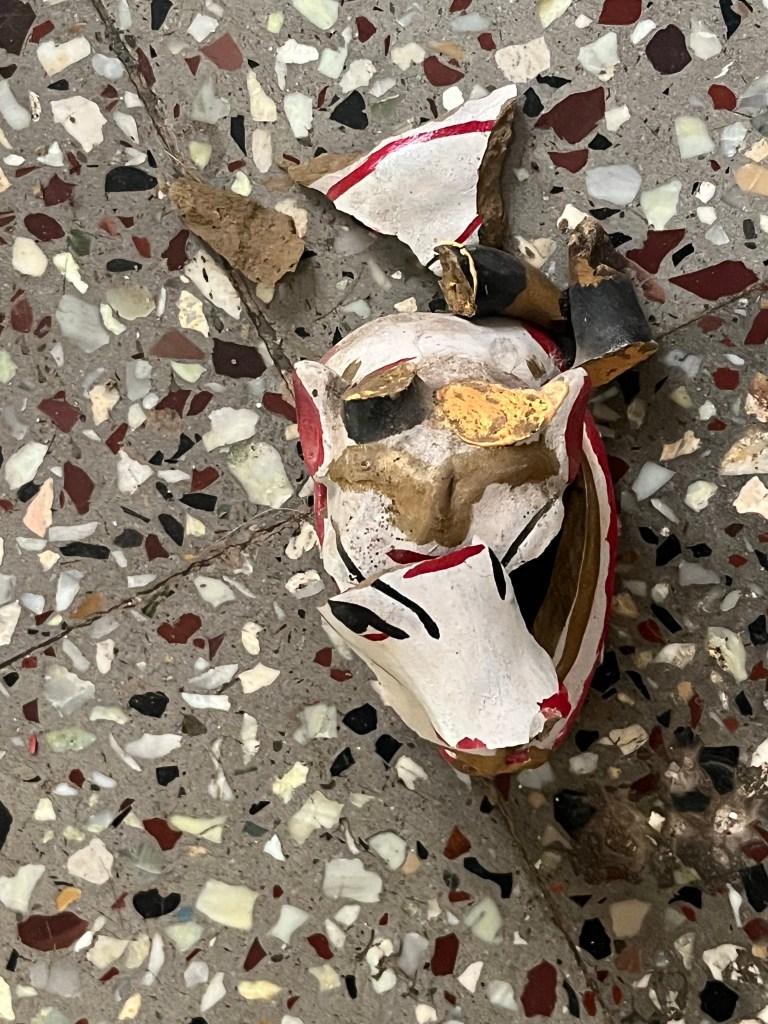
More later.