
If I can find a guide (supervisor?) I hope to do a PhD
I’m about to ask people at the university if they can help.
A big challenge is to work out what type of research to use and what to study, especially as I tend to cut across disciplines.
But I wonder if I can find someone to help me do a PhD using the sort of research I prefer?
I’ve researched things before but not what we normally associate with (empirical) more traditional scientific research; which starts with some assumptions (such as a hippopotamus sorry hypothesis), then you go gather information to check them out, analyse and conclude. That will indicate if you agree with the assumption or reject it. Hopefully at some point it leads to action.
I understand why it’s done that way but — my attempts have been a bit different to that — a bit more ‘off the wall’.
In the late 80s we used public meetings, market research panels, a reference group and interviews to find out disabled people’s wants and needs and then writing a business plan from what we learned. This enabled us to reorganise their services provided by the local authority (like a city corporation/council), using the money, the best way
It was called LEVEL BEST. We organised a conference to share our work.
Later, I read a book ‘Being Digital’ by Negroponte about the internet and the future of technology. We wanted to help all the communities to access the internet so invented — ‘cyber coffee morning’ — which was an introduction to the world-wide-web a year or so after it was launched. We set up a team, and delivered it to hundreds of people in the locality. People loved it. My MPhil (critical management) research was to learn about how a project develops, the key roles people take on and what motivates them. I was in and amongst what was happening and changed things in real time depending upon what I learned.
I’ve used the knowledge from that research in many ways, since then. This projects title was CYBER CITIZENS.
Career-wise, it helped me shift from being a manager in government to be a facilitator and consultant with multi-national companies.
A few years later I was asked to work in a small town to help bring people and organisations together. I facilitated it on behalf of the council to help respond to the community needs in our planning, help organisations collaborate and respond by developing new projects and practices.
A challenge for all governments is to develop continuing relationships with its voters between elections. Things change so quickly and representation needs to be supplemented. As I began the project I was interviewed by the local journalist. He asked me how I’d decide what projects and ways of consulting I’d develop. My response was that I’d try different things and go with what worked. Over thirty years later some of the projects are still going strong. That’s a form of action research. It was called CANDo
I develop slogans and brands and my methods are most like market research which always involves action and continual analysis. I was often the participant who is constantly observing and analysing with groups and networks to advise and support
All of my research has been ‘suck it and see’ and actually sometimes lead to quick responsive action.
It’s usually been about …
Creating opportunities to involve stakeholders (those with interest and influence) and making things happen, as we go along. That’s not waiting for wisdom to be handed down.
If I even go back to my earliest jobs after graduating I supported groups of young people who were ‘in care’ to share their opinions with their social workers, helped develop half way houses to help them develop the skills to become independent. This was critical as many had lived in institutions.
I became coordinator of Notting Hill Social Council continuing their work from the 50s. This involved working with the diverse communities (African Caribbean, Moroccan, Indian sub continent, Filipino peoples) to raise people’s voices, influence the council and develop community responses
It’s probably no accident that I’ve facilitated workshops in London for over twelve years based on developing values based organisations built on stakeholder engagement.
When I helped organise events in India starting in 2006 we created interactive experiences with Indian communities for company directors from multi-national companies to learn and inform their business strategy. I featured pukar at the first of these events as they followed a similar approach to mine https://pukar.org.in in engaging stakeholders.
So, I’ve done lots of research but usually through the active engagement of the communities themselves.
I wonder if I can find someone who help me do a PhD using the approach I have experience of: participant observer, dialogue, reflection, real time action?
I hope so.
This idea of doing a PHD isn’t really new, in some ways I’ve been building up to it for years. In each of my roles I’ve tried to help people learn by doing and becoming active participants. More recently it’s arisen from Manjula Mysore’s support to young people through creativity days, reflective space and the sponsorship of Naveen and Kaveri.
It’ll somehow relate to this.
It also reflects the work I first stared on my BA in the 1970s
I just hope I can find someone at the university who will support a slightly different approach.
So what will it be about?
Watch this space.
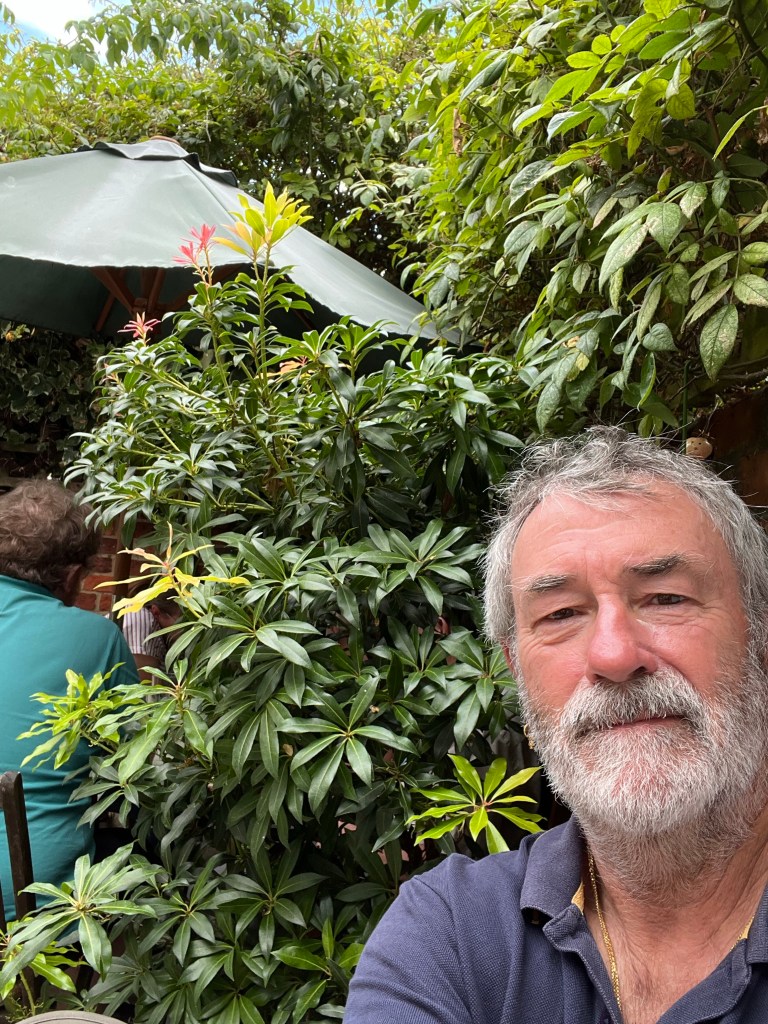




 Me and MYCycle