Kaveri is now staying alternate weeks between the home MAnjula created and home with her mum Chandrika
That’s after ..
.. a Great weekend together
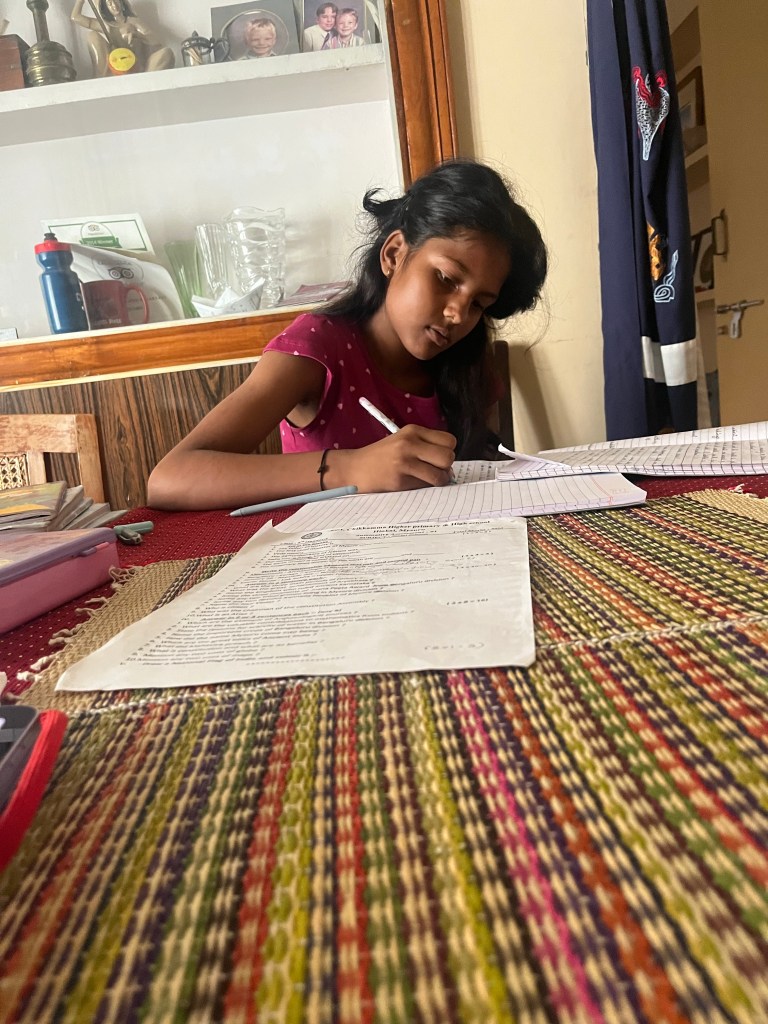
It’s involved buying new shoes, maths, animals, angles, English, Hindi (I was not involved with that one), breakfast, more and more.
It’s exhausting.
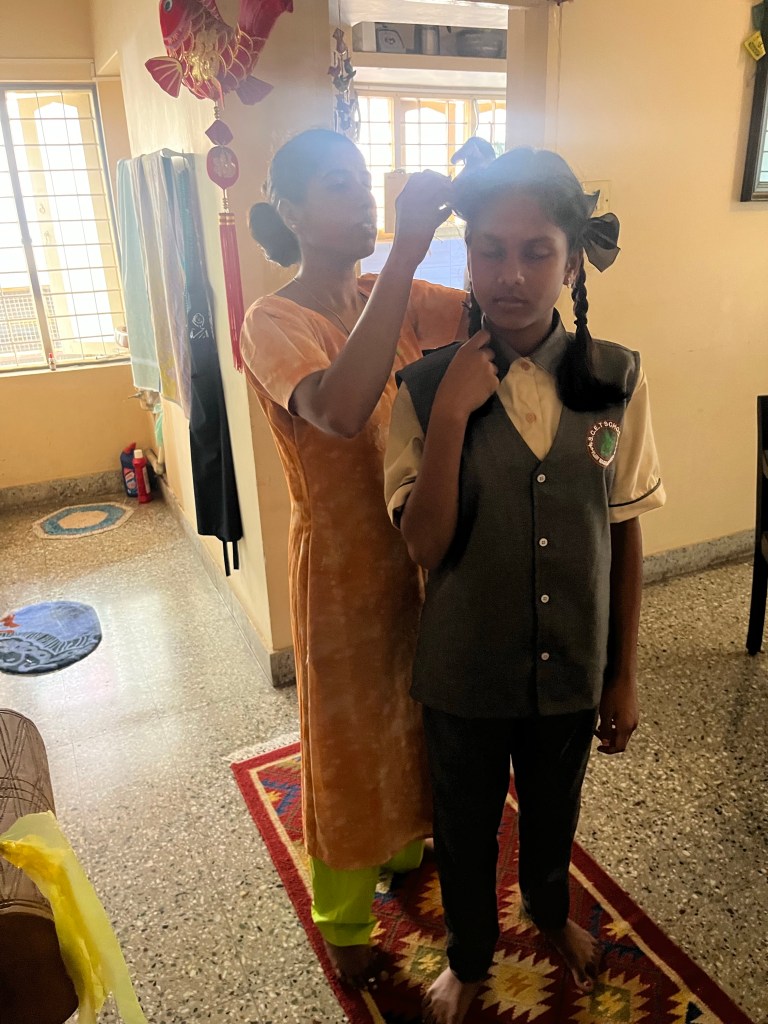
I’m feeling it but also realising how Sowbaghya is stepping up by preparing breakfast, lunch and dinner and finishing my pathetic attempts to comb Kaveri’s hair.
It reminds me of … what a challenge it is and my own long hair in the 70s.
Stephen and TriciaWe’re building something ..,
and another thing … the curriculum, text books, homework have made mistakes about turtles and tortoises. It’s sort of understandable but can’t correct it for Kaveri as she’d then answer it wrong in her homework or test. . Now there’s a lesson, of sorts.
A tortoise might be a type of ‘turtle’ and a reptile but it doesn’t live in water but on land!!
Here’s thanks from AI searching the net.
Yes, all tortoises are turtles, but not all turtles are tortoises. Tortoises are a type of turtle that are specifically adapted to live on land, while the term “turtle” generally refers to reptiles with shells that can live in both aquatic and terrestrial environments.
Here’s a more detailed explanation:
Order Testudines:Both turtles and tortoises belong to the order Testudines, which encompasses all reptiles with a shell.
Tortoises:Tortoises are a family of turtles (Testudinidae) characterized by their terrestrial lifestyle and distinct physical features like domed shells and sturdy, often “elephantine” legs.
Turtles:The term “turtle” is broader and can include both aquatic (like sea turtles and freshwater turtles) and semi-aquatic species, as well as tortoises.
Key Difference:The primary difference lies in their habitat and related adaptations. Tortoises are land-dwellers, while turtles can be aquatic, semi-aquatic, or terrestrial.
The homework had got tortoises going in the water.




























 Me and MYCycle