Recognising Buddhism

The flag.. a gift from Bylakuppe

  1. Just as the blue light emanating from Buddha’s hair symbolizes universal love and compassion for all sentient beings, the blue color in the Buddhist flag represents universal compassion and peace.
  2. Just as the yellow light radiating from Buddha’s skin symbolizes the attainment of liberation and omniscience through relying on the Middle Way that avoids extremes, the yellow color in the flag represents the Middle Way that avoids the extremes of eternalism and nihilism.
  3. Just as the red light emanating from Buddha’s flesh symbolizes the blessings that flow from Buddhist practice, the red color in the flag represents perfect realization, wisdom, virtue, merit, and dignity attained through practice.
  4. Just as the white light radiating from Buddha’s bones and teeth symbolizes the purity of Buddha’s teachings and the possibility of attaining liberation and omniscience through them, the white color in the flag represents the purity and timelessness of the Buddha’s teachings, which remain unstained by faults and lead to liberation regardless of time and space.
  5. Just as the orange light emanating from Buddha’s palms, soles, and lips symbolizes the unwavering nature of Buddha’s teachings, the orange color in the flag represents the essence of Buddhist teachings, rich in wisdom, strength, and dignity.
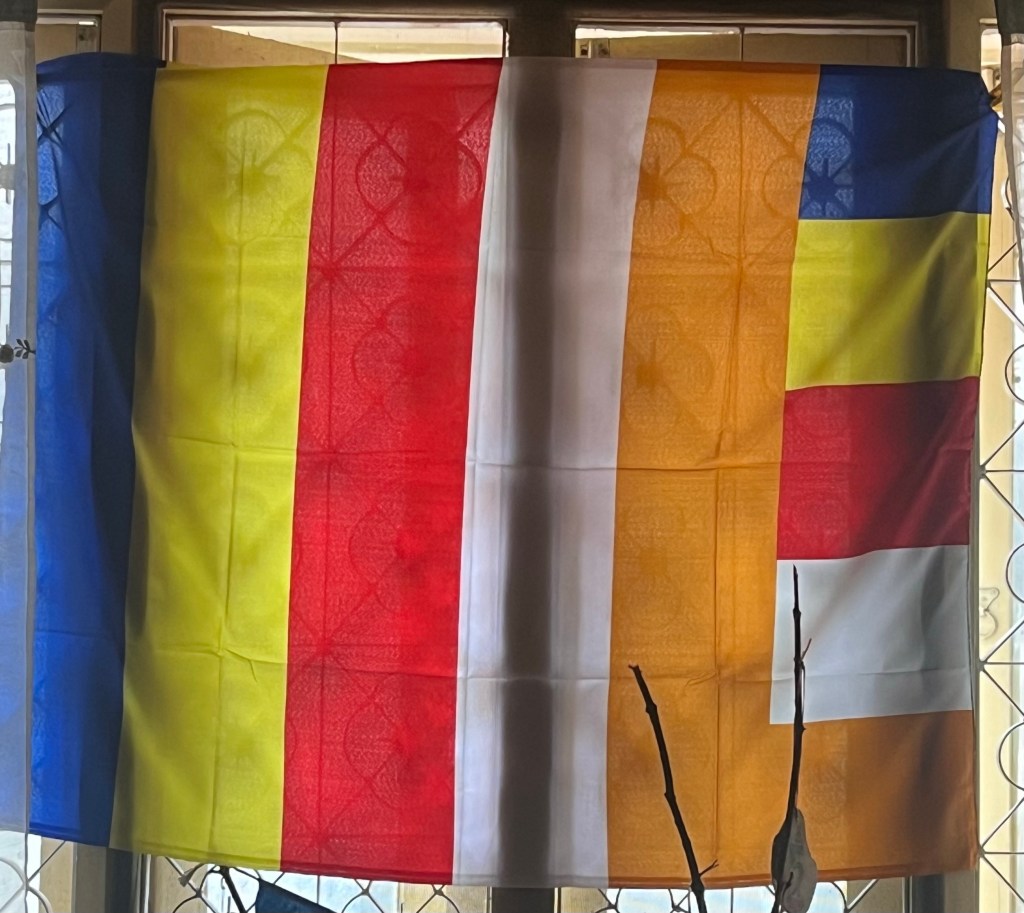
The Buddhist flag in our downstairs hall
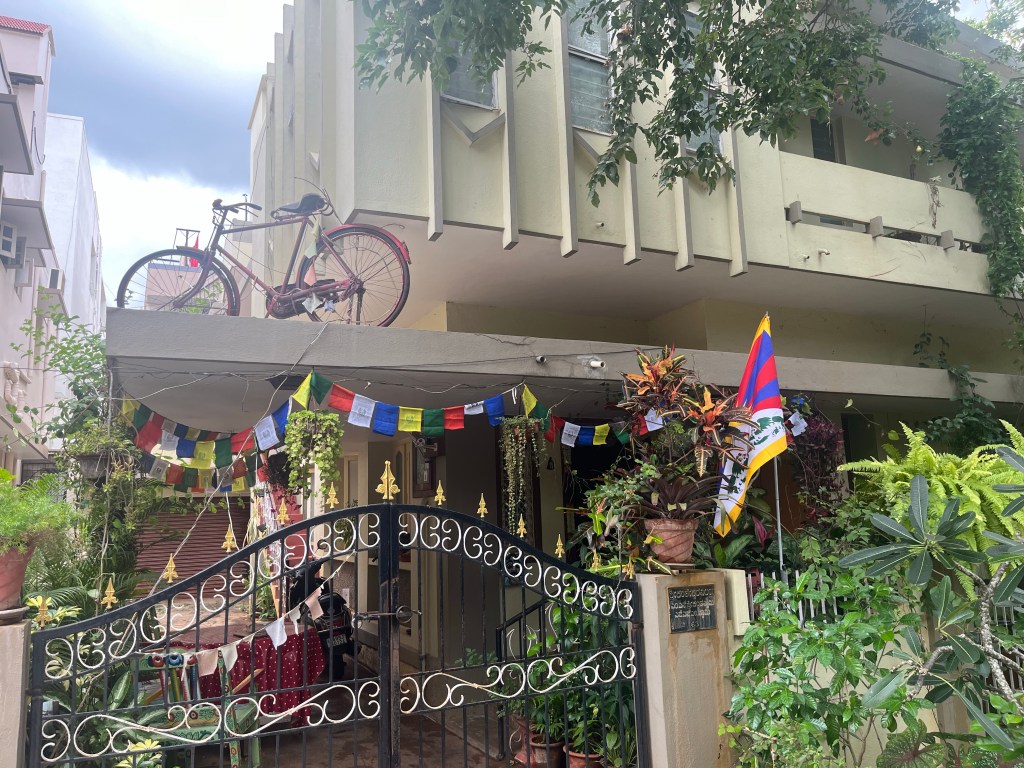
Our front gate, Tibetan and prayer flags.

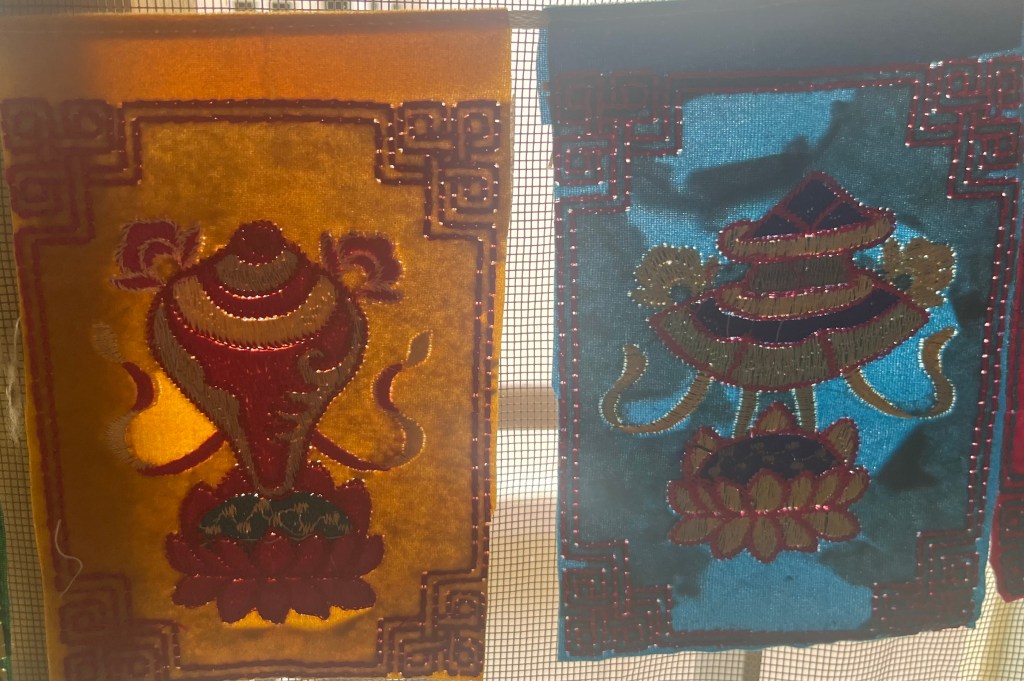
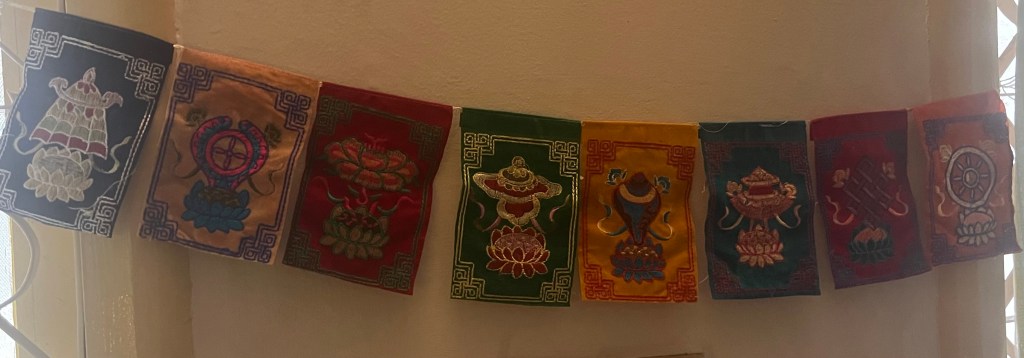
Eight Auspicious Symbols:

Here is the English translation of the Tibetan text , describing the Eight Auspicious Symbols:

  1. The Wheel: Symbolizes the teaching of the Dharma (the Three Baskets) and the transmission of the Three Trainings to disciples.
  2. The Parasol: Represents the dispelling of the heat of suffering and afflictions for sentient beings.
  3. The Victory Banner: Symbolizes the defeat of Mara and non-Buddhist opponents, and the complete perfection of the major and minor marks of enlightenment.
  4. The Endless Knot: Represents the complete perfection of all qualities and the possession of the five wisdoms.
  5. The Right-Turning Conch Shell: Symbolizes the melodious sound of the Buddha’s speech proclaiming the Dharma.
  6. The Vase: Represents being completely filled with the essence of good qualities and serving as a support for pure merit.
  7. The Lotus: Symbolizes being in the world but uncontaminated by it, untainted by the impurities of karma and afflictions.
  8. The Golden Fish: Represents the abandonment of all faults and obstacles.

The text also mentions a quote from the Mahayana sutra called “The Stacked Auspicious Ones,” which describes how these eight symbols relate to different parts of the Buddha’s body and qualities. It concludes with an aspiration for auspiciousness and well-being through these symbols.

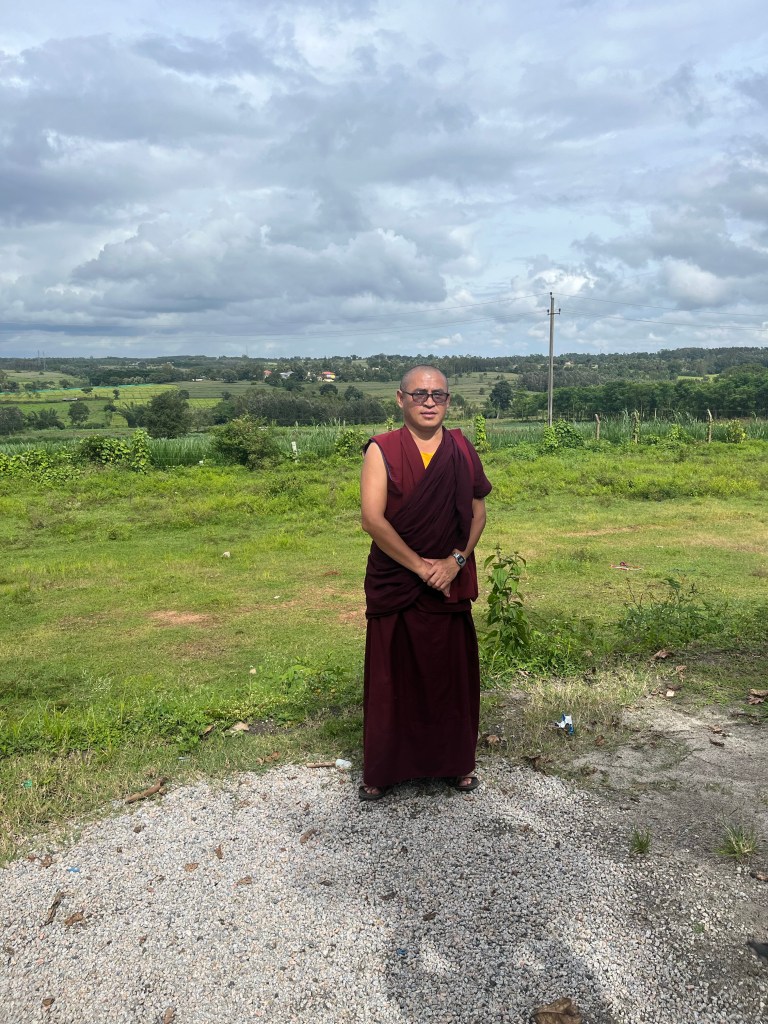
Dorjee visited us in Mysore with a gift of a Buddhist flag and helped us better understand the auspicious symbols

The passage notes that while there are more detailed explanations and interpretations of these symbols available, this brief description should suffice as an introduction to their meanings.