Creativity Days

Were organised by Manjula’s Mysore at Kaliyuvamane, the ‘open’ school that Kaveri attends in Mysore and separately for an NGO working with visually impaired young women.

Why?

… because it’s an ‘alternative’ approach we think reflects our way of thinking and that of the school.

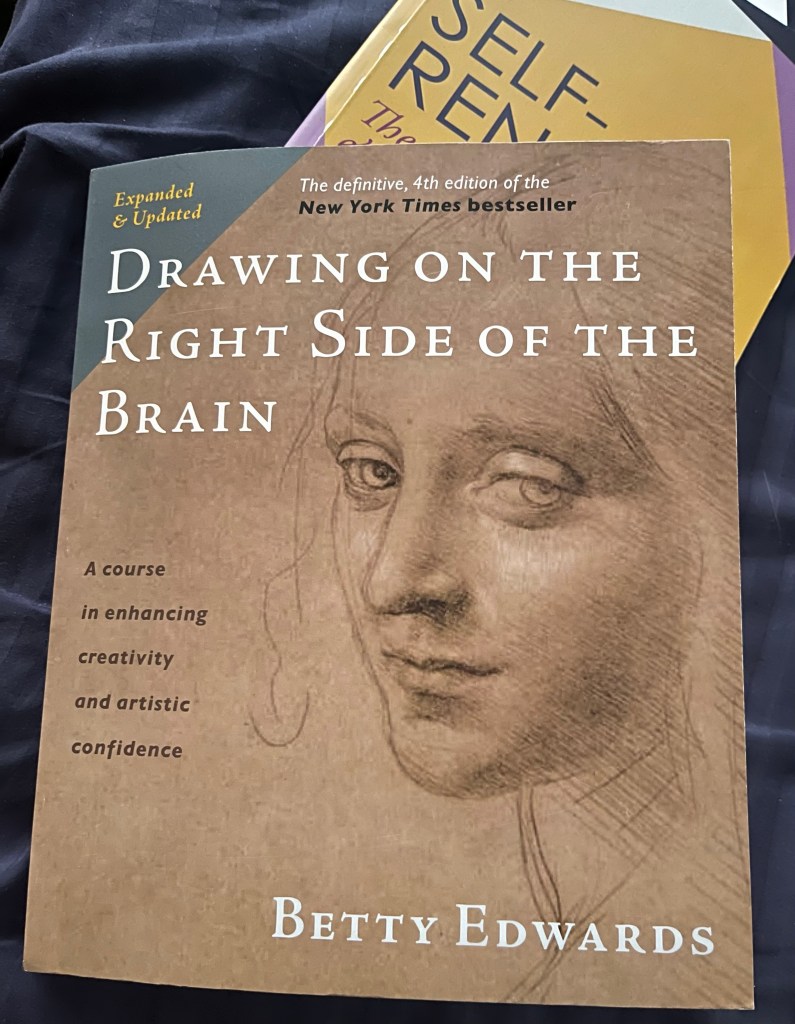
Betty Edward’s writer of ‘Drawing on the Right Side of the Brain’ puts it well…

“throughout many cultures … there is much talk of creativity and our need for innovation and invention. “ …. Yet …
“our education system seems bent on eliminating every last bit of creative perceptual training of the right side of the brain, while overemphasising the skills best accomplished by the left side of the brain: memorising dates, data, theorems, and events with the goal of passing standardised tests.”

Edwards believes that “with careful teaching transfer, drawing and reading together can educate both halves of the brain.”

Indeed the management guru Tom Peters declared innovation as the no 1 competency for successful, thriving organisations. That was also reflected in the work of John W Gardner author of ‘excellence’ and ‘self-renewal: the individual and the innovative society’

As I look into this more, I realise that creativity helps us develop and use the right side of the brain to enhance our perception and to bring meaning into our increasingly complex worlds.

It’s therefore no accident that we’ve promoted “two vital global skills: reading and drawing.”

I hope MAnjula was happy and proud that in her memory we’ve tried to better equip young people for the challenges they’ll face, bringer greater equilibrium and help them find their passion.

Details of our creativity days are here and here

How amazingly

fortunate am I?

A beautiful wife — of many wonders — one of my many gifts from India.

Now in addition to my MAnjula

memories living

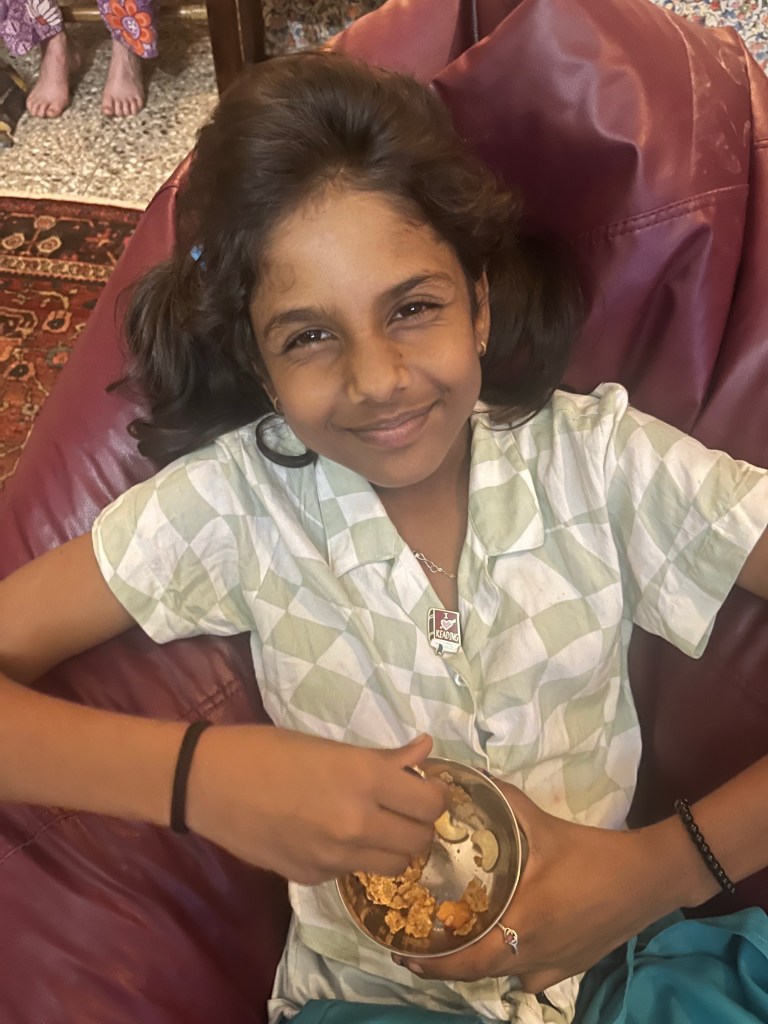
in my heart there’s a little thing

Helping fill my life and manage my grief …

Putting it in its place. …

Thank you

MAnjula and Kaveri.

Dancing elephants

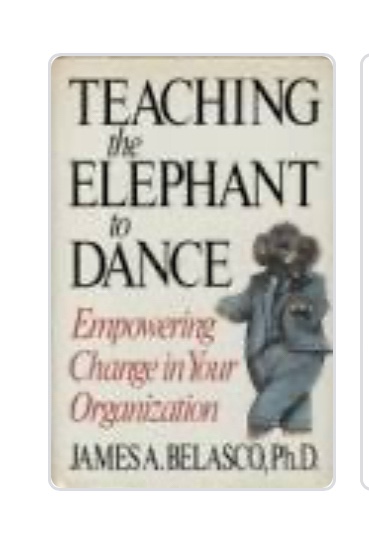
This image popped up today

It reminded me of when I was reorganising a government department in the 1990s

All the staff were asked to attend one of my interactive workshops called ‘teaching the elephant to dance.’

This was based on how a circus would tame elephants. The elephant would be chained to a stake so it couldn’t move away.

Later the chain would be removed but due to ‘learned behaviour’ the elephant wouldn’t move away, as if the chain was still there.

Of course, I’m not condoning this treatment of elephants but it’s a useful analogy.

In organisations we develop a narrow ‘world view’ and institutional way of doing things. This can stop us being innovative, creative and lead to insensitivity . Which means we are less likely to learn and adapt.

Both collectively and individually we’re like the elephant that doesn’t move away from the stake, yet we’re not physically restrained.

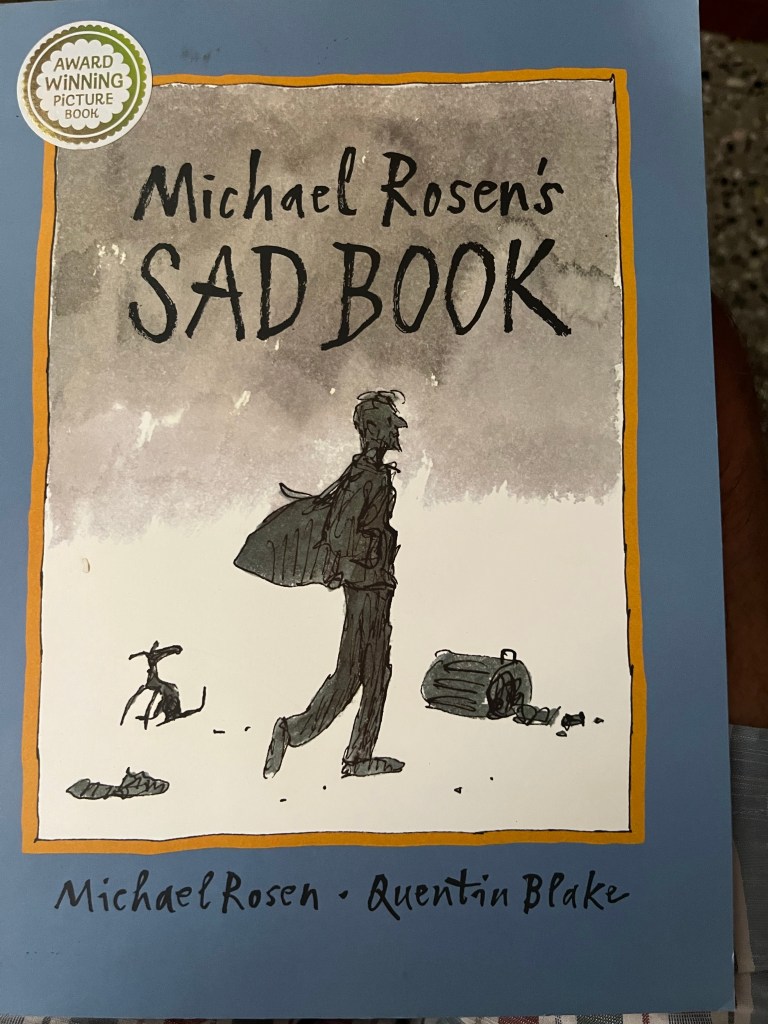
I’d read this book…

Forty years ago it was very exciting time as we created an organisation to better serve disabled people.

That perspective is also appropriate for today.

We can liberate ourselves from our own narrow perspectives and unhelpful traditions.

Check this link for an uncanny coincidence.

And Giraffes can dance.

Jams, a new favourite

We’re always on the lookout for delicious new things to share with our guests.

The latest discoveries … are …

Prasukh jams

Check them out

There an interesting range with an unexpected twist

My own favourites are the one’s with chilli and especially the mango, chia and chilli.

mmmmm

They’re very much appreciated by the guests of Mysore Bed and Breakfast

….

They’re also a modern quality company in other ways.

The last delivery was damaged in transit. A third of the jams were lost but the company replaced them

Fab.

Thank you Prasukh

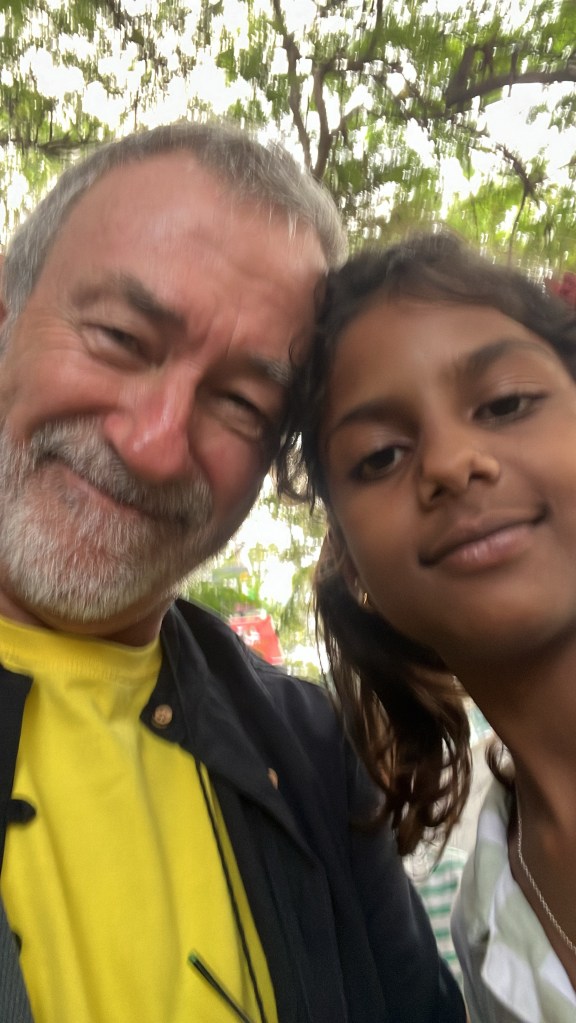
Friends become family.

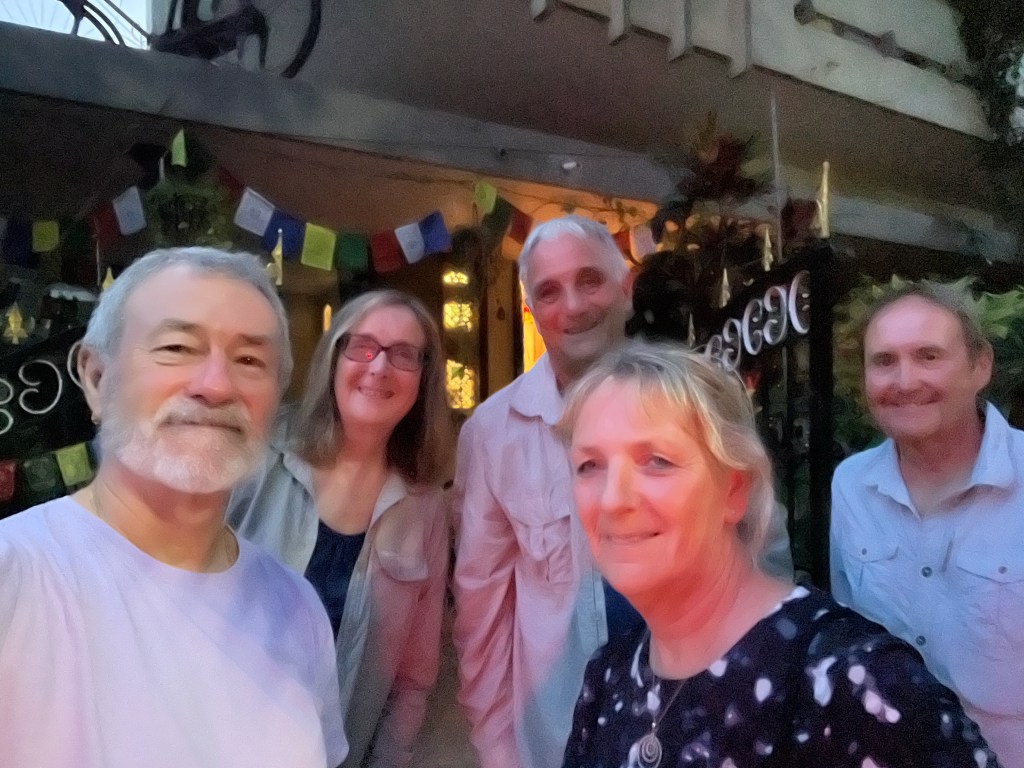
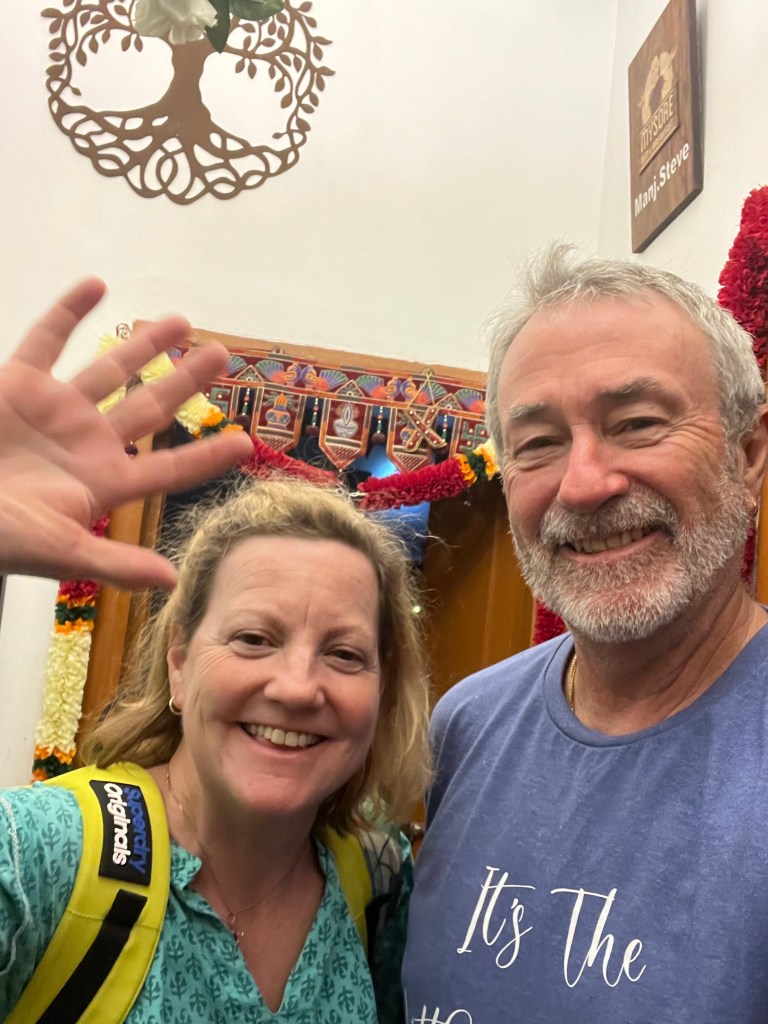
Another example of our wonderful guests, that become friends and how our chosen family now spans the world.

How lucky are we?

Here’s this weeks Facebook posting from them. ….

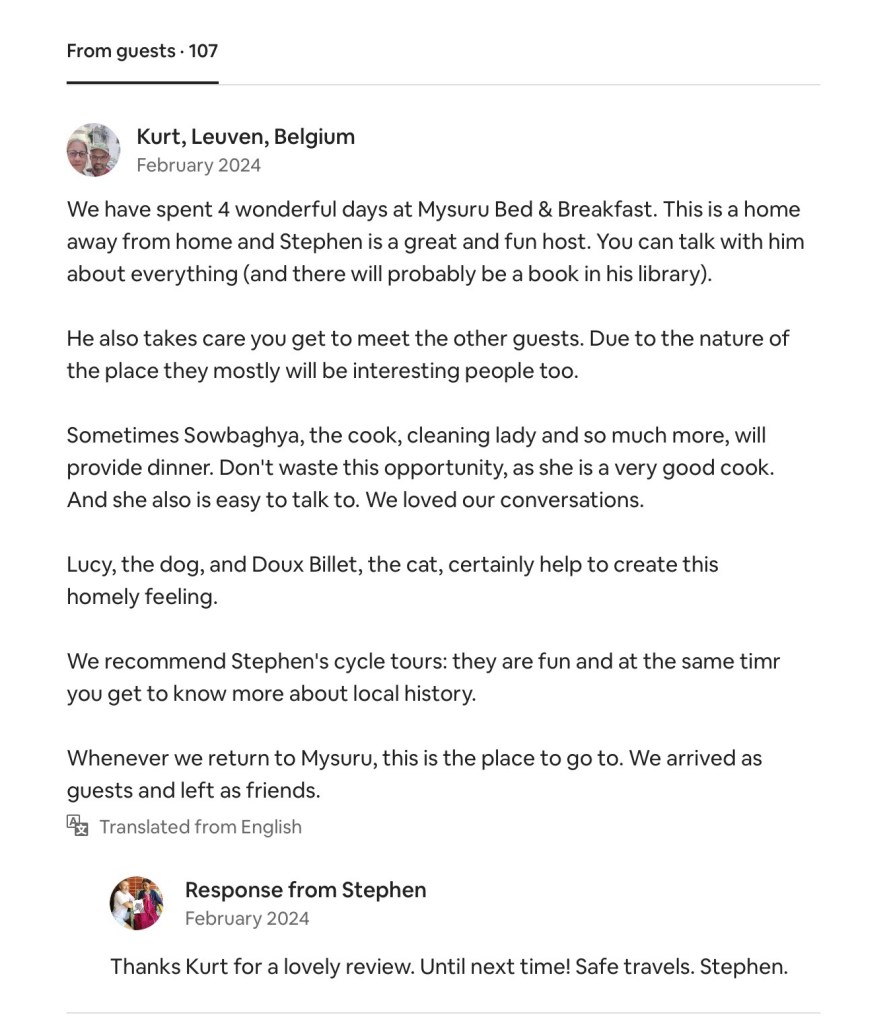
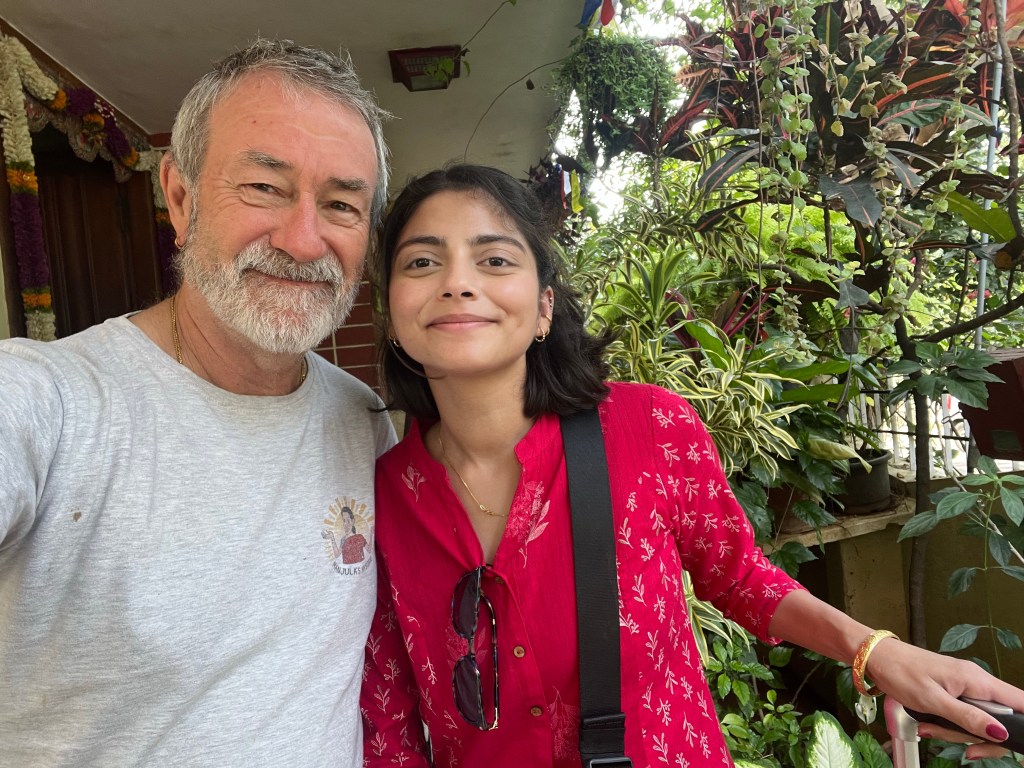
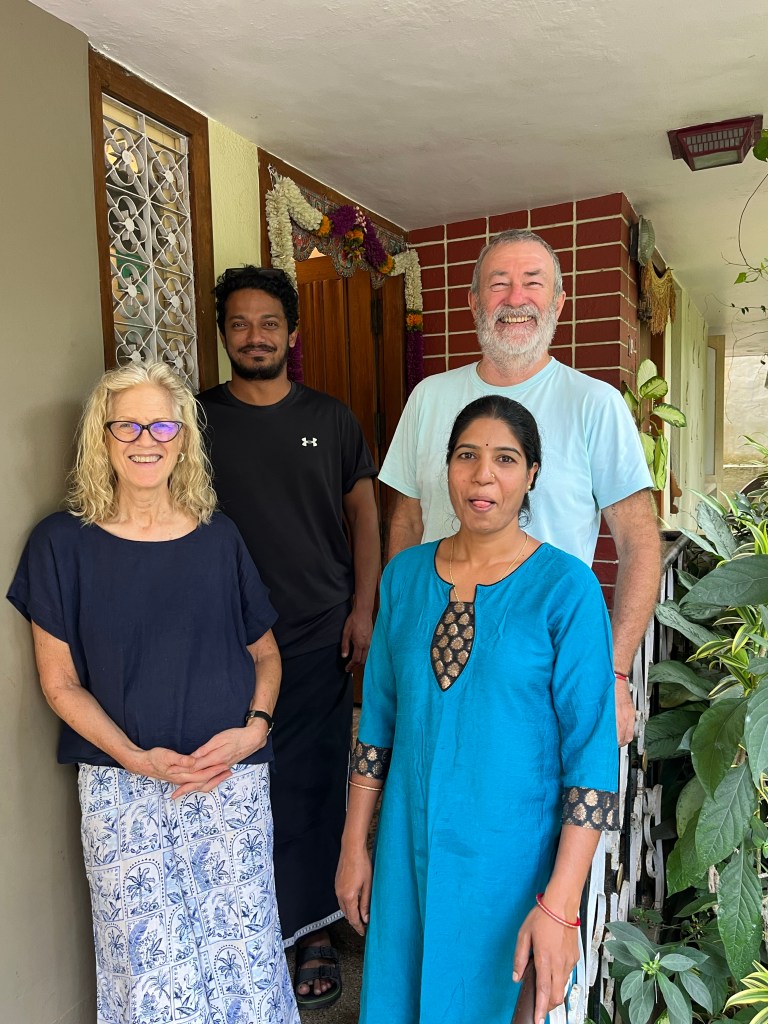
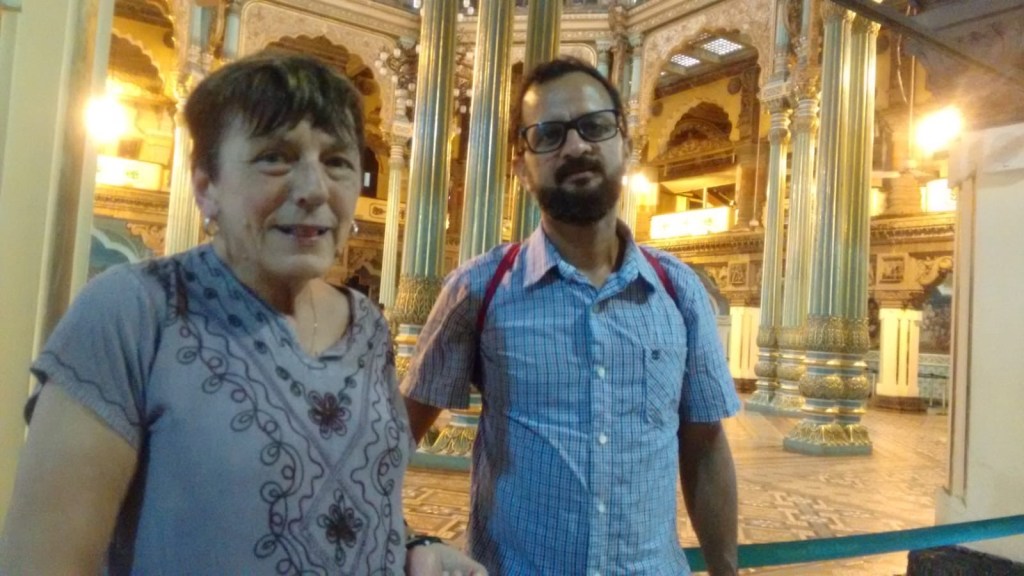
Ten years ago when we planned a visit to Mysore with children for the first time, we  wanted to give them a unique experience. After lots of googling we chose an english man Stephen Farrell’s , Mysore Bed and Breakfast. It was a home away from home where travellers from different part of the world prefered to stay during their Mysore visit. 

 Stephen shares his home with guests and offer complimentary home cooked tasty breakfast. All the guests share the same table  conversing  with each other during breakfast. 

Warm hospitality shown by  Stephen, Manjula and their lovely Lucy remained as fond memory with us, especially with Dhrithi n Diya.

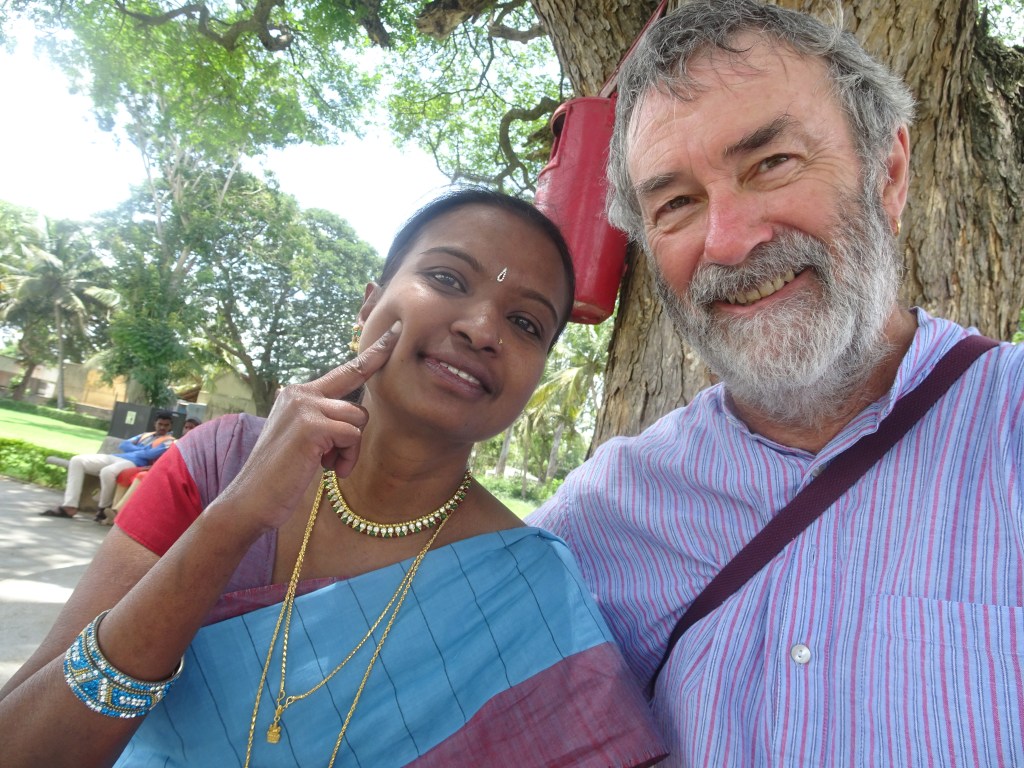
We were in touch with Stephen through Facebook and we knew what’s happening in his life. He married Manjula but unfortunately their time together after marriage was only for short duration due to untimely demise of Manjula.  Stephen gave a beautiful experience to Manjula during her life time. He traveled with her to different tourist destinations, took her to his home country twice, Introduced her to his family and friends. He loved her unconditionally, gave best treatment possible and tried to fulfill her dreams. The days spent with Stephen might be the happiest moment in Manjulas life.

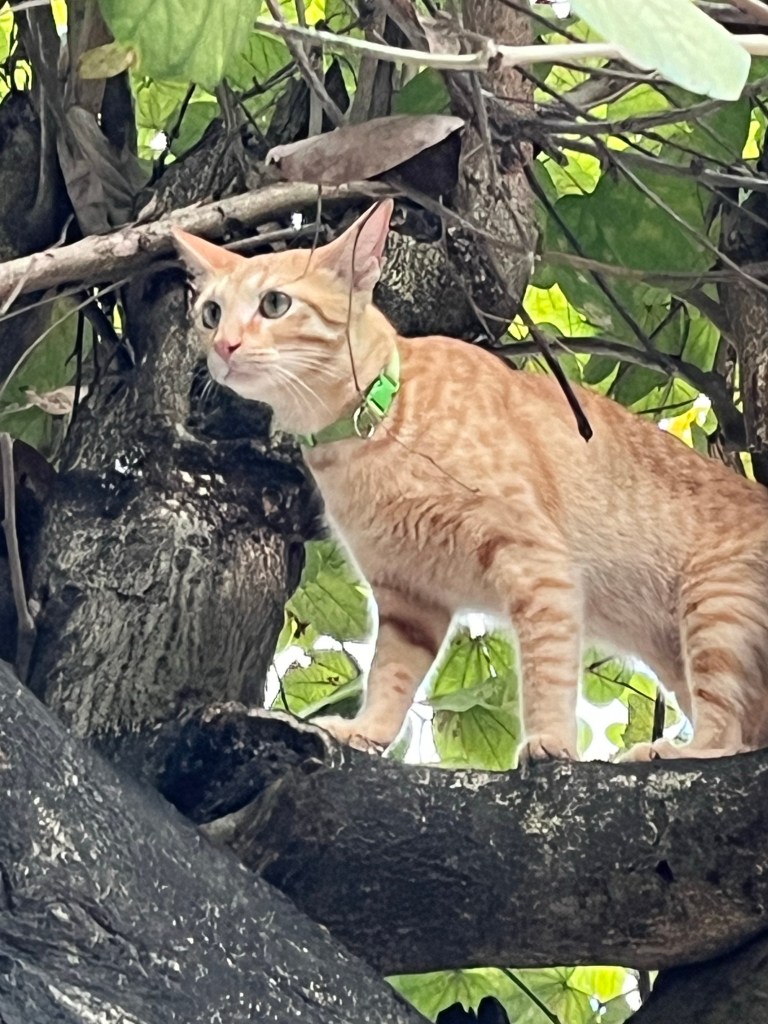
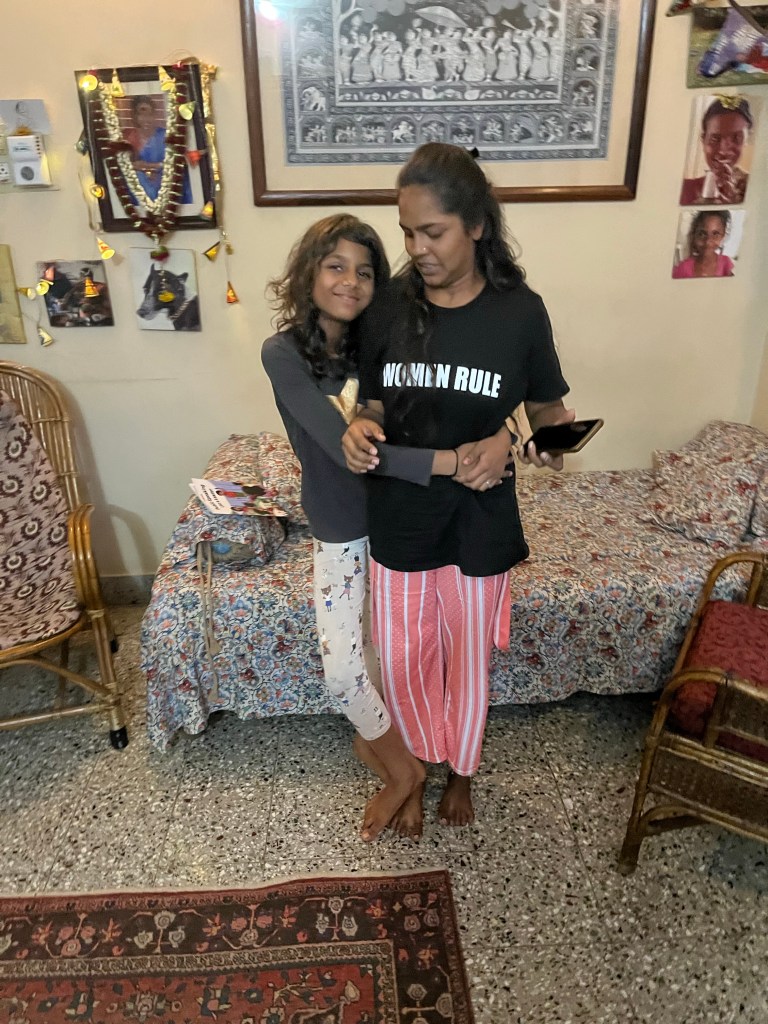
 Few days ago, i. e. After ten years we got the opportunity to visit Mysore again with daughters.  Dasara Celebration was just over but vibe was still there.  Dhrithi Diya didn’t show  any interest in seeing palace, decorations,  exhibition or lightings. Instead they wanted to meet Stephen at his place. We were meeting him  after ten years but surprisingly we didn’t feel the time gap and the connection was instant. He  interacted and narrated stories with same enthusiasm, Lucy was as lovely as she was before. Beadu cat is the new addition to the family.  Even we could feel the presence of Manjula in every room every corner of that  house. Stephen manages public garden in front of the house in her memory. Stephens eternal love towards Manjula is incomparable. 

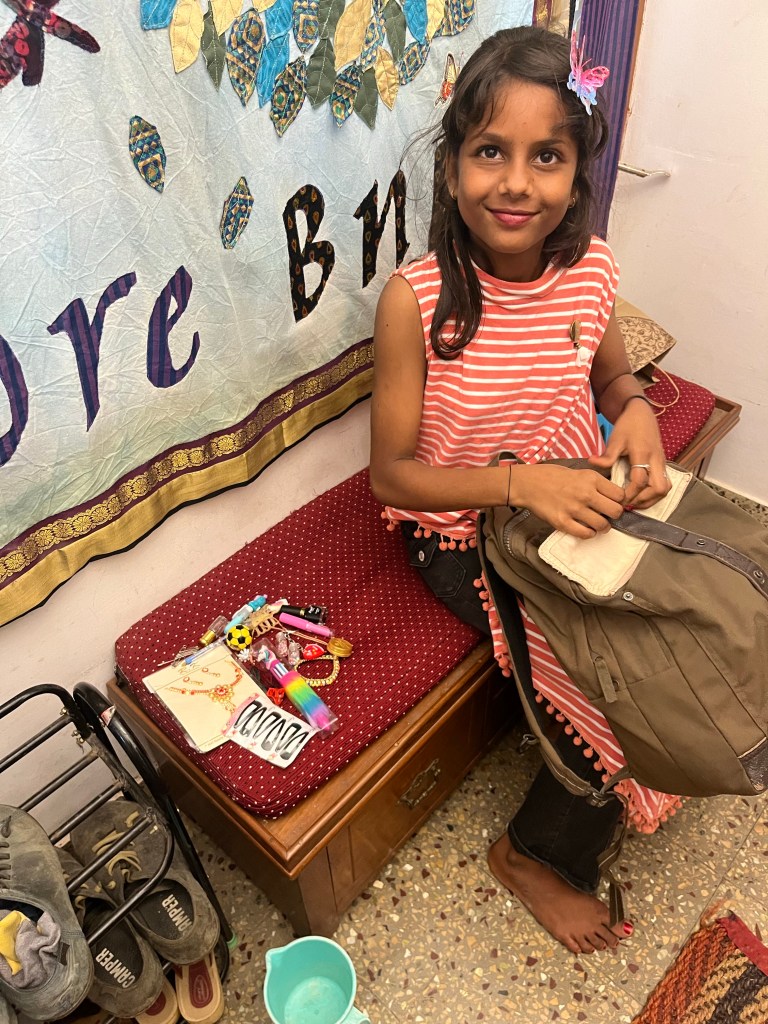
He converted one room to Library in Manjulas memory. He showed his collection of books to Dhrithi Diya. He is keeping Manjulas memory alive through various activities including reading activity for youths.  Dhrithi n Diya received godfather card from Stephen . And he said only few children recived that card from him so far and he will support them always .

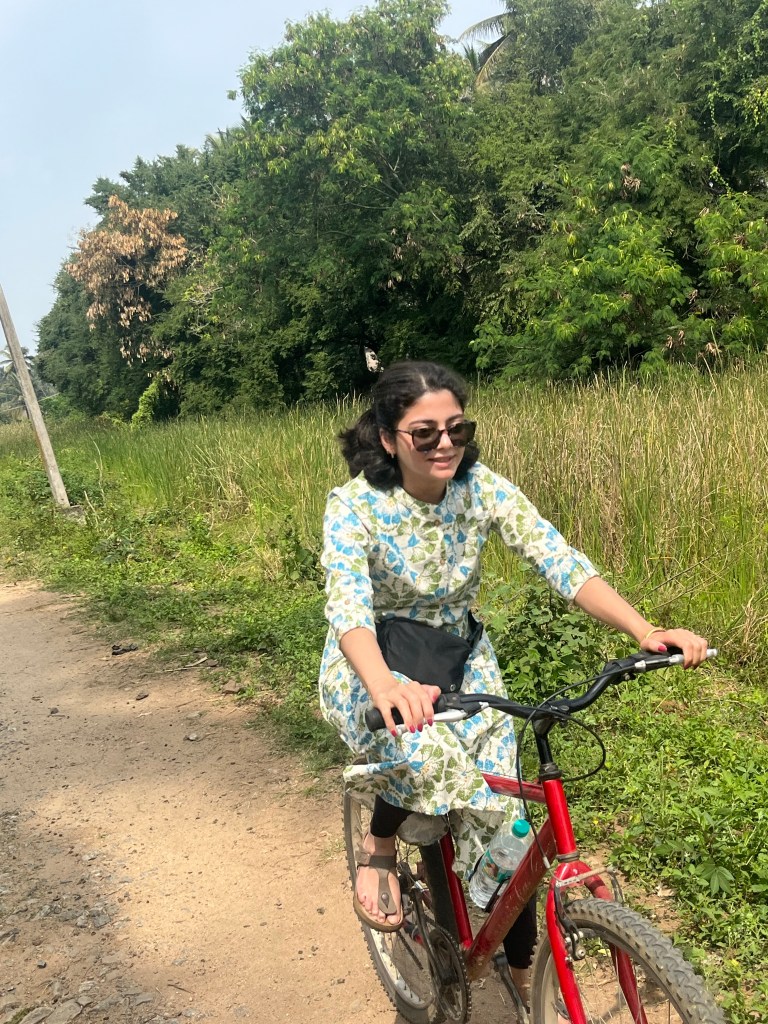
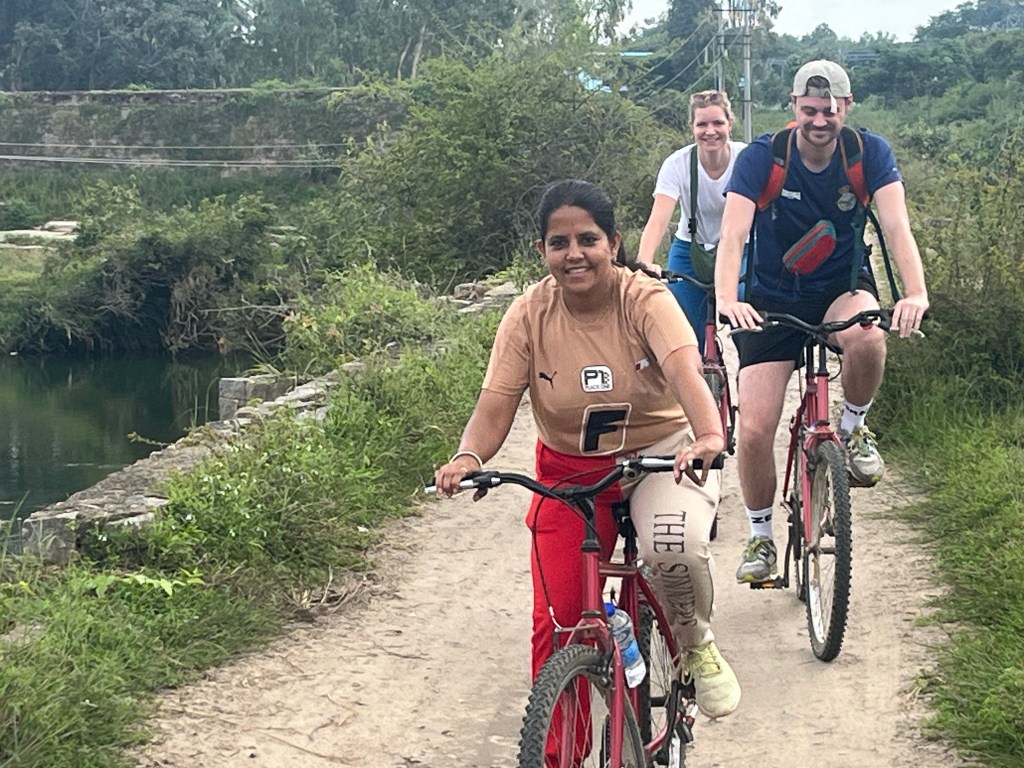
Stephen  conducts MyCycle, tour on Cycle to various parts of Mysore and surrounding villages. He has good knowledge about India, he apreciates cultural diversity, craftsmanship, artifacts & practices of India. He loves to interact with people from diverse background , celebrate festivals. He has deep understanding about the essence of India and some time I feel he is more Indian than many of us.

He shares his experience and memories in his blog

 https://meandmycycle.com/2023/10/31/guests-become-friends-2/

Their Facebook entry

https://www.facebook.com/share/WC6vpdovNcwwwRZY/?

Important Rituals and fun things.

October update.

We have our fair share of things we do … at Mysore Bed and Breakfast.

Here we commemorate MAnjula and help her spirit find its new body.

Support Kaveri in Manjula’s name and share her sunshine

Go cycling with our guests

Ask the goddess to make our ‘tools’ work for the next year

That’s MAnjula

“There are some people who have sun inside them.
It’s hard to explain.
Their presence just brightens, it’s not about their beautiful smiles.
They have an internal being that sheds light and feels like sun.
It’s a calm energy. Inner peace.
But most importantly; it’s not wanting anything back in return.
It’s sun.”

— Unknown 🎀

As is this …..

We even invented a sun cake.

Managing people 2

And organisations

whim ….

comes from whimsical, I quite like the energy and pace involved but it isn’t necessarily the best way of making decisions or implementing change 

I thought it might be useful to consider the difference between well thought through and ‘on the spur of the moment’ decisions. Here’s a dictionary definition. 

..

Quick decisions, not well thought through and rapidly changed can create unnecessary uncertainty and centralisation as the members of the team or community don’t know what might happen next. Unpredictably is the nature of our life but this approach can result in even more. 

It might create an unhelpful organisational culture, that’s capricious.

The effect might be to create worry and uncertainty yet by contrast it can motivate some people through increased stimulation (and extra adrenaline) and quickly changing action. 

It’s like the rushing fire engine dousing fires rather than thought through and planned.

So what’s not management via whim? 

In the late 80s and early 90s when working for a (local) government , in England, I was given responsibility to consult the users and managers of a ‘welfare’ (social services) section and to review its services: was it meeting people’s needs? Could it be organised more efficiently and effectively?

A team of government officers and members of the community used this to devise a plan to reorganise the service. I together with my colleagues implemented that change. 

All my workshops with businesses since then have been based on engaging people’s active participation. ie gaining ‘ownership’ of the various ‘stakeholders.’ (Ie those with interest and influence).

That approach is not management through whim, as people were consulted, a plan devised and adopted. It involved changing the jobs, buildings, shifting the budget. It took a long time to plan and implement. Continuous evaluation was built into how it worked.

The non-whimsical approach is likely to be more long-lasting and sustainable, and better suited to meeting the needs of the individuals and communities the organisation exists for. 

BUT however we manage—it needs to anticipate, respond to and facilitate change ie innovate, otherwise it’ll not flourish or even survive.

Stephen@manjulasmysore.in

.. is a guide

Managing People 1

Here’s two recent terms I’ve used to describe management ‘styles’ that may need more explanation. 

Banyan 

Meaning a manager who is so strong in imposing his or her will that nothing below can easily grow and flourish. 

This style is often seen in command and control structures or in new developments that have difficulty in moving on from the initial pioneering stage. 

The end result is limited delegation, people fearful of taking the initiative or making mistakes. It’s centralised control and reliance on one rather than the many in the team and loses the valuable diversity that is achievable through engaging all the brains in the organisation. 

Please note I’m not disrespecting the Banyan which is wonderful.

To follow next… management through whim. 

Let them eat cake

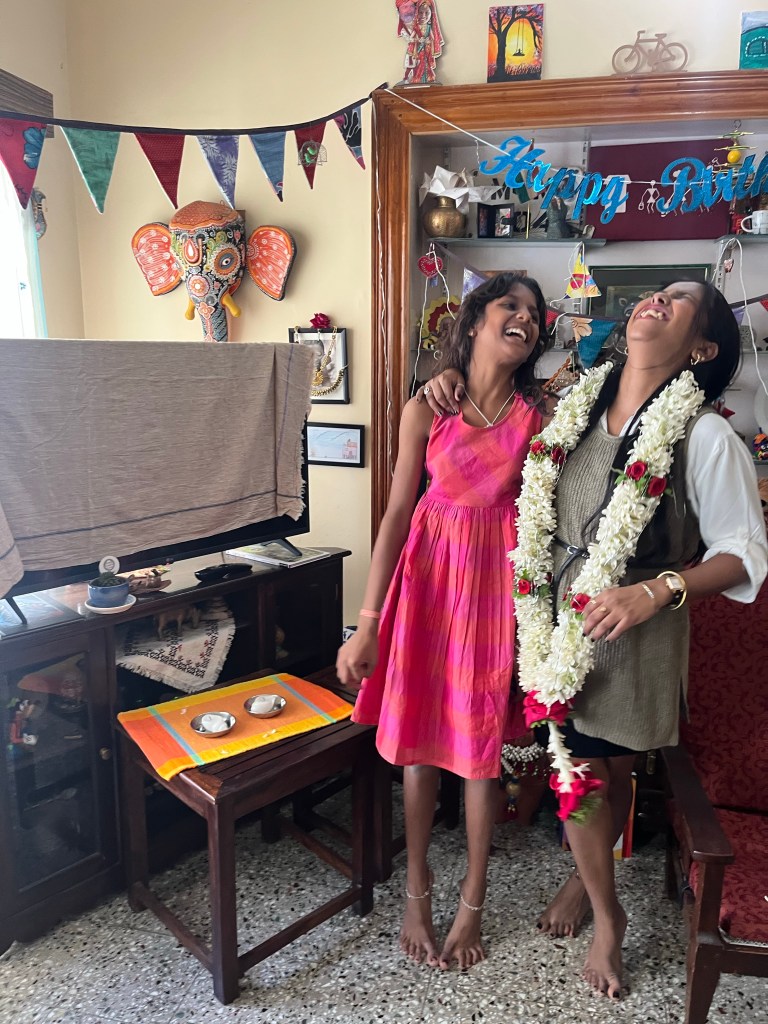
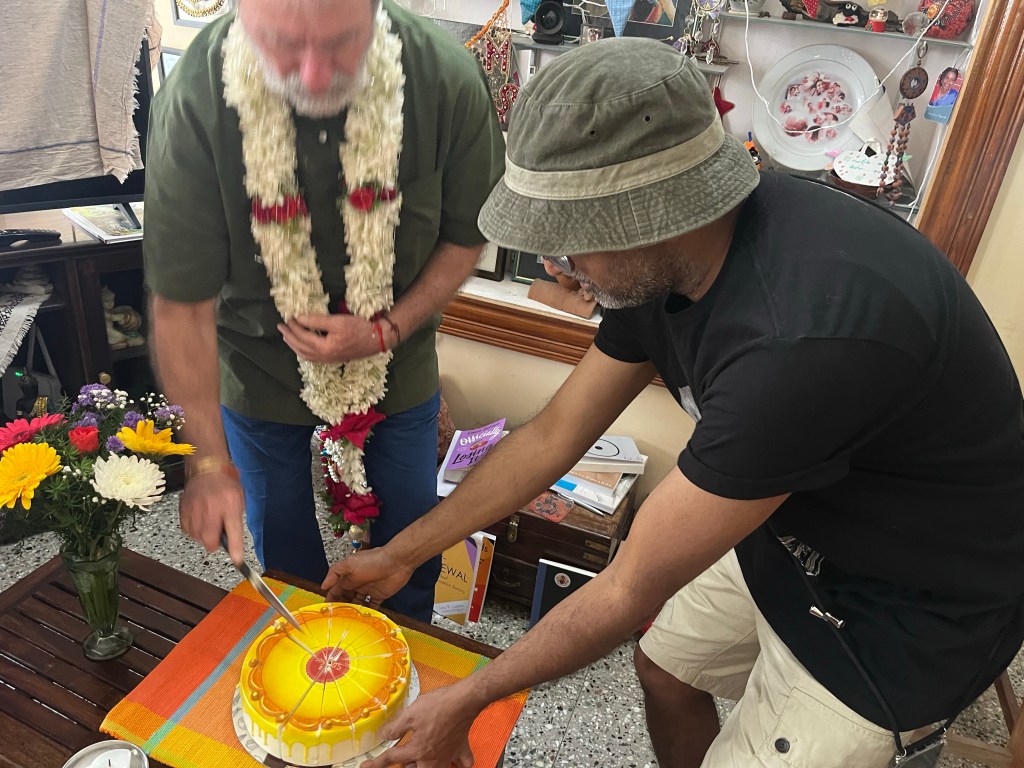
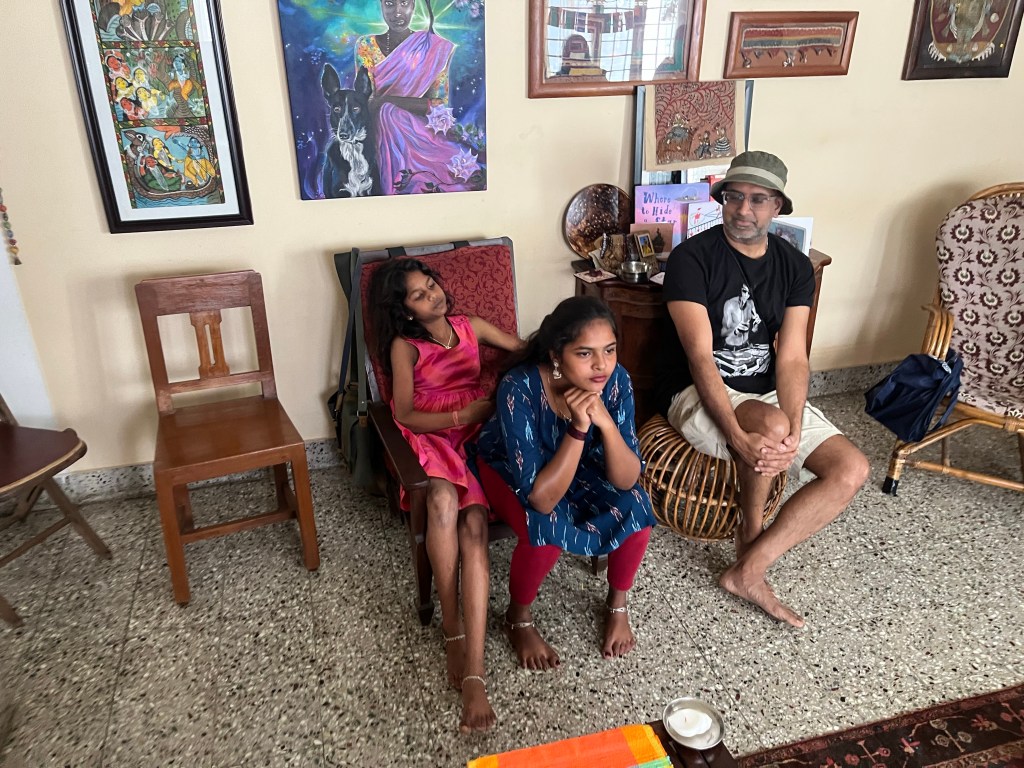
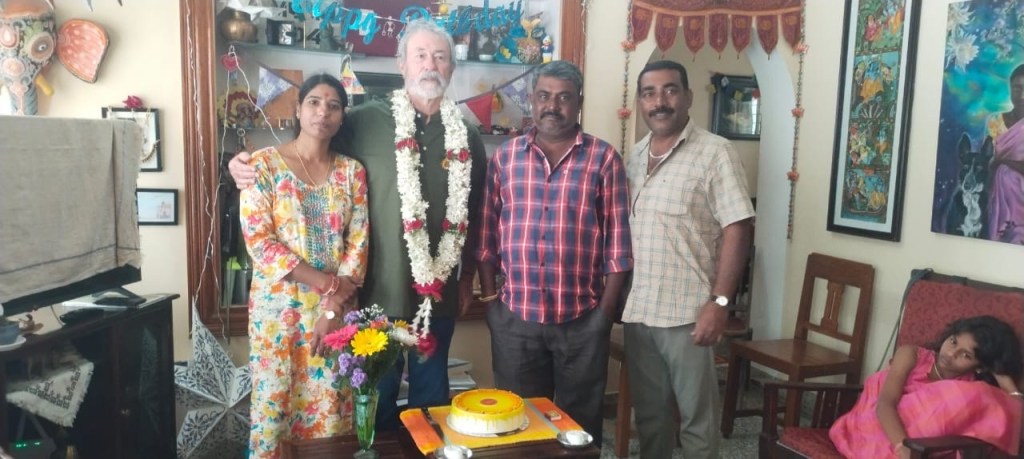
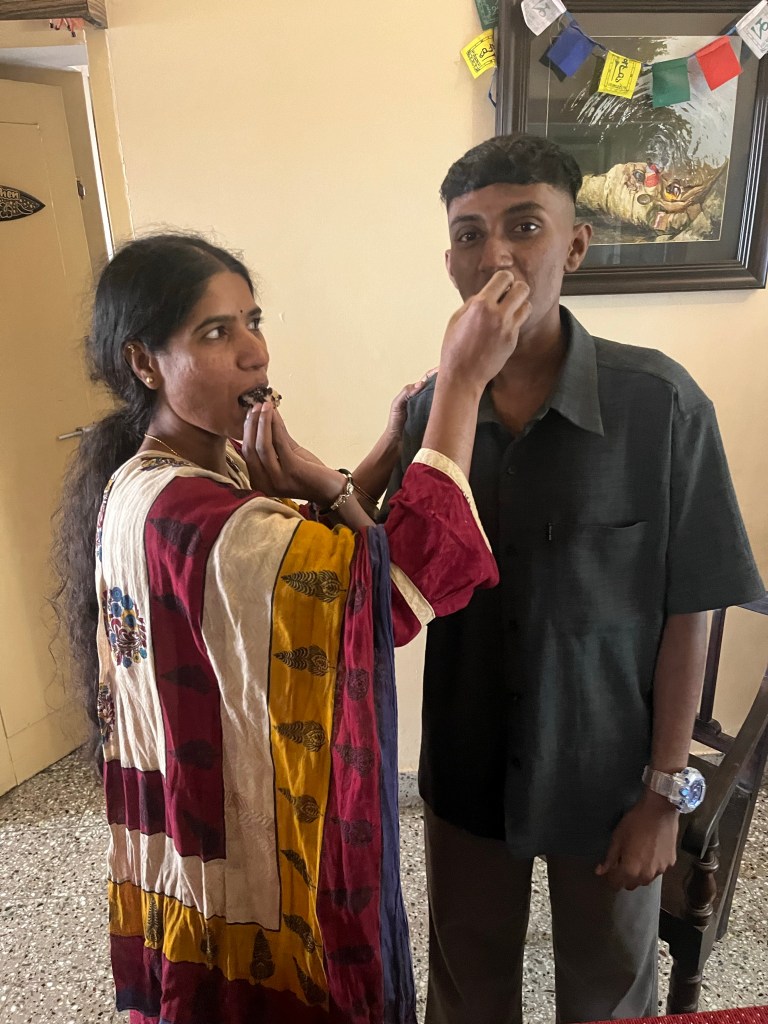
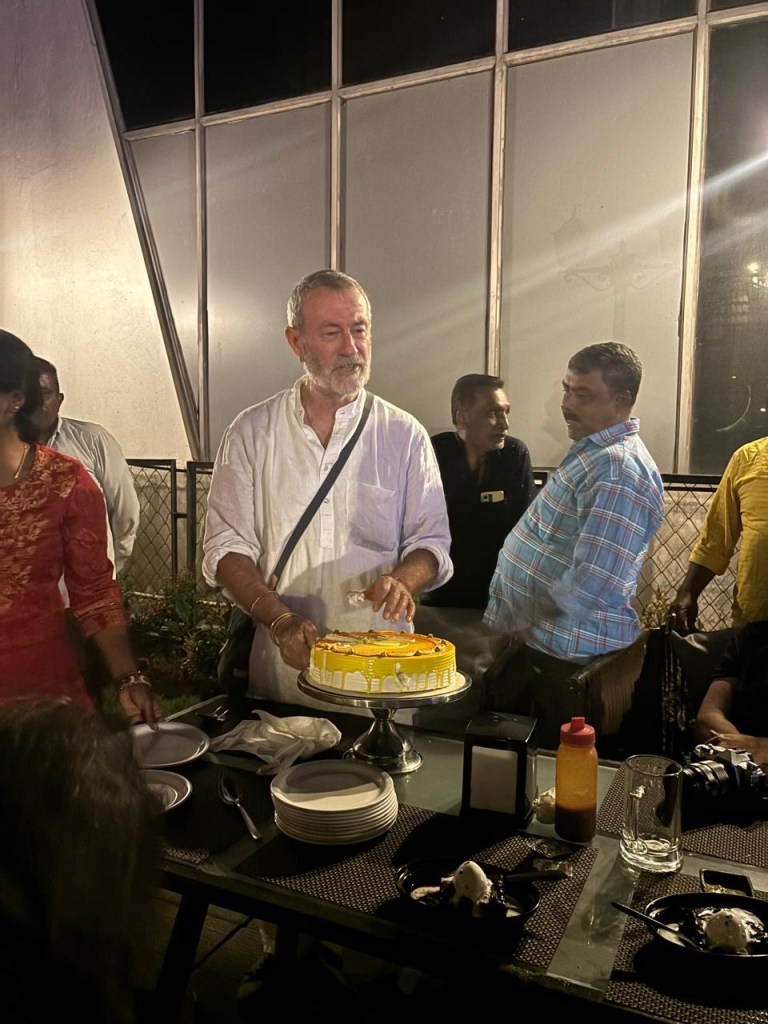
The third cake saw the gang celebrating Manjula’s birthday at a Mysore micro brewery.

Maria can’t believe we’ve devoured so much cake.

We continue to celebrate Manjula’s birthday for a whole week and onwards.

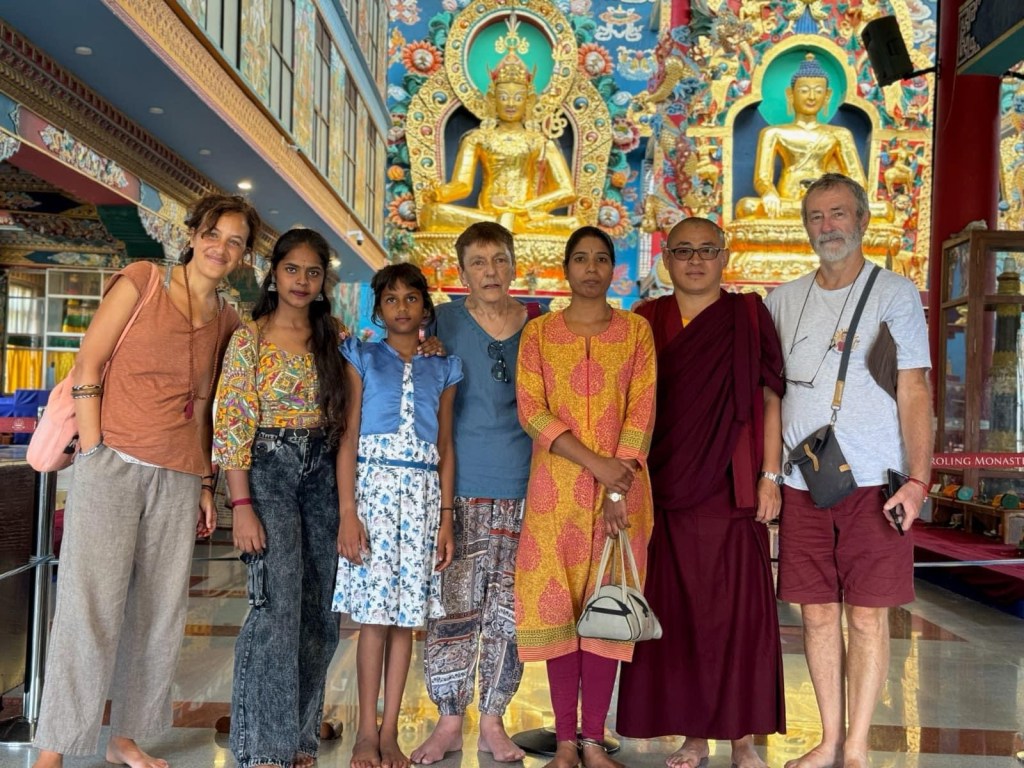
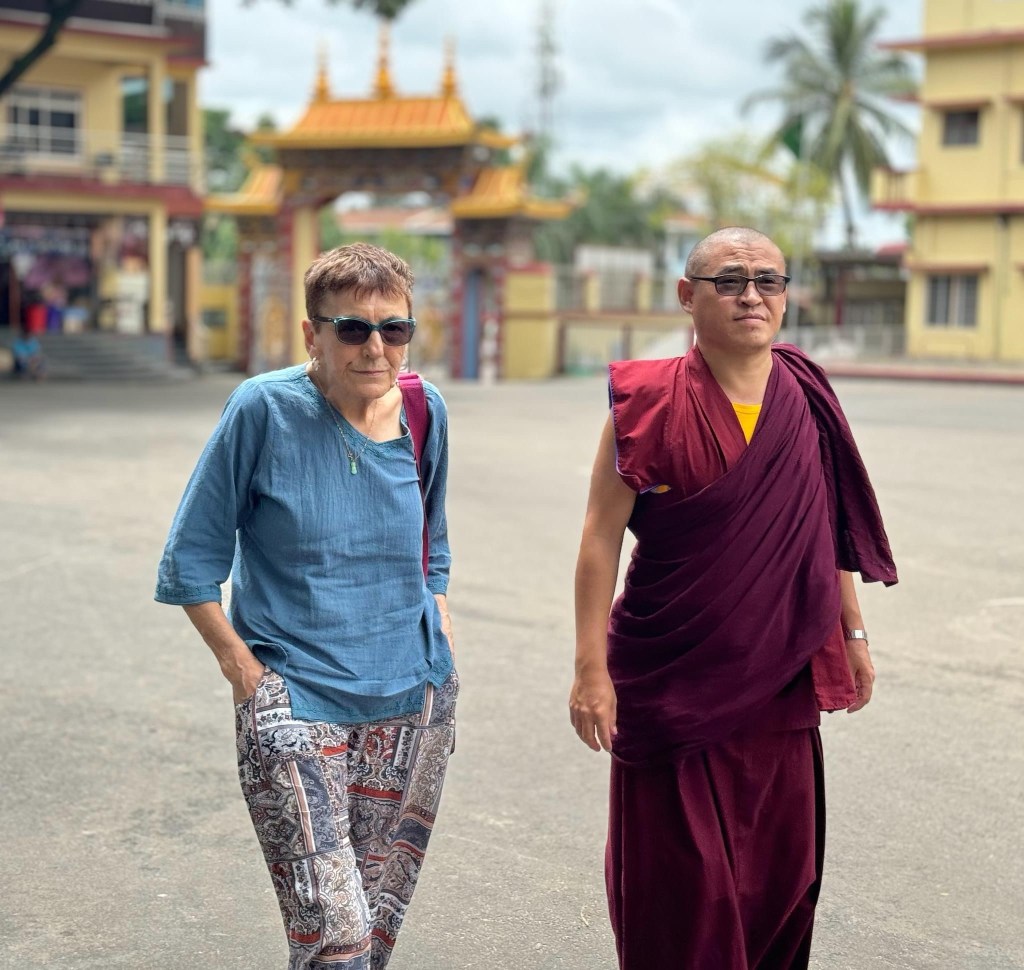
and recognise our support for our Tibetan friends through decorating our house