A major challenge for any organisation and for individuals is having the confidence to take risks. Thats how organisations innovate (if they don’t they’ll not survive) and its how people learn and grow We can see this everyday —- its our duty as managers, teachers, parents, friends, to help people take risks and learn from the experience. If we’re too worried to try new things or making a mistake we’ll not change or grow. We’ll be stuck physically, mentally — socially and economically.
It’s about stepping out of one’s ‘comfort zone.’
Same for our organisations, which might become less competitive and left behind, if they or their employees are too scared to step up
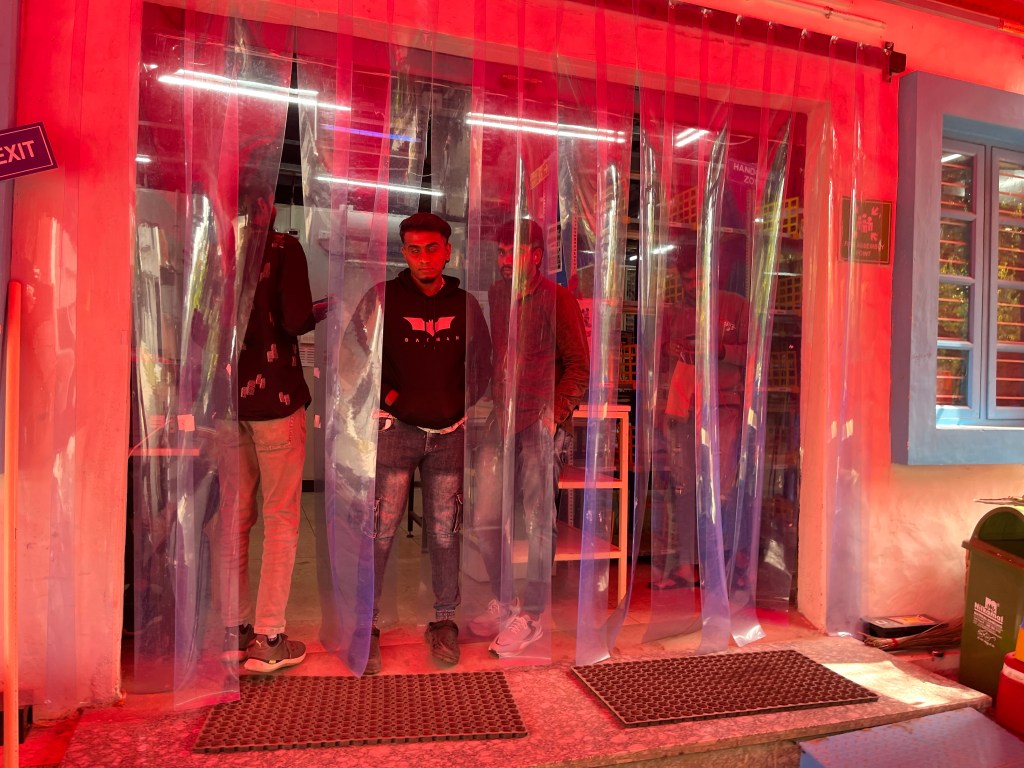
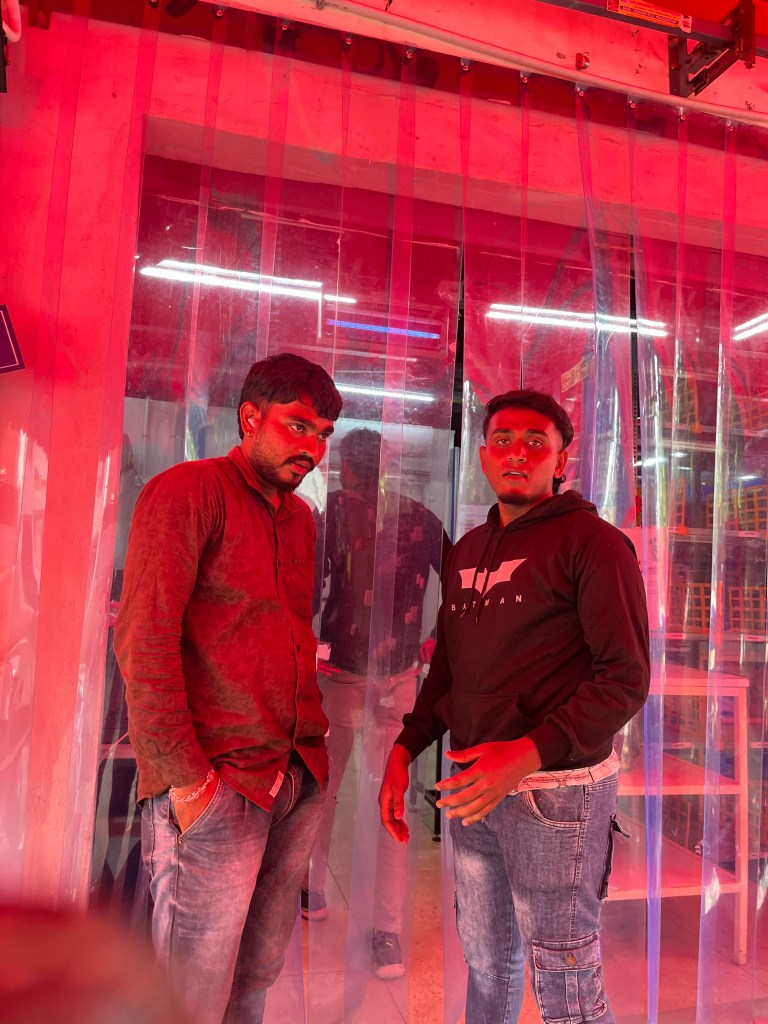
I saw yet another example of it today at Flipkart.
As a company they were in prime position when they first launched. I wonder what they feel now. Have they progressed as fast as they expected?
If not then what can they learn from it? How about empowering their employees to innovate?
By next season (October 2026 onwards) we will be in a new home.
It’ll prove to be challenging — leaving the home that I shared with MAnjula, that we created together. But it’s a positive change and MAnjula would approve.
We’ll continue to share our home with our community from around the world and new friends who find us.
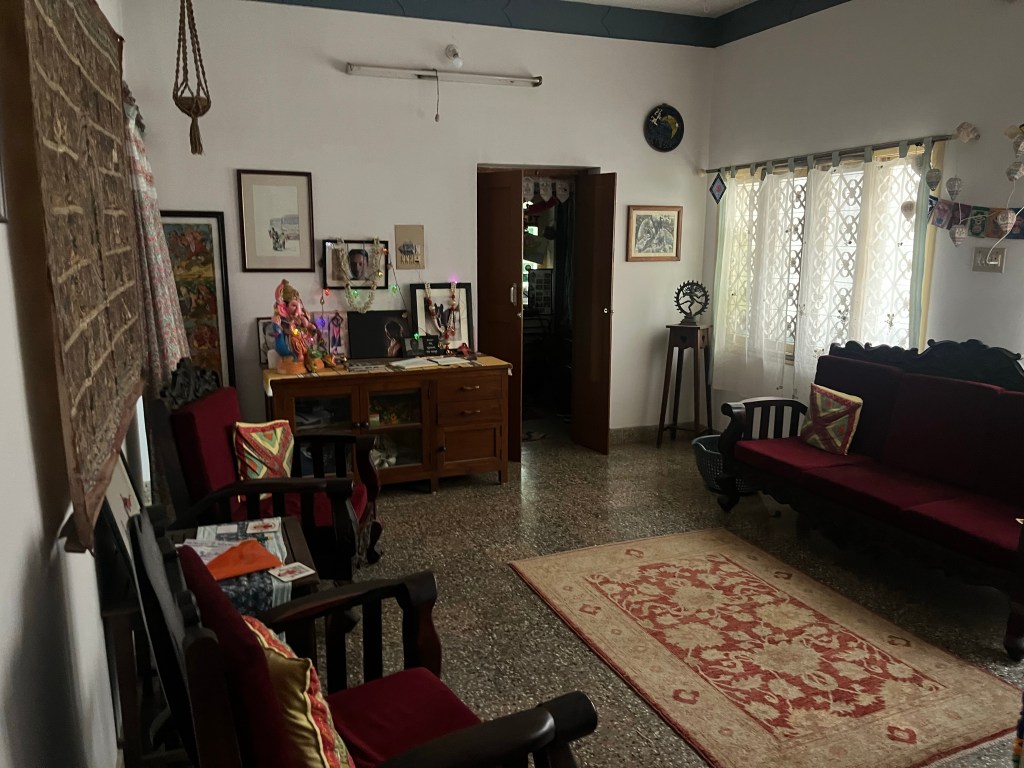
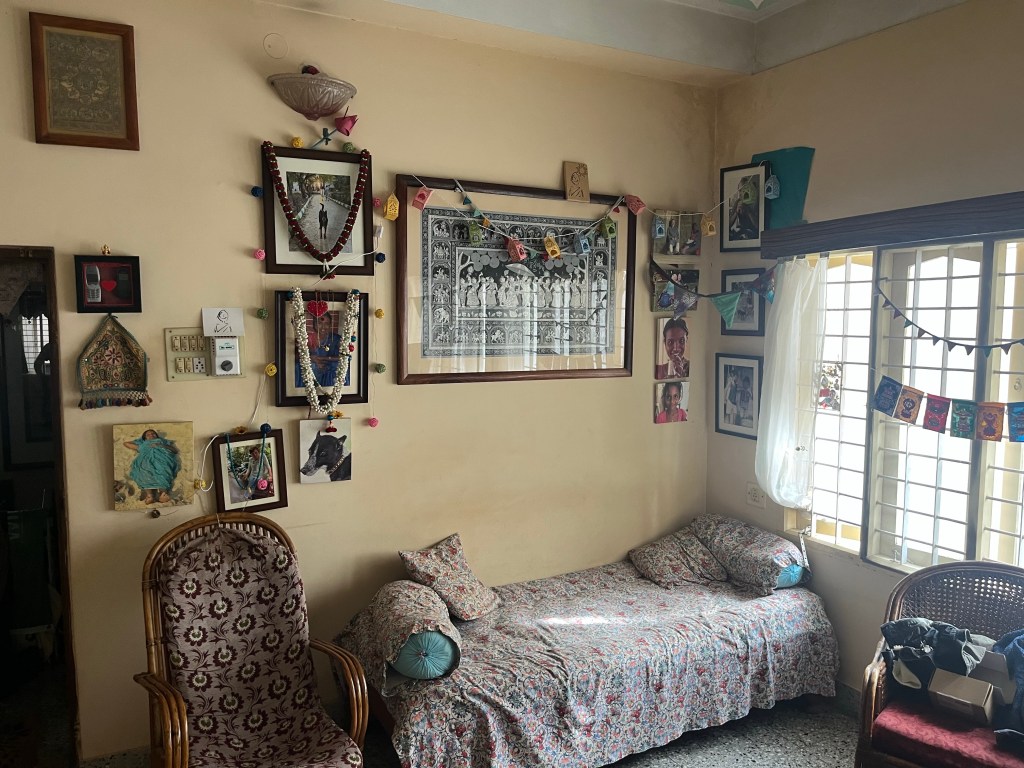
A first step will be to reduce the ‘clutter’ here at home.
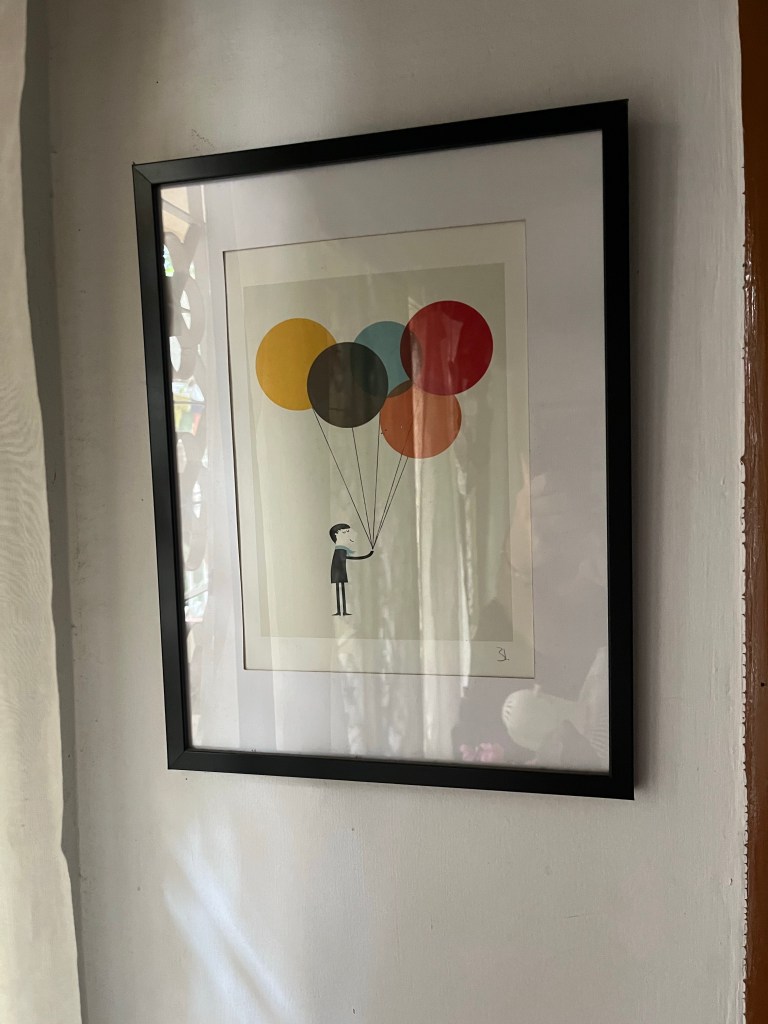
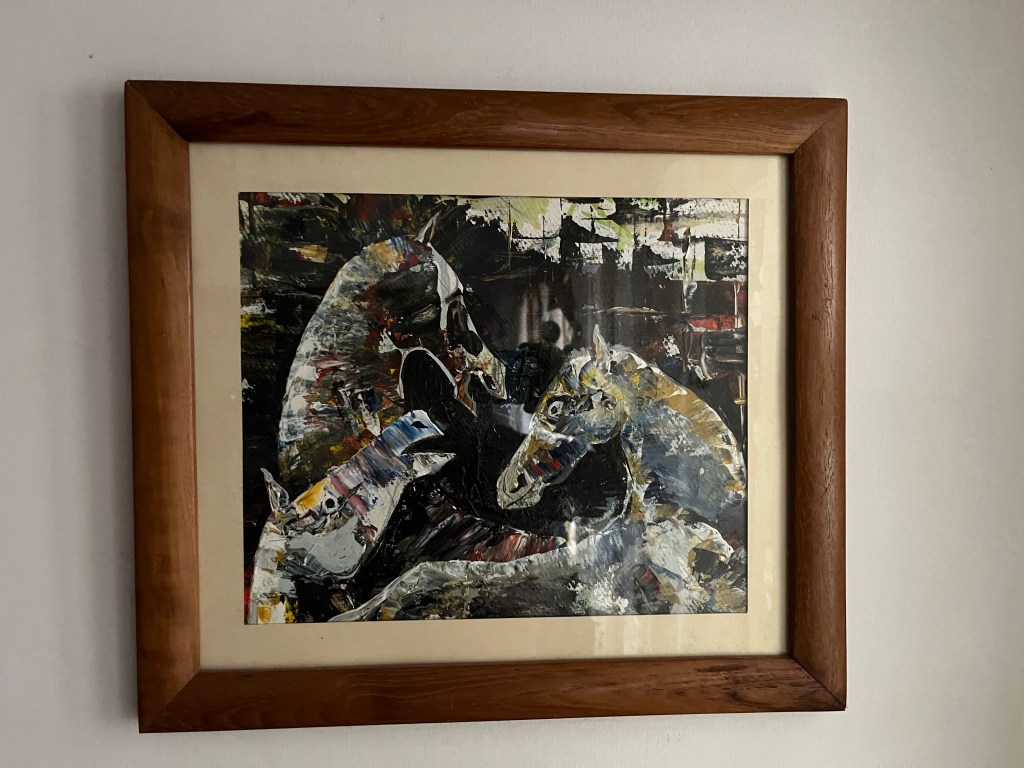
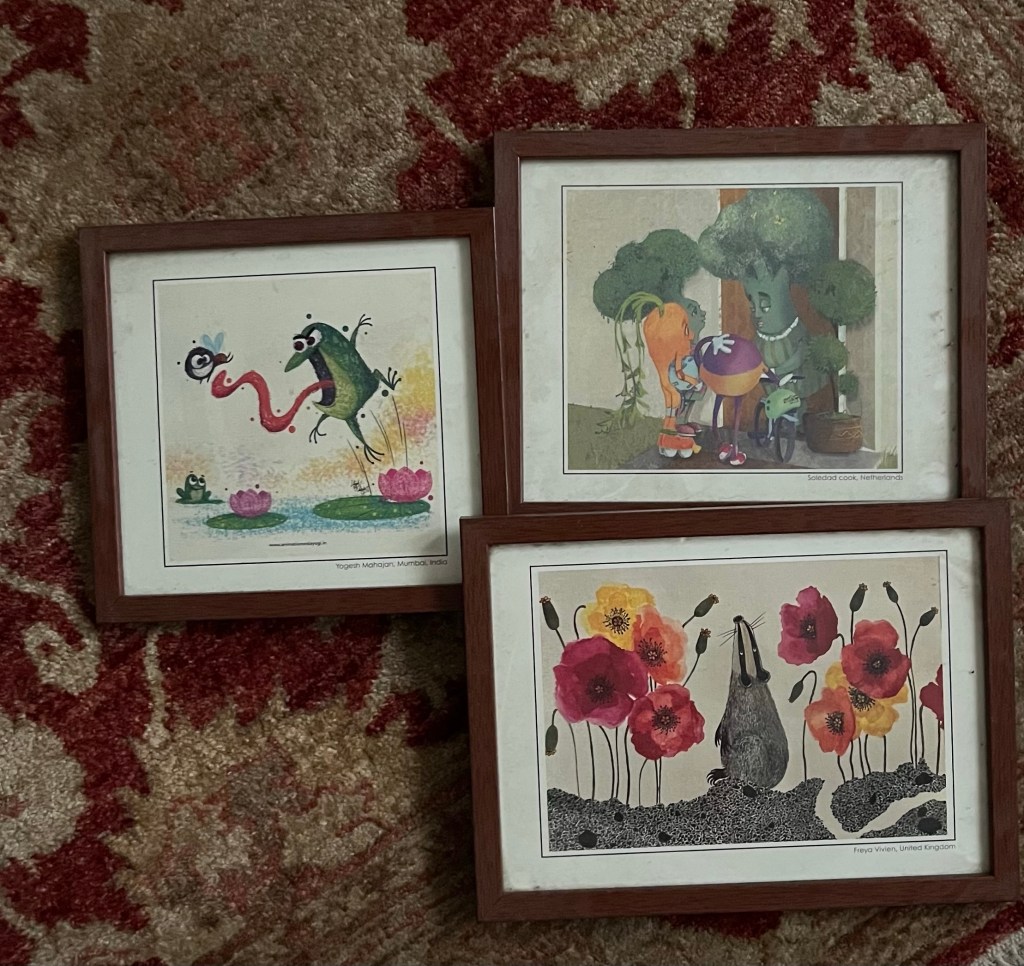
Already friends have been eager to pick souvenirs from our home. Furniture, paintings, and Knickknacks as their mementoes.
We continue to invite our community of guests and visitors to spot things they’d like.
Soon I’ll start posting specific things that are available to buy.
I like finding similarities that help us find bridge points and make connections.
I’m often sharing experiences of similarity to show how connected we really are… that especially important in our global political environment.
To guests and the young people who’ve joined Manjula’s Mysore’s network I often give this example.
When I meet a new English person they’ll try and figure out where in England I’m from. My accent will easily show I’m from the north of England.
After a little more dialogue they’ll probably hone in on Yorkshire county rather than Lancashire.
Certain words I might use would indicate I’m from a working class background.
I don’t mind that —- fact is,—I’ve crossed many boundaries in my life. A particular help has been going to university, the first in my family.
In India people think class is an insurmountable experience. In my case it definitely wasn’t. In fact I think that, being middle class from a working class background is an advantage.
People I’ve talked to, think class is somehow like caste. I don’t think that’s true at all.
Caste seems so prevalent in Indian life and potentially much more damaging to individuals and society overall.
I think there’s an added issue. There’s a joke that people from north England don’t ‘do’ deference. I think that’s quite accurate
I like to think of myself as egalitarian. Don’t misunderstand — I have my prejudices and being aware of them is a critical step in dealing with it — leading to some personal change.
..
I’ve realised one of the additional problems that colonialisation by the British has created for India.
Distraction from other important battles.
It’s the colonialists to blame for diverting the community’s political energies. Unlike in Europe in the 19th and early 20th centuries where the social structure was beginning to be challenged — in India the energies were used necessarily to throw off the outsiders. They missed the opportunity to use that time and people power to throw out the traditions. I hope that the growth of the middle classes, the lower castes using their muscle we might see a correction and move away from the feudal.
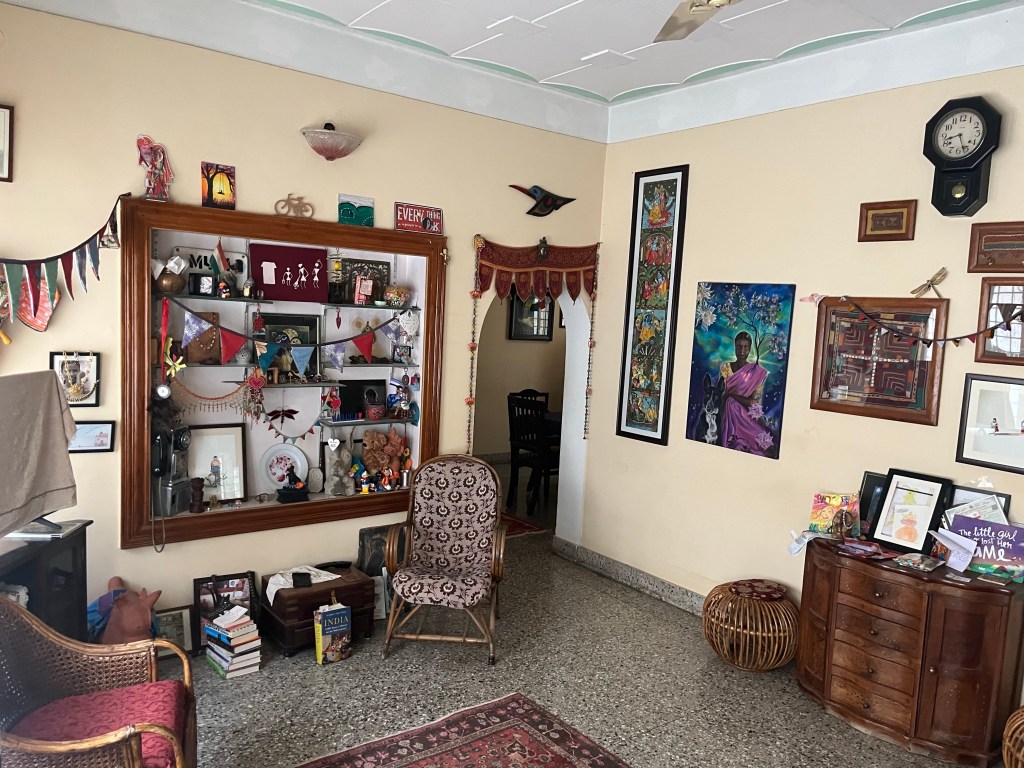
houses in and around Siddartha layout often have a large square in their lounge. It’s framed (5’ x 5’) as if for a giant picture and built into the wall. On or rather in it there’s a series of shelves.
Like this …
But maybe not usually as cluttered.
The photograph is of the one in our upstairs hall (aka living room).
It usually has two glass sliding doors.
It did have ….
…
One day a glass door fell out and onto MAnjula
There was a squeal from Manjula as she was almost pinned to the floor, desperately calling for my help. I rushed to her rescue. .
Her hero. 🤔
I lifted the two glass doors out and put them in storage. That was a scare. They are heavy and she was tiny.
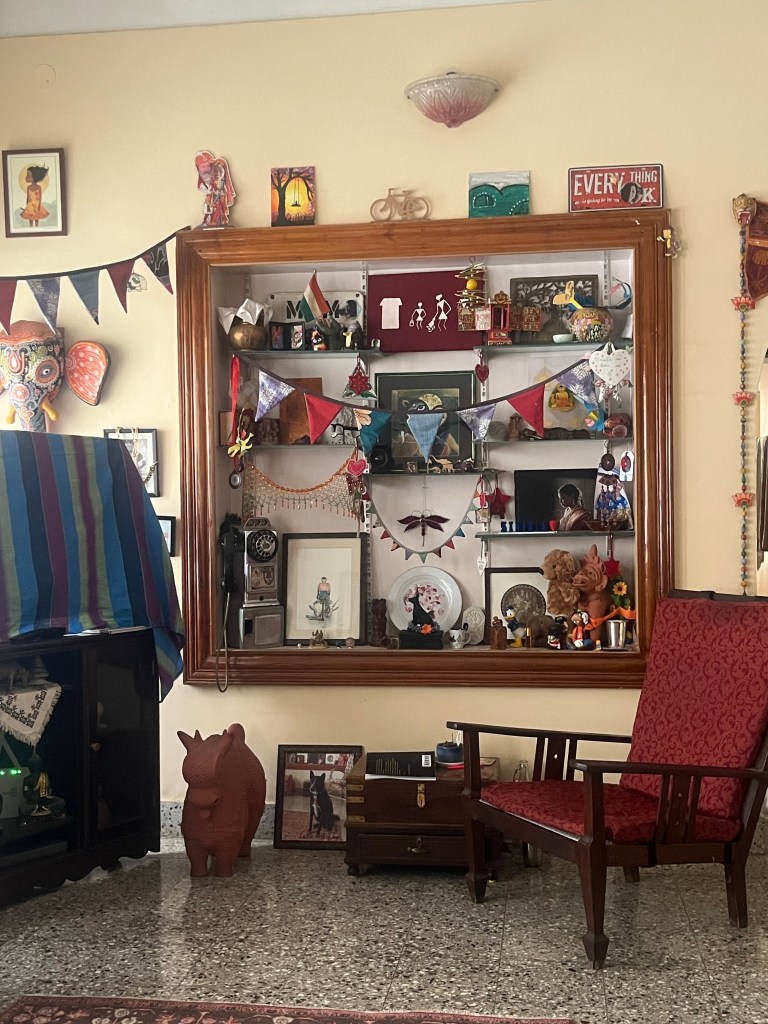
The photograph below, shows the bottom third of that very shelving. 🤔
It has a lot of clutter and that’s not at all unusual in our house.
That’s … My fault.
Many of our guests regularly return, wanting to discover what’s new.
So .. what’s there…?
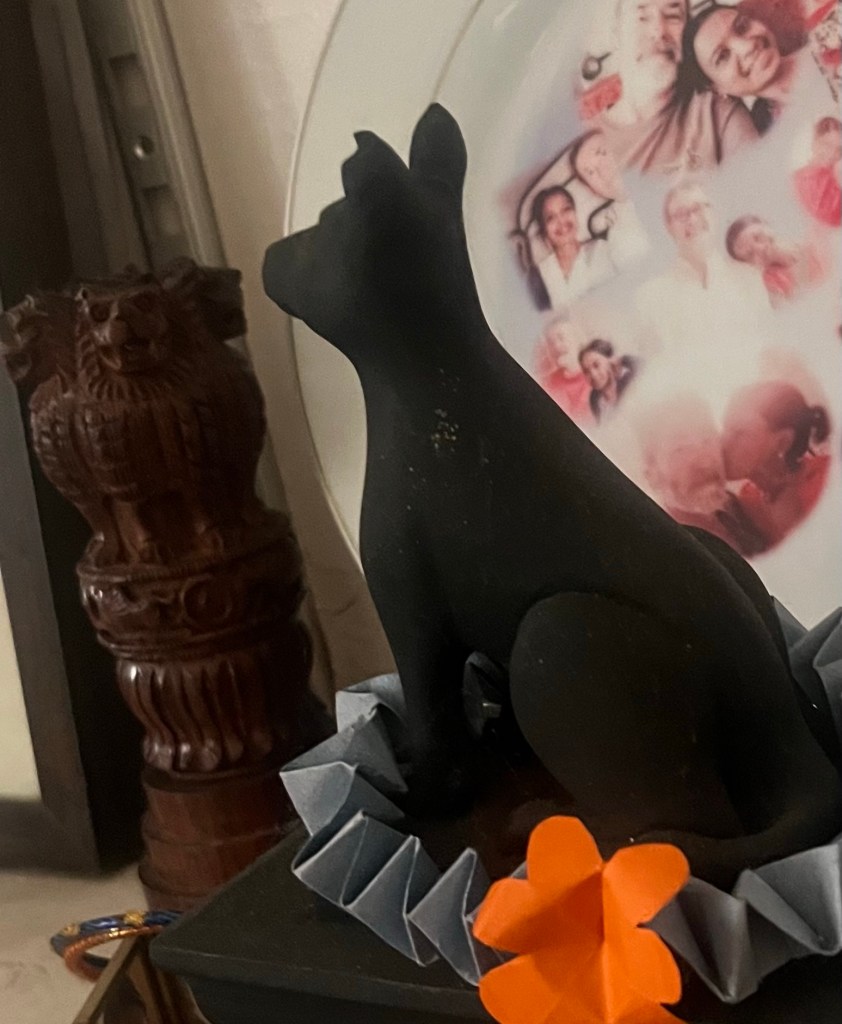
The item in the very centre is a stone carved statue of Lucie our wonderful dog.
Complete ‘with’ the piece missing from her ear.
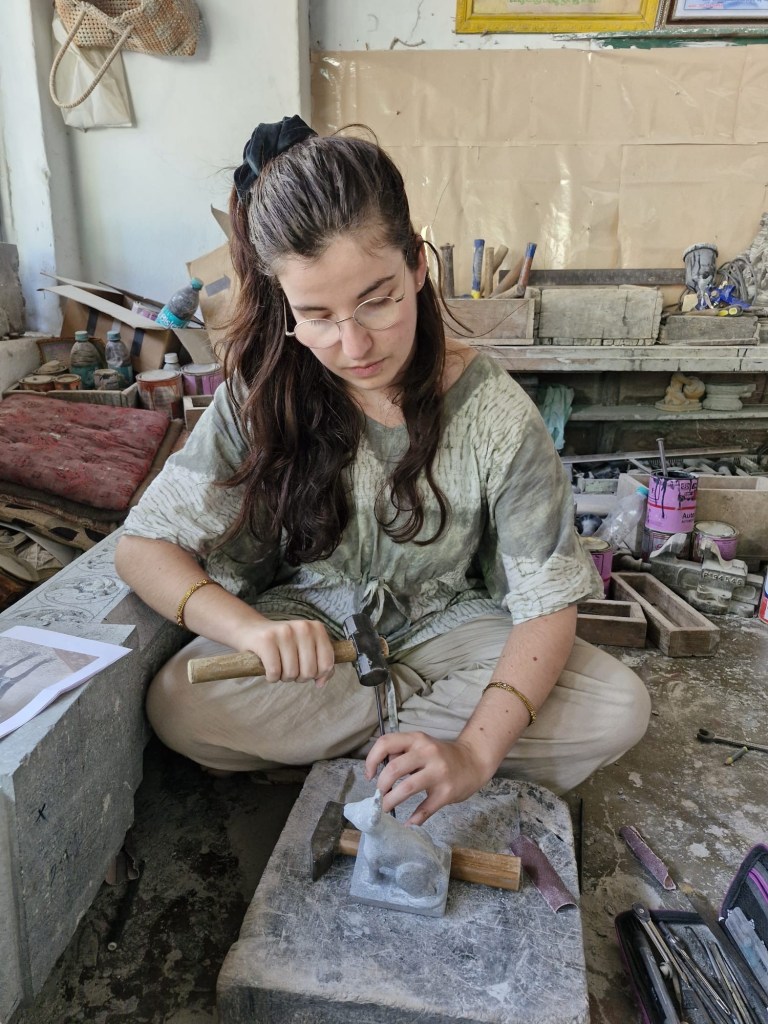
With us for 15 years, she died in January this year. Carved by Mailis a French woman who stayed with us for quite some weeks. Another record!
Mailis attended stone carving lessons at the most famous Stone Carvers in Mysore. The head of the family had carved the God for the New temple in Ayodya. So it’s very famous .
It was a beautiful thought and very appropriate as Mailis from France became a good friend of Lucie and took Lucie to the veterinarian on her last day, while I was attending Kaliyuvamane school to watch Kaveri perform at an event.
I went to the veterinarians as soon as the performance was over.
It was time for us to say goodbye to Lucie as she was suffering. We buried her in a field created for pet dog burials, did puja, buried a plant, said our tearful farewells and will regularly return to help her spirit on its way.
I cleared the shelf to be able to place Lucy‘s statue in prime position.
I shifted all the characters that lived on the shelf and extra ones into the far right corner so starting from the right you’ll see a pottery version made by a tribal Potter from Tamil Nadu, an unusual representation of Hanuman. (He was the leader of Ram’s army that rescued Sita).
In my mind they resembled a crowd looking at the new statue. It was orderly but now as time goes on they’re pushing and shoving, breaking out of the corner and straining to get a better view.
To the left of Hanuman is a teddy bear — gift from my granddaughter poppy in London to Kaveri who we support, help sponsor and protect as she comes from a family very similar to Manjulas. That’s partly why we chose to help her.
To the right of Hanuman is an embroidered stitched star Next down is a plastic (!) flower
Next a silver glass. (In India the default name for a small drinking vessel regardless of what it’s made of .. is ‘glass’ ). This one, in silver, was a last Christmas present from Manjula. It’s a very precious present and acknowledges our marriage.
So that’s very very significant as most things are in this house — with a story to accompany them. .
As we move further left along the shelf we meet Goofy and next is a minion dressed as a guard that you see outside Buckingham Palace.
Gifts from crazy guests.
Next is a carved rosewood dog’s head gifted from one of the best wood Inlay workshops in Mysore.
Behind is a painting inspired by a traditional Ganjifa. It’s a family grouping of Siva his wife and his son Ganesh and in front of them is another famous guy — Donald Duck. Next to a stone carved image of a flower created by Kaveri with the help of our new friend
Pravalika ..
Little cup in front of it which is a featuring the Eiffel Tower and bicycles was a gift from a French couple who visited not long after manjula died heard our story and brought this gift but up to the left of it
Immediately behind Lucy with a little bit of her ear missing exactly as true to life is a plate with a series of photographs built into it of Manjula and I.,
moving back to the bottom of the shelf is an nifty little holder of photographs on the 1960s which holds two photographs of Manjula and it’s something I sometimes carry with me on my travels.
immediately behind is a lovely rosewood representation of an Ashoka column which has now become a key symbol of India, found on our rupee notes
From the top, there’s four lions, down beneath their claws are representations of different animals reflecting important human characteristics and all on an upturned lotus flower (which many friends associated with Manjula.)
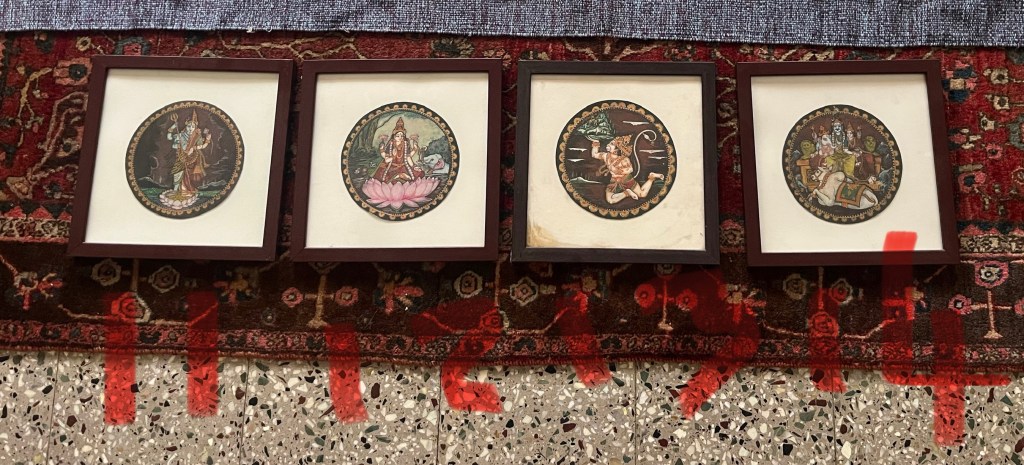
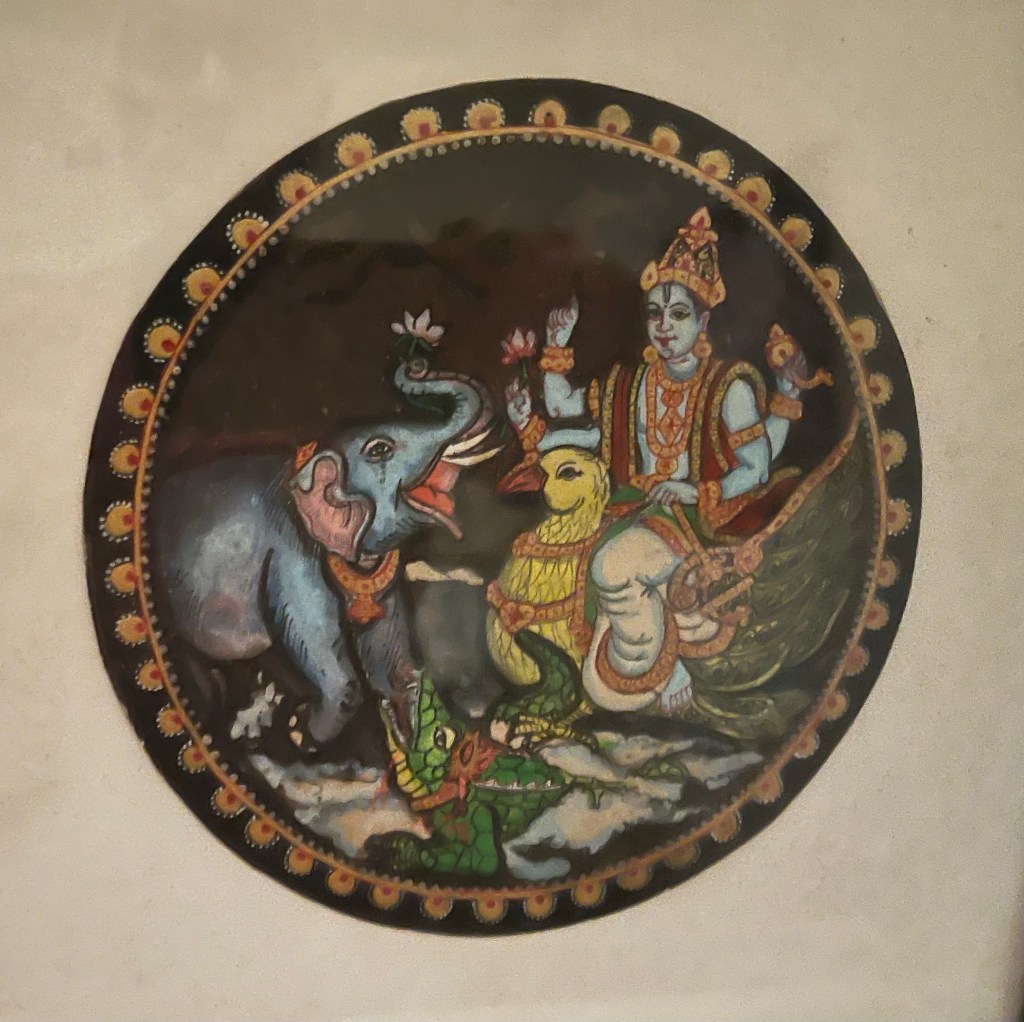
Next picture. We got quite a few of these around the house.
It’s a watercolour from two brothers who visited from Chennai at the famous art market in Bangalore. In front is another (brass) image of Siva‘s family together with his two sons, his wife, his vehicle and his son Ganesh‘s vehicle, which is a rat or somesay it’s a mouse—whatever. Either side of them are representations the Sun — the Earth and then moon. To the left is a 1950s public phone a payphone from the USA. Since age 18 I collected telephones there’s a handful left squirrelled away in the house.
Plus there’s medals for Kaveri from her skating, even more images of Manjula a dragonfly reminding me of a messenger she once sent — bunting made out of Manjula‘s clothing Manjula‘s beautiful face preparing for our wedding celebration just got into all the stories that relate to the individual items of boredom. I’m sure that’s what the house is like.
This was our home together. It was the most special time in my life, obviously this equally special but this was very special because it’s the time but two people came together to work and fell in love. I never imagined that I would like to work with a lover But in fact it worked exceptionally well and that was down to her her ability to be flexible responsive sensitive above all you really showed me —the significance of — being attentive and present to help make relationship to work well.
..
That’s all left me a little breathless. There’s an important reason to share with you, details of our accumulated ‘clutter.’
Be prepared. There maybe a few postings about —- what next? I’ve adopted India as my home for sixteen years after first visiting twenty years ago and connecting with India from a distance in the 1970s.
Let’s not forget, I’ve been so lucky and—- i fell in love with the most amazing woman — MAnjula. But I’m slowly getting the message that I’m not wanted anymore (if I’ve ever been) and maybe just maybe I need to think afresh and try something new.
It’s not the people of India.
They are very friendly and welcoming. I’ve been and continue to be very happy here. I want to stay here and retire here.
It’s the system.
I’ve lived here on a business visa, all this time. It’s now getting increasingly difficult to do that. I’ve failed to get OCI supposedly because MAnjula died yet I’ve heard others have it in similar circumstances but in other parts of the country. I’ve tentatively tried other things and keep hitting (soft) brick walls.
It’s tiring.
When I first posted this on Facebook a friend reacted and introduced me to someone who might be able to help. We’re in discussion now.
As I reach 69 in a few weeks I recognise I can’t keep moving. I may have only moved here sixteen years ago but it feels like it’s always been my home.
If I must leave, I must, but my particular concern is my desire to continue to support and help Kaveri grow to her full potential. She really is like my daughter.
I’ve always had a soft spot for Ashoka who was an innovative Emperor in India over two thousand years ago.
He was the emperor who converted to Buddhism after regretting his army killing thousands in the battle to take over what is now part of the state of Odisha.
…
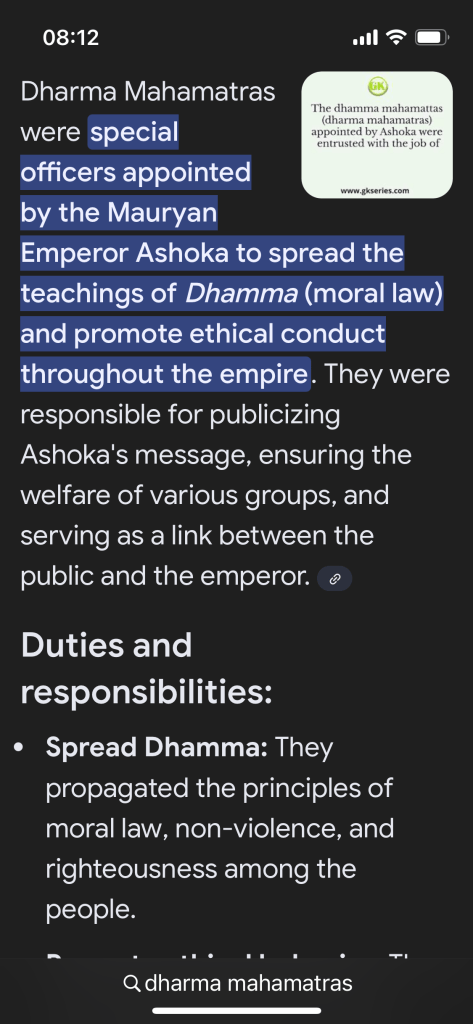
This week, I’m helping Kaveri with her revision and learning about the Dharma Mahamatras, appointed by the emperor to do good.
I like that
I’m feeling the connections
🤭
Look
We’ve even got our own copy of an Ashoka column, in the house. It was one of the ways he promoted good amongst his people.
So maybe I’m a reincarnated Dharma Mahamatras?
I quite fancy that.
Look at the evidence: social and community work, experimenting with participative democracy in England, radical work with disabled people, ‘Seeing is Believing’ events in India to establish community/business partnerships, facilitating the development of hundreds of community projects and groups, in the name of MAnjula helping young and old people and gifting almost 50 bicycles. I even helped design and deliver — for an Indian company — European-wide workshops on interpreting their ethical policies into appropriate daily business behaviour.
Ok ok, that’s enough of the trumpet blaring. It’s important to say we should be facilitators in helping each other.
Farrell factoid footnote.
What’s the difference between illness and wellness?
I and we, admittedly a joke but with a serious message. We should connect and cooperate to be kind to each other. As sapiens we’ve taken a wrong turning.
I’ve always looked for the ‘we’.
This is so obvious to me.
A top priority is ..
.. Kaveri and helping her develop and grow. When you meet her ask what BK is.
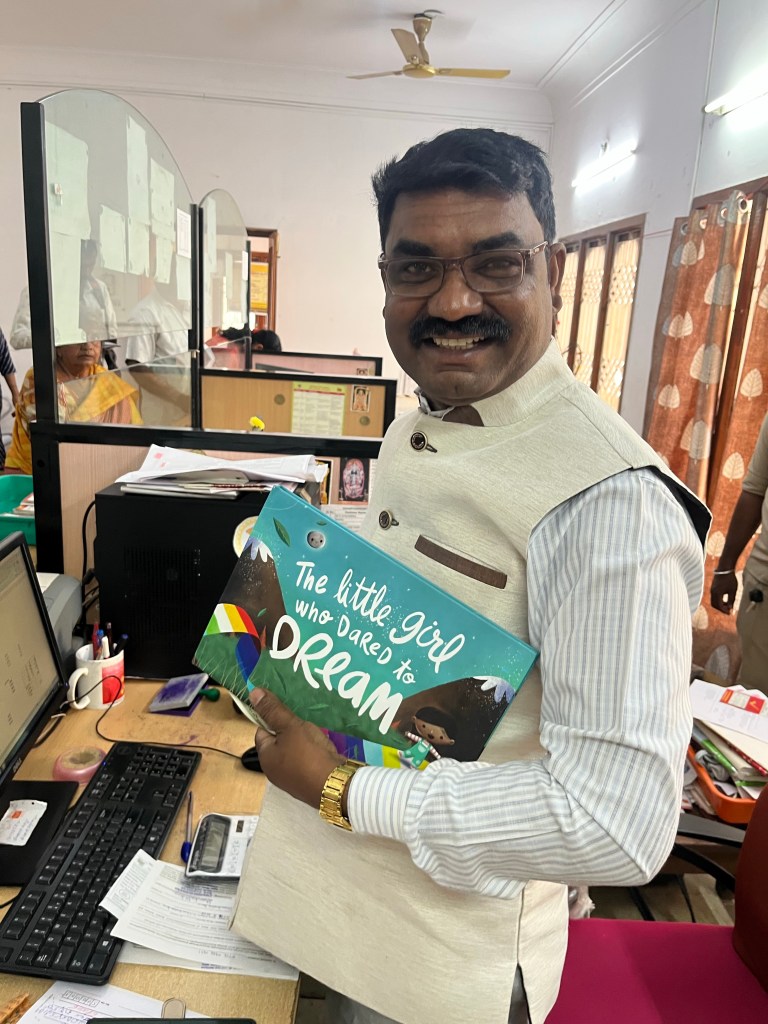
I collected the parcel from the post office today.
We’ll reveal more …Of what’s in these wonderbly books once Kaveri receives her presents.
The officers tried their best but they were unable to delete the tax charges.
It was over 30 U.K. pounds or 3,000 rupees for two books. That’s the equivalent of what we pay for over a month of Kaveri’s education AND the cost of one of the very special personalised books.



















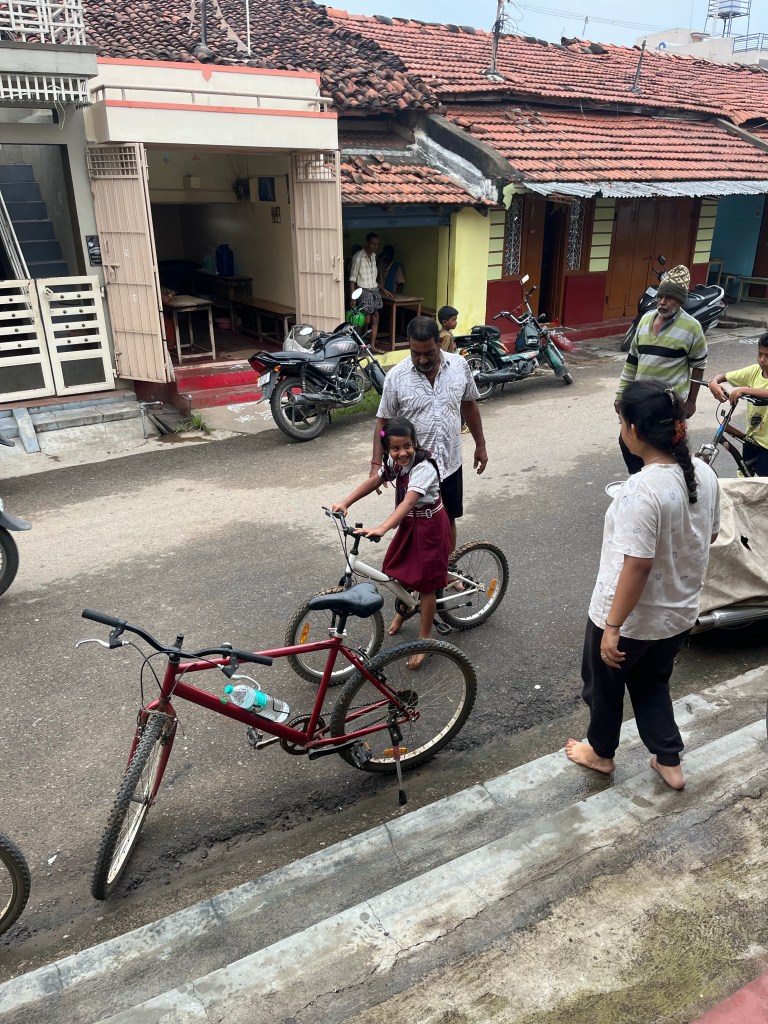
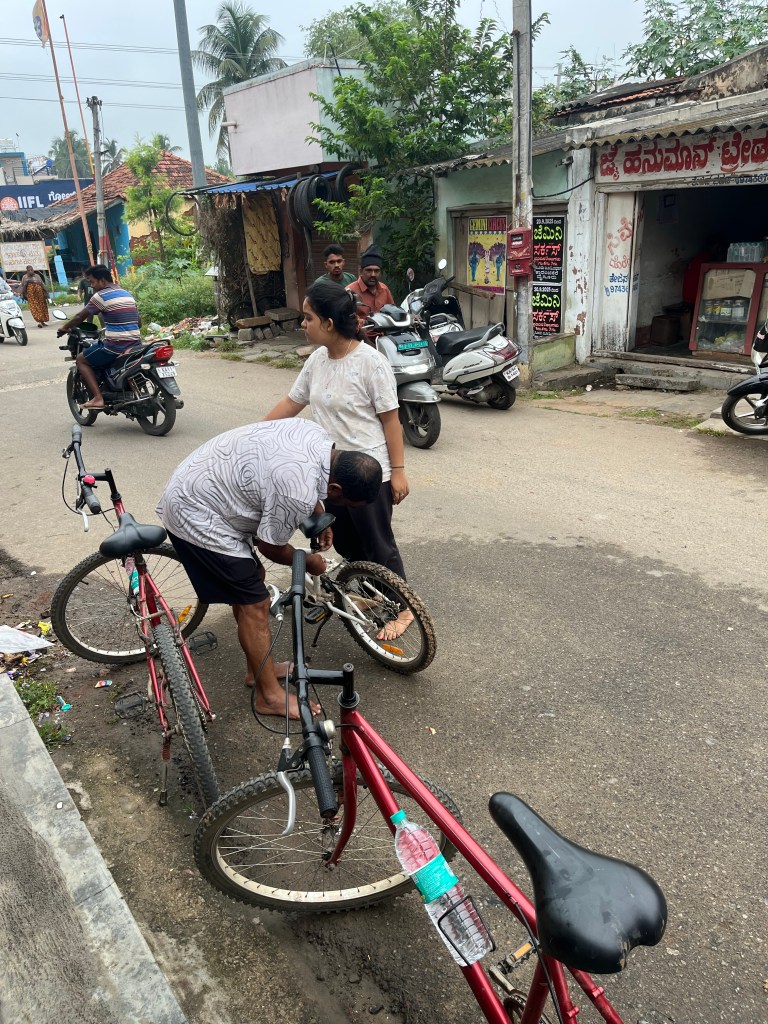
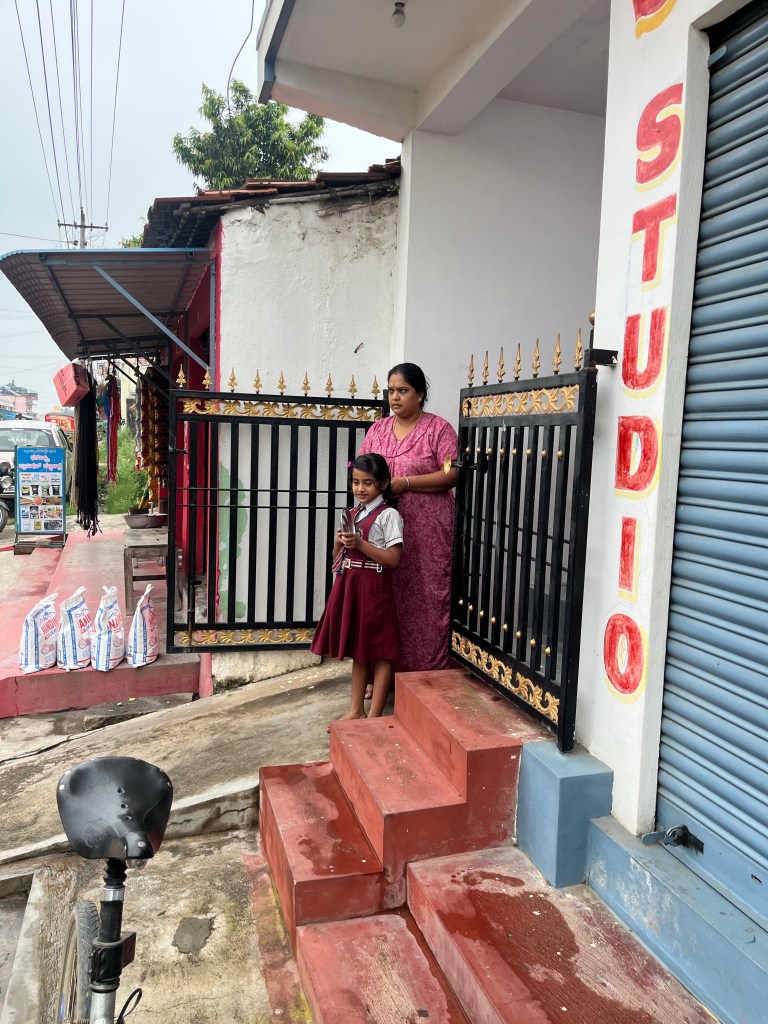
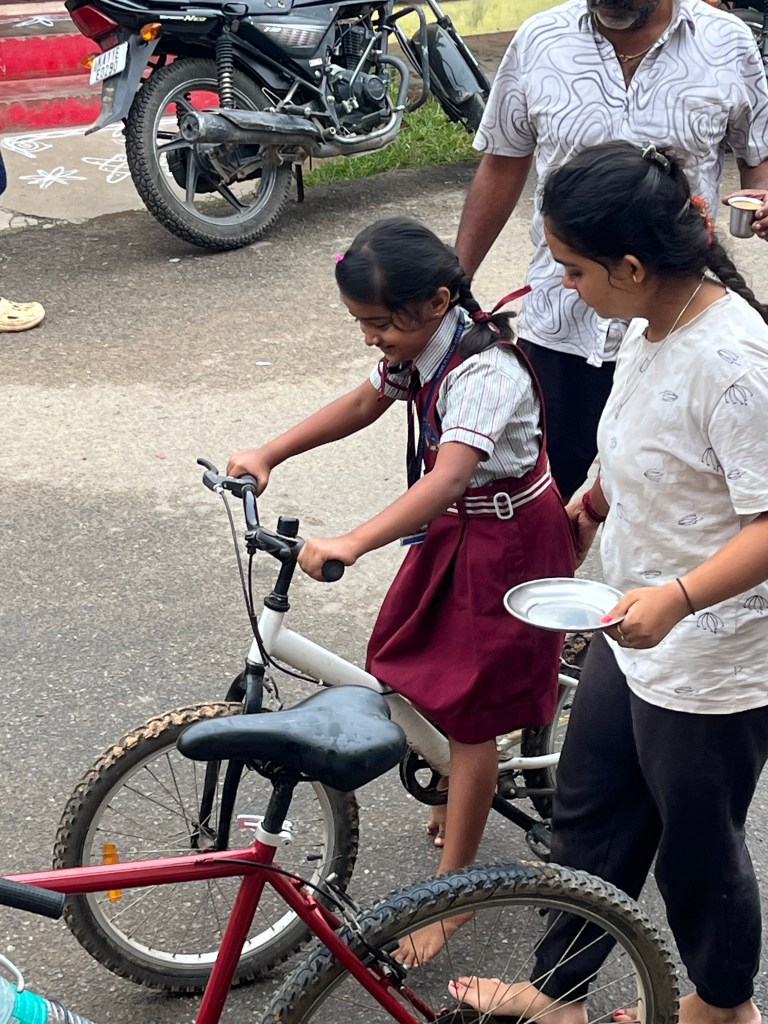

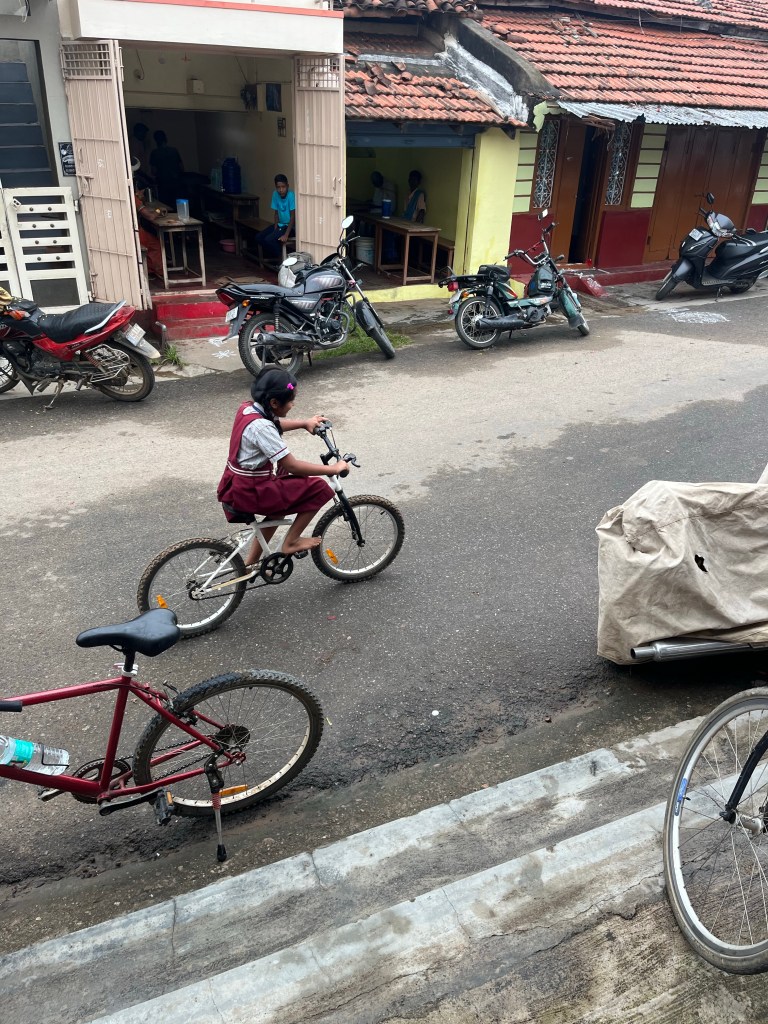
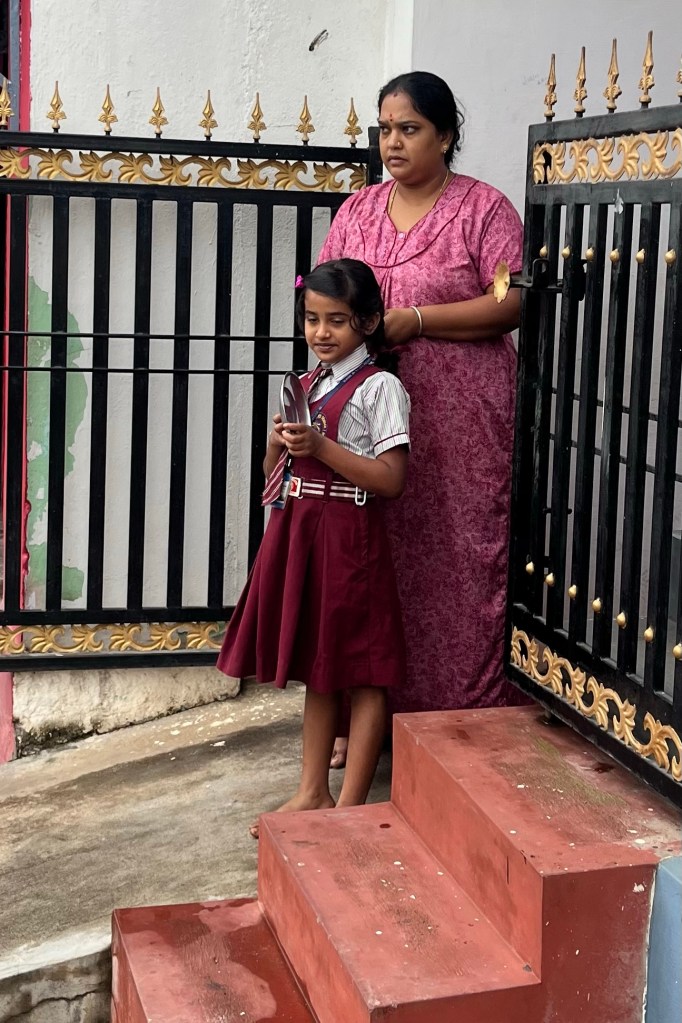

 Me and MYCycle